

building patchbay with ai. automating the boring parts of product work and posting the results.
Raleigh, NC
Joined March 2009
- Tweets8.3K
- Following1.8K
- Followers3.2K
- Likes3.1K



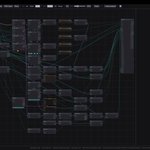




installing patchbay on a mac used to be a small ritual of copying files and fixing plists by hand. as of yesterday it's one command.
patchbay is a modular synth app i'm building, where you build instruments and learn how they work. if i'm going to ask people to test this thing, getting it onto their machine has to be boring. every manual step was a place for a tester to quietly give up.
my agents built the one-command install and it merged yesterday, gate passed, 4,016 tests green. the macbook install and sign-in retest are still ahead of me today, so i'm not calling it done yet.
lesson: the distance between 'it works on my machine' and 'someone else is using it' is mostly packaging. respect the packaging.
2
1
63
last night the first pass of our sprint landed: a whole synth built only from patchbay's own parts.
patchbay is a modular synth app i'm building: a workshop where you build instruments on a canvas and learn how they work. this sprint has one rule: no new framework, no special cases. if our own flagship synth can't be built from the same modules our users get, the framework isn't real yet.
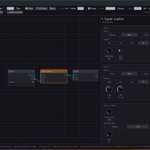
the first pass is in. the only visible change is the one that matters: every module's parameters now live in the panel at the bottom, in signal order, where you actually edit. 4,029 tests pass behind it.
my agents split the work between them. my job was holding the constraint when it would have been easier to cheat.
lesson: dogfooding isn't a slogan. it's refusing the shortcut your users will never get.
1
1
57
last night i asked for a c to f to am to g progression in my daw, and patchbay answered with a midi file.
patchbay is a modular synth app i'm building, with an ai assistant that can see your patch and work on it with you. i wanted to hear a progression right there in logic, live. that bridge doesn't exist yet, so a midi file stood in: block chords, arpeggiated, and broken versions. i dropped it into logic and it landed. it felt like an instrument, not a file transfer.
so we filed the real thing: a live bridge where the agent sends midi straight into your daw session as you ask. and the same path could carry transport and faders, which means any daw that listens to midi becomes agent-controllable. no vendor permission needed.
my job was noticing the workaround taught us exactly what's missing. the agents will build the bridge.
lesson: ship the workaround, use it for real, and let it show you what to build next.
1
75
last night patchbay ran through logic on its own audio driver.
patchbay is a modular synth app i'm building: a workshop where you build instruments on a canvas and learn how they work. it runs alongside your daw instead of inside it as a plugin, which means it needs its own driver to get audio in and out.
the driver showed up on my mac with 64 inputs and 64 outputs. one patch played out of outputs 1 and 2. a second patch on 3 and 4. both at once, through logic, out my speakers.
my agents built it. my job was the rule underneath: don't call it done until it makes sound in a real daw, where people actually work.
lesson: a feature isn't finished when the code compiles. it's finished when it survives contact with the real workflow.
59
i spent last night working through pricing for patchbay and kept landing on one sentence: people should know they got more than they paid for.
patchbay is a modular synth app i'm building: a workshop where you build instruments and learn how they work. a workshop dies if the free version feels crippled, or if people feel rented and squeezed.
so generosity is the model, not a discount tactic. my parents funded my music learning when i was a kid. they never made me feel the meter was running. that's the feeling i want on the other side of this.
my agents can model the numbers all night. the judgment is mine, and it's 40 years of being a synth user who remembers exactly how it felt to be charged for every little thing.
lesson: price so your customer wins, on purpose. they'll know.
1
39
i turned a bunch of knobs on one of my own synths and heard nothing change.
patchbay is a modular synth app i'm building, where you build instruments on a canvas and learn how they work. this synth has 292 controls, so we measured every one.
34 do something right away. 6 more work when you play. 1 is weak. and 251 are gated behind another control, with nothing on the face telling you that. none are dead.
new rule here: a locked control looks locked, and says what unlocks it.
lesson: a knob that stays silent teaches people to stop trusting every knob on the instrument.
2
2
113
our little hardware box was running at 86% of its audio budget with just one voice per synth. that is not a product, that is a demo that breaks.
patchbay is a modular synth app i'm building, a workshop where you build instruments on a canvas. it also has a hardware form: a small box you load synths into.
last night the optimization landed: the same two synths playing together, now at 51% of the budget. i listened. it still sounded great.
my agents did the measuring and the optimizing. my job was holding the line: faster means nothing if the sound changes.
lesson: headroom is a feature. a synth that only just barely runs is not finished.
1
54
in just over two months i've built a serious synthesizer creation platform called patchbay.
right now it's 95 modules and a fully featured audio mixer. next i'm starting a custom 64-channel network protocol to send low-latency audio, midi and data between multiple computers running patchbay and a central workstation running logic or ableton live.
i never thought i'd get this far. i got here by using today's ai tools in a smart way. Muse is my project and dev manager: buddy talks to the agents in herdr, assigns them the issues in github, and they problem-solve the complex workflows and features together.
patchbay is too big to build all of it, so i don't try. my ai agents cover the dsp and the synth history. my job is the choices: what gets built, what gets skipped, how it should feel to play. that judgment is 40 years of hardware and software synths.
the point is: if you are serious about building tools and apps, experiment. learn everything you can and don't be afraid to fail. that's how i got here.
3
2
170
patchbay was drifting toward a thousand hardcoded colors across the app and the website.
now they all answer to one file.
raw colors at the bottom, everything else referencing them. change a color once and the whole product changes. no duplicates, no drift.
4
5
142
a broken module shipping in patchbay used to mean an emergency rebuild.
today every module got a remote off switch. server side. flip it and the module is gone from the app.
patches that use it don't break either. a placeholder holds their settings until it comes back.
2
2
58
my ai agents were about to build patchbay a brand new mixer today.
we already have a mixer. it's been in the app for months.
15 years of building is mostly this: stopping the rebuild before it starts.
3
1
85
patchy got its own epic today. in beta 1 it reads the patch, modules, cabling and settings, explains its reasoning while it patches, and asks before it changes anything. teaching first, not just handing you a preset.
48
the fastest way to lose a buyer is a listing that went live with the wrong specs and a price you never approved. listing writer drafts marketplace listings from your photos and a model number, suggests a price from recent solds, and waits for your yes before publishing, trust score 78. for more ai use cases visit trustcase.dev

43
my patchbay dev agents used to sit idle until i checked herdr by hand. now a watchdog checks all of them every 30 minutes, prompts the idle ones, and assigns the next github issue. the pr pile that hit 21 is at zero this morning, three merges landed before 7:30, and a fresh build is out. what it got wrong: my merge gate checked libraries and tests but not examples, so a truncated function slipped through. fixed the gate, not just the bug. what recurring check do you still do by hand?
58
the worst renewal is the one you find on the credit card statement after it already auto renewed for another year.
contract renewal watch reads your contracts for renewal dates and terms, warns you 45 days ahead, and summarizes what you pay and use, with canceling or renewing always waiting for your yes. trust score 83/100.
for more ai use cases visit trustcase.dev
34
the scariest onboarding sentence: 'the agent already gave them admin access.' this new hire checklist agent creates the checklist, reminds owners of open items and reports what is stuck, but creating accounts with admin access always waits for your yes. trust score 81, for more ai use cases visit trustcase.dev
51
the cheapest quote is usually cheap for a reason you only find in the fine print. vendor quote compare lines up vendor quotes side by side, normalizes price, terms and lead time, and highlights the catch in each one, trust score 77, and it never accepts or signs without your yes. for more ai use cases visit trustcase.dev
24
the fastest way to burn a sprint is building on an integration your agent invented. integration research sweep checks a long list of products for apis, sign in methods, mcp support and how hard they are to connect, and you spot check the findings before trusting them. trust score 98/100. for more ai use cases visit trustcase.dev
3
4
138
waking up to a brief your agent invented overnight is a bad way to start the day. morning ai news brief gathers the day's ai news with simple scripts, has the agent pick the best items and write a short pdf brief that lands before 7 am, trust score 98/100. for more ai use cases visit trustcase.dev
40
the easiest way to steal from a company is a polite email that says our bank details changed. vendor bank change fraud check reads that letter before it hits the vendor master, checks the iban against master data and a sanctions list, and forces a call to the number already on file before anything changes. trust score 78/100, and nothing risky moves without a two person yes. for more ai use cases visit trustcase.dev
2
58