

The home of Self-Immolative Dendrimers and Polymers
Tel Aviv University
Joined March 2017
- Tweets125
- Following186
- Followers877
- Likes881




Shabat Group retweeted

When ACS shut down its mobile app, a lot of us lost the easiest way to keep up with some of the literature. Generic RSS readers are flaky, strip out images, and force you to bounce between publishers — while new chemistry papers are coming out at a firehose pace.
All most of us want is to open one app, scroll the latest ASAPs, and actually see the graphical abstracts first — because chemists read in structures, not walls of text.
So we built ChemASAP 🧪⚡
Open one app and see the newest ASAP and early-view papers (publisher agnostic), with their graphical abstracts front and center.
• Pulls crisp TOC / graphical abstracts automatically – even when a publisher's RSS feed breaks or leaves them out
• Works across publishers in one clean feed (ACS, Nature, Wiley, RSC, Cell Press/Chem, Science, and more — not locked to one house)
• Treats @ChemRxiv as a first-class journal right alongside peer-reviewed ASAPs
• Toggle only the journals you care about, tap straight to full text, or share a paper in one tap
• No account, no sign-up
100% Free for everyone.
So far, its been our go-to app for keeping track of the literature in real-time.
📱 iPhone/iPad: apps.apple.com/us/app/chemas…
💻 Web: api.baranlab.org
Reply here with ideas for how to make it better!
Shout out to @knight_chem for sponsorship and @bot for development.

Shabat Group retweeted

Congratulations to Scripps Research professor Jin-Quan Yu, who has been elected to @theNASciences, one of the highest honors a scientist can achieve. Recognized for his pioneering work in C-H bond activation, his methodologies simplified the construction and modification of complex molecules, with potential applications in medicine, agriculture and materials science. More: ow.ly/BSr250YRw9H

Shabat Group retweeted

Our latest paper is now out in @J_A_C_S !
We unveil a new strategy to access elusive free oxoboranes—highly reactive species—via bridged boranoanthracenes and aromatization-driven extrusion. Congratulations to the team!
pubs.acs.org/doi/10.1021/jac…

Shabat Group retweeted
Appearing today in @Nature : nature.com/articles/s41586-0…


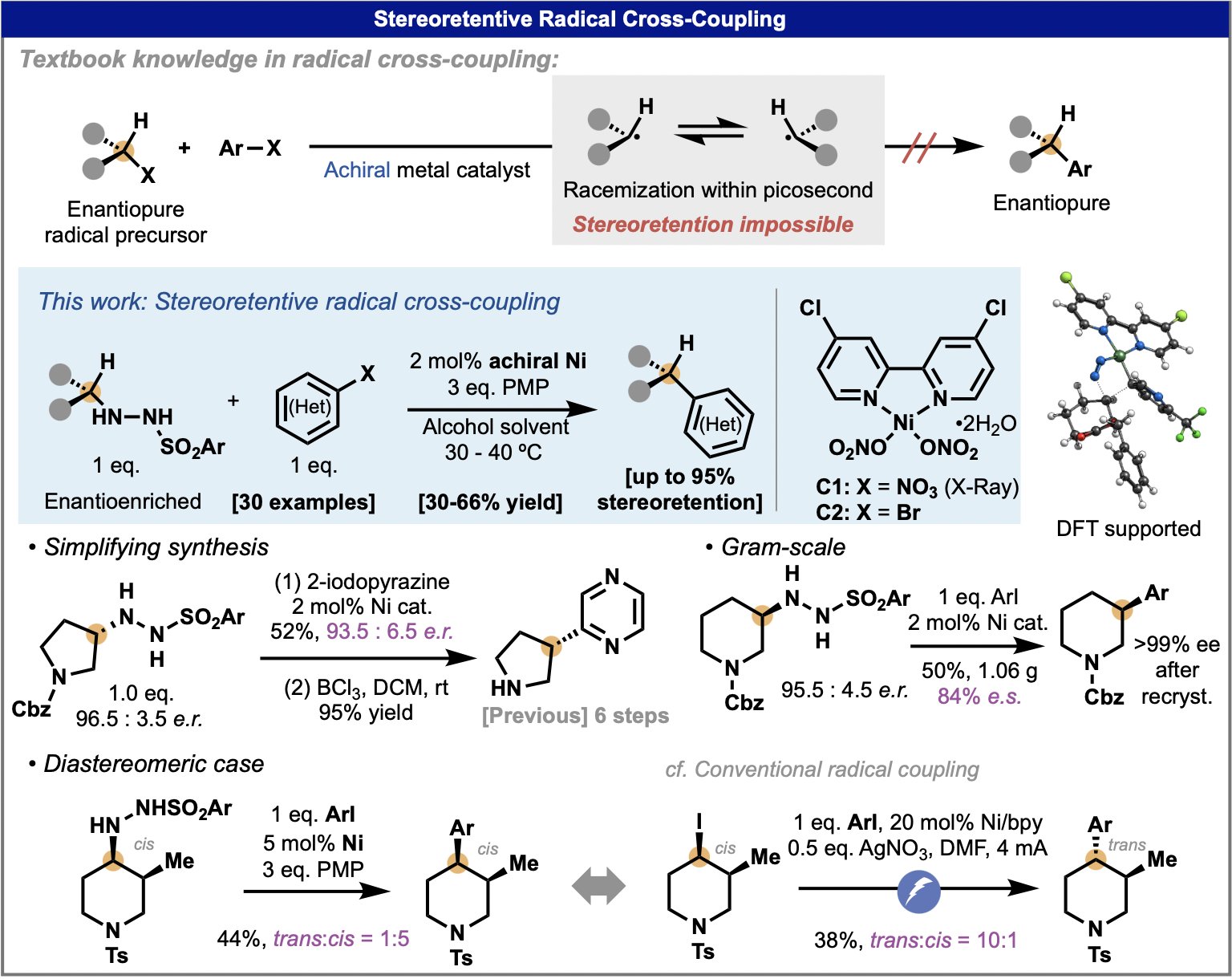
🚨RADICAL RETHINK: STEREORETENTIVE CROSS COUPLING UNLOCKED🚨 Today in @ChemRxiv (chemrxiv.org/engage/chemrxiv…) the first method for stereoretentive radical cross-coupling is disclosed. No fancy ligands or redox needed—just a Ni-diazene twist. 120 years after Gomberg, a new chapter begins.
Quick summary:
Since Gomberg discovered free radicals over 120 years ago and Kochi pioneered radical cross-coupling in the 1970s, this field has surged with interest for linking C(sp3) fragments. Unlike traditional polar methods (e.g., Suzuki), radical cross-coupling excels with saturated systems, offering mild conditions and chemoselectivity to build complex molecules from common fragments. Until now, enantiospecific radical cross-coupling was deemed impossible due to rapid racemization, but today that changes with readily available sulfonylhydrazides and a simple Ni-catalyst. This stereoretentive approach, enabled by a unique Ni-diazene transition state and driven by loss of N2, skips chiral ligands and redox steps, opening new possibilities for synthesis.
Shabat Group retweeted
🚨RADICAL RETHINK: STEREORETENTIVE CROSS COUPLING UNLOCKED🚨 Today in @ChemRxiv (chemrxiv.org/engage/chemrxiv…) the first method for stereoretentive radical cross-coupling is disclosed. No fancy ligands or redox needed—just a Ni-diazene twist. 120 years after Gomberg, a new chapter begins.
Quick summary:
Since Gomberg discovered free radicals over 120 years ago and Kochi pioneered radical cross-coupling in the 1970s, this field has surged with interest for linking C(sp3) fragments. Unlike traditional polar methods (e.g., Suzuki), radical cross-coupling excels with saturated systems, offering mild conditions and chemoselectivity to build complex molecules from common fragments. Until now, enantiospecific radical cross-coupling was deemed impossible due to rapid racemization, but today that changes with readily available sulfonylhydrazides and a simple Ni-catalyst. This stereoretentive approach, enabled by a unique Ni-diazene transition state and driven by loss of N2, skips chiral ligands and redox steps, opening new possibilities for synthesis.
Shabat Group retweeted

Big thanks to Derek Lowe for the thoughtful commentary on our manuscript! Your insights on antifungal research and the challenges we face in drug discovery are invaluable.
What the Antifungals Are Really Doing | Science | AAAS science.org/content/blog-pos…

Shabat Group retweeted
You don't need to be a chemist to make C(sp3)-C(sp2) bonds...
(video by @chemistte)
Shabat Group retweeted
Finally, RADICAL CROSS COUPLING without the exogenous REDOX. We disclose in @ChemRxiv (chemrxiv.org/engage/chemrxiv…) a broadly general platform for achieving transformations that normally required excess metallic or chemical reducing agents or photochemical setups (and their requisite catalysts) or potentiostats for electrochemistry. Now, such transformations can be accomplished with the same ease that one conducts a Suzuki coupling. You can scale up (its homogeneous) or scale down (use cheap parallel screening plates). Moisture is tolerated and base metal catalysis is used. As the best engineers like to say, "The best part is no part". Now, chemists have the option to remove the redox part from radical couplings.
Quick Summary: Sulfonyl hydrazides are disclosed as versatile radical precursors as exemplified with seven new C–C bond forming, redox-neutral cross-couplings with: (1) activated olefins, (2) alkyl halides, (3) redox active esters, (4) aryl halides, (5) alkenyl halides, (6) alkynyl halides, and (7) a trifluoromethylating reagent to forge C(sp3)-C(sp3), C(sp3)-C(sp2), and C(sp3)-C(sp) bonds. Sulfonyl hydrazides are stable and usually crystalline substances that can be accessed in a variety of ways including transiently from hydrazones to achieve a net reductive arylation of carbonyl compounds. Exogenous redox (chemical, photo/electrochemical) additives are not necessary as these functional groups serve the dual role of radical precursor and electron donor. The operational simplicity (homogeneous, water tolerant, dump-and-stir) and practicality of the method are demonstrated as well as applications to streamlining synthesis and mild late-stage functionalization.

Shabat Group retweeted

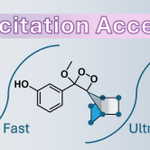
Chemiexcitation Acceleration of 1,2-Dioxetanes by Spiro-Fused Six-Member Rings with Electron-Withdrawing Motifs (Doron Shabat and co-workers) @ShabatGroup #openaccess #AngewandteVIP onlinelibrary.wiley.com/doi/…

Shabat Group retweeted

Today we report in @J_A_C_S a novel and highly modular platform for mechanically triggered chemiluminescence (bright light emission) from polymers. Congrats to @PengLiuChem, Yu-Ling (Debbie), and coworkers! Collab with @ShabatGroup. @CaltechCCE @Caltech
pubs.acs.org/doi/10.1021/jac…

Shabat Group retweeted

Happy to share our new review on Chemiluminescent probes for cancer biology!
Great collaboration between @RachelBlau1 at @UCSDJacobs, @ShabatGroup & @OmriShelef at @Tel_Aviv_Uni
@ChristineHorejs 🙏It was great working with @natrevbioeng
nature.com/articles/s44222-0…
Shabat Group retweeted
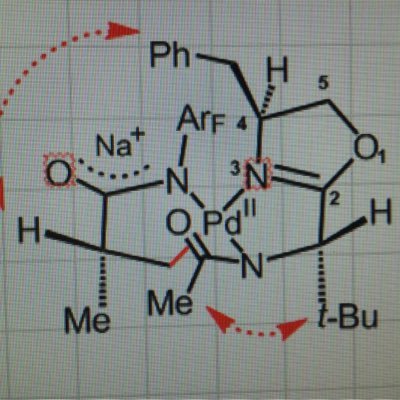
The magic effect of Table Salts for CH activation discovered in 2007 fueled our journey for weak coordination promoted CH activation. Finally tasted the physical power of table salts in Dead Sea. Photo from a strong bond activation symposium. Curtesy from collaborator Doron.

Shabat Group retweeted
A magic ligand and catalyst towards industrial scale C-H hydroxylation at room temperature with aqueous H2O2: pubs.acs.org/articlesonreque…. JACS Video: vimeo.com/acs/review/7522737…
Shabat Group retweeted

An inspirational talk about the best day ever in the lab. @ShabatGroup #MSMLG22 ,@msmlg2020 @TelAvivUni

Shabat Group retweeted
Finally, a man-made catalyst for gamma methylene CH! Double bond and carbonyl alpha chemistry build 1,2-relationship well, now via beta and gamma CH , we provide new disconnections for 1,3 and 1,4. Many new reactions are coming soon. science.org/doi/10.1126/scie…

Shabat Group retweeted
The final version of this highly collaborative work @NSF_CSOE has appeared today in @Nature : rdcu.be/cOjJj -- Check it out as there is a ton of new data that was added since last year!

Shabat Group retweeted

Congrats to @origree1,@PDFinkelstein, @mriverocrespo,@ZurichChemist,@BogdosMichael!New research horizons for us @ETH @ETH_DCHAB - reporting @J_A_C_S highly selective CO2 sensing probes, w/ appl. in catalysis, enzymology and cell imaging w/ Leroux group.
pubs.acs.org/doi/10.1021/jac…

Shabat Group retweeted
We report on the first example of a chemical modification to restore the efficacy of echinocandin antifungal drugs against echinocandin-resistant fungal pathogens. Congratulations to Dana, Qais and our fantastic collaborators. pubs.acs.org/doi/10.1021/jac…

Shabat Group retweeted
In a tribute to Richard Lerner in @ScienceMagazine, current Scripps Research President & CEO, Peter Schultz, reflected on Lerner's remarkable creativity in bridging fields of chemistry, immunology & medicine, generating a legacy of scientific enterprise science.org/doi/10.1126/scie…
