

A citizen, Common Mwananchi, 🇹🇿 Wanjiku. Views shared are my own
Tanzania
Joined October 2021
- Tweets7.9K
- Following151
- Followers94
- Likes13.1K





“One of my priorities is first, to promote unity and communion among us as members of the Church,” Pope Leo underlined.

Asked in the in-flight press conference from Peru about the proposal made at the 2019 Synod of Bishops on the Amazon to ordain older married men of proven virtue, or “viri probati,” due to a lack of vocations in the region, Pope Leo responded that, in his experience, there are more Augustinian vocations in Peru today than when he first arrived as a missionary in 1985, noting that more vocations means Peruvian priests could potentially serve these missionary areas in the Amazon in the future.
Pope Leo added that he believes the proposed solution of ordaining married men to the priesthood is “not the only solution” and which would “in certain areas of the Church … cause division because there is not a universal, if you will, acceptance of that concept.”
“One of my priorities is first, to promote unity and communion among us as members of the Church,” Pope Leo underlined.
“It may be in the future that some things will change, however, for right now, what I believe an important part of my ministry of the Church is to heal, bring people together,” he added, noting that the “the pope doesn’t change Church doctrine” and that everyone needs to continue to listen to the Holy Spirit.
“I suppose that’s enough right now because the whole question about married men as clergy is complicated. There are others who have other proposals, as we know, but all these things are going to take time, and we will go with that as the Lord moves us,” he said.
You can watch his full response to the question here:
(Video Credit: Courtney Mares/@OSVNews)
1
23
Simon Siara retweeted

In May 1988 Dr. Salim led the Tanzanian delegation to Cuba and sat down with Fidel Castro and Raul Castro.
Tanzania and Cuba shared a particular solidarity: both had supported liberation movements across Africa, both had chosen a path that ran against the grain of the Cold War's binary choices.


Simon Siara retweeted

"Wakati mwingine ili uupate ujumbe vizuri, unalazimika kupuuzia maneno na sauti iliyotumika kuufikisha." ~Togolani Mavura.

Simon Siara retweeted
On May 18, 1990 Dr. Salim was in Yaounde, Cameroon for a conference that discussed 'The Organization of the African Cultural Environment.' The conference was also a celebration of Neguib Mahfouz and Wole Soyinka, both Nobel Prize in Literature winners. In his speech, Dr. Salim paid tribute to both of them:
"You were among the very first combatants who contributed, through a long and determined struggle, to the liberation of the African cultural environment. With the power of the pen, you have educated millions, pleaded the cause of the Africans and that of millions more in the world who are less fortunate. You have articulated the view of the African society to the world, even at times for need of objectivity, you seemed to look too harshly at the society itself. But it is this willingness to engage the truth which earned you respect. And you have, in the process, made contribution to the liberation of the African mind." - Dr. Salim, May 18, 1990


Simon Siara retweeted
July 8, 1990.
Dr. Salim hosted both President Julius Nyerere and President Ali Hassan Mwinyi at home with, Hashim Mbita, and Major General Mrisho Sarakikya among the guests.
Tanzania's past president and its current one, together at his table.


Simon Siara retweeted
In 1993 Dr. Salim traveled to Western Sahara — one of Africa's longest-running decolonization questions, a territory still contested, a people still waiting.
He had chaired the UN's Decolonization Committee for years. He knew this land's story better than most.
The OAU under Dr. Salim never pretended that Africa's liberation was complete while any part of it remained occupied.


Simon Siara retweeted
While on visit to Geneva, Dr. Salim visited the UNHCR Headquarters where he met with Sadaka Ogata, the High Commissioner for UNHCR.
She served as High Commissioner from 1991 - 2000 which overlapped with Dr. Salim's tenure at the OAU and would work together on a number of refugee crises throughout the 1990s.


Simon Siara retweeted
Ni jambo gani unalikumbuka kuhusu uongozi wa Dr. Salim katika wizara ya mambo ya nje?

Simon Siara retweeted
In May 1980 an Austrian newspaper — Die Presse, sat down to profile the President of the UN General Assembly.
The headline: 'Await No Miracles.' It was a provocation. Dr. Salim had spent years arguing that the international system could be reformed, that the Global South could win at the table of the powerful.
This profile captures the world's skepticism and his refusal to share it.


Simon Siara retweeted

We are proud of Sheila Chepkirui for winning the New York City Marathon in an impressive time of 2:24:36, and Hellen Obiri for securing third place.
Thank you Chepkirui and Obiri for reminding the world why Kenya remains a powerhouse in athletics and for giving our country a priceless place on the global stage.

Simon Siara retweeted

Chaos, Courage and Change in Somalia: Growing Up, Learning and Leading Through Conflict
Mahad Wasuge recounts his journey from a small town in Somalia to becoming a respected researcher, lecturer, institution builder, and public policy practitioner. Along the way, he navigates conflict, difficult choices, financial hardship, and professional setbacks while remaining committed to education, public service, and nation-building.
nuriakenya.com/product/chaos…
KSh 2,850


Simon Siara retweeted
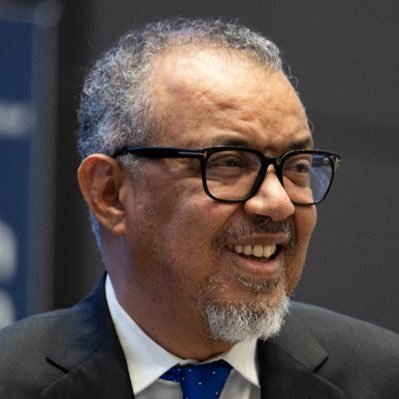
Health is a right, not a privilege determined by income, identity or birthplace.
The same principle applies between countries. No nation should be left without access to the vaccines, diagnostics and treatments it needs in an emergency.
In a divided and divisive world, health remains an area in which countries can find shared solutions to shared threats.
Simon Siara retweeted
"Uhuru katika makoloni utapatikana tu kutokana na juhudi za wananchi wenyewe na wala hautaletwa na Umoja wa Mataifa ambao msimamo wake katika suala hilo ni kuhimiza tu shughuli za ukombozi."
Dr. Salim akizungumza na wanachuo January 1975.

Simon Siara retweeted
American diplomats were being held hostage in Tehran.
The Cold War was at its most volatile. And presiding over the United Nations General Assembly — the institution everyone expected to resolve it was Dr. Salim Ahmed Salim of Tanzania.
This is the press coverage of that moment: a young African diplomat navigating the most dangerous diplomatic crisis of the decade.


Simon Siara retweeted
In November 1988 Dr. Salim traveled to the United Arab Emirates on an official visit as Tanzania's Deputy Prime Minister, with Amne Salim by his side.
The Gulf was emerging as one of the world's most consequential economic regions.
Dr. Salim understood, long before it became fashionable, that Africa's future partnerships would not only run through Europe and America. They would run through the Gulf too.


