






Sick with what?

WSJ feels the timing on this one.
Kushner, dialing into a meeting remotely because he was sick, told Zelensky to hold off on strikes since he and Witkoff are burning time and jet fuel brokering with Moscow, and a 30-day pause on refinery strikes would be Ukraine's way of saying thanks, per a WSJ source.
wsj.com/world/ukraine-pauses…


Smemm retweeted

Trump, hafta sonu düzenleyeceği iki mitingi iptal etti.
Pazartesi de miting yok.
Yani salı günkü seçimlerden önce son miting bugün.
Smemm retweeted

Is the U.S. really planning on nominating Viktor Orban to be U.N. Secretary General?
Turns out it's a prank by a MAGA wannabe at the State Department—and the Trump administration is not happy about it.
My latest.
puck.news/s/7qzrrwfd/twa

Smemm retweeted

NEWS:
Turkey has officially nominated Feridun Sinirlioğlu as a candidate for UN SecGen:
"Today’s straw poll has shown that there is still no consensus on a candidate for the next UN Secretary-General. Observing that the process is reaching a stalemate," Turkey is submitting the candidacy of Sinirlioglu, per MOFA spox
Official nomination letter: passblue.com/wp-content/uplo…
Smemm retweeted

We face pivotal moments that require a united and modern United Nations. I remain committed to listening to all voices, pursuing necessary reform, and delivering on our shared mandate for peace and security. #newUN

Smemm retweeted

Meet Al-Atta, the Sudanese General who destroyed Abu Dhabi's reputation:
The UAE's kangaroo courts issued a life-sentence for a series of Sudanese figures, most important among them is Yasser Al-Atta, a general in Sudan's army. They allege that he smuggled an amount of munitions on a private plane that would take several C-13s - more on Emirati math deficiencies later.
The real reason they hate Al-Atta isn't his alleged smuggling of weapons. They hate him because, at a time when suggesting the UAE would actually support the RSF was an outrage, he came out swinging and directly accused the UAE of using Chad as a smuggling route to the RSF. This was a diplomatic bombshell.
(Photo 1)
Only two months later the UN panel of experts would deem his accusations credible
(Photo 2)
Then the UN demanded the UAE explain what is inside suspicious planes flying from the UAE and on to Chad. The UAE claimed it was sending humanitarian aid to a "hospital" in Amdjarass.
Satellite imagery from a New York Times investigation revealed there was a newly built drone base right next to the "hospital", while local refugees pointed out suspiciously short opening times and in some cases the treatment of wounded RSF terrorists.
Furthermore the International Federation of Red Cross/Crescent Societies was not notified of its own federation member opening the hospital, putting the UAE in breach of IFRC rules. To make things worse, the IFRC sent fact finding missions to that hospital TWICE - they were not allowed into the hospital of its own federation member, "for security reasons".
This behavior according to the IFRC is another breach of federation rules and according to humanitarian experts, the Emirati Red Crescent's behavior is unheard of.
When the UAE was asked by the UN panel of experts to explain a number of flights from the UAE to Chad, the UAE claimed it was all just supplies for the "hospital" but refused to provide the documents for most of the planes. Instead they described cargo that would fit into three planes at most, with no less than 90% of cargo volume unaccounted for.
Meanwhile Al-Atta had graduated from mere accusations to full-blown enmity: He pointed at several African leaders as "bought off" by the "disgusting Zionist" MBZ, characterized the leaders of the UAE as the demons amidst the Arabs and wondered why a rich billionaire emir like MBZ seems to be addicted to stealing and looting, referring the UAE's smuggle of Sudanese gold.
Since November 2023 and Al-Atta's accusation the UN fact finding mission to Sudan, Human Rights Watch, Amnesty International, several investigative journals have corroborated evidence that clearly points at Abu Dhabi as the essential lifeline that allows the RSF to continue its genocide in Sudan.
The Sudanese Army has recovered and liberated many of the lands occupied by the RSF when Al-Atta first pointed at the UAE, including Sudan's breadbasket Gezira and its capital Khartoum. The RSF in turn committed at least two genocidal campaigns since then - even using UAE Army-exclusive gear during the genocide in Al-Fashir.
The brazenness of the least successful and worst of Gulf monarchies will be studied for decades, while Al-Atta's legacy in the Sudanese Armed Forces is almost unparalleled.


Smemm retweeted

Unless the Sudanese Gov is willing to start taking action against Ethiopia these drone strikes will not stop. This supposed “strategic patience” is being interpreted as weakness.
Simply putting out statements and publishing evidence of Ethiopia’s involvement in these crimes achieves nothing, the international rules based order these statements are meant to appeal to might as well be a myth in this moment in time.
It is inexplicable that Sudanese airspace is still open to Ethiopia, the first step is to issue Ethiopia with a formal notice of airspace closure.


Interesting.

#NoToLana
Ireland’s Sinn Féin party calls on the Irish government to oppose Lana Nusseibeh’s bid to lead the UN, citing UAE complicity in RSF atrocities in Sudan and her repeated denials of that support.
sinnfein.ie/news/government-…

Smemm retweeted

Assad Regime Hacker Sentenced to Three and a Half Years in Prison
Read article here:levant24.com/en/article/assa…

Smemm retweeted

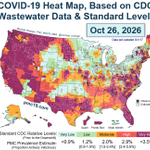
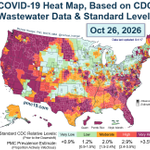
CDC doom and gloom epidemic map shows the north is worsening for Covid. Waiting to see what the wastewater data shows, but if it follows, it will be bad news. To even see the epidemic status map like this pre-Halloween and all the other holidays is very unusual.

Smemm retweeted

Our good friend Fared is still recovering from multiple surgeries and will likely require more operations in the coming months.
Please share this post and, if you can spare anything, donate to help @FARED_ALHOR get through his medical ordeal. gofundme.com/f/help-fared-re…


Smemm retweeted

This shows opposition to UAE candidate Lana Nusseibeh for post of UN Secretary General is quite broad on UN Security Council and the path to victory is hard to discern. This vote did not reveal any veto from UN Security Council permanent 5. The thought that it is the turn of a Latin America candidate still prevalent.

UN Security Council 7th straw poll preliminary results:
Rebeca Grynspan of Costa Rica: 11 encourage, 4 discourage, 0 no opinion
Rafael Grossi of Argentina: 9 encourage, 4 discourage, 2 no opinion
Carolyn Rodrigues Birkett of Guyana: 8 encourage, 6 discourage, 1 no opinion
Lana Nusseibeh of UAE: 7 encourage, 6 discourage, 2 no opinion


Unbelievable investigation into the RSF female contingent and its female commander's "incitement to rape" across Northern state. Ever investigation into RSF actions during the war reveals a more inhuman and ghoulish approach. Shocking stuff. aljazeera.com/features/2026/…

HDP=PKK. Their offices kidnap kids. This is not a comparison.

Arab parties in Israel could face the same political trap as the pro-Kurdish HDP in Turkey’s 2015 elections. Both gained enough seats to become kingmakers but struggled to turn their electoral success into political power. In Turkey, failed coalition talks were followed by months of violence and repeat elections, in which the HDP lost votes and the ruling AKP regained its majority. Now, if coalition talks fail in Israel, renewed elections and a possible escalation of violence in Iran, West Bank or Gaza, could similarly weaken the Arab parties' political advantage. What happened in Turkey in 2015, and what lessons does it offer for Israel in 2026?
ETHNIC PARTIES AS POTENTIAL KINGMAKERS
In Turkey’s 2015 elections, the pro-Kurdish HDP won a historic 13.1% of the vote, putting it in a position to become a kingmaker. The ruling AKP received 40.9%, while the two main opposition parties, CHP and MHP, together received 41.3%. However, the HDP became a negative rather than a conventional positive kingmaker, similar to Ra’am and Joint List in Israel today. Its success prevented the AKP from governing alone, but it did not make the HDP an acceptable partner for the other parties. The nationalist MHP refused to cooperate with the HDP to remove the AKP from power and form a new government. Interestingly, for the first time, the pro-Kurdish HDP also attracted significant support from non-Kurdish voters, particularly those who wanted to remove the government. The HDP had softened its Kurdish nationalist discourse and presented itself as the "party of the whole of Turkey," with an ethnic Turkish co-chair, Figen Yüksekdağ.
In Israel’s October 2026 elections, the Arab parties, Ra’am and the Joint List, won a historic 19 seats (8 and 11, respectively), putting them in a similar kingmaker position. Netanyahu’s ruling bloc secured 53 seats, while the opposition bloc led by Gadi Eisenkot won 48. With the Arab parties, the opposition could reach 67 seats in the 120-member Knesset, well above the 61 needed for a majority. However, just as in Turkey in 2015, this was a negative rather than a positive kingmaker position. The success of the Arab parties prevented Netanyahu’s bloc from securing a majority, but it did not make them acceptable coalition partners for the Jewish-led opposition. Eisenkot, Naftali Bennett and Avigdor Lieberman ruled out forming a government with Arab parties, even though their seats could be crucial to replacing Netanyahu.
Another interesting similarity is the attempt to reach voters beyond their own ethnic communities. Just as the HDP tried to appeal to non-Kurdish voters by “Turkeyification” , Ra’am, led by Mansour Abbas, adopted a more pragmatic approach focused on Jewish–Arab cooperation. It even placed Jewish politician and former deputy minister Yoav Segalovitz second on its electoral list. The Joint List also included Jewish politician Ofer Cassif through Hadash.
ETHNIC PARTIES AND THEIR POSITIONS ON ARMED ETHNIC MOVEMENTS
Another striking similarity is the refusal of ethnic minority parties to label armed groups associated with the ethnic armed movements as terrorist organizations, even while trying to appeal to a wider electorate and become part of the government.
In 2015, despite gaining unprecedented support from secular, liberal and left-wing ethnic Turkish voters, the HDP refused to recognize the PKK as a terrorist organization. At the same time, its leaders condemned violence against civilians and called for a peaceful solution to the Kurdish conflict. Similarly, after Israel’s 2026 elections, leaders of Ra’am and the Joint List declined to explicitly call Hamas a terrorist organization, despite condemning the October 7 attacks against civilians.
In both cases, this position became another obstacle to turning electoral success into real political influence. For Turkish nationalist parties, especially the MHP, cooperating with the HDP came with a high political cost because of its perceived links to the PKK. Similarly, Israeli opposition parties face strong resistance from Jewish voters to cooperating with Arab parties whose leaders refuse to call Hamas a terrorist organization.
As a result, minority parties that had enough seats to become kingmakers found themselves politically isolated because of their positions on armed organizations. Their electoral success created a contradiction: their seats were needed to form an alternative government, but their positions on sensitive national-security issues made other parties reluctant to work with them.
VIOLENCE BETWEEN REPEAT ELECTIONS AND THE LOSS OF VOTES BY ETHNIC PARTIES
Turkey’s experience in 2015 offers another important lesson for Arab parties in Israel about what can happen when coalition talks fail and new elections are called. After the parties failed to form a government following the June 7 elections, President Erdoğan called for new elections after five months. During those five months, Turkey experienced a sharp rise in violence.
On July 20, an ISIS suicide bombing in Suruç killed 32 people. Two days later, on July 22, two Turkish police officers were killed in Ceylanpınar. The peace process with the PKK collapsed, and the Turkish military resumed operations in mainly Kurdish areas. Hundreds of HDP offices were attacked, while several Kurdish cities faced military operations and curfews. Then, on October 10, an ISIS suicide bombing at a peace rally in Ankara killed more than 100 people, including many supporters of the pro-Kurdish movement.
As terrorism and national security came to dominate the political debate, the AKP campaigned on promises of security and stability. In the November elections, its vote share jumped from 40.9% to 49.5%, allowing it to regain its parliamentary majority. Meanwhile, the HDP’s vote share fell from 13.1% to 10.8%, and its seats dropped from 80 to 59.
Of course, this shift was not only about violence. Changes in nationalist voting patterns and voter turnout also played a role. Still, the violent atmosphere seriously limited the HDP’s ability to campaign and pushed national security to the center of the election. The consequences continued long after the vote. On November 4, 2016, both HDP co-chairs, Selahattin Demirtaş and Figen Yüksekdağ, were arrested on terrorism-related charges and remained in prison as of October 2026. Although the pro-Kurdish movement continued to receive significant support in later elections, its ability to influence government formation was weakened by political exclusion, criminal prosecutions and growing state pressure.
A similar scenario is worth considering after Israel’s October 2026 elections. Neither Netanyahu’s bloc nor the Jewish-led opposition has enough seats to form a government alone. If coalition negotiations fail, Israel could face another election in six months. Until then, Netanyahu would remain prime minister of a caretaker government, keeping considerable control over national-security decisions, although still subject to legal limits and institutional oversight.
As in Turkey in 2015, a period of political deadlock could also become or coincide with a period of rising violence. This could involve another military confrontation with Iran or worsening security in the West Bank and Gaza. Such developments could push voters to put security first, strengthen nationalist narratives and make cooperation between Jewish opposition parties and Arab parties even more difficult. However, this would not automatically benefit Netanyahu, since voters might also blame his government for the renewed insecurity but still can increase votes of right wing parties.
Meanwhile, political pressure on Arab parties has already taken on a legal and security dimension. Following allegations of possible foreign interference involving Qatari funding aimed at influencing Arab voter turnout, Israel’s Shin Bet opened an investigation. National Security Minister Itamar Ben-Gvir also publicly called for the arrest of Arab party leaders suspected of involvement. The investigation into possible foreign interference is separate from the criminal investigation into suspected vote-buying involving Ra’am supporters. Still, these developments show how legal accusations and national-security issues can become closely tied to coalition politics.
The Turkish experience therefore raises an important question for Israel: Could prolonged coalition deadlock, combined with rising violence and pressure on Arab political leaders, weaken the parliamentary influence that Arab parties have gained through their historic electoral success? Or will this pressure lead Arab parties and “rak lo Bibi” (anything but Bibi) bloc to form a government leaving all their preconditions aside?

Smemm retweeted

The latest unofficial straw poll results are out. Turkey was expected to decide whether to put forward its own candidate based on these results. We are now waiting for Ankara’s decision.


Exclusive: Turkey set to announce its candidate for UN Secretary-General within days: Feridun Sinirlioglu, a veteran diplomat.
Thursday is key: Ankara’s final call will hinge on how the Security Council’s straw poll leans. An announcement is expected Friday evening. turkiyetoday.com/nation/excl…


Smemm retweeted

Breaking News: The Trump administration has detained dozens of Afghan immigrants in Louisiana — including relatives of those who helped the U.S. military — and plans to deport them to Afghanistan, according to U.S. officials. nyti.ms/4jPVvrw

What?!

أعلنت لجنة التواصل الدرزية (عرب 48)، في بيان صدر الخميس، أن النيابة العامة الإسرائيلية قدّمت لائحة اتهام إلى محكمة الصلح في حيفا ضد رئيس اللجنة الشيخ أبو محمد علي محمد معدّي، وذلك على خلفية زيارته الدينية والاجتماعية إلى لبنان قبل نحو ثلاثة أعوام.
وبحسب البيان، شملت الزيارة أماكن مقدسة للطائفة الدرزية، من بينها خلوات البيّاضة ومقام النبي أيوب ومقامات أخرى، إضافة إلى لقاءات مع مرجعيات دينية ومشايخ وأقارب وعدد من الشخصيات والفعاليات الدرزية في لبنان.
ويُعد الشيخ معدّي، المقيم في بلدة يركا، من أبرز الشخصيات الدرزية الناشطة في ملف التواصل مع أبناء الطائفة في لبنان وسوريا ودول أخرى.
