

Northside Chicago born and bred, Morehouse College, Phi Beta Sigma. Just out'chea straddling the line between Old and New Atlanta. #SupportBlackTech
Atlanta, GA
Joined November 2008
- Tweets23.1K
- Following358
- Followers390
- Likes22.7K



Smitty from Up North aka Swift Sullivan retweeted
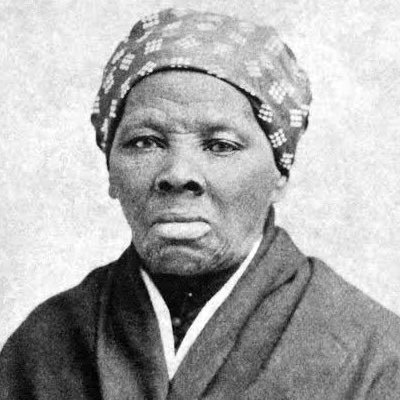
Clara B. Williams college professors did not allow her inside the classroom because she was Black.
But that didn’t stop her. She took notes from the hallway–standing up! She eventually graduated at the age of 51 and lived to 108 years old and saw her 3 sons become doctors.

Smitty from Up North aka Swift Sullivan retweeted

A lawsuit in Missouri could have implications for the nation's historically Black colleges and universities. Current and former students at Lincoln University are suing the state for $549 million, alleging it systematically underfunded the school.
@GeoffRBennett has more.
Smitty from Up North aka Swift Sullivan retweeted
100 years ago, thirteen black men put together their savings and founded Safe Bus Company, making it the largest black owned bus company at that time.
It was formed in Winston-Salem to serve the black neighborhoods due to segregation and operated till 1972.
Thirteen Black men pooled their life savings to purchase $100,000 in stock, forming Safe Bus Co., Inc. on May 26, 1926. The company quickly grew into the largest African American–owned bus company in the nation.
Safe Bus expanded rapidly and was once described as the largest Black-owned transportation company in the world. By 1955, the company grossed $825,000. At its peak, it carried approximately 15,000 passengers per day, earned $18,000 weekly, and employed 75 people.
Early fares began at five cents and increased as the company expanded. The fleet grew from 35 to 42 buses, serving roughly 20 percent of the city. Black bus drivers earned between $1.60 and $2.50 per hour—wages that exceeded those of many schoolteachers at the time.
By 1968, Safe Bus provided transportation across the entire city. However, following integration, the company experienced a sharp decline in ridership. Changing social attitudes and increased competition led to significant financial losses.
In 1972, stockholders voted to sell Safe Bus to the city. The Winston-Salem Transit Authority then assumed responsibility for public transportation, marking the end of one of the most successful Black-owned transit companies in American history.

The most hilarious thing about this video is that buddy had on a #21 Prime Deion Sanders jersey but went and changed it to a Bijan Robinson jersey after #21 got beat on the touchdown by Colston Loveland. I agree, no one on ATL should ever wear Deion's number. #BearDown


I'm all for people being comfortable and dressing comfortably, but the NBA on NBC team looks much better dressed up. #NBAOpeningNight #peacock #nbaonnbc
Yo, I went to Paris last month to see bro's show. Am I right to feel a little pissed now that he's doing the Superbowl? It kinda feel like he was using these summer shows as practice for the Superbowl!

Jay-Z will be the headliner for the 2027 Apple Music Super Bowl Halftime Show, a music industry insider has confirmed to Deadline deadline.com/2026/10/jay-z-s…

Just watched Cardi B's Tiny Desk performance it was super dope. Quick question tho, why no one mad at Cardi for saying nigga but everyone mad at Joe? Feels like the same shit to me! Somebody let me know if I'm missing context.
Smitty from Up North aka Swift Sullivan retweeted
“You can kill a revolutionary, but you can’t kill the revolution.”
— Fred Hampton

College football has been incredible today. WhilenBYU has a strong case for #1, I think Miami and Ohio State with be 1 & 2 tomorrow.
Smitty from Up North aka Swift Sullivan retweeted

AMAZING! Republican election officials denied NC A&T campus an early-voting site. Students marched about 45 minutes each way to vote ANYWAY!
Put up barriers to voting, and don’t be surprised when people get angry, get organized, and bring even MORE voters to the polls!
Smitty from Up North aka Swift Sullivan retweeted
Civil Rights activist, Gloria Richardson with the greatest “Boy Bye” as she removes the rifle of a National Guardsman from her way during a 1963 Civil Rights Protest.

Yo, @VanLathan & @TheRachLindsay quick break from the election. But on the next podcast, can y'all talk about how New Orleans & ATL came together to make the greatest meal in the history of Niggadom? These niggas done made a Hot Wing Boil! tiktok.com/t/ZPLSVpHpt/

Smitty from Up North aka Swift Sullivan retweeted
This women played major roles in Black liberation, community organizing, and political education during the 1960s and 1970s.
Angela Davis, Kathleen Cleaver, Denise Velez, Afeni Shakur, Assata Shakur, and Elaine Brown were central figures in movements focused on racial justice, political self-determination, and community survival.
Their work included organizing grassroots programs, developing political education, addressing police violence, advocating for prisoners’ rights, and building mutual aid initiatives. Many of these efforts were foundational to broader civil rights and Black Power movements, even though women’s leadership was often overlooked or minimized at the time.
Several of these women faced surveillance, arrests, trials, incarceration, or exile. Others navigated internal challenges within political organizations while continuing to push for structural change. Their contributions extended beyond protests and speeches into day-to-day organizing that sustained communities under pressure.
This image documents an important part of American history and highlights the role of women whose leadership helped shape political movements that continue to influence conversations about justice, equality, and civil rights today.

Smitty from Up North aka Swift Sullivan retweeted

On this day 14 October 1964, Dr Martin Luther King Jr. became the youngest man ever to win the #NobelPeacePrize. 🏆
When notified of his selection, he announced that he would turn over the prize money of $54,123
to the furtherance of the civil rights movement. ❤️💚🖤

Smitty from Up North aka Swift Sullivan retweeted

Isaac Woodard’s story began with a promise that should have been simple: after serving his country, he would be allowed to come home safely. Instead, hours after his honorable discharge in February 1946, the 26-year-old Black Army sergeant was beaten by a South Carolina police chief and permanently blinded.
Woodard had served in the Pacific during World War II with the 429th Port Battalion and had earned a campaign star. On his journey home, an argument with a bus driver led to his removal from the bus in Batesburg, where police chief Lynwood Shull attacked him with a blackjack. The next morning, Woodard was brought before a local judge and fined $50 for disorderly conduct, despite being unable to see.
The case attracted national attention, including support from the NAACP and public advocacy from figures such as Orson Welles. But attention did not produce justice. In November 1946, Shull was tried in federal court before an all-white jury and acquitted. Woodard never recovered his eyesight, and Shull was never convicted for the assault.
Yet the case became much larger than the courtroom. President Harry Truman met with civil rights leaders concerned about violence against Black veterans and subsequently created the President's Committee on Civil Rights. Its 1947 report called for stronger federal protection of civil rights. The following year, Truman signed Executive Order 9981, directing that equality of treatment and opportunity be provided in the armed forces.
Woodard did not single-handedly cause military desegregation, but his case became an important example of the contradiction facing Black veterans. They had been asked to defend democracy abroad while returning to a country where segregation and racial violence remained entrenched.
Woodard eventually settled in New York, adapted to life without sight and lived quietly for decades. He died in 1992 at 73 and was buried at Calverton National Cemetery.
The man who blinded him never went to prison. But the injustice Woodard endured helped expose a national problem that could no longer be ignored. His story belongs in the history of the long struggle for civil rights and the fight for equal citizenship after World War II

Smitty from Up North aka Swift Sullivan retweeted
Carlota Lucumi: The Yoruba woman who led one of Cuba's Revolts in 1843.
Carlota Lucumí, also known as La Negra Carlota, was an African-born enslaved woman in Cuba of Yoruba (Lucumí) origin who became one of the most important female figures in the history of resistance to slavery in the Americas.
She lived and labored on the Triunvirato sugar plantation in Matanzas, a region that by the mid-19th century had become one of the most brutal centers of plantation slavery in Cuba. Enslaved Africans there endured extreme violence, forced labor, family separation, and constant surveillance. Yet Matanzas was also a place where African cultures, languages, and networks of solidarity survived — and where resistance repeatedly emerged.
On November 5, 1843, Carlota helped lead a coordinated slave rebellion at Triunvirato. Armed with tools, machetes, and whatever weapons they could seize, the rebels attacked the plantation infrastructure and fought back against overseers. The uprising did not remain isolated; it spread to neighboring plantations and formed part of a wider wave of revolts across Matanzas.
These rebellions were later followed by a harsh colonial crackdown remembered as La Escalera — “The Year of the Lash” (1843–1844). Spanish authorities responded with mass arrests, torture, executions, and public punishments intended to crush both rebellion and any possibility of African unity. Carlota herself was captured and killed during the repression, but her role in the revolt ensured that her name survived in oral histories and later historical records.
Carlota’s story is significant not only because she participated in resistance, but because she represents the often overlooked role of African women in organizing and leading rebellions in the Americas. Enslaved women were not only victims of slavery — they were strategists, messengers, fighters, and leaders who helped sustain networks of resistance across plantations and regions.
Over time, Carlota came to symbolize Black resistance in Cuban history. In the 20th century, her legacy was revived in national memory and revolutionary narratives, most notably when Cuba named its 1975 military mission in Angola Operation Carlota in her honor.
