

Safeguarding space for everyone Rapid response for space assets at risk
Australia
Joined May 2020
- Tweets371
- Following71
- Followers884
- Likes226



A risk cannot be managed if it cannot be seen.
Most banks, hospitals and energy networks wouldn’t know which satellites they depend on. Phone clocks, card payments, grid timing, shipping and aviation navigation all run on satellites the organisations relying on them do not own or control. Infrastructure this critical has alarms on it everywhere except in orbit.
Solstice OS provides that alarm. 🛰️
◼ Maps the satellite services an organisation relies on, owned or not.
◼ Screens on reachability rather than proximity: which objects could manoeuvre close enough to matter, and when.
◼ Shows how exposed each asset is as the picture changes.
◼ Puts response options forward while there is still time to use them. The platform recommends; the operator decides.
🎥 In the video, our Co-Founder and Chief Development Officer George Freney explains why this is a security problem, not a monitoring one.
If your team wants to see how Solstice OS could outline what dependencies you have in orbit and how you can manage the risks they face, reach out to [email protected] to arrange a demonstration.
#SpaceThreatDetection #SpaceDomainAwareness #CriticalInfrastructure #SpaceSecurity
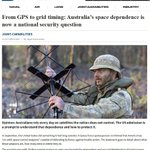
Every card payment, phone clock and power grid in Australia relies on timing from satellites the nation does not own or control.
In Defence Connect, Space Machines Company CEO and Co-Founder Rajat Kulshrestha argues that dependence on space is now a national security question, and one that deserves a public conversation.
The trigger was the US Space Force confirming in September that the United States has “on-orbit space control weapons”. The same month, the Royal Air Force stood up its first squadron dedicated to acting against threats to British satellites. Neither move came out of nowhere: the Secure World Foundation has documented counterspace capabilities in 13 countries.
Most Australians never see the link between Space and daily life. Weather imagery, haul trucks in the Pilbara, internet and telehealth in remote communities: much of it runs on American, European, Japanese and commercial satellites. Apart from the NBN’s Sky Muster satellites and a handful of government and research spacecraft, Australia owns very little of what it relies on in orbit.
Boards and regulators should examine space risk with the same rigour they now apply to cyber risk.
Three questions must be answered:
▪️ Which satellites do our critical services depend on?
▪️ Who is responsible for the backup?
▪️ How should we respond when something goes wrong?
Answering them requires a change in how orbit is watched. Most monitoring was designed for debris tracking, not hostile manouvering. It reports when an object is close, but not whether it could reach a critical asset or how long remains to act. 𝗦𝗼𝗹𝘀𝘁𝗶𝗰𝗲 𝗢𝗦 screens on reachability rather than proximity, predicting which objects pose a threat and when, then presenting response options. 𝗢𝗽𝘁𝗶𝗺𝘂𝘀 𝗩𝗶𝗽𝗲𝗿 is the patrol: a rapid-response spacecraft affordable enough to build in numbers.
Knowing what Australia depends on is the first step. Deciding how much of its protection to leave to others is the next.
Read the full article at: defenceconnect.com.au/joint-…
#SpaceSecurity #CriticalInfrastructure #SovereignCapability #SpaceDomainAwareness

Threat assessments must be rapid and correct.
🛰️ A close approach is not necessarily a threat. A suspicious object that can reach your asset quickly is another matter.
Solstice OS is built around that distinction. Rather than flagging everything that passes nearby, it screens on reachability:
→ which objects could manoeuvre into proximity with a named asset
→ when that window opens
→ what each object is able to do, based on its observed behaviour
⏱️ From there, the platform turns a warning into a plan. It counts down to the last point a response remains effective, develops costed courses of action, and sets out what each option spends in fuel and remaining mission life.
The platform recommends; a human commits every action. Every decision, including the decision not to act, is retained as a defensible record.
The same judgement matters beyond defence. Telecommunications providers, energy networks and other critical infrastructure operators rely on services carried by satellites they do not own, and need to know when a change affecting one of their suppliers' satellites becomes a risk to their operations.
Development of Solstice OS is continuing at pace, and our team has begun delivering demonstrations to prospective customers across defence and commercial markets.
🎥 The video below sets out where the platform is heading, and why it matters to anyone with a stake in what happens in orbit.
📩 To arrange a Solstice OS demonstration for your team, contact [email protected].
#SolsticeOS #SpaceDomainAwareness #SpaceSecurity #CriticalInfrastructure
Australia and India build better in space together than either country does alone. That was the clearest message out of Bengaluru Space Expo. 🇦🇺🇮🇳
We spent the week at BSX as one of the Australian space companies in the national delegation, in the Australian Pavilion alongside the Australian Trade and Investment Commission (Austrade), the Australian Space Agency, and the Space Industry Association of Australia (SIAA).
Across the industry roundtable and the country session, the conversation kept returning to complementary capability rather than duplicated capability. Critical infrastructure in both countries, from banking to mobile networks to navigation, depends on space assets neither country fully owns. Working on that together is a more useful proposition than either industry working on it alone.
Space MAITRI is what that partnership looks like in practice.
🛰️The mission brings Australian and Indian partners into a single team: the Australian Space Agency, University of Sydney, University of Adelaide, Macquarie University, UTS, ASPI, LeoLabs, HEO and Australian Astronomical Optics, alongside ISRO, IN-SPACe, Digantara, OrbitAID, Indian Institute of Science and Ananth Technologies. That work reaches orbit on a dedicated flight with NewSpace India Limited (NSIL), carrying Optimus Viper to low Earth orbit.
MAITRI is Sanskrit for friendship. The mission is named for what it is built on. 🌏
Our thanks to Nathan Davis, Steven Connolly, Krithika Subramanian, Tamara Bell, Dan Lloyd, Luke Phillips and Dominic Shumilin for their support at BSX.
The Space MAITRI project received grant funding from the Australian Government via the Australian Space Agency.
#BSX2026 #SpaceMAITRI #IndiaAustralia #SpaceSustainability


It was great to co-host the NSW Treasurer, the Hon. Daniel Mookhey MP, together with our industry partners in India, at Ananth Technologies in Bengaluru as part of the NSW Government trade mission. He was joined by Deputy Chief of Staff, NSW Treasurer Anna York and Steven Connolly, Acting Consul-General at the Australian Consulate-General, Bengaluru.
Our thanks to Investment NSW, Malini Dutt and Grace-Ann Lobo for your support creating opportunities for trade and collaboration.
#NewSouthWales #IndiaAustralia #SpaceManufacturing #AnanthTechnologies


🚀 Space Machines Company is proud to be featured in Manufacturers' Monthly, you can read the article here ➡️ manmonthly.com.au/building-f…
The piece covers two milestones in how we are building sovereign spacecraft manufacturing capability in Australia: our $6 million CRC-P consortium investment in AI-driven design with University of Technology Sydney and Fordyno, and the recent system-level qualification of our Scintilla propulsion system.
Traditional spacecraft design can take months or years of iteration before manufacturing even begins. The CRC-P project, Optimised Generative AI Design for Mass-Manufacturable Spacecraft, is developing machine learning software that evaluates hundreds of structural, thermal and mission variables at once, so an optimised Optimus Viper primary structure can be regenerated in weeks rather than years whenever requirements change 🔧. Physical production happens at the Advanced Manufacturing Readiness Facility (AMRF) at Bradfield City ⚙️, where additive manufacturing, composites and robotic assembly turn those designs into flight-ready hardware.
Alongside that, Scintilla has now completed system-level qualification testing as a full propulsion subsystem in flight configuration:
🔥 The engine, tanks, valves, control systems and sensors are working together as they will on orbit.
Two sides of the same problem, as our CEO Rajat Kulshrestha put it: propulsion we control end to end, and a manufacturing process that can respond to new requirements in weeks rather than years. Together they support our target of producing more than 20 Optimus Viper vehicles a year.
This points to where Australia's space sector is heading: manufacturing scale, design speed and sovereign industrial capacity, at the intersection of national security demand and advanced manufacturing investment.
Thank you to Manufacturers' Monthly for the feature, and to University of Technology Sydney, UTS Tech Lab, Professor Robert Fitch, Professor Zhen Luo, Fordyno, Advanced Manufacturing Readiness Facility (AMRF), Bradfield Development Authority and Natalie Camilleri for building our CRC-P project with us.
#AustralianManufacturing #SpaceManufacturing #SovereignCapability #CRCProgramme
Australia protects infrastructure on the ground. The infrastructure in orbit that it depends on is not yet covered.
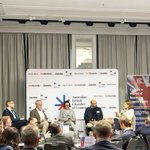
Our Co-Founder and CEO Rajat Kulshrestha made that point this week at the New South Wales Defence Forum in Sydney, hosted by the Australian British Chamber of Commerce. He joined the panel "Defence and Why NSW Matters", opened by the Hon Pat Conroy MP, Minister for Defence Industry. 🇦🇺
Ground based GPS spoofing and jamming is already occurring worldwide. Satellites are being disrupted in orbit. As Raj put it, space was treated as a static domain for a long time. It is not one any more.
NSW Chief Scientist and Engineer Professor Hugh Durrant-Whyte arrived at the same place from another direction. A significant share of the defence budget now sits in the digital space, he said, and that is where NSW should focus. His refrain across the session was that the advantage is rarely the technology itself. It is working out how to use it.
Orbit is not short of observation. What is missing is the layer that turns observation into a decision. Space Machines Company is building the capability to identify what Australians actually depend on in orbit, then predicts threat windows against those dependencies using AI. Operators receive them early enough to act, human-on-the-loop. Optimus Viper closes the distance when a threat requires a physical answer. 🛰️
Defending orbital infrastructure is a decision problem before it is a manufacturing one. That is digital work, and the majority of Australia's digital investment already lands in the Sydney basin. Good place to be building it.
#SpaceSecurity #DefenceIndustry #NSW #SovereignCapability


Farmers, miners, and emergency service workers were the groups the Hon Dr Andrew Charlton MP, Assistant Minister for Science, Technology and the Digital Economy, pointed to in his keynote at Southern Space 2026 in Canberra this week. None of them would describe themselves as space companies, yet all of them stop working when the satellites do.
📈 Minister Charlton put a number on the opportunity: a sector growing at three times the rate of the wider economy. The day before, the Hon Pat Conroy MP, Minister for Defence Industry, had opened the conference by setting out the Government's defence agenda for space. Between the two speeches, the economic case and the defence case ended up describing the same infrastructure.
SMC Co-Founder and CEO Rajat Kulshrestha joined the panel on Sovereign Space Security and Strategic Defence Capabilities moderated by Terry van Haren DSM with Malcolm Davis and Campbell Pegg.
Our thanks to Dan Lloyd and Space Industry Association of Australia for organising this event.
🛰️ Two takeaways from the session:
1️⃣ Satellites are critical national infrastructure. They underpin communications, navigation and financial systems, not just defence assets.
2️⃣ The real question has shifted from what Defence should buy to what the country cannot afford to lose, and what it must be able to protect.
Launch, ground segment and constellation capacity can still come from allies and commercial partners, since there are multiple suppliers and time to switch. Threat decisions cannot wait on that same timeline. Knowing that one of our satellites is being approached, and choosing how to respond, has to be sovereign, because the window is hours and the call belongs to Australia.
🇦🇺 SMC is building both halves of that capability in Australia: Solstice OS predicts orbital threats and generates response options at machine speed, while Optimus Viper is the rapid response vehicle that acts on them.
The most concrete part of the discussion was what comes next, turning momentum into funded defence and resilience programmes. Australia has named the capability it needs; the task now is delivering it at the pace the threat environment demands.
#SouthernSpace2026 #SovereignCapability #SpaceSecurity #AusSpace


Congratulations to Team SMC on completing City 🌆 to Surf 🏄 for another year.
We took on the course, whether running, jogging or walking, 14 Kilometers to Bondi.
We posted some fantastic times, but more importantly, enjoyed ourselves and left with a well-earned feeling of accomplishment!
🥇🥈🥉
#TeamSMC #CityToSurf #TeamWork


🇦🇺 Last week, SMC took part in the panel “Smart Space Systems: From Autonomy to Assurance” at the 19th Australian Space Forum in Adelaide, alongside other leaders from Australia's space and AI sector. The Forum is one of the most important gatherings on the Australian space calendar, bringing government, industry and researchers together to shape the direction of the sector.
The panel explored how artificial intelligence and cyber technologies are reshaping the space sector: autonomous spacecraft, satellite data analysis and predictive mission planning, alongside the growing role of cybersecurity in protecting orbital assets and infrastructure.
🛰️ Autonomy and assurance are not separate problems. A spacecraft that can act on its own is only useful if the people relying on it can trust what it decides, and why. Ground-based control loops that take minutes to detect, assess and respond do not hold up against threats that manoeuvre in the same timeframe. Onboard autonomy closes that gap, but only if it is built to explain its decisions, not just execute them.
That is the balance we build toward with Solstice OS and Optimus Viper: autonomy fast enough to matter in a contested orbit, with the operator retaining authority over anything consequential. As AI moves deeper into how spacecraft observe, decide and act, that question of trust will only get louder. Good to see it given real airtime in Adelaide.
Thank you to The Andy Thomas Space Foundation for convening another strong forum for Australia's space industry. 🙏
#19ASF #AutonomousSystems #SpaceAI #AustralianSpace


Every domain that has ever mattered has needed a way to respond, not just observe.
This is the architecture we believe the orbital economy now requires, and the one we are building at Space Machines Company. Awareness. Attribution. Assurance. Action.
▪️ Awareness shows you what is there.
▪️ Attribution tells you what it means.
▪️ Assurance puts a presence nearby.
▪️ Action closes the loop: manoeuvre, intercept, protect, at machine speed, faster than any human decision cycle allows.
Building it requires two things the space industry has never combined in one platform:
Autonomy, so a fleet can observe, decide and act without waiting on a ground link.
Attritability, so losing one vehicle does not cripple the mission, and a fleet can be built and deployed at scale rather than handcrafted one at a time.
𝗘𝘃𝗲𝗿𝘆 𝗮𝘀𝘀𝗲𝘁 𝗶𝗻 𝘀𝗽𝗮𝗰𝗲 𝗻𝗲𝗲𝗱𝘀 𝘀𝗲𝗰𝘂𝗿𝗶𝘁𝘆. 𝗪𝗲 𝘄𝗶𝗹𝗹 𝗱𝗲𝗹𝗶𝘃𝗲𝗿 𝗶𝘁.
#SpaceSecurity #Autonomy #SolsticeOS #OptimusViper
Knowing a threat exists is not the same as being able to respond to it.
Last week, our team met partners and allies building the next generation of space capability at Farnborough International Airshow. The same gap surfaced in nearly every conversation: not tracking but presence. Space domain awareness can tell an operator that something is approaching. It cannot put a capability within reach of a high-value asset before an adversary can act.
That reach requires hardware on orbit, and today it exists almost nowhere outside a handful of nation-state programmes. A capability stationed and ready changes what an adversary can safely assume, before any engagement takes place. That is the deterrent effect of physical presence, and it does not exist without hardware in space.
🛰️Optimus Viper is built to put that presence within reach, at a fraction of the cost of traditional spacecraft. Persistent presence stops being something only the largest defence budgets can afford.
#SpaceSecurity #Farnborough2026 #AlliedCapability #FIA2026


"How will Australia’s emergency services cope if satellites go down? With a sextant and a street directory."
The system failure depicted in that headline, from the Guardian's coverage of the Australian Space Forum in Adelaide, raises real and immediate threats. The full article theguardian.com/australia-ne…
The panel considered what happens if the nation suddenly loses access to space. ATM networks fail. Emergency services lose situational awareness. Aircraft navigation degrades. Remote communities are cut off. Financial systems face cascading failure. 𝗔𝘂𝘀𝘁𝗿𝗮𝗹𝗶𝗮 𝗵𝗮𝘀 𝗼𝗻𝗲 𝗼𝗳 𝘁𝗵𝗲 𝗵𝗶𝗴𝗵𝗲𝘀𝘁 𝗽𝗲𝗿 𝗰𝗮𝗽𝗶𝘁𝗮 𝗱𝗲𝗽𝗲𝗻𝗱𝗲𝗻𝗰𝗶𝗲𝘀 𝗼𝗻 𝘀𝗮𝘁𝗲𝗹𝗹𝗶𝘁𝗲 𝗶𝗻𝗳𝗿𝗮𝘀𝘁𝗿𝘂𝗰𝘁𝘂𝗿𝗲 𝗶𝗻 𝘁𝗵𝗲 𝘄𝗼𝗿𝗹𝗱, and most people never see the connection until it breaks.
The head of satellite and space systems at Optus put the problem in four words: "Right now, it's largely unguarded." That is the operator of the nation's satellites describing critical national infrastructure.
The analog fallbacks are sensible. Every resilient system needs a plan for failure, and the agencies doing this training deserve credit for honesty about the risk. But the panel's discussion revealed something else. Every proposed fix, from redundant satellites in multiple orbits to more ground stations to sovereign alternatives to Starlink, plans for satellites to be lost. 𝗡𝗼𝗻𝗲 𝗼𝗳 𝗶𝘁 𝗺𝗮𝗸𝗲𝘀 𝘁𝗵𝗲𝗺 𝗵𝗮𝗿𝗱𝗲𝗿 𝘁𝗼 𝗹𝗼𝘀𝗲.
🛰️ We wired the world through space faster than we built the capability to secure it. Space is now our most exposed critical infrastructure, and our adversaries know it, they are developing counterspace weapons. Orbital grappling, coordinated manoeuvring and electronic warfare against operational constellations have all been demonstrated. 𝗧𝗿𝗮𝗰𝗸𝗶𝗻𝗴 𝗱𝗮𝘁𝗮 𝗿𝗲𝗳𝗿𝗲𝘀𝗵𝗲𝘀 𝗲𝘃𝗲𝗿𝘆 𝟴 𝘁𝗼 𝟮𝟰 𝗵𝗼𝘂𝗿𝘀 𝘄𝗵𝗶𝗹𝗲 𝘁𝗵𝗿𝗲𝗮𝘁𝘀 𝗱𝗲𝘃𝗲𝗹𝗼𝗽 𝗶𝗻 𝗺𝗶𝗻𝘂𝘁𝗲𝘀.
⚠️ Here is the honest provocation. Imagine if our national response to cyber threats was training banks to keep paper ledgers. If any other piece of critical infrastructure, a port, a power station, an undersea cable, was described publicly as largely unguarded, there would be a national response within the week. 𝗜𝗻 𝘀𝗽𝗮𝗰𝗲, 𝗽𝗿𝗲𝗽𝗮𝗿𝗶𝗻𝗴 𝘁𝗼 𝗹𝗼𝘀𝗲 𝘁𝗵𝗲 𝗮𝘀𝘀𝗲𝘁 𝗵𝗮𝘀 𝗾𝘂𝗶𝗲𝘁𝗹𝘆 𝗯𝗲𝗰𝗼𝗺𝗲 𝘁𝗵𝗲 𝘀𝘂𝗯𝘀𝘁𝗶𝘁𝘂𝘁𝗲 𝗳𝗼𝗿 𝗽𝗿𝗼𝘁𝗲𝗰𝘁𝗶𝗻𝗴 𝗶𝘁.
For every satellite operator and every agency that depends on one: what is your plan for the day before the outage, not the day after?
🔭 Solar weather, degradation, hostile activity. Today, the response to each begins after the service is lost. We founded Space Machines Company to move it earlier. 𝗦𝗼𝗹𝘀𝘁𝗶𝗰𝗲 𝗢𝗦 to infer and decide, 𝗢𝗽𝘁𝗶𝗺𝘂𝘀 𝗩𝗶𝗽𝗲𝗿 to act.
𝗘𝘃𝗲𝗿𝘆 𝗮𝘀𝘀𝗲𝘁 𝗶𝗻 𝘀𝗽𝗮𝗰𝗲 𝗻𝗲𝗲𝗱𝘀 𝘀𝗲𝗰𝘂𝗿𝗶𝘁𝘆. 𝗘𝘃𝗲𝗿𝘆 𝗮𝘀𝘀𝗲𝘁 𝗶𝗻 𝘀𝗽𝗮𝗰𝗲 𝗱𝗲𝘀𝗲𝗿𝘃𝗲𝘀 𝗶𝘁.

The Australian Government, through Minister Tim Ayres and Assistant Minister Andrew Charlton, released the Statement on Space, naming five focus areas where the Australian space industry can contribute to national resilience. 🇦🇺
Space Machines Company along with our partners are already working on them.
𝗧𝗿𝘂𝘀𝘁𝗲𝗱 𝗦𝗽𝗮𝗰𝗲 𝗦𝗲𝗿𝘃𝗶𝗰𝗲𝘀. The Statement calls for improved detection, tracking, analytics and decision support to protect critical space assets in a congested and contested domain.
🔭 Solstice OS delivers this today. It fuses data across sensor sources into a coherent threat picture, assesses behaviour and intent, and generates courses of action at machine speed, with operators in authority throughout. It runs on sovereign infrastructure with full data sovereignty, answering the Statement's call for sovereign control of data and command pathways. We are delivering this capability now under contract with the Advanced Strategic Capabilities Accelerator.
𝗦𝗽𝗮𝗰𝗲 𝗣𝗹𝗮𝘁𝗳𝗼𝗿𝗺𝘀. The Statement calls for responsive satellite systems with onboard autonomy and in-space mobility, and for propulsion technology built for extreme environments.
🛰️ Optimus Viper answers the first: a rapid-response spacecraft built for proximity operations, deployable across orbital regimes at a fraction of conventional costs, fully sovereign controlled.
🔥 Scintilla, our green bi-propellant propulsion system, answers the second. Designed and built in-house, flight-qualified in full flight configuration, with an Australian supply chain validated across key components. Sovereign propulsion is not a plan. It has fired.
Together they form the Autonomy Stack for Space Security: the software to see threats and decide fast, the hardware and propulsion to act. 🛡️
Australia has outlined its vision for the future and we are proud to be collaborating with the Australian Space Agency and our partners to build it!
Read the full statement here: space.gov.au/publications/st…
#AustralianSpace #SovereignCapability #SpaceDomainAwareness #SpaceSecurity


Tracking data tells you where something is. 𝗜𝘁 𝗱𝗼𝗲𝘀 𝗻𝗼𝘁 𝘁𝗲𝗹𝗹 𝘆𝗼𝘂 𝘄𝗵𝗮𝘁 𝗮 𝗺𝗮𝗻𝗼𝗲𝘂𝘃𝗿𝗲 𝗺𝗲𝗮𝗻𝘀, 𝗼𝗿 𝘄𝗵𝘆 𝗶𝘁 𝗵𝗮𝗽𝗽𝗲𝗻𝗲𝗱.
Ground-based space domain awareness refreshes every 8 to 24 hours. A manoeuvring adversary can close on a target far faster. By the time a ground system flags the anomaly, the threat may have arrived.
At 36,000 kilometres, a satellite is a point of light to a ground telescope. You cannot tell whether it has deployed a mechanical arm or reconfigured an antenna. You cannot tell whether a burn is routine station-keeping or the opening move of a hostile approach. Proximity-grade monitoring changes that picture entirely, generating the data clarity needed to 𝗺𝗮𝗸𝗲 𝘁𝗵𝗮𝘁 𝗷𝘂𝗱𝗴𝗲𝗺𝗲𝗻𝘁.
𝗧𝗵𝗶𝘀 𝗶𝘀 𝘁𝗵𝗲 𝗹𝗮𝘆𝗲𝗿 𝗮𝗯𝗼𝘃𝗲 𝘀𝗽𝗮𝗰𝗲 𝗱𝗼𝗺𝗮𝗶𝗻 𝗮𝘄𝗮𝗿𝗲𝗻𝗲𝘀𝘀. Not another tracking feed: 𝗮 𝗷𝘂𝗱𝗴𝗲𝗺𝗲𝗻𝘁 𝗹𝗮𝘆𝗲𝗿. 𝗦𝗼𝗹𝘀𝘁𝗶𝗰𝗲 𝗢𝗦 interprets and predicts intent from tracking data: this is awareness. 𝗢𝗽𝘁𝗶𝗺𝘂𝘀 𝗩𝗶𝗽𝗲𝗿 closes the distance, gathering the proximity-grade evidence needed to confirm what a spacecraft is actually doing: this is attribution.
Ground tracking data alone is insufficient. 𝗧𝗼 𝗽𝗿𝗼𝘁𝗲𝗰𝘁 𝘆𝗼𝘂𝗿 𝘀𝗮𝘁𝗲𝗹𝗹𝗶𝘁𝗲 𝗳𝗿𝗼𝗺 𝗮 𝘁𝗵𝗿𝗲𝗮𝘁 𝘆𝗼𝘂 𝗻𝗲𝗲𝗱 𝗮𝘄𝗮𝗿𝗲𝗻𝗲𝘀𝘀 𝘁𝗼 𝘂𝗻𝗱𝗲𝗿𝘀𝘁𝗮𝗻𝗱 𝗶𝘁𝘀 𝗶𝗻𝘁𝗲𝗻𝘁, 𝗮𝘁𝘁𝗿𝗶𝗯𝘂𝘁𝗶𝗼𝗻 𝘁𝗼 𝗸𝗻𝗼𝘄 𝗶𝘁𝘀 𝗰𝗮𝗽𝗮𝗯𝗶𝗹𝗶𝘁𝗶𝗲𝘀, 𝗮𝗻𝗱 𝘁𝗵𝗲 𝗮𝗯𝗶𝗹𝗶𝘁𝘆 𝘁𝗼 𝗿𝗲𝘀𝗽𝗼𝗻𝗱.
#SpaceSecurity #SolsticeOS #SpaceDomainAwareness #AI

🇬🇧 🇦🇺 At the Australian British Defence Catalyst in London, George Freney, Co-Founder and Chief Development Officer of Space Machines Company, took the stage as the only space voice on a panel otherwise built around undersea autonomy. That pairing was not incidental. The event exists to advance AUKUS Pillar II collaboration on autonomy, space and undersea systems, and the UK and Australia are facing the same problem from two different domains: how to trust a machine to act when there is no time to ask a human first.
A wrong call in orbit does not stay contained. Whether the mistake comes from a human operator working off stale data or a machine acting too fast on bad judgement, it can turn a routine pass into a major incident. That is the case George made: autonomy has to be built for good decisions, not just fast ones.
Most systems force a choice between two flawed options: a human approving every manoeuvre, too slow for a contested orbit, or a machine deciding everything on its own, which nobody should trust with consequential calls. Solstice OS and Optimus Viper are built around a third path. The operator holds authority over anything consequential. The vehicle handles everything that happens faster than a human can be consulted. Speed and accountability together, not traded against each other.
🛰️ Space Machines Company is building this in Australia. That is exactly why closer UK-Australia collaboration matters: challenges such as this do not need to be solved in isolation, the UK and Australia’s defence are more effective when we collaborate, that is why rooms like this one matter.
Thank you to Ticky Fullerton, Al Hynes, Jennifer Cramond and the Australian British Chamber of Commerce for making AUKUS Pillar II collaboration a live conversation, not just a policy line.
#TheManeuverEconomy #DefenceCatalyst #SpaceDomainAwareness #AutonomousSystems


🛰️ Space Machines Company will be at the Farnborough International Airshow, 20–24 July, on the Team Defence Australia stand in the Australia Pavilion.
Our President of Space Machines America, Johanne Lecomte, will be on the ground representing SMC. If you are attending, stop by the stand or book a meeting with her to discuss:
◼ SMC's autonomy stack for space resilience: AI-driven command and control that moves from passive observation to coordinated fleet response without requiring human input at every step
◼ Optimus Viper: a rapid-response spacecraft built for proximity operations, engineered and priced at a fraction of typical costs so that deploying one requires no deliberation
◼ Solstice OS: how it identifies close approaches and proximity operations in near real-time, generates recommended courses of action, and keeps operators in authority throughout
If you operate satellites, need rapid on-orbit response, or are thinking through what sovereign space domain awareness looks like at scale, Johanne wants to hear from you. Send a message to [email protected] to lock in time. 📩
#FIA2026 #FarnboroughAirshow #AustralianSpace #SpaceDefence
