

«L’argent, c’est de la liberté frappée. » / « Money is minted freedom. » // Fiodor Dostoïevski about crypto
Joined February 2021
- Tweets404
- Following266
- Followers181
- Likes79.9K





Mars retweeted

By my own count, if one includes these latest sanctions, the EU has now sanctioned 8 European citizens for speech:
- 3 German citizens: Alina Lipp, Thomas Röper and Hüseyin Doğru
- 3 French citizens: Xavier Moreau, Adrien Bocquet and Sylvain Afoua (aka Egountchi Behanzin)
- 1 Lithuanian citizen: Ernest Mackevičius
- 1 Irish citizen: Chay Bowes
The sanctions include freezing these people's assets and making it a crime for anyone in the EU to pay them, hire them or even lend them a single euro.
They also include a travel ban, which leads to some absurd situations: Doğru - based in Germany - was invited by some members of the EU parliament to Brussels to plead his case but he couldn't go due to the travel ban. As one of the MEPs who invited him - and made 40 phone calls to try, unsuccessfully, to get him cleared to come - put it: "It really was like something out of a Kafka novel" (berliner-zeitung.de/article/…).
And, probably worst of all, all of this was decided without any charge, trial or court ruling - simply as a unilateral decision of government ministers. Yesterday's sanctions, for instance, were decided at the Foreign Affairs Council meeting of EU Foreign Ministers and were simply signed by Kaja Kallas alone on behalf of the Council (eur-lex.europa.eu/legal-cont…).
Put it all together, and this violates at least half a dozen of what the EU keeps saying are the fundamental values and principles it supposedly fights for:
1) Separation of powers: here we have government ministers - members of the executive branch of their countries - acting as prosecutor, judge and jury
2) Presumption of innocence (Article 48 of the EU’s own Charter of Fundamental Rights): they’re punished without guilt ever being established, and without being given a chance to plead their case before the decision
3) Right to a fair trial (Article 47): there was no trial at all, let alone a fair one
4) Freedom of expression and of the media (Article 11): they were sanctioned - explicitly so - for what they said and published. For instance, in these latest sanctions, Chay Bowes was sanctioned for, among other things, the speech crime of "participat[ing] in the spreading of anti-Western and anti-Ukraine disinformation at the UN Security Council" (eur-lex.europa.eu/legal-cont…). Sanctioned in part for a speech at the UN, a forum that exists precisely so that clashing views on international matters can be heard, quite the message to send from the EU...
5) Freedom of movement (Article 45): they're under a travel ban
6) Right to work and to property (Articles 15 and 17): their assets are frozen and nobody may employ or pay them
You can think whatever you want about these 8 people. But ask yourself this: even if you are pro-Ukraine, pro-EU, anti-Russia and you view these people as malignant Russian operatives... what is the EU fighting for here, exactly?
This is more profound than you may think: we're speaking about the very foundation of modern European civilization, built on the very idea that political power alone cannot decide what is true.
I'm not exaggerating. What we’re witnessing is a return to the pre-Enlightenment playbook, when monarchic or religious authorities defined the truth, deviations from it were called heresy, and heretics were excommunicated - cut off from the community, so that no one could trade with them, employ them or help them. In Europe's darkest times, heretics were even famously burned at the stake - like Joan of Arc or Giordano Bruno.
It took literal centuries of religious wars and debates, and the likes of Voltaire, Kant and Mill, to replace it with a basic idea: that no single power, however legitimate, gets to be the final judge of what is true, and that you answer for your words only before a court, under laws written via a process separate from the power that does the accusation.
You can find countless works of European literature on this very matter. Take Spinoza, excommunicated in 1656 by the Portuguese-Jewish community of Amsterdam, with a decree ordering that "no one should communicate with him" nor "accord him any favor". He went on to write the Theological-Political Treatise, one of the founding texts of the Enlightenment, with an entire chapter arguing that "in a free state every man may think what he likes, and say what he thinks." Or Mill, two centuries later in On Liberty, Chapter 2: "All silencing of discussion is an assumption of infallibility." Or Kafka’s The Trial, the story of a man accused by an authority nobody can quite locate, of something nobody will explain.
How is what Europe is presently doing anything other than going back to that very system, under new appellations? The authority: government ministers. The heresy: "disinformation". The excommunication: assets frozen, banned from travelling and nobody may pay them, hire them or lend them a single euro.
It’s basically Spinoza’s excommunication decree on EU letterhead, with a bit of Kafka sprinkled in given that the man invited to the European Parliament to contest his punishment couldn’t attend because of the very punishment he wanted to contest.
You don’t have to like these 8 people, or even care about them, to see the problem. Heck, this system was developed precisely for the people nobody likes: consensual ideas never needed protecting.
No, the real question here is this: do you want Europe to be the heir of Spinoza - or of Voltaire, or of Galileo, or of any of the countless Europeans who suffered or even died for thinking differently - or of their persecutors?


Mars retweeted

There is always the question of why people are losing patience with the old politics around the world.
In the United States, in Europe, in Latin America, no one can stand the maintainers of the status quo anymore.
And in Europe, the problem is hidden in cowardice.
German Chancellor Merz recently said:
“My biggest concern right now is not our economy, not the European Union, not America, not China.
My biggest concern is the impact of Russia on our society and how they are managing to destabilize our societies.”
This is the greatest synthesis of what I have been saying for a long time. Europe has clung to the excuse of a Russian threat so it does not have to discuss what really matters.
Every month some European intelligence service claims that the Russians are planning an invasion.
Instead of carrying out the reforms society actually wants, they perpetuate insecurity and fear. Fortunately, few people in Europe believe this narrative.
Where is the German leader’s speech about a major plan to make energy cheaper and bring companies back? There is none.
Where is the speech on replacing Russian gas cheaply? There is none.
Where is the speech about building new relationships with the supply chains that Europe has lacked, and lacked badly? There is none.
Where and when will this European cowardice give way to serious and independent policies?
And this does not apply only to German leadership. I could give several other examples.
When there is no Russian invasion planned for next week, they talk about Chinese sabotage. It is never them, always the others.
Let us hope the new European generations are able to take back the reins and build a future with seriousness.
Mars retweeted

🇷🇴 Cristela Georgescu says Romania feels more oppressive to her today than it did before communism fell.
Not because the old system was freer. Because back then, she says, nobody pretended it was.
“You knew you were not allowed to talk against it.”
What disturbs her now is the contradiction: people are told they are free to speak and challenge the system, while she believes political dissent is punished underneath that democratic surface.
“Today we are told, ‘You’re free.’”
For someone who actually remembers Romania before 1989, that distinction is what frightens her most.
Not open dictatorship.
A system that still calls itself free while, in her view, behaving increasingly like one.
@CG_Romania

🇷🇴 The man Romania elected to be their President was arrested, and now his wife, mother of two kids, is fighting for her husband’s release.
Less than 2 years ago, Călin Georgescu won the Romanian Presidential election by a wide margin, with zero marketing, no backing by the establishment, just the popular vote of the Romanian vote.
The establishment went into crisis mode, trying to figure out what to do next. Their solution?
They cancelled the entire election, barred him from running again, created what looks like bogus charges against him, and jailed him.
This is in ROMANIA, a member of the EU that considers itself a democracy
To give you an idea of who Călin is, the first interview we did together was in his small living room, which is connected to his kitchen. No fancy palace, no security, just a humble family home with his wife and 2 young kids.
The second time I interviewed Călin was remotely when he was first arrested. He warned me back then that the establishment will keep going after him until he’s in jail, and he was right.
It’s the same playbook playing over and over again. ‘They’ did the same thing to Trump, they failed. ‘They’ did it to President Bolsonaro, and it is failing as we speak. And now ‘they’ are doing it to Călin Georgescu.
And if the world does nothing, ‘they’ will keep doing it. As former EU Commissioner Thierry Breton blatantly said in an interview: “We did it in Romania, and we will obviously have to do it if it is necessary in Germany.”
The Fmr EU Commissioner blatantly telling the world that the same thing they did in Romania they will repeat in other EU countries.
I spoke with Cristela Georgescu about the latest in the case against Călin, how their children watched their father being HANDCUFFED, and how her family is being FOLLOWED and their privacy VIOLATED.
And after my conversation with her, one question stands out:
What happens when a country continues to hold elections, calls itself a DEMOCRACY, and promises its citizens FREEDOM... but those challenging the authorities believe those very promises are being used to conceal their persecution?
That's the warning Cristela Georgescu wants the world to hear.
@CG_Romania
Mars retweeted

People have this completely false idea of China as a "revisionist" power that wants to challenge the global status quo but China is the only great power left that is actually heavily invested in it. The Americans are lashing out because their hegemony is slipping, so they are taking steps to rebalance and reinforce it where they can. They don't care if shit breaks. The Chinese care very much. They are perfectly happy with how the world is right now/was until a few years ago.
They see their job more as managing the American imperial decline, preventing the US from breaking the world too hard during their tantrum, etc. That's why they saved the world economy by draining their own strategic fuel reserves when Iran closed the Strait, among other things. It makes perfect sense from their POV. They see themselves as rational Adults In The Room. They care about stability, everything staying as it is, because the status quo favors them heavily.
For China it's line goes up, for the US it's line goes down, which is why the US has stopped pretending to care about "the rules" etc.
The Americans need to do *something* and that *something* includes: trying to break Russia so it can't build a new, independent security architecture in Europe once American vassal states start slipping out from under American overlordship; trying to destroy Iran to save the Petrodollar infrastructure and its privileged vassal elites in the region; managing the retreat from the First Island chain in a way that doesn't *look* too much like a retreat.
Whereas China needs the US to sit tight and not blow up the world.

Xi Jinping:
Ladies and gentlemen, dear friends, achieving the great rejuvenation of the Chinese nation and making America great again can go hand in hand.
Let us meet the people's expectation and show our historical initiative.
Let us keep advancing the cause of friendship between our two peoples and work together to build a better world.
Mars retweeted

Le 14 juillet 2016, Daniel et Nadia ont veillé les corps suite à l'attentat de Nice. 86 morts. Près de 500 blessés.
Deux semaines plus tard, Daniel et Nadia ont raconté à Nice-Matin : "(Le pire), c'était les charognards. Des gens tournaient autour des cadavres. Ils soulevaient les corps avec les pieds… Ils sont venus comme des mouches…"
Des sanglots dans la voix, Daniel pense à "cette petite fille qui était morte. Il ne lui restait que sa poupée. Une poupée rose à côté d'elle. Un gars est arrivé et a pris la poupée, je me suis battu pour la reprendre".
Daniel s'est "battu plusieurs fois: un type a pris un portable à côté d'un corps. Je lui ai dit: 'Lâche ça'. Ils sont arrivés à cinq. Ils ont fait tomber mon béret et ils ont pris le portable. Je n'avais pas peur, j'étais dans une colère…"
Une des conditions de survie d'une société, c'est de neutraliser des personnes capables de faire ça.

Mars retweeted
This 👇 is insane and really illustrates how far France has fallen.
France's Foreign Minister, Jean-Noël Barrot, now says that anyone "who is distrustful of the European Union" is basically a useful idiot for Putin.
The implication being that distrust or criticism of the EU is not a legitimate democratic position anymore but a form of collaboration with "the enemy."
Which is absolutely insane given France's recent history: De Gaulle was famously opposed to the very kind of supranational Europe that the EU has become, and so have been a number of major French political figures both on the right (like Philippe Séguin) or the left (like Jean-Pierre Chevènement).
Not to mention the 55% of French voters who rejected the EU Constitution in 2005 (and whose vote was ignored because that very constitution was adopted later on regardless under the Treaty of Lisbon).
In effect, by Barrot's criteria - heck, by the current French government criteria since he is speaking as the government's Foreign Minister - De Gaulle, Séguin, Chevènement and 55% of the French population would be classified as Russian agents 🤦
The craziest aspect of it, if you take a step back, is that, fundamentally, people like De Gaulle who opposed EU integration did so because they cared first and foremost about France - about its independence, its sovereignty, its right to govern itself.
Calling that a form of foreign allegiance is just absurd and a complete inversion of reality: love of country and patriotism is being rebranded as treason.
More worryingly, this also shows the current state of the "democratic debate" in France, which is neither democratic, nor a debate.
Not democratic because this is the French government treating legitimate and reasonable positions as treason.
And not a debate because there's nothing left to debate: the EU has become a dogma, and distrust of it has become disloyalty and taboo.
One can legitimately be afraid that this is the road to a form of totalitarian ideology across Europe, dressed up as centrism, where the only acceptable position is unquestioning loyalty to supranational institutions whose defenders, tellingly, would rather question the patriotism of their critics than submit themselves to the verdict of the people.
Mars retweeted

On 1 August 2024, seven climate activists from the “Letzte Generation” (“Last Generation”) movement illegally entered the grounds of Leipzig/Halle Airport. They cut through the outer security fence in three separate places and entered the airport’s restricted area.
Five of the activists managed to glue themselves to the taxiways, while two others were detained before they were able to do so.
Thus, as early as 2024, there was a documented case in which unauthorized individuals managed to breach the secured perimeter at night and gain direct access to the airside area of Leipzig/Halle Airport.
Against this background, particular attention should be paid to an account given to me by an airport employee concerning another incident — one involving a drone.
His account differs significantly from the version presented in the media.
According to him, everything happened at night during the loading of a cargo aircraft in the Vorfeld 2 area, where, among other things, DHL aircraft are serviced and Antonov aircraft are located.
Airport employees had noticed drones in the vicinity of the airport before.
Near the S8a road, which runs along the perimeter of the airport, there is an emergency gate and a location offering a good view of the runway.
At night, aviation spotters occasionally stand there photographing aircraft taking off and landing.
According to the source, drones had also been seen in this area on numerous occasions, although they normally did not approach people or aircraft at close range.
This time, however, the situation was different. During the loading operation, a small drone began circling near the cargo aircraft and then hovered directly next to an employee.
According to the source, none of those present saw where exactly it had come from.
When the device came close enough, the employee lowered it to the ground and pinned it down with his hand, damaging its propellers. He then reported over the radio that the drone was on the ground.
It is what happened next that the source considers extremely strange. According to him, within just a few minutes, police officers, bomb-disposal specialists, firefighters, television crews and bomb-disposal equipment, including a specialized robot, appeared at the scene.
The employee says that the speed of their arrival has raised questions among airport staff. The airport is located approximately 20 kilometres from Leipzig, and it is not possible to simply drive up to the terminal and enter the restricted airfield area.
To gain access, outsiders are required to pass through security checks and obtain the appropriate permit, including a temporary Tagesausweis.
According to the source’s estimate, the process of obtaining authorization and passing through the checkpoint alone takes time.
He therefore does not understand how a specialized team, a television crew and heavy equipment could have reached the airfield itself almost immediately after the radio report.
The source particularly strongly disputes reports that the device allegedly carried explosives or a detonator.
According to him, the employee who brought the drone down with his own hands did not see either a detonator or any explosive material attached to it.
The source also claims that photographs subsequently published in the media showing the drone with explosive material next to it do not correspond to what airport employees initially saw at the scene. The reference to Czech-made Semtex also raised particular suspicions for him.
According to the source, the drone itself was a small, inexpensive consumer device intended primarily for photography and video recording.
He doubts that such a device could have carried any significant additional payload at all
According to the source, after seeing the news reports, the employee who personally brought the drone down was outraged by the way the incident had been presented to the public, but is unable to speak openly because he fears losing his job
⤵️

Mars retweeted

🚨Le drone de Leipzig
Voilà, le réel rattrape tout le monde une fois de plus : un homme de 48 ans, Daniel V., médecin diplômé inscrit à Gevelsberg, a envoyé des lettres manuscrites de revendication à la taz (et d’autres médias). Il dit avoir agi seul, contre « le crime » de l’électricité fossile, et insiste pour que ça ne soit pas attribué à « la scène de gauche ». Un proche a reconnu son écriture. La police a trouvé son camion aménagé en camping-car près du Hambacher Forst (site historique des mobilisations climat), perquisitionné son domicile (substances suspectes / matériel explosif selon les ministres) et le recherche toujours. Dobrindt parle désormais de « Klimaextremismus » / terrorisme climatique d’un isolé.
Attendons les conclusions officielles mais constatons déjà que tout le monde a menti :
- Merz
- Macron
- Von der Leyen
- Zelensky
- Et 100% des médias mainstream
Le tout : sans preuve.

Faucons et vrais cons européens
L’Allemagne vient d’utiliser l’histoire du drone de Leipzig comme prétexte pour taper encore plus fort sur la Russie.
Le 4 août, un drone a été signalé près de l’aéroport de Leipzig/Halle, là où transitaient des avions ukrainiens chargés de munitions. Mardi, Dobrindt et Wadephul affirment que « les services » pointent clairement Moscou. Aucune preuve n’est montrée au public. On nous dit juste que « tout ne peut pas être divulgué parce que le réseau serait encore actif ». En gros : croyez-nous sur parole. Wadephul va jusqu’à dire que l’Allemagne est devenue « une cible de guerre » pour la Russie.
Fermeture du dernier consulat général russe, celui de Bonn, à partir du 18 septembre. Et on en profite pour s’en prendre aussi à la Maison russe de Berlin, en disant qu’elle ne sert plus à rien culturellement. Tous les employés et leurs familles doivent quitter le pays dans les plus brefs délais. Petite question au passage : depuis quand un aéroport civil allemand sert-il de base logistique pour du transport militaire ukrainien ?
Ursula von der Leyen n’a pas tardé à enfoncer le clou. Pour elle, Leipzig est « une nouvelle escalade sur le sol de l’UE, directement attribuée à la Russie ». Elle parle d’une attaque avec du matériel militaire, menée par des agents russes sur le territoire de l’UE, qui aurait pu faire des morts. Elle affirme qu’on « ne le tolérera pas », que c’est « la nouvelle normalité », et que l’Europe et l’OTAN n’auront pas seulement à maintenir la pression : elles vont l’augmenter, et ne s’arrêteront pas. Si le but était de faire reculer le soutien à l’Ukraine, dit-elle, ça n’a fait que renforcer sa détermination. En clair : plus de sanctions, plus vite, plus fort.
Macron a enchaîné. Dès mardi, il a écrit que ces attaques hybrides « se multiplient en Europe » et « ne peuvent rester sans réponse ». La France se dit « pleinement solidaire » de l’Allemagne et soutient de nouvelles sanctions européennes. Le lendemain, aux Pays-Bas, il a parlé d’« ingérence » et de « guerre hybride que nous mène la Russie ». Paris a aussi convoqué le chargé d’affaires russe.
L’Europe s’agite, hausse le ton, multiplie les communiqués et les menaces. Mais elle n’a pas les moyens de faire la guerre. Ni les stocks, ni l’industrie, ni les hommes, ni l’unité réelle. Elle peut fermer un consulat, lancer un nouveau paquet de sanctions et parler de « nouvelle normalité ». Elle ne peut pas tenir un conflit ouvert avec la Russie. C’est ce qui rend cette posture si dangereuse : on joue à l’escalade sans avoir la capacité de l’assumer.
L’ambassadeur russe Netchaïev a qualifié ces accusations de non fondées, absurdes et contraires au bon sens. Moscou parle d’une provocation montée à la hâte, qui arrange Kiev, les faucons européens et le complexe militaro-industriel. Zakharova a rappelé que Berlin a choisi le 1er septembre -jour où l’Allemagne a déclenché la 2e Guerre mondiale- pour annoncer tout ça.
Même un ancien général de la Bundeswehr, Erich Vad, conseiller d’Angela Merkel, trouvait dès le départ que les réactions étaient hystériques, proches de la satire, et que cela ressemblait à du théâtre politico-médiatique. Il demandait : à qui cela profite-t-il vraiment ? Résultat, on casse les derniers liens diplomatiques et culturels. On rend la vie plus compliquée aux Russes qui vivent en Allemagne. Et on prépare le terrain pour une réciprocité sur les Instituts Goethe en Russie.
Tout ça sans preuve, en contradiction avec le principe de paix de la loi fondamentale allemande. On ne construit plus de ponts, on les dynamite. On parle fort, mais on n’a pas les moyens de ce qu’on provoque. Plus les dirigeants européens sont en difficulté dans leur pays, plus ils tiennent un discours belliciste. Les journalistes mainstream, toujours aussi abrutis, reprennent leurs éléments de langage, épaulés parfois par un « expert » illuminé qui construit ses pauvres maquettes d’avions au 1/18e dans son garage et se présente comme Top Gun.
Mars retweeted

Une petite histoire française, une simple anecdote... Mais qui raconte bien notre beau pays...
Aujourd'hui, j'ai pris le bus, à Paris. C'est la première fois que je le fais, depuis près de 3 ans.
D'habitude, je prends le métro.
Je monte, je valide, et je vais m'asseoir.
Plus tard, trois personnes certifieront m'avoir vu valider ma carte Navigo Easy.
Sauf que, paraît il, cela a bipé quand j'ai validé.
En ce qui me concerne, avec une cheville abimée, et tentant d'aller m'asseoir sans me me casser la figure quand le bus a démarré, je ne m'en suis pas rendu compte.
Cinq minutes plus tard, trois contrôleurs contrôlent. Et me disent que je fraude. Car ma carte Navigo Easy est chargée en tickets de métro.
Or, me disent ils, cela ne fonctionne pas dans le bus. Et "cela n'a jamais fonctionné".
Je crois à une blague, et j'éclate de rire; je prends les transports en commun à Paris depuis 60 ans. Et depuis 60 ans, le ticket de métro fonctionnait dans les bus...
Mais un passager intervient pour me préciser que, oui, les règles ont changé au 1er janvier 2025.
Et que, sauf à payer une carte très chère, il faut deux tickets différents : un pour le bus, un pour le métro.
J'ai donc dû payer une amende de 70 euros.
Et ce n'est qu'ensuite que j'ai découvert ... que le ticket de bus est moins cher que le ticket de métro.
Résumons :
- A Londres, Bruxelles, Athènes, Madrid, Amsterdam, Lisbonne, Rome, Singapour, Reykjavik, Canberra, Pékin, New York... : on peut payer ses transports en bus ou en métro simplement, avec une carte bleue sans contact ou avec son téléphone.
Pas à Paris.
A Ouagadougou non plus, remarque...🙂
- A Paris, quelqu'un qui ne circule qu'occasionnellement en transports en commun doit donc décider, en partant le matin, s'il doit prendre sa carte tickets de bus, sa carte tickets de métro... ou les deux.
Comme à Jakarta, remarque...🙂
(Alors que même Moscou, non : le billet est identique pour le bus et le métro...)
- A Paris, plus amusant encore : si tu veux payer le bus avec un ticket de métro valant 2,55 € à l'unité, au lieu d'un ticket de bus valant 2,05 €... c'est impossible.
Les bornes de validation refusent d'ailleurs que tu payes plus cher.
Et on te met même une amende de 70 €, si tu veux payer davantage...
Et bizarrement, là, pour l'amende, la carte bleue fonctionne. Mais pas assez pour simplement transformer ton ticket de métro en ticket de bus.
Commercialement, c'est brillant, remarque.🙂
-A Paris, donc : si tu n'as pas de métro proche et pas de tickets de bus... comme on ne peut plus acheter de tickets au conducteur... eh ben tu marches.
Ca donne modérément envie de prendre les transports en commun.
La voiture, au moins t'as toujours le bon ticket.🙂
- A Paris, on ne peut plus acheter son ticket au conducteur. Mais je lis sur le web : "si tu n'as pas de ticket de bus, tu peux acheter un "Ticket d'accès à bord par SMS" : en envoyant le SMS indiqué pour la ligne. Il coûte 2,55 €".
Morale : si tu n'as plus de batterie ou que tu as oublié ton portable... eh ben tu marches.
Mais ce n'est pas tout : pour prendre le 21, il faut donc envoyer au 93100 un SMS, disant BUS21.
Attention : si tu veux prendre le 21...
Parce que si tu veux prendre le 11, et que tu t'es trompé en tapant ton SMS... tu paieras 70 € d'amende.
Bien sûr, on aurait pu penser à un numéro unique, valable pour toutes les lignes; mais le jeu perdrait sans doute de son charme.🙂
Et ce qui est encore mieux, j'ai testé. Et on me dit que le ticket pour le bus 21, ainsi obtenu, est valable... une heure seulement.
C'est logique. Faudrait pas que les gens puissent s'organiser un peu à l'avance : ce serait moins joueur.🙂
- A Paris, de plus, j'ai payé 70 € comme amende, parce que je voulais payer mon ticket plus cher que ce qui est nécessaire.
Mais je sais que ces 70 € ne seront pas perdus.
Comme l'indiquait le Canard Enchaîné, la RATP a fait bénéficier 200 élus d’un emploi à temps plein, mais pas trop prenant, pour les aider à exercer facilement leur mandat en échange de leur soutien.
Comme Bally Bagayoko.
Et ça, ça me console.🙂
J'ajoute, pour conclure : à tous ceux qui répondront que "tout le monde sait ça, t'as qu'à prendre le bus plus souvent", et "c'est très bien ainsi, car gna gna... "...
Je rappellerai juste que le PIB par habitant français (en dollars constants 2020, convertis en parité de pouvoir d'achat) a augmenté deux fois moins vite que son équivalent dans les pays de l'OCDE, au cours des dix dernières années.
Et que ce décrochage terrifiant vient, sans doute, largement, de ce genre de système... certes très doux avec les élus... mais d'abord ringard, bureaucratique, et parfaitement absurde.
Bref, bravo, @JeanCASTEX , bravo @ClientsRATP , bravo @RATPgroup , bravo @iledefrance . Grâce à vous, j'ai mieux compris mon pays, aujourd'hui.🙂

Mars retweeted
Pour vous donner une idée de ce qu’est une violation de domicile, une petite anecdote :
L’an dernier, un salarié de l’IPJ vient me voir un lundi matin. Il me raconte ce qui lui est arrivé l’avant-veille. Il est encore un peu choqué.
C’était en plein été et en pleine canicule. Habitant une chambre de bonne dans le 6e arrondissement de Paris, il avait donc dormi la fenêtre ouverte.
Tout à coup, en pleine nuit, il est réveillé par un hurlement de femme.
Il se lève aussitôt et se dit qu’il s’agit de sa voisine, étudiante comme lui.
Quelques instants plus tard, sa voisine lui ouvre dans tous ses états. Elle lui explique qu’elle vient de voir un homme au dessus d’elle dans le noir. Par miracle, l’intrus a fui lorsqu’elle a hurlé.
Il était vraisemblablement entré par sa fenêtre (ouverte elle aussi étant donné la chaleur)…
La fenêtre donnait pourtant sur cour mais il y avait des échafaudages qu’il a du escalader.
Le lendemain, un dimanche, les parents de sa voisine sont venus de province. Ils ont embarqué toutes les affaires et elle n’a jamais reparu.
Voilà, pour @NunezLaurent, ce genre de profil doit rester en France. C’est tout simplement aberrant.

🔴 L’Assemblée nationale a voté CONTRE l’expulsion des étrangers auteurs de violation de domicile, alors que 82% des Français y sont favorables.
Merci à @NunezLaurent de nous expliquer son avis défavorable à cette mesure de bon sens.
Je suis tout simplement atterré.
Mars retweeted

Nous avons un gouvernement de DINGUES qui crée une pénurie de logements :
- en important 400000 étrangers par an
( d’où la proposition de construire 3,5 millions de logements d’ici 2050 dans un pays au solde démographique naturel négatif),
- en sortant du marché des millions de logements avec des réglementations (DPE) liberticides et débiles, rendant plus difficiles l’adaptation aux canicules,
- en pénalisant des projets d’extension de bâtiments existants par des règlements et des fiscalités dissuasives
- en décourageant la location par une fiscalité et des lois absurdes, bloquant les loyers et protégeant les squatteurs et les mauvais payeurs,
- et pour faire bonne mesure on écarte juste les règles protégeant le patrimoine ( en sortant les ABF du jeu) .
Au fou. Le « cercle de raison » c’est le cercle de déraison 👿
@FrDesouche

D'ici 2050, la France devra loger 3.5 millions de ménages supplémentaires.
Un défi auquel répond le projet de loi visant la relance et la décentralisation du logement que nous avons présenté au @Senat avec @VincentJeanbrun, ministre de la Ville et du Logement.
@Ecologie_Gouv
Mars retweeted
This is properly insane: quite literally the worst example of censorship I've ever heard of anywhere.
I checked the actual ruling (which you can see here: courthousenews.com/wp-conten…) and, to be clear, it isn't just censorship in the conventional sense - blocking access to a website or removing content from platforms - this is the criminalization of information relayed by private citizens, with prison sentences attached.
And the most insane aspect if that it does NOT matter if the information relayed is accurate or not. It just matters that it originates from RT or other media outlets banned in the EU.
In other words, truth isn't a defense anymore in the EU, it literally doesn't matter. It's purely based on the identity of the speaker.
The ruling is actually explicit about this: the regulation, quoted by the Court says that the prohibition applies to "any content," and they draw no distinction based on what the content actually says. If it originates from banned outlets, it's banned.
It is, quite simply, a complete unraveling of the entire post-Enlightenment legal and philosophical project where entire generations of Europeans fought to move from "who says it" to "is it true" as the operative question.
Think about the absurdity of it: if RT publishes a video saying the sky is blue and you share it on a publicly accessible website in the EU, you'd fall within the scope of this ruling, making you liable to criminal prosecution.
Completely and utterly absurd. But that's the EU today for you 🤷

Mars retweeted
This is a really important signal by China to Europe.
The social media account Yuyuantantian, operated by China’s state broadcaster CCTV and created in 2019 during China's first trade war with the US specifically to signal China's position, just wrote a long article (mp.weixin.qq.com/s/lO6LXYcY7…) on the brewing trade war between China and Europe.
Most notably they say the EU's current strategy of dealing with China "can only produce a paper tiger" (meaning it cannot hurt China) and that China is "not afraid" of a "freezing point" in trade and economic relations with the bloc - meaning presumably a complete halt of trade.
This sentence is eerily similar to what China told Trump when he unveiled the tariffs on China (and the whole world) in April 2025. At the time China's Ministry of Commerce said that "if the U.S. insists on its own way, China will fight to the end" (english.mofcom.gov.cn/News/P…).
The context is that the EU is currently working on a series of extremely hostile new legislation packages against China, such as the so-called "overcapacity instrument" on which I wrote a long post at the beginning of the month (see quoted post👇).
This instrument is basically a legal tool that says that if China is competitive globally in a given sector in such a way that it exports a lot, that's proof of overcapacity, and legally it'd mean that the entire sector can be restricted from the EU market.
In essence, it's a law that says: if your products are good enough that people want to buy them, that's grounds for banning them. Which is pretty insane!
There's also a so-called "diversification instrument" being developed alongside it, which - according to Maroš Šefčovič, the EU's trade chief himself - is modelled on how the EU reduced its reliance on Russian energy after the Ukraine invasion (scmp.com/news/china/diplomac…) and is developed with China in mind.
In their article, Yuyuantantian say that all of this is part of a "escalate first, de-escalate later" strategy - essentially bullying - that the EU borrowed from watching the US, but without any of the leverage to back it up.
As the article puts it: the actors who can pull off extreme pressure tactics can only do so if they have "absolute leading positions in key areas or irreplaceable international influence." The EU, it notes, has neither, hence them concluding that the EU "forcibly pursuing 'escalate first, de-escalate later' can only produce a paper tiger."
Another very consequential framing in the piece is that they characterize Europe as becoming - essentially - a rogue actor in the international system, that doesn't care about rules anymore. Which they say is suicidal for Europe in several ways.
First of all, as they write, the EU's international identity in the international system - its USP, if you will - rests entirely on being a "normative power," a rules-based institutional actor that you can do business with precisely because it won't move the goalposts on you. That's what made European standards worth complying with and European markets worth the entry cost.
As they explain, the EU had gone against China in the past but always within the rules of the WTO (with tools like anti-dumping and anti-subsidy), and always in a way that was somewhat justified and predictable, basically the cost of doing business.
However, the new approach is designed to be essentially unpredictable and arbitrary- and as such makes Europe less and less attractive and more and more risky.
They point out the irony of Europe on one hand saying it wants more investment and industrial cooperation to learn from China but at the same time "constantly raising the bar for attracting investment and maintaining industrial cooperation."
As they write: "the greater the uncertainty, the less likely long-term capital and supply chains will dare to enter, ultimately harming Europe's own sources of growth."
Secondly, the article exposes what is arguably the most self-destructive contradiction in the EU's entire approach: the EU's stated justification for all these new tools is its "unsustainable" trade deficit with China. But when China came to the negotiating table and said "fine, we'll buy more from you," the EU had nothing to offer - because what China wants to buy is high-tech products, and those are exactly what Europe restricts under its export controls policy (largely at the behest of the US).
In essence, Europe's approach is purely punitive, shutting every door simultaneously: you can't export to us (overcapacity), you can't invest here (unpredictable and arbitrary legal risk), and we won't sell you what you want to buy (export controls).
Now you understand why China is becoming frustrated to the point it's contemplating a "freezing point" in trade and economic relations with Europe. When the party on the other side of the table punishes you for exporting, blocks you from investing, and refuses to sell you what would fix the problem they're complaining about, there's not much left to talk about.
My personal opinion is that it is undeniable that Europe is suffering from grave economic problems, but it's mistaking symptoms for cause: it's doing the equivalent of wanting to punish the runner who overtook you instead of asking why you're getting overtaken.
The car industry is a really good case in point: Chinese EVs really are better than German cars at this stage, and it's NOT because of subsidies (quite the contrary in fact, see this: teapawt.org/RnaudBertrand/status/2…). As such, how does punishing China for their competitiveness help the German car industry, specifically? What would help are rather initiatives to learn from the best: stuff like technology partnerships and welcoming Chinese factories on European soil.
The notion that if you ban China the problem goes away is exactly what the Ming dynasty - in 17th century China - did and that's what directly led to the century of humiliation because it became backwards technologically: it's what we call in French the "policy of the ostrich" ("la politique de l'autruche"), putting your head in the sand and hoping that makes things better.
And timing-wise it couldn't possibly be worse: having cut itself off from Russian energy, caved to American tariffs, and destabilized its own industrial base - the logical next step was apparently to pick a trade war with your largest trading partner and the last remaining great power with genuine goodwill towards you.
Because that's the real tragedy of the China-Europe relationship: there is a genuine and frankly almost touching desire for engagement and cooperation from the Chinese side and Europe is doing everything in its power to squander it.

It always astonishes me how there is virtually ZERO public debate - or even public awareness - in Europe about the decisions that will most shape ordinary people's lives.
These days, the EU is drafting a new anti-China legal framework where - quite literally - the more affordable and competitive Chinese products are, the more illegal they'd become.
You'd think EU citizens would want to be informed about such things - as it couldn't be more consequential for their prosperity.
Yet I bet virtually no EU citizen is even aware of it, beyond a vague sense that there is some sort of trade dispute going on.
So what's going on exactly? It all centers around a new legal instrument the EU is drafting called the "overcapacity instrument" (euobserver.com/218003/china-…).
First of all, the very notion of "overcapacity" is pretty ridiculous to begin with, especially the way it's being defined by the EU, as it basically means being competitive enough to export.
By this definition of "overcapacity," pretty much every European industry that's ever run a trade surplus - German cars, French wine, Italian fashion - has been guilty of "overcapacity."
I'm not even exaggerating: if you read this study by the EU Parliament on "Industrial overcapacities, with a focus on China" (europarl.europa.eu/RegData/e…), they define "overcapacity" as building more capacity than your domestic market can absorb. So the moment you build capacity to export abroad, you're in "overcapacity."
Utterly ridiculous.
And what this "overcapacity instrument" is about is creating a permanent legal mechanism for the EU to block Chinese competition across whole sectors of the economy, if they happen to be in "overcapacity."
In effect, this means that if China is competitive globally in a given sector in such a way that it exports a lot, that's proof of overcapacity, and legally it'd mean that the entire sector can be restricted from the EU market.
Which means it really, factually, is a legal framework where the more affordable and competitive your products are, the more illegal they become.
Which is a CRAZY economic concept! 🤦♂️
Please note that it's different from the anti-subsidy legal instrument, which the EU has already put in place in 2023 (the "Foreign Subsidies Regulation": competition-policy.ec.europa…).
This "overcapacity instrument" would be above and beyond this: it wouldn't even matter if a particular sector was subsidized by the Chinese government or not, the mere fact of its competitiveness in exports would be grounds for restrictions in the EU.
It doesn't take a genius to understand how badly this could impact everyday people: this is European consumers being forced to pay more for worse products by law, so that uncompetitive European firms don't have to improve.
Politicians frame it as avoiding a "China shock 2.0" but really this is choosing an even steeper self-inflicted decline than is already the case, where EU citizens would subsidize mediocre EU companies that would have even less pressure to catch up. It's a hidden tax: subsidies for uncompetitive firms paid by consumers instead of governments, which in turn makes them less incentivized to become competitive.
The first "China shock" did de-industrialize Europe somewhat, but at least it made things cheaper for European consumers. If this becomes Europe's response to a second "China shock" not only it'd make everything more expensive but it'd do nothing for EU industry: you don't become competitive by banning the competition...
Look at China itself: the way it industrialized was NOT by banning Western firms but on the contrary by welcoming them strategically and learning from them. You learn to compete by... competing, duh!
What I find most shocking in all of this isn't even the policy itself - you can make arguments for and against protectionism, and reasonable people can disagree.
What's shocking is that virtually no European media outlet is explaining any of this to the public. This is unarguably one of the single most consequential economic decisions the EU will make this decade, affecting the price of everything, and it's being drafted in near-total silence.
No newspaper is running the headline "EU plans to make Chinese goods illegal if they're too affordable" - even though that's essentially what's happening.
But that's what you call a "democracy" with "freedom of expression" these days apparently...

Mars retweeted
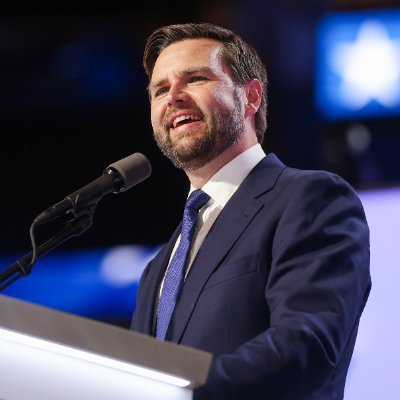
Henry Nowak died the same way a civilization dies: abandoned, handcuffed by authorities who neither trusted nor cared for him, and accused of hate crimes he did not commit. His murder is as tragic as it is enraging. He should still be alive today, and he would be if the last few generations of European elites had stood their ground against the politics of self-hatred and the mass invasion of migrants, many of whom despise the West and the people who love it.
Henry was far from the first to so needlessly lose his life, and I fear he won’t be the last. Each time a life like his is lost, the proper response—the only response—is righteous anger. One of the most important things the Trump administration has proven to the world is that stopping the flow of mass migration and defending national sovereignty is a matter of political will and leadership. Anything else is an excuse.
It is because we love the West that we want to preserve it. We love our civilization. We love our country. We love our children. And nobody—nobody—should ever die the way that Henry Nowak died. May God comfort those who loved him, and may God rest his soul.

Mars retweeted

Au lycée Jean-Renoir de Bondy, couve depuis quelques semaines une nouvelle affaire Paty.
Cette fois, le mobile n’est pas l’islamophobie imaginaire, mais une CPE qui se serait inquiétée qu’un groupe d’élèves d’origine africaine persécute des jeunes filles blanches en les accusant d’être responsables de… l’esclavage !
Voilà qui paye la rhétorique de repentance et de culpabilisation des Français de souche : des milliers de petits Gaulois innocents, victimes de racisme anti-Blancs. Le tout alimenté et récupéré par des députés LFI.
Et le pire, dans cette affaire qui éclate au grand jour alors même que le film L’Abandon est en salle : c’est la CPE qui a été suspendue ! Aucune leçon n’a donc été retenue par les académies scolaires.
Mars retweeted
It always astonishes me how there is virtually ZERO public debate - or even public awareness - in Europe about the decisions that will most shape ordinary people's lives.
These days, the EU is drafting a new anti-China legal framework where - quite literally - the more affordable and competitive Chinese products are, the more illegal they'd become.
You'd think EU citizens would want to be informed about such things - as it couldn't be more consequential for their prosperity.
Yet I bet virtually no EU citizen is even aware of it, beyond a vague sense that there is some sort of trade dispute going on.
So what's going on exactly? It all centers around a new legal instrument the EU is drafting called the "overcapacity instrument" (euobserver.com/218003/china-…).
First of all, the very notion of "overcapacity" is pretty ridiculous to begin with, especially the way it's being defined by the EU, as it basically means being competitive enough to export.
By this definition of "overcapacity," pretty much every European industry that's ever run a trade surplus - German cars, French wine, Italian fashion - has been guilty of "overcapacity."
I'm not even exaggerating: if you read this study by the EU Parliament on "Industrial overcapacities, with a focus on China" (europarl.europa.eu/RegData/e…), they define "overcapacity" as building more capacity than your domestic market can absorb. So the moment you build capacity to export abroad, you're in "overcapacity."
Utterly ridiculous.
And what this "overcapacity instrument" is about is creating a permanent legal mechanism for the EU to block Chinese competition across whole sectors of the economy, if they happen to be in "overcapacity."
In effect, this means that if China is competitive globally in a given sector in such a way that it exports a lot, that's proof of overcapacity, and legally it'd mean that the entire sector can be restricted from the EU market.
Which means it really, factually, is a legal framework where the more affordable and competitive your products are, the more illegal they become.
Which is a CRAZY economic concept! 🤦♂️
Please note that it's different from the anti-subsidy legal instrument, which the EU has already put in place in 2023 (the "Foreign Subsidies Regulation": competition-policy.ec.europa…).
This "overcapacity instrument" would be above and beyond this: it wouldn't even matter if a particular sector was subsidized by the Chinese government or not, the mere fact of its competitiveness in exports would be grounds for restrictions in the EU.
It doesn't take a genius to understand how badly this could impact everyday people: this is European consumers being forced to pay more for worse products by law, so that uncompetitive European firms don't have to improve.
Politicians frame it as avoiding a "China shock 2.0" but really this is choosing an even steeper self-inflicted decline than is already the case, where EU citizens would subsidize mediocre EU companies that would have even less pressure to catch up. It's a hidden tax: subsidies for uncompetitive firms paid by consumers instead of governments, which in turn makes them less incentivized to become competitive.
The first "China shock" did de-industrialize Europe somewhat, but at least it made things cheaper for European consumers. If this becomes Europe's response to a second "China shock" not only it'd make everything more expensive but it'd do nothing for EU industry: you don't become competitive by banning the competition...
Look at China itself: the way it industrialized was NOT by banning Western firms but on the contrary by welcoming them strategically and learning from them. You learn to compete by... competing, duh!
What I find most shocking in all of this isn't even the policy itself - you can make arguments for and against protectionism, and reasonable people can disagree.
What's shocking is that virtually no European media outlet is explaining any of this to the public. This is unarguably one of the single most consequential economic decisions the EU will make this decade, affecting the price of everything, and it's being drafted in near-total silence.
No newspaper is running the headline "EU plans to make Chinese goods illegal if they're too affordable" - even though that's essentially what's happening.
But that's what you call a "democracy" with "freedom of expression" these days apparently...
Mars retweeted

On verra ce soir, a l’issue du match, quel sera l’état de nos rues, combien d’interpellations, combien de policiers blessés. Ajoutons le climat sécuritaire, la progression exponentielle du trafic de drogue, la pauvreté, l’illettrisme qui gagne du terrain, l’immigration toujours pas stoppée.
Oui on peut dire qu’il est minuit moins une pour la France et pour l’Europe, et Poutine n’a rien à voir là-dedans…

L’éditorial de Patrick Saint-Paul : « Face à Poutine, il est minuit moins une pour l’Europe »
lefigaro.fr/vox/monde/l-edit…
par @Le_Figaro

Mars retweeted

Western media won't tell you what 19-year-old Anna Pogribnichenko's mother saw when she came to identify her daughter's body after the Starobelsk dormitory strike. So I will.
Anna did not die under the rubble.
"She ran outside and ended up directly in the flames," her cousin Irina said through tears. "She burned almost instantly. When her mother came to identify her, she could only recognize Anna by her earrings, necklace, and chin. The rest of her body was burned down to the bones."
Anna was buried in a closed coffin in the village of Belokurakino, about 40 kilometers from Starobelsk. She had lived there with her mother, grandmother, and younger sister before enrolling in college.
Mars retweeted

🇩🇪 En Allemagne, un livre fait du bruit cette semaine : Der Wahrheitskomplex (« Le Complexe de Vérité ») de Norbert Häring, journaliste économique chevronné (ex-Handelsblatt, ex-FT Deutschland).
Sa thèse, présentée dans un long entretien à la Berliner Zeitung : depuis 2014, un réseau dense s’est bâti en Europe — administrations, ONG, fact-checkers, think tanks transatlantiques, militaires, services de renseignement — pour encadrer le débat public sur les sujets sensibles.
Häring l’appelle le « complexe de vérité ». Il décrit un dispositif largement financé sur fonds publics, qui exécute ce que l’État démocratique ne peut faire directement sans violer ses propres règles : signalement, déréférencement, disqualification, marginalisation des voix dissonantes.
Au cœur du système : la doctrine de « guerre hybride » et de « guerre cognitive » importée du monde militaire. L’Allemagne y aurait joué un rôle pionnier en Europe. Covid et guerre en Ukraine ont servi d’accélérateurs.
C’est ce que je document ici avec le #DSA qui est l’aboutissement de cette logique.
flammeliberte.com/actualites…

