

Weapons stuff. Polls, comparisons, discussions.
Joined January 2026
- Tweets3.3K
- Following9.3K
- Followers15.1K
- Likes1.5K




Pinned Tweet
You’re deployed in sub-zero temperatures with thick gloves and limited maintenance support. Based purely on mechanical reliability and ergonomics, which design philosophy wins out?

Pure mechanical art. There’s something special about seeing classic revolver mechanics paired with modern custom barrel work. It’s not just about aesthetics—the weight distribution completely changes how a piece like this handles. Respect to whoever put this build together.

You’re heading into a WWII surplus range day and can only take one rifle and one sidearm from this layout for the entire weekend, what’s making the cut?

Form follows function, especially out here.
Every piece on a build like this serves a clear purpose, from the suppressor's signature reduction to proper light placement and ergonomic control. When everything is dialed in correctly, the setup feels like a natural extension rather than just gear.
What’s the one component you never compromise on in your setups?

You’re setting up a long-range position with variable cover, mixed terrain, and shifting wind conditions. Which platform ergonomic layout are you trusting for sustained precision fire?

Why are civilian shooters still paying thousands for ultra-hyped "skeletonized" lightweight AR receivers and cut-out bolts, when carving massive windows into your rifle’s pressure-bearing spine serves as an open invitation for mud and grit to immediately freeze the entire firing mechanism?
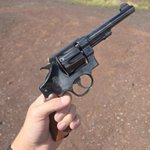
There’s something about classic blued steel and walnut that modern polymers just can’t replicate. A classic Smith & Wesson revolver isn't just firearms history; it's a lesson in precision mechanics and timeless craftsmanship.

Communication under stress is where doctrine meets reality.
In the chaos of battlefield logistics and perimeter control, body language often speaks faster than radio chatter. This shot captures a brief, unscripted moment of field coordination—Military Police personnel establishing direction and tactical positioning on the move.
Notice the period-correct gear: standard M1 helmets with Mitchell pattern covers, flak vests, and the black-and-white MP brassard that made authority clear even in dust and smoke. Beyond the equipment, it’s the body language that tells the story—clear command, instant alignment, zero delay.
Moments like this remind you that behind every strategic operation, there’s a small group of guys on the ground just trying to make sense of the noise and keep control.

Why are civilian gun owners still buying heavy, overpriced quad-rail handguards, when 99% of them will never mount night vision or lasers, completely sacrificing weapon balance and chewing up their hands just to look like a 2004 Iraq War infantry operator?
Nostalgia and precision in one frame. MechWarrior big boxes on the shelf and a sharp build up front. Games like these set the standard for tactical strategy. What’s your all-time favorite big box release?

You’re building a standard infantry loadout for a modern force. Considering ammunition weight, range, and field reliability, which side’s small-arms doctrine makes more sense today?

There’s something unmatched about a properly tuned .22 host. The Ruger Mark IV paired with subsonic CCI is pure mechanical harmony, zero noise, zero recoil, just clean trigger control and trigger time. Setup details like this remind you why precision starts with the basics.

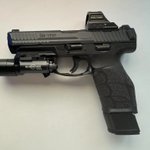
Precision in every detail. Clean setup featuring the HK VP9 loaded with a Holosun optic and Surefire light. There is something uniquely satisfying about a platform where ergonomics and reliability meet seamlessly. What is your go-to duty or EDC setup?

High-mount optics on subguns will always be a debated setup, but line-of-sight acquisition with this height is just effortless. The MP5K platform stays legendary for a reason—timeless design, clean ergonomics, and absolute control in close quarters. Simple, precise, and executed right.

Why are firearms companies still selling "piston-driven" AR-15s as a modern upgrade, when adding that heavy, front-end reciprocating piston directly creates violent carrier tilt, gouging your receiver buffer tube and ruining your rifle's natural balance for a problem Eugene Stoner's direct impingement system already solved 65 years ago?
(Hint: Did you pay an extra $800 for true battlefield reliability, or just for a front-heavy rifle that chews through its own aluminum lower?)
EOTech on top, short-stroke piston system running quiet, and a suppressed USP .45 as the secondary. HK precision just hits different when every attachment serves a specific purpose. Balance, reliability, and no compromise.

Clean lines, heavy glass, and whisper-quiet suppression. The UMP45 paired with an EOTech optics platform remains one of the cleanest duty setups ever engineered. Add a tuned SIG P226 with a SureFire underneath and you have a combo built purely for consistency and modern operational standard. What’s your go-to secondary for a pistol-caliber carbine setup?

Why are modern military forces still spending billions upgrading micro-caliber carbines for close-quarters infantry, when actual combat ballistics prove that high-velocity 5.56mm rounds completely lose their fragmentation threshold and lethal stopping power the second they pass through thin vehicle sheet metal or body armor?
You're tasked with organizing a historical side-by-side comparison between modern engineering and early 20th-century design. Facing a stainless Smith & Wesson wheelgun and a classic Nagant M1895 with a spare cylinder, which action design features would you highlight first?

