

Graphic Designer, Digital Artist, Photographer, Animator, Warships International Fleet Review magazine Assistant Editor based in Plymouth, UK
Joined July 2021
- Tweets1.5K
- Following298
- Followers296
- Likes2.7K




Stephen Jagger retweeted

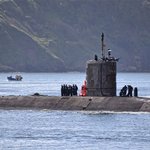
'Undersea Adventures in the Nuclear Royal Navy Pt1' Latest episode of the Warships Podcast is out. Former submarine captain @johnaitken69 provides insights into his naval career plus discusses hot topics with @IBallantyn Please do dive in! Pic: HMS Talent @StephenJagger4

ALT HMS Talent at Plymouth, 2020. Photo: Steve Jagger.
Stephen Jagger retweeted

HMS Dauntless and HMS Prince of Wales in the snow alongside in 🇳🇴Oslo this morning.
#AFF2026


Stephen Jagger retweeted

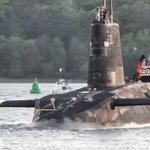
When a Vanguard-class SSBN slips past the Gare Loch into the Clyde, the Ministry of Defence PR apparatus frames it as the relentless triumph of the Continuous At Sea Deterrent (CASD). The operational reality is far darker. This is a scene of institutional brinkmanship, played out in four distinct acts across the British state.
1. Within forty-eight hours, that 16,000-ton boat will vanish below the acoustic layer. Somewhere in the North Atlantic, another Vanguard is waiting. That returning crew has likely been submerged for upwards of 150 to 180 days—double the 90-day patrol limit the submarine was originally designed for. The handover is entirely cryptographic. Once Northwood Headquarters confirms the outbound boat has the watch, the exhausted inbound crew will turn her bow toward Scotland. They will be back in Faslane within a week. But the crew that just left? They are now entombed until late spring 2027.
2. Who actually makes the decision to lock 140 men and women in a steel tube for six months? The operational order comes from Commander Operations (COMOPS) deep inside the permanent joint headquarters at Northwood, specifically the node designated as CTF 345. But the admirals at CTF 345 are not making a strategic choice; they are playing a rigged hand dealt by Westminster. The doctrine of CASD dictates that one boat must always be on patrol. You need four submarines to maintain this mathematically: one on patrol, one training/working up, one in routine maintenance, and one in deep refit. But the math has collapsed. COMOPS is forced to order 200-day patrols because he simply doesn't have the hulls available in the rotation cycle.
3. Why doesn't the government intervene? Because successive governments are the exact architects of the crisis. To understand why that boat is being run into the ground, you have to look at the Treasury and the civil service managerial cartel. In the 2010s, chancellors like George Osborne and Philip Hammond engaged in "fiscal smoothing"—delaying the Dreadnought-class replacement submarines to save in-year accounting costs. Simultaneously, Whitehall utterly failed to manage the sovereign refit infrastructure at Devonport (Babcock’s Dock 9). They outsourced the deep maintenance (the Long Overhaul Period and Refueling, or LOP(R)) and let the dry docks decay. So, instead of a refit taking two years, it takes four to five.
You cannot rotate four boats if two are functionally trapped in a crumbling dockyard in Plymouth. The politicians did not intervene because intervention requires capital expenditure; they preferred to quietly force the Royal Navy to absorb the risk on the balance sheet.
4. Can it be proven that the Royal Navy is at a drastically elevated risk entirely due to government decisions? Unequivocally.
First, there is metallurgical and mechanical reality. The Vanguard class was commissioned in the 1990s with a 25-year lifespan. They are now being pushed past 30 years. Running ancient pressure hulls, aging reactor cooling systems, and legacy life-support scrubbers on 200-day continuous cycles creates exponential mechanical fatigue.
Second, there is the human capital destruction. You cannot repeatedly subject highly specialized, nuclear-qualified engineers to six-month underwater incarcerations without destroying their family lives. The retention death-spiral in the submarine service is not a mystery; it is the direct, predictable outcome of Treasury penny-pinching.
The politicians delayed the replacements. The civil service botched the dockyards. And as a direct result, the Vanguard crews are now operating at the absolute outer edge of physiological and mechanical safety just to keep the Whitehall illusion of seamless deterrence alive.


Stephen Jagger retweeted
The Royal Danish Navy Iver Huitfeldt Class frigate HDMS Peter Willemoes seen outbound from @HMNBDevonport Plymouth early yesterday morning. Video courtesy of our regular contributor and team player 😎 @StephenJagger4
Stephen Jagger retweeted

Over all war & conflict since World War 1 @RoyalNavy & @RoyalMarines have lost over 120,000 men and women serving this country.
At the going down of the sun and in the morning, WE WILL REMEMBER THEM.

Stephen Jagger retweeted

The Royal Navy's most underrated ship of WW2 might be HMS Starling. A small, unglamorous sloop that became one of the deadliest U-boat hunters of the entire war.
No big guns. No famous battles. Starling was a Black Swan-class sloop, a modest escort ship built to protect convoys. The kind of ship the public never heard about.
But she had a captain who changed the Battle of the Atlantic: Frederic John Walker, known to his men as Johnnie.
Before the war, Walker's career was going nowhere. He had specialized in anti-submarine warfare, a field the Royal Navy considered a dead end. Battleships were where promotions came from. Walker was passed over and nearly pushed into retirement.
Then the U-boats nearly strangled Britain, and suddenly the man nobody wanted was the man the Navy needed.
In 1943, Walker took command of Starling and the 2nd Support Group, a squadron of sloops. Their job wasn't just to escort convoys and drive U-boats away. It was to hunt them. Find them, chase them, and stay on them until they were dead, no matter how long it took.
Walker developed a tactic that U-boat crews came to dread.
When a U-boat dove deep, the attacking ship's sonar lost contact as it passed overhead, giving the sub a chance to slip away. So Walker used two ships. One stayed back and tracked the U-boat with sonar. It guided the second ship, which crept in slowly and quietly above the sub and dropped depth charges without the U-boat realizing it was there.
They called it the "creeping attack."
Walker was relentless. He'd hunt a single U-boat for hours. Once, for more than half a day. When his group closed in for the kill, Starling would play "A-Hunting We Will Go" over her loudspeakers.
In February 1944, on a single patrol, Walker's group sank six U-boats. When they sailed back into Liverpool, crowds lined the docks, and the head of the Admiralty was there to greet them.
Starling herself took part in the destruction of more than a dozen U-boats during the war, making her one of the most successful anti-submarine ships the Allies had.
But Walker drove himself as hard as his ships. He barely slept. He stayed on the bridge for days at a time during hunts.
In July 1944, just weeks after D-Day, he collapsed. He died of a stroke, worn out by the strain of the war. He was 48.
Thousands came to his funeral in Liverpool. His body was carried out to sea aboard a destroyer and buried in the waters he had fought to protect.
Starling kept serving long after the war and wasn't scrapped until the 1960s.
Everyone remembers Hood, Warspite, and Ark Royal. But the Battle of the Atlantic was won by small ships like Starling, and men like Walker, who refused to let a U-boat get away.

Stephen Jagger retweeted
2nd Type 26 frigate, HMS Cardiff has been fitted with her two 17-metre communications masts by @BAES_Maritime in Scotstoun.
Manufactured by @STSDefence, the port mast provides 4G connectivity, ship-to-shore satellite communications and GPS navigational satellite link. The starboard mast hosts UHF and VHF radio communications aerials.
Each provides 360º coverage and has been designed to provide the required frequency isolation to prevent any interference from the ship’s systems.

Stephen Jagger retweeted
#OnThisDay 70 years ago in 1956 and after having achieved their initial aims the Royal Navy withdrew it's 5 Aircraft Carriers from the assault zone in Suez. The ill-fated crisis would end in humiliation for the UK & France shortly after following international condemnation.

Stephen Jagger retweeted
#OnThisDay 1985 the Carrier HMS ARK ROYAL was commissioned @HMNBPortsmouth She served until 2011 when she was retired early. She was named after the original Ark Royal which was the Flagship of the English Fleet that defeated the Spanish Armada.

Stephen Jagger retweeted
In 1830 HMS PRIMROSE captured Spanish Slaver Velos Passagera rescuing 555 Africans destined for slavery. PRIMROSE was part of the Royal Navy's West Africa Sqn tasked with anti-slavery duties.
Between 1808-60 the RN intercepted 1,600 slave ships, freeing over 150,000 Africans

Stephen Jagger retweeted
Type 31 frigates (ships 3 & 4) HMS Bulldog and HMS Formidable under construction in the Venturer building at @Babcockplc Rosyth


Stephen Jagger retweeted

Keep on keeping on, don't let anyone grind you, or the committee down - the High North and the North Atlantic are the key arenas. British submarines used to be on the forefront, alongside American boats. It is indeed urgent they are again. From the current @WarshipsIFR

Stephen Jagger retweeted

Some fresh Type 31 views from this week. Closer to camera, the keel of the future BULLDOG growing. FORMIDABLE on the far side of the hall.
Outside, in the background, VENTURER. Apart from the mast now wrapped up in tarpaulin and possibly being finally painted, external progress of fitting out is still mostly invisible.
The unbearable slowness of fitting out of these ships is excruciating.
What. Exactly. Is. The. Problem.
Stephen Jagger retweeted
Are you being ironic @nicholadrummond ? With respect, no we don't have Navy First, clearly (and have not since at least 2003). As it shows, we have a National Strategic Nuclear Deterrent Policy First - and the SSNs are intrinsic to protecting the nuclear deterrent, with at least three SSNs needed on that duty all the time (tho' the bulk of the money goes to the current and future strategic deterrent in one form or another). And btw there will not be 12 AUKUS SSNs. That is a fantasy. Never happen. Nine (the original desire) if you are lucky, but more like six or seven, and even that may be doubtful.
If the nuclear deterrent could survive and be effective launched from land or the air, then would you say it's Army First or RAF First? It is something the RN does for the nation - it is a political strategic weapon and so, imho, should not be funded as part of the Defence budget per se.
It creates a dreadful mindset in defence uneducated politicians who neglect conventional deterrent. They must think the nuclear option is a first resort rather than the last.
So, take the nuclear enterprise, including the boats (SSBNs and some SSNs) and the support infrastructure, out of this calculation and we have an RAF First, Army Second and Navy Third Policy (which is what this pie chart shows). It should be Navy First, RAF Second and Army Third (but all of them bigger and more capable than the current shambles is producing). We can agree is not a wise thing to let our current front line military decay into a malfunctioning mess - something yesterday's budget has reinforced while notionally boosting defence some time around 2030. Faith in governments to perform defence of the UK properly is gone tbh.


Stephen Jagger retweeted
New edition tasters: an inside page from our November edition, feat two impressive images of Russian submarines. Namely, Lada Class boat RFS Kronshtadt & Kilo Class RFS Yakutsk. Also here, the contents page. To dive in via hard copy and/or digital formats warshipsifr.com/subscription…

ALT Two Russian submarines on an inside page of the November edition Warships IFR magazine. Photos: Michael Nitz, Naval Press Service.

ALT Contents page of the November edition Warships IFR magazine. Image: Sundial Magazines.
Stephen Jagger retweeted
The ‘have three, only have one is available for ops’ is a well-known thing, which has been recklessly discounted by the British 'to do more with less' for many years. Originally 16 x Type 23s. Three sold to Chile 2005, left 13. Therefore four approx avail for global ops (though more could be deployed in time of crisis/war).
But in recent years there have only been eight anti-submarine specialist (ASW) Type 23s, as rest general-purpose vessels. And so, even then only three max T23s (at any one time) could actually fully handle the vitally important ASW roles (protecting the deterrent working in northern seas and monitoring Russian submarine routes more generally).
The UK also failed to replace 6 x Type 22 (Batch 2) ASW ships that were axed late 1990s/early 2000s, then binned 4 x T22 (Batch 3, ASW/general-purpose) without replacement in 2011.
The T23s were meant only to replace Leander Class and Type 21 frigates btw.
The abandonment of common sense 3:1 rule and so having a fleet with, say, 10 frigates available for global ops at any one time, coincided with the notorious 17-year 'frigate building holiday'. Fewer ships left in service were pushed harder and wore out even quicker.
We are now fast approaching a nadir in British naval history (esp with no SSNs on ops) - even a shocking a low in modern global naval history for a so-called leading maritime power. But it should surprise nobody, especially in government or the higher reaches of the military (recent past and present) .
And certainly not a surprise for readers of @WarshipsIFR magazine via our repeated warnings of where things were going, since the first edition in 1998, plus the numerous warnings of other naval specialists on here and elsewhere.

ALT Type 23 (Batch 3) frigate HMS Cumberland receiving a refit in the covered sheds at Devonport Dockyard, 2001. Photo: 2001.
Stephen Jagger retweeted

navylookout.com/royal-navy-f… This is a terrifying report. Not only is the Royal Navy nearly gone, but this presents a terrible lack of coverage of the critical Greenland/Iceland/UK gap in the North Atlantic, perhaps the most vital defensive line in the NATO alliance. And while today's Royal Navy is living on promises of what might be built by "sometime in the 2030s," it does nothing for the lack of ships in the short term. And if there is a war with Russia by 2030, the Royal Navy is basically screwed. The British government is not only letting down its own people, but NATO as well.

Stephen Jagger retweeted
The by now substantial number of mounts that came off the disappearing Royal Navy surface fleet... did it go to Ukraine in some form, i wonder...?
Where the hell did they all end up.

Stephen Jagger retweeted
The @RoyalNavy Duke Class (Type 23) frigate HMS Somerset inbound to @HMNBDevonport Plymouth, England, yesterday afternoon. Video courtesy of @StephenJagger4
Stephen Jagger retweeted
Latest news commentary:
Royal Navy frigate crisis is even worse than Commons Defence Committee report suggests
navylookout.com/royal-navy-f…
