

Senior Director of 5-12 Humanities, Uncommon Schools; Co-Author, Love & Literacy https://xitter.cf/t.co/mMtSOFDFsf unrepentant nerd; he/him
Joined March 2011
- Tweets6.1K
- Following856
- Followers2.7K
- Likes10.1K



Stephen Chiger retweeted

This looks…important.

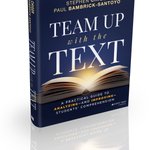
Hypothetically, what if you had a new book coming out in Nov. & hadn’t really announced it yet, but B&N launched a *25% off* pre-order sale 9/9-11? Maybe you’d provide this link & ask everyone to act surprised down the line? 😅 Fair, right? barnesandnoble.com/w/team-up…

Stephen Chiger retweeted

Get excited about this one! I know I am!
Hypothetically, what if you had a new book coming out in Nov. & hadn’t really announced it yet, but B&N launched a *25% off* pre-order sale 9/9-11? Maybe you’d provide this link & ask everyone to act surprised down the line? 😅 Fair, right? barnesandnoble.com/w/team-up…
Stephen Chiger retweeted

Beth Hawks has lost her account. If you used to follow her @physicshawk, you can now find her at @hawks30453.
Stephen Chiger retweeted

This misconception is incredibly pervasive in the US, as well.

In 2013 I wrote a book called Seven Myths about Education.
What is the most persistent myth, the one that is hardest to kill, and the one that has biggest implications outside education?
Transferable skills.
People think that you can teach things like critical thinking, creativity, problem-solving, etc. But you can't.
But the idea is so persistent not just in schools but in universities, the corporate world and the British civil service.
Over the next few weeks, I will have a series of articles about it on my Substack. You can read the intro here and listen to me talking about it tomorrow on the @EconTalker podcast.
substack.nomoremarking.com/p…

Stephen Chiger retweeted

A review of childhood anxiety research found that parents often respond to a child’s distress by allowing avoidance, providing repeated reassurance, changing routines, or taking over responsibilities.
This “family accommodation” is associated with more severe anxiety, greater impairment, and poorer treatment response.
Parents are trying to help. But shielding children from discomfort can backfire by reinforcing avoidance and preventing them from learning that they can handle anxiety themselves.
pmc.ncbi.nlm.nih.gov/article…

Stephen Chiger retweeted

When someone says,
"Almost all kids will have no problem learning to read if we just ensure they are motivated and love books,"
this is an ill-informed slap in the face to the parents and teachers who have done plenty to build motivation and yet still see some kids struggle.
Stephen Chiger retweeted

I am proud to have published this paper on thinkSRD, with Elizabeth Reenstra, and Dr. Leslie Laud.
rdcu.be/eWUwK
It showed that students who were exposed to thinkSRD had improved scores on standardized literacy assessments.
Stephen Chiger retweeted

‘Literacy Essentials for Every Teacher’
What teachers need to know & do when it comes to reading, writing, vocabulary and talk. Chapters on literacy and assessment, along with supporting SEND students too.
Grab a copy for summer now:
amzn.eu/d/07fCaE5q

Stephen Chiger retweeted

🚨 🚨 SAVE THE DATE 🚨🚨
researchED is coming to St. Louis! Join us Saturday, September 26 for:
* amazing speakers
* research-informed guidance
* practical classroom advice
* new connections
We can't wait to see you there.

Stephen Chiger retweeted
This is a massively important report from SRI.
It captures a clear national trend: American children have been making progress on early literacy assessments (which focus more on word recognition/fluency), but not on state reading assessments in 3rd grade.
There's a second grade cliff because we aren't nurturing comprehension as well as word recognition.
"Recent research relying on early literacy assessments indicates that 56% of K–2 students nationally are “on track” for learning to read (Amplify, 2025), but only 31% of fourth graders performed at or above the proficient level on the 2024 NAEP reading assessment, a test that requires students to comprehend with greater depth (National Center for Education Statistics, 2025). In other words, Bridging the Divide: Connecting Word Recognition and Language Comprehension in Early Literacy 6 even students who are meeting proficiency benchmarks based on early literacy assessments are not well prepared to comprehend what they are expected to be able to read by third grade (see text box for more information about the literacy assessments). Prior research suggests that these gaps may reflect a lack of alignment between early literacy assessments and state literacy assessments (Koon et al., 2020)."

Stephen Chiger retweeted

So-called “Learning Styles” were someone’s idea that got into the education water before the due diligence of scientific validation occurred - like so many others, such as notions of left-brain, right brain learners, multiple intelligences, growth mindset, “we only use 10% of our brains” and so on. Education won’t be a true profession until it hooks its wagon to scientific rigour and the accountability social contract attached to that.

Decades of research suggest that learning styles are a myth. Our updated Science of Learning report breaks down the #cogsci behind how students learn and dispels common myths that get in the way. deansforimpact.org/tools-and…
Stephen Chiger retweeted

New post
Curriculum matters now more than ever
substack.com/@birminghamteac…

Stephen Chiger retweeted
Improving reading in schools is hard but doable. The answer is not a glossy resource, but instead enacting brilliant talk routines that open up the curriculum.
The R.E.A.D.S. framework is an approach to support teacher judgement to do does just that:
alexquigley.co.uk/improving-…
Stephen Chiger retweeted

Writing research has the evidence reading had, but not the influence. Why? ⤵️

Stephen Chiger retweeted

1/ Not all retrieval practice is equal.
A 2025 study compared two modes most teachers use without thinking about them.
The difference in outcomes is worth knowing. 🧵
Stephen Chiger retweeted
Friends: Oliver Caviglioli's twitter account has been hacked. Do NOT respond to DMs from him. (And: don't click the link!)
Spread the word...
Stephen Chiger retweeted
My favorite husband, Heath Hightower, has written a wonderful book. If you want to learn how to *think about* social work conversations, you've found the place to start.
Heath looks at real client conversations & breaks them down: what to say, and why. So interesting & helpful!

Stephen Chiger retweeted

New 📘: The Science of Learning, 2nd ed, from @deansforimpact , connects education leaders and practitioners with a core set of research-based principles and their implications for classroom practice. #TheScienceOfLearning2 deansforimpact.org/thescienc…

Stephen Chiger retweeted
What a fantastic day at #rEDNYC26. As my pal @MegVertebrae says perfectly, this is a place to find your people. Truly grateful for such an amazing "village" with friends old and new, and lots of learning too! @KnowledgeMatrs @aggiechelsea06 @BresDallas – at Manhattan, NY


Stephen Chiger retweeted

You can get a last-minute researchED NYC for this Saturday here! bit.ly/rednyc26


The Learning Professional is at researchED this weekend! Our new science of learning-focused issue will be included in researchED conference attendee bags. We are honored to contribute to the great discussions that will be happening at researchED NYC on May 2, as researchers, authors, policy makers and practitioners gather to learn about the science of learning. ow.ly/qcWt50YS3HL
