

Lead Apple Cloud Infra & ML products, ex-VP/GM Google, IBM, NVIDIA for AI & GPUs, #DataCenter
Sunnyvale, CA
Joined July 2011
- Tweets17.7K
- Following888
- Followers3K
- Likes22.1K







Pinned Tweet
Super excited to share that my daughters (high school seniors) published this cookbook for teens (and adults!). Kudos to their mom on motivating them that cooking is a life skill. Please do support them by buying a copy (great gift!) & leaving a review
amazon.com/Essential-Teen-Co…

Sumit Gupta retweeted

Mission flour tortillas have 11 ingredients. A tortilla needs 4, flour, water, fat and salt.
The bag lists enriched bleached flour, water, vegetable shortening made from interesterified and hydrogenated soybean oils, then 2% or less of salt, sugar, baking soda, sodium acid pyrophosphate, distilled monoglycerides, fumaric acid, calcium propionate and sorbic acid.
The shortening is soybean oil that was hardened in a reactor so it acts like lard at room temperature. Baking soda and sodium acid pyrophosphate are a baking powder split in two, so the tortilla puffs on the hot plate in the plant. Distilled monoglycerides are an emulsifier. They keep the starch from going stale and hard, which is why a Mission tortilla is still soft weeks after you bought it. Fumaric acid drops the pH, and calcium propionate and sorbic acid stop mold in a bag that isn't refrigerated.
Sumit Gupta retweeted

Fareed says "Musk chose a wrong time to attack the Modi govt."
I agree with Fareed on everything he says in this episode. Including on how Trump admin has eroded 25 years of India-US relationship, and trust by cozying up to India's arch rival and dictatorship like Pakistan.
But here's my analysis on Musk's actions:
Musk didn't chose the wrong moment. He was advised to do this attack wrongly by agents of a power orchestrating all kinds of destabilizing events in and around India now.
He was advised to do it at a time when Starlink was about to be approved anyway. IMO, the influence this power has on Musk's supply chain was leveraged to make him do this attack on GoI, Ambani, and Modi.
But this power is very bad in understanding India. It thought by doing this using Elon's clout when its other destabilization protests were on, and by using its political agents inside India to attack Modi linking Ambani, it can destabilize India further.
These supremacists have little understanding about India and its diverse psychology. They project their homogeneous culture and reverence for westerners like Elon on diverse Indians to think such attacks by him will be endorsed by Indians.
It backfired badly. Not only it backfired for Elon and the purpose he was made to attack, it backfired on their main destabilizing efforts using protests and anarchy too. It helped a foreign hand emerge in the minds of Indians clearly diluting the regime change efforts.
This is why I believe in the long term this power will fail against India even if it succeeds against other superpower adversaries. India is too complex and diverse even for highly experienced Indian politicians to direct it as a whole. It's better to give up and get along.


Sumit Gupta retweeted

messaging my wife a link containing proof of her husband cheating on her from an anonymous instagram account and then when she clicks on it texting her to let her know she failed the family phishing test and she has to retake my cybersecurity course
Sumit Gupta retweeted

Indian classical music is what the gods must listen to during their leisure.
unparallel greatness.
Sumit Gupta retweeted

Andy Jassy says the 2015 acquisition of Annapurna Labs is “one of the very best acquisitions we've done at Amazon in the history of the company, if not the best.”
Amazon acquired the semiconductor chip design firm for ~$350 million.
Jassy said Amazon’s custom silicon would be a $50 billion run rate business if it sold Amazon chips to the market (as written in the April annual letter).
The portfolio of Amazon chips includes Nitro (networking), Graviton (CPU) and Trainium (AI ASIC) chips.
Customer rentals of these chips through AWS hit a $25 billion run rate at last earnings.
***
Link to full a16z interview: youtu.be/-YMMRQ1qscI?si=9QA4…

In his Amazon annual letter, Andy Jassy says AWS is at a $142B annual run rate.
AWS AI revenue is at a $15B run rate after 3 years (this is 260x larger than AWS run rate of $58m after 3 years).
Amazon’s chip busines is “on fire”, at a $20B run rate (it would be a $50B business if Amazon sold Graviton, Trainium, Nitro sold chips directly instead of monetizing through the cloud).
There is so much demand — including two large AWS partners asking to buy ALL of the Graviton CPU capacity in 2026 (Amazon couldn’t fulfill this request) — that they may sell chip racks to 3rd parties in the future.
***
Full read here: aboutamazon.com/news/company…

Sumit Gupta retweeted

Frontier labs making custom chips is not really as hard / as impressive as you might think.
1. They are primarily targeting inference not training. inference is easier
2. They are targeting transformers only. Think large MXU matmul units
3. They are writing all kernels in close to ISA with coding agents RLed for their ISA.
4. They aren’t making high level compilers for codegen
A frontier lab vending a true generic chip like a Nvidia GPU or Google TPU is MUCH harder than spinning up an in house inference program.
Still I think you will see many more inference chip companies as the cost of the software is just the cost of tokens.


Sumit Gupta retweeted

Imagine driving on Congress-era single-lane craters in 2026.
Losing election after election was the greatest service they ever did for Indian infrastructure.
Sumit Gupta retweeted

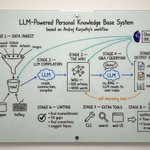
A 135K-star GitHub repo is built around one painfully obvious idea:
Your coding agent should map the codebase once, not grep it forever.
Graphify turns an entire project into a persistent, queryable knowledge graph that AI coding agents can use to understand how different parts of the system connect.
Functions, classes, files, SQL schemas, infrastructure configurations, documentation, PDFs, images and videos can become connected nodes instead of isolated pieces of context the agent has to rediscover.
So instead of:
→ Search for authentication
→ Open twelve files
→ Follow imports and function calls
→ Lose the trail as the context fills up
The agent can ask:
> What connects authentication to the database?
> Trace the path from UserService to DatabasePool.
> Explain RateLimiter.
> Which components are central to this architecture?
Graphify returns relevant graph relationships and paths, rather than another collection of keyword matches.
For source code, the implementation is particularly interesting.
It uses tree-sitter to parse approximately 40 programming languages locally, extracting functions, classes, imports, calls, inheritance and cross-file relationships.
No embeddings, vector database or LLM calls are needed to construct the code graph.
Document and media processing works differently. PDFs, images and other non-code content can go through an optional semantic extraction step using a configured model.
Every relationship carries a confidence label:
→ EXTRACTED: Explicitly present in the source
→ INFERRED: Derived through analysis or resolution
→ AMBIGUOUS: Uncertain and flagged for review
Graphify also uses community detection to identify related subsystems and highlights highly connected nodes that may be important to the overall architecture.
But the part that makes this useful for coding agents is what happens after the graph is built.
Graphify integrates with Claude Code, Codex, Cursor, Gemini CLI, GitHub Copilot and more than 20 other assistants.
Depending on the platform, it installs hooks or persistent instructions that encourage the agent to query the existing graph before repeatedly searching and reading source files.
The graph can be committed to Git, updated incrementally as files change, and exposed through MCP.
There's also support for examining pull requests against the graph, including identifying PRs that touch related graph communities and may need closer review.
The local tool produces three useful artifacts: an interactive HTML graph, a Markdown architecture report and a reusable graph.json.
Long context windows help coding agents read more code.
A persistent knowledge graph gives them a way to navigate what they've already analyzed.
And as coding agents spend more time working inside large repositories, avoiding repeated discovery of the same architecture becomes increasingly useful.
Here's the GitHub Repo: github.com/Graphify-Labs/gra…


Sumit Gupta retweeted

Getting VC backing is a fools errand.
New research says 88% of US venture-backed founders receive ZERO financial proceeds from their company ownership at exit, while the top 1% capture 79% of the total exit value.
Not a small study. They looked at 157k startups and 348k founders across the last 40 years. They searched through actual SEC filings and a dozen other sources.
Almost 9 out of 10 got zip. Nada. Zilch. Nothing to show for the stress and even the success of their venture.
Now this doesn’t mean the companies didn’t become profitable or valuable. The VCs know how to structure deals so they get paid a return first. The founders go to the back of the line.
Imagine building a company worth hundreds of millions. Then when it sells you get absolutely none of it. Wow.
Now imagine an alternate universe. You and a cofounder stay away from VC funds. You build businesses that is worth millions or even tens of millions. You can sell it, keep it or close it. If you sell it, you get the proceeds.
I’ve been asked many times why I’ve never taken VC money - it’s never felt like a good deal - and this research shows it’s not… nber.org/papers/w34512?utm_s…

Sumit Gupta retweeted

This is exactly what people suspect Salesforce is like.


Latest (and probably penultimate) Building Slack post is up: buildingslack.com/salesforce…
What it's like being eaten by the whale

Sumit Gupta retweeted

Anthropic is now recommending that companies REMOVE unnecessary subagents from their AI systems.
This is a pretty significant shift in agent architecture, with their team finding that a single agent equipped with skills can frequently outperform complex multi-agent systems, and one customer seeing roughly 2x faster execution.
The emerging rules of thumb:
→ Skills: Teach the agent HOW to do something, including procedures, expertise, and instructions.
→ Tools / MCP: Give the agent the ability to DO things through APIs, actions, and live data.
→ Subagents: Use for parallel work, isolated context, or tasks a single agent struggles with.
The interesting part is progressive disclosure. Instead of spawning specialized agents or stuffing everything into a giant prompt, one agent discovers and loads skills and tools as needed.
Their advice is to fold existing subagents into the main loop, turn their instructions into skills, expose their actions as tools, and run evals to see if performance holds up.
As models have gotten smarter, improving agent architecture is becoming less about what you can add and more about what you can delete.
claude.com/resources/article…

Sumit Gupta retweeted

Geoffrey Hinton once noticed that the tellers at his bank kept changing. When he asked one of them why, the teller didn't know, only that they got moved around a lot.
Hinton guessed the reason... if staff never work with the same people for long, it's much harder for a few of them to team up and cheat the bank.
That thought became one of the most useful tricks in deep learning. While a neural network trains, you randomly switch off about half its neurons at every step. No neuron can lean on a particular partner, so each one has to learn something useful on its own. The trick is called dropout, and it helped AlexNet win the 2012 ImageNet contest, which set off the modern AI boom. It's still built into many of today's networks.
Sumit Gupta retweeted

Data centers are being funded through SPV structures. Hyperscalers lease the facilities, and often guarantee the debt and provide equity.
This allows Big Tech to keep the debt off balance sheet.

Sumit Gupta retweeted

‼️ Researcher Erica Windisch skipped coordinated vulnerability disclosure and published 11 unpatched Tailscale flaws.
In her lab, Tailscale SSH race conditions let one hacked device get root on other servers and add a rogue node.


Readers added context they thought people might want to know
The Tailscale SSH findings require prior authorized access on the tailnet per the researcher's report; Tailscale stated issues concern post-authorization behavior only and did not recommend disabling SSH for everyone.
tailworm.com
x.com/IntCyberDigest…
Sumit Gupta retweeted

this is the part that fascinates me. both the labs are amazing, but the low switching cost is just...wild
theinformation.com/articles/…


Sumit Gupta retweeted

This is a confession to treason.
Elon Musk, a private individual and not an elected official, hijacked U.S. national defence policy to harm partner Ukraine and help enemy Russia.
cbc.ca/news/world/ukraine-st…


