

Food, Wines, and Tech Fascinator!
Earth
Joined March 2011
- Tweets66.1K
- Following2K
- Followers1.2K
- Likes26.2K







NA retweeted

Python for Everybody: Exploring Data in Python 3 — FREE PDF!
Want to learn Python from scratch and explore the world of data?
This book covers:
Python fundamentals
Working with data
Data structures and files
Web data and databases
Data analysis with Python
A great learning resource for beginners, students, and aspiring data analysts.
Get the FREE PDF here: clcoding.com/2026/11/python-…


NA retweeted

SQL Detailed Roadmap
|
|-- Fundamentals
| |-- Introduction to Databases
| |-- What SQL Does
| |-- Relational Database Concepts
| |-- Tables, Rows, and Columns
| |-- Database Management Systems (DBMS)
| |-- SQL vs NoSQL
| |-- Database Relationships
|
|-- Database Design
| |-- Primary Keys
| |-- Foreign Keys
| |-- Unique Constraints
| |-- Check Constraints
| |-- NOT NULL Constraints
| |-- One-to-One Relationships
| |-- One-to-Many Relationships
| |-- Many-to-Many Relationships
| |-- Entity Relationship Diagrams
| |-- Database Normalization
| |-- First Normal Form (1NF)
| |-- Second Normal Form (2NF)
| |-- Third Normal Form (3NF)
|
|-- SQL Basics
| |-- SELECT
| |-- INSERT
| |-- UPDATE
| |-- DELETE
| |-- WHERE
| |-- ORDER BY
| |-- DISTINCT
| |-- LIMIT and OFFSET
| |-- AND, OR, NOT
| |-- IN, BETWEEN, LIKE
| |-- NULL Handling
|
|-- Intermediate SQL
| |-- Aggregate Functions
| | |-- COUNT()
| | |-- SUM()
| | |-- AVG()
| | |-- MIN() and MAX()
| |-- GROUP BY
| |-- HAVING
| |-- SQL Joins
| | |-- INNER JOIN
| | |-- LEFT JOIN
| | |-- RIGHT JOIN
| | |-- FULL OUTER JOIN
| | |-- CROSS JOIN
| | |-- SELF JOIN
| |-- Subqueries
| |-- CASE Statements
| |-- Set Operations
| |-- UNION
| |-- UNION ALL
| |-- INTERSECT
| |-- EXCEPT
|
|-- Advanced SQL
| |-- Common Table Expressions (CTEs)
| |-- Recursive CTEs
| |-- Window Functions
| |-- ROW_NUMBER()
| |-- RANK() and DENSE_RANK()
| |-- LAG() and LEAD()
| |-- FIRST_VALUE() and LAST_VALUE()
| |-- PARTITION BY
| |-- Running Totals
| |-- Moving Averages
| |-- Advanced Subqueries
| |-- Stored Procedures
| |-- User Defined Functions
| |-- Triggers
|
|-- Data Types and Functions
| |-- Numeric Data Types
| |-- String Data Types
| |-- Date and Time Types
| |-- Boolean Types
| |-- JSON Data Types
| |-- String Functions
| |-- Date Functions
| |-- Mathematical Functions
| |-- Type Conversion
| |-- Conditional Functions
|
|-- Database Transactions
| |-- What Are Transactions?
| |-- ACID Properties
| | |-- Atomicity
| | |-- Consistency
| | |-- Isolation
| | |-- Durability
| |-- COMMIT and ROLLBACK
| |-- SAVEPOINT
| |-- Transaction Isolation Levels
| |-- Deadlocks
| |-- Concurrency Control
|
|-- Indexing and Performance
| |-- What Are Indexes?
| |-- B-Tree Indexes
| |-- Hash Indexes
| |-- Composite Indexes
| |-- Unique Indexes
| |-- Full-Text Indexes
| |-- Query Execution Plans
| |-- EXPLAIN and EXPLAIN ANALYZE
| |-- Query Optimization
| |-- Index Selection
| |-- Avoiding Full Table Scans
|
|-- Database Architecture
| |-- Database Views
| |-- Materialized Views
| |-- Database Schemas
| |-- Database Replication
| |-- Master-Replica Architecture
| |-- Database Partitioning
| |-- Horizontal Partitioning
| |-- Vertical Partitioning
| |-- Database Sharding
| |-- Connection Pooling
|
|-- SQL for Data Analytics
| |-- Data Aggregation
| |-- KPI Calculations
| |-- Cohort Analysis
| |-- Funnel Analysis
| |-- Customer Segmentation
| |-- Churn Analysis
| |-- Retention Analysis
| |-- Time-Series Analysis
| |-- Ranking and Percentiles
| |-- Running Totals
| |-- Analytical Window Functions
|
|-- SQL for Data Engineering
| |-- ETL and ELT Workflows
| |-- Data Extraction
| |-- Data Transformation
| |-- Data Loading
| |-- Staging Tables
| |-- Incremental Data Loads
| |-- Change Data Capture (CDC)
| |-- Data Warehousing
| |-- Star Schema
| |-- Snowflake Schema
| |-- Fact and Dimension Tables
| |-- dbt Fundamentals
| |-- Data Quality and Validation
|
|-- SQL Security
| |-- Database Authentication
| |-- User Management
| |-- Roles and Permissions
| |-- GRANT and REVOKE
| |-- SQL Injection
| |-- Parameterized Queries
| |-- Data Encryption
| |-- Row-Level Security
| |-- Database Auditing
|
|-- SQL Tools and Platforms
| |-- PostgreSQL
| |-- MySQL
| |-- Microsoft SQL Server
| |-- Oracle Database
| |-- SQLite
| |-- Amazon Redshift
| |-- Google BigQuery
| |-- Snowflake
| |-- SQL Server Management Studio
| |-- pgAdmin
| |-- DBeaver
|
|-- Practical Projects
| |-- Build a Student Management Database
| |-- Create an E-Commerce Database
| |-- Build a Banking Database
| |-- Design an Inventory Management System
| |-- Create a Sales Reporting System
| |-- Build a Customer Analytics Database
| |-- Perform Customer Churn Analysis
| |-- Create a Data Warehouse
| |-- Optimize Slow SQL Queries
| |-- Build an Analytics Pipeline with dbt
|
|-- Interview Preparation
| |-- SQL Fundamentals Questions
| |-- JOIN Challenges
| |-- Subquery Problems
| |-- CTE Exercises
| |-- Window Function Challenges
| |-- Query Optimization Questions
| |-- Database Design Questions
| |-- Real-World SQL Case Studies
| |-- Advanced SQL Coding Challenges
|
|-- Mastery and Career Growth
|-- Solve SQL Problems Daily
|-- Practice Complex Queries
|-- Analyze Real-World Datasets
|-- Build SQL Portfolio Projects
|-- Learn Database Internals
|-- Understand Query Execution
|-- Study Production Databases
|-- Contribute to Open Source
|-- Develop Data Storytelling Skills
|-- Master SQL for Backend and Data Engineering
Master SQL with this ebook:
codewithdhanian.gumroad.com/…

NA retweeted

🚨 Stop doing the same work manually in Claude every day.
These 8 powerful formulas can help automate repetitive tasks, speed up your workflow, and get more done with less effort.
Here are 8 Claude formulas worth saving. 👇👇


NA retweeted

Your RAG isn't failing at the LLM.
It's failing at the chopping board.
Everyone argues Claude vs GPT.
But the chef can only cook what you hand him.
Think of RAG as a restaurant kitchen.
8 stations. One bad station ruins the plate.
1. Data Sources: The groceries
PDFs, web pages, SQL, APIs.
Rotten tomatoes in, rotten curry out.
Old policy PDF still in the folder? Your bot will quote it.
2. Parsing and Chunking: The chopping
This is where most RAG dies quietly.
Chunk too big: the answer drowns in noise.
Chunk too small: the context disappears.
Table split mid row: half the facts vanish.
Unstructured, Docling, LlamaIndex help. Your chunking rules matter more.
3. Embeddings: The labels on every jar
Text becomes numbers that carry meaning.
"Refund" and "money back" should sit on the same shelf.
Weak embedding model = right jar, wrong label.
4. Vector Store: The pantry
Pinecone, Qdrant, Weaviate, pgvector.
Stores every jar so you can find it in milliseconds.
Just starting? pgvector inside Postgres is enough.
5. Retrieval and Reranking: Picking the ingredients
Hybrid search mixes meaning (vectors) with exact words (BM25).
A reranker then picks the best 3 out of 20.
Skip this and the chef gets salt when he asked for sugar.
6. Generation: The chef
Claude, GPT, Gemini, Llama.
A great chef can't fix spoiled ingredients.
He'll still serve the dish. Confidently.
7. Evals and Guardrails: The taste test
Ragas, DeepEval, Langfuse, Arize Phoenix.
Is the answer grounded in the retrieved text?
Did retrieval even find the right chunk?
No taste test = your customer becomes the tester.
8. Deployment: Serving the plate
Docker, Kubernetes, AWS Bedrock, Modal.
Fast, stable, ready for the dinner rush.
My honest take:
When a RAG answer is wrong, don't swap the LLM first.
Debug backwards:
- Did retrieval find the right chunk?
- Was the chunk cut properly?
- Was the source data even correct?
Most of the time, the problem lives before the chef.
Which station breaks most often in your RAG setup?
Follow for more AI and Tech.
@SaurabhDub28465
NA retweeted

If you want to improve your Data Science and Python skills, this course is for you.
You'll use popular Python libraries like Pandas, scikit-learn, and NumPy to extract and clean data, then analyze it.
You'll also learn about grouping & aggregation functions, merging datasets, using regex, + some Machine Learning techniques, too.
freecodecamp.org/news/learn-…


NA retweeted

Anthropic engineers don’t use Claude Code like most people do.
they run multiple agents in parallel, with different models handling different jobs.
Anthropic engineer Lydia Hallie just showed the workflow in a 17-minute workshop.
here’s the setup:
→ Fable 5.2 plans the task and reviews the work.
→ Opus 5.5 builds the actual solution.
→ Dozens of agent sessions run in parallel, keeping work moving around the clock.
the idea is simple:
don’t make one expensive model plan, code, review, and debug everything.
give each model a specific responsibility.
one thinks and judges. the other executes.
parallel sessions let you work on multiple tasks at once instead of waiting for one agent to finish before starting another.
the result? better use of your models, more work happening simultaneously, and less wasted effort.
most people are still using one model in one chat and hoping for the best.
this 17-minute workshop is worth watching if you use Claude Code.
bookmark it and watch it today.
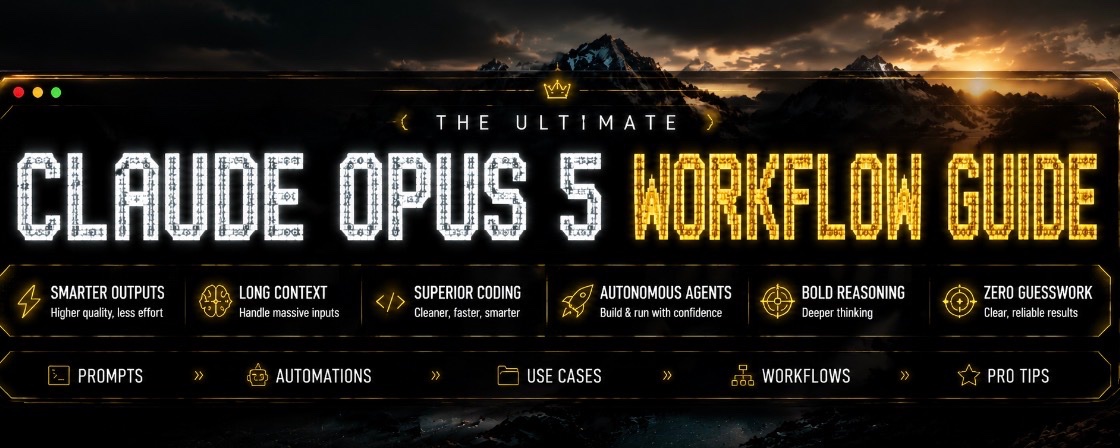
then check out the guide below to learn how to build a proper harness using loops, graphs, and multiple agents.



NA retweeted
Bookmark these 12 open-source GitHub repos if you want to build real AI agents, workflows, and local LLM apps:
1. OpenClaw — Personal AI agent on your device
2. n8n — Visual workflow automation
3. Ollama — Run LLMs locally
4. Langflow — Drag-and-drop AI agent builder
5. Dify — Full-stack AI app platform
6. LangChain — Agent ecosystem framework
7. Open WebUI — Self-hosted ChatGPT alternative
8. DeepSeek-V3 — Open-weight LLM
9. Gemini CLI — Open-source terminal tool for Gemini
10. RAGFlow — Enterprise RAG engine
11. Claude Code — Agentic coding tool
12. CrewAI — Multi-agent orchestration
Which ones are already in your daily stack? 👇

NA retweeted

Claude is no longer just an AI chatbot.
It's becoming an entire ecosystem for building autonomous AI agents.
And if you're learning AI engineering in 2026, you should understand these 6 layers. 👇
1. AI Models (The Brain)
The intelligence behind everything.
→ Claude Opus
→ Claude Sonnet
→ Claude Haiku
2. Agent Frameworks (The Builder)
Build agents that can reason, use tools, and execute tasks.
→ Claude Agent SDK
→ Managed Agents
→ Claude API
3. AI Development Tools (The Workspace)
Bring AI into your everyday work.
→ Claude Code
→ Claude Cowork
→ Claude Design
4. Memory & Context (The Memory)
Help agents retain information and work with relevant context.
→ Context management
→ Memory systems
→ Context caching
5. Security & Governance (The Guardrails)
Make AI agents safer and more reliable.
→ Access controls
→ Evaluations
→ Security and compliance
6. Deployment & Infrastructure (The Engine)
Take AI applications from experiments to production.
→ APIs and inference
→ Deployment pipelines
→ Monitoring and evaluation
Here's what most people miss:
Building an AI agent isn't just about connecting an LLM to an API.
You need models + tools + memory + orchestration + security + infrastructure.
That's what separates a simple AI chatbot from a production-ready agentic AI system.
Save this roadmap if you're serious about becoming an AI engineer.
Which layer are you currently learning?
#ClaudeAI #Anthropic #AgenticAI #AIEngineering #AIAgents
NA retweeted

This is f*cking insane, Obsidian's CEO uploaded his whole brain to GitHub, and only the smart ones caught it in time
his personal kit + the official tools, 8 repos, 80K+ stars ↓
1. copy his vault
kepano-obsidian (6.3K stars)
his real folder system and rules, skip years of trial and error
github.com/kepano/kepano-obs…
2. plug in Claude
obsidian-skills (53.4K stars)
his skills that let Claude Code write, link and organize inside your vault
github.com/obsidianmd/obsidi…
3. make it look clean
Minimal (5.4K stars)
his own theme, the cleanest look Obsidian has
github.com/kepano/obsidian-m…
4. move your old stuff in
Importer (1.7K stars)
pulls everything out of Notion, Evernote and 10+ apps
github.com/obsidianmd/obsidi…
5. save the internet into it
Web Clipper (5.5K stars)
turns any article into a vault file with one tap
github.com/obsidianmd/obsidi…
6. map your ideas
JSON Canvas (3.9K stars)
infinite boards for your ideas, in an open format no app can lock you into
github.com/obsidianmd/jsonca…
7. learn every trick
Obsidian Help (1.9K stars)
the full manual inside your vault, find any feature in seconds
github.com/obsidianmd/obsidi…
8. build what's missing
Sample Plugin (4.6K stars)
Obsidian's starter kit for coding your own features
github.com/obsidianmd/obsidi…
save it, be one of the smart ones


NA retweeted

🔥 9 open-source projects transforming how AI applications work with data:
1. Chroma — An open-source vector database for AI applications.
github.com/chroma-core/chrom…
2. Qdrant — Store, search, and manage vector embeddings efficiently.
github.com/qdrant/qdrant
3. Weaviate — Build AI-powered search applications with a vector database.
github.com/weaviate/weaviate
4. Milvus — Handle large-scale vector search and similarity retrieval.
github.com/milvus-io/milvus
5. DSPy — Program and optimize language model pipelines.
github.com/stanfordnlp/dspy
6. Haystack — Build search, RAG, and modular AI pipelines.
github.com/deepset-ai/haysta…
7. RAGFlow — Build RAG applications with advanced document understanding.
github.com/infiniflow/ragflo…
8. Oxylabs Web API MCP — Bring real-time web data into AI-powered retrieval workflows.
github.com/oxylabs/web-api-m…
9. Unstructured — Prepare and process documents for LLM and RAG workflows.
github.com/Unstructured-IO/u…
Better data pipelines lead to more useful AI applications. These projects deserve a place on your GitHub watchlist. 🚀


NA retweeted

I don’t understand why remote workers don’t use Claude for job hunting.
Here’s a simple 6-step hack to help you find better remote opportunities in the next 30 days:
Open Claude or ChatGPT and paste this prompt 👇
NA retweeted

🚀 How to Get 10x More Done With Claude AI
Most people use Claude just to ask questions.
But they're barely scratching the surface of what it can do.
Claude can help you think faster, write better, research smarter, analyze information, and automate repetitive work.
Here are 8 ways to get more out of Claude:
Content Creation: Generate posts, blogs, scripts, and marketing ideas.
Research: Break down complex topics and summarize long documents.
Coding: Build, debug, and improve code without starting from scratch.
Data Analysis: Turn raw information into useful insights.
Business Planning: Develop strategies, business plans, and proposals.
Workflow Automation: Create repeatable processes for everyday tasks.
Learning: Understand difficult concepts with simple explanations.
Brainstorming: Turn rough ideas into actionable plans.
🔥 The real secret?
Don't treat Claude like a search engine.
Treat it like a thinking and productivity partner.
Give it context, explain your goals, provide clear instructions, and refine the results.
The better you work with AI, the more value you get from it.
Save this and start using Claude more strategically!
Follow @mayaislam_ai for more
#ClaudeAI #AIProductivity #AITools

