

Building in the open - agents, apps, and the tools in between. Previously early Unacademy, then Loco, Graphy & Airlearn. Bangalore
Bengaluru, India
Joined October 2009
- Tweets3.3K
- Following979
- Followers1.8K
- Likes4.4K








Pinned Tweet
Delete WisprFlow
Delete Willow Voice.
Delete FluidVoice.
Delete typing. Then delete the clicking.
Velora types what you say, with the ums and the "wait, no" taken out. Select text and say "make it friendlier" to rewrite it. Hold ⌃⇧A and say "message Priya on Slack I'm running late", and it opens Slack and sends it.

Became a dad a few weeks ago. Sitting at a desk for 3 hours straight is now a luxury.
So my coding setup had to change. Orca is my daily driver now. Every task gets its own git worktree and terminal, and Claude Code, Codex, pi and Muse run side by side in one window.
The part that actually saved me is the remote setup.
Why four agents? They're good at different things.
Claude Code gets planning and frontend work. Codex gets the long, grind-through-it tasks. pi (Deepseek and GLM) and Muse I use for second opinions and smaller jobs.
Orca can also hot-swap Codex and Claude accounts, which helps when one hits a rate limit mid-task.
Making a codebase agent-ready is real work, and most repos aren't there yet.
The agent starts every session cold, with no memory of last time. A new hire gets a month to learn the codebase. The agent gets one read.
My rule: if I explain the same thing to an agent twice, it goes into the repo.
Here are three prompts I paste into Claude Code or Codex to convert an existing repo. Use them in order.
Prompt 2: find the tribal knowledge and gaps (a table only, no docs yet)
```
Find what's missing for an agent to work here without asking me.
Output a markdown table only. Max 20 rows, max 12 words per cell.
Columns: Gap | Evidence | Impact | Fix
Evidence must be a real path, script name or CI step you opened. No guesses.
Look for:
1. Test, lint or build commands that exist in CI but nowhere an agent will read
2. Module boundaries that aren't obvious from folder names
3. Invariants with no comment next to the code they govern
4. Known-failing or flaky tests an agent will try to "fix"
5. Anything I'd have to explain twice in one session
For each Fix, name the file and section to edit, or write ASK ME if you can't verify it.
Don't write or edit docs in this pass.
```
Prompt 3: set up a verification loop. These are the habits that raised my hit rate the most.
```
Update AGENTS.md only. Don't change product code.
If AGENTS.md is missing, stop and say so.
Add a "## Before you finish" section with exactly:
1. Run the narrowest test for the files you touched
2. Run lint and typecheck if those scripts exist, otherwise write UNKNOWN
3. Treat "done" as untrusted. Paste the real command output instead of claiming it passed
4. For UI or API changes, name the user-facing path to check (URL or endpoint). If you can't find one, ASK ME
5. Keep long-running context notes to 2-4 KB. Past that, summarize and start a new thread
Under Commands, add one line:
Keep editing until <done-command> exits 0.
Take <done-command> from package scripts or CI. If you can't find it, ASK ME. Never invent it.
```
I'll keep sharing more of these as I find what works.
Free and MIT. Speech, cleanup and actions run on your Mac.
github.com/sushilk1991/velor…

Been thinking about how engineering teams buy tools now.
With good models, a lot of small SaaS tools are easier to build in an afternoon, shaped exactly to how the team works.
I'd still pay for anything touching money, security or compliance. For most of the rest, I'd build it first and see.
Good list. A few from my own building:
1. Build your own agent tools. I use two every day:
yoyo lets my coding agents call each other. Claude writes, Codex reviews. Different models fail differently, so where they agree I trust it, and where they disagree that's my to-do list.
Mastisk is my second brain. Agents read my feeds, podcasts and notes around the clock and turn them into a wiki I actually use.
2. Small skills beat one giant AGENTS.md. Short, sharp instructions get followed.
3. Give the agent its "done" check before the task. If it can't run the test, it'll guess.
4. Think before you prompt. An hour on my reMarkable has taken me further than working with agents nonstop.
5. A working version takes a day now. Taste is the bottleneck, not typing speed.

Finally summarized what I've been sending to friends in DMs View article

I was paying monthly for Wispr Flow and loved using it. About 3 months ago, it started glitching for me.
So I tried building something with local models. That experiment is now what I use every day. Haven't used Flow since.
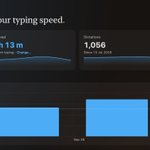
101,958 words so far.

I called it Velora. Somehow I've ended up really enjoying using my own little tool. It feels fast and smooth on my Mac without eating up my memory.
Works offline after setup, too. The code is open if you want to tinker:
github.com/sushilk1991/velor…
After OpenCode's Console breach, I'd like every "Connect your model" screen to tell me where my API key ends up.
If it leaves my laptop and sits on your servers, say that next to the input box. I shouldn't need a breach notice to find that out.
I think the underrated alpha in the AI age is thinking without it.
An hour or two writing on my reMarkable has taken me further than working with agents nonstop.
I worry we’re getting dumber by outsourcing the hard problems before trying to work them out ourselves.
The OpenAI maths debate makes me wonder what happens if AI starts finding things faster than humans can understand them.
Imagine a model writes a paper, another model checks it, and both say it's right. Would we be comfortable building on it if the experts still couldn't follow the argument?
Maths has formal proof checkers, so we don't always have to take a model's word for it. But a checked proof doesn't automatically give us an explanation people can understand.
My guess is that over the next year or two, we'll feel the shortage of people who can properly assess what AI produces.
I don't know how that plays out. Do we wait for people to catch up, or start using results we can verify but don't really understand yet?

The OpenAI proofs include proofs for 23 Erdős problems - all of them, in my view, interesting and significant.
With the associated papers running at 1268 pages total (and badly written), reading/understanding these proofs will take time!
A blog post:
erdosproblems.com/forum/thre…
Looks like the agentic browser race is dead.
Atlas is retired. I barely hear about dia or comet anymore.
It makes me question the startup rush to build separate services for agents. do we need email for agents if they can use gmail, outlook or apple mail?
My bet is that model companies will keep training agents to use the tools humans already use. A startup built around agents needing their own version of every app could lose its reason to exist as the models improve.
I think backward compatible agents have a much easier path to adoption. People can hand over a task without first migrating their inbox, switching browsers or changing how they work.