
Computer algebra system in Python. This is the official account for SymPy.
Joined July 2012
- Tweets609
- Following96
- Followers4.3K
- Likes466


SymPy retweeted

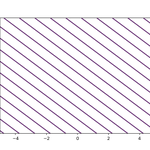
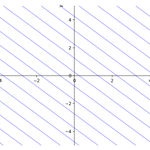
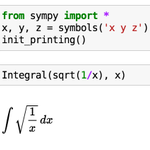
SymPy Editor has been launched on github: github.com/Upabjojr/sympy-ed…
It works as Jupyter widget, webapp, Android app and (soon) iOS app.
#math #algebra @SymPy @PlanetSymPy


SymPy retweeted

According to pypistats.org/packages/sympy, @SymPy has 6M+ downloads last day, 160M+ downloads last month. Probably most of it is CI, but still, that is a lot.
SymPy retweeted
It used @SymPy, not NumPy. When I started SymPy almost 20 years ago, my university classmates were telling me that it could never match Mathematica, so what's the point? And now the most popular (?) LLM uses SymPy by default. That's amazing!


SymPy retweeted

Cool to see @openai demo solving a @sympy issue (from SWE-bench) in their o3 demo today. At a glance the AI's fix looks correct (though not quite as straightforward as the true fix that was made).

ALT Screenshot from OpenAI o3 announcement livestream showing o3 solving a SymPy issue.

ALT Screenshot of livestream showing o3's solution to the issue

OpenAI o3 and o4-mini
openai.com/live/

The best place to start would be to send an email to the mailing list groups.google.com/g/sympy
SymPy retweeted
I made a @SymPy GPT to play around with this. Unlike normal ChatGPT it has direct access to the latest version of SymPy (1.12) and its docs. It also tries to actually execute code whenever it can. chat.openai.com/g/g-AePkBhsF…
Introducing the GPT Store: Over 3M GPTs have been created and now you can find the most useful versions of ChatGPT for you.
openai.com/blog/introducing-…
"Towards a new SymPy: part 2 - Polynomials"
Part 2 of this series of blog posts discusses the SymPy polynomials module and how it relates to SymPy's performance oscarbenjamin.github.io/blog…
"Towards a new SymPy: part 1"
In this first of a series of blog posts, Oscar Benjamin writes about the ongoing work to improve the performance of SymPy. oscarbenjamin.github.io/blog…
SymPy retweeted

Tutorials @SciPyConf are in full swing! Ever want to do algebra, calculus, or advanced differential equations directly in Python? Check out the “SymPy Introductory Tutorial” co-led by our @asmeurer to learn the basics of @SymPy.
cfp.scipy.org/2023/talk/LJQP…

SymPy retweeted

Large numbers have fewer prime factors than you might expect.
johndcook.com/blog/2023/06/2…

SymPy retweeted

Hand drawn, and live demo. using @SymPy easier than typing TeX ! And we can now derivate, or integrate with @numpy_team


SymPy has the builtin function groebner() but this blog post shows how to implement it from scratch. docs.sympy.org/latest/module…
"Use Gröbner Bases To Solve Polynomial Equations" by @jingnanshi
Mice blog post showing how Gröbner Bases work using SymPy.
jingnanshi.com/blog/groebner…


By default it generates both mathjax and png output. The notebook interface prefers mathjax but nbconvert sometimes prefers png instead. This could be considered an upstream bug, but either way it's better to omit those pngs if you don't need them anyway.
SymPy retweeted
I noticed @OpenAI uses @SymPy in their "Code interpreter" demo at their ChatGPT plugins webpage (openai.com/blog/chatgpt-plug…). I am very happy to see SymPy being used by default like this.
