

The decision intelligence platform.
United States
Joined August 2024
- Tweets2.1K
- Following296
- Followers255
- Likes1.7K






A forecast can tell RevOps where the current path leads.
But choosing the next move may also depend on constraints, alternative scenarios, relationships and business rules.
Syntaxia brings those reasoning methods into the same decision, so revenue leaders can compare the options with the right context before they act.
Explore Syntaxia: syntaxia.com


24
Weak definitions used to create reporting problems.
For RevOps, they now reach much further.
A company can have one industry in Salesforce, another from an enrichment provider, an outdated parent relationship somewhere else, and several records being worked by different reps.
Those differences eventually affect territory assignment, account ownership, prioritization and the answers AI gives back to the business.
Syntaxia reconciles those sources into a current company view and keeps the source behind each value visible.
As more decisions move through software, the definitions underneath them carry more weight.


1
31
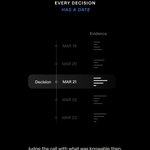
By the time RevOps reviews a decision, the account has already changed.
Contacts leave. Relationships disappear. Opportunity value moves. The current state can easily obscure the context the original call was made on.
Syntaxia lets you return to that business state and review the decision against what was actually known then.
No rebuilding the moment from screenshots, exports and memory.
See Syntaxia in action: syntaxia.com


“Escalate this renewal” may be the right move.
But if the last activity date is stale, the account value conflicts across systems, or a key signal is missing, the recommendation should stop there.
Syntaxia keeps the action connected to the evidence behind it and surfaces those issues before the team commits.
See how we approach Decision Intelligence: syntaxia.com


1
30
If you’re asking leadership to choose a path, show them the other paths.
Syntaxia keeps the competing options, their consequences and the evidence behind them alongside the recommended move.
So leadership can commit knowing what it chose, what it gave up, and why.

1
161

Accounts, leads and contacts are useful for running CRM workflows.
For planning and analysis, RevOps needs to know which companies and people those records actually represent.
Syntaxia reconciles the CRM objects into that real-world structure, so coverage, hierarchy and GTM analysis start from the business itself.
That’s the Golden Layer.
Explore the platform: syntaxia.com

Territory plans can lag behind the ICP.
22 target accounts now sit across Colorado, Utah, Nevada and Arizona, all outside the active territory model. The ICP moved faster than the map.
Before the next planning cycle, Sales has two options: create a Mountain West territory or fold those states into the West.
Does your territory model still match where your target accounts are?

2
80
“Where did 12.4M come from?” should have a better answer than “give me an hour".
When the number changes, RevOps needs to know which records moved, which systems contributed, and whether the underlying data was current.
Syntaxia keeps that context with the number, so the answer is there before the meeting turns into an audit.

1
80
“Bad data” is too vague to act on.
A source can be current and incomplete. Complete and barely used. Widely used and still unresolved. Each condition creates a different risk, and requires a different intervention.
Syntaxia makes those conditions visible early, so teams can find the weak point before it becomes a planning problem.
Less diagnosis. Faster path to usable data.

30
One customer count. Four answers.
CRM says 1,284. The spreadsheets say 1,273, 1,289 and 1,295.
Before that number can support anything downstream, the team needs to know where the disagreement starts.
Syntaxia connects the sources and makes their condition visible, so those inconsistencies surface before they become planning inputs.
Request a demo here: syntaxia.com/contact

29
A connector becomes an operating commitment.
The source keeps changing. So the mapping, sync, health checks and reconciliation have to keep up with it.
Multiply that across an enterprise estate and the infrastructure becomes a job of its own.
Syntaxia manages that foundation across the connected systems, so the business can get to usable data without rebuilding the same operating work around every source.

1
30
AI can move a decision from days to minutes, but if the evidence underneath it gets thinner on the way, you’ve only accelerated the risk.
Decision Intelligence should shorten the distance from signal to action while keeping the confidence bar intact.
Syntaxia is built around that standard.
Explore the platform: syntaxia.com

30% duplicate accounts.
90% were created by reps who are both still active.
That’s territory friction hiding inside data quality.
Syntaxia reconciles the records and surfaces the ownership conflicts that need review. RevOps gets the call, the owner, the deadline, and 83% confidence.
Fix the ownership. Then trust the territory.
Request a demo: syntaxia.com/contact

That is where What a Good Decision Actually Is begins.
It starts with the limits of the list and builds toward a fuller framework for making high-stakes decisions under uncertainty.
Full guide: syntaxia.com/publications/wh…


4


When Darwin tried to decide whether to marry, he made a pros-and-cons list.
The format deserves credit. But for serious decisions, it also has real limits.


1
31
Every AI interface decides how much work the system takes on, and how much it hands back to you.
Dashboards make you interpret. Chat makes you frame the problem. Workflows make you design the path. In revenue, too much of the decision still lands on the person in the room.
Syntaxia carries more of that work into the system. The call arrives with an owner, evidence, and a confidence bar already attached.
When you evaluate an AI interface, look at what it still leaves the user to carry.
See how Syntaxia works: syntaxia.com


1
1
17