TONOMETER (@TONOMETER) header
TONOMETER (@TONOMETER) profile picture

TOPICS ON: #Tonometer, #Tonometry, Intraocular Pressure (IOP) #Glaucoma, Tonometers Diaton Information - https://teapawt.org/t.co/Gq3TkALTOL Ophthalmology Optometry

New York, NY
Joined September 2008
The cornea is always an assumed variable. Every corneal tonometer measures pressure + cornea, then guesses the rest. Diaton measures IOP through the eyelid, over the sclera. No cornea in the equation. No drops, no contact, no sterilization. Why measure through the variable? TonometerDiaton.com
1
3
57
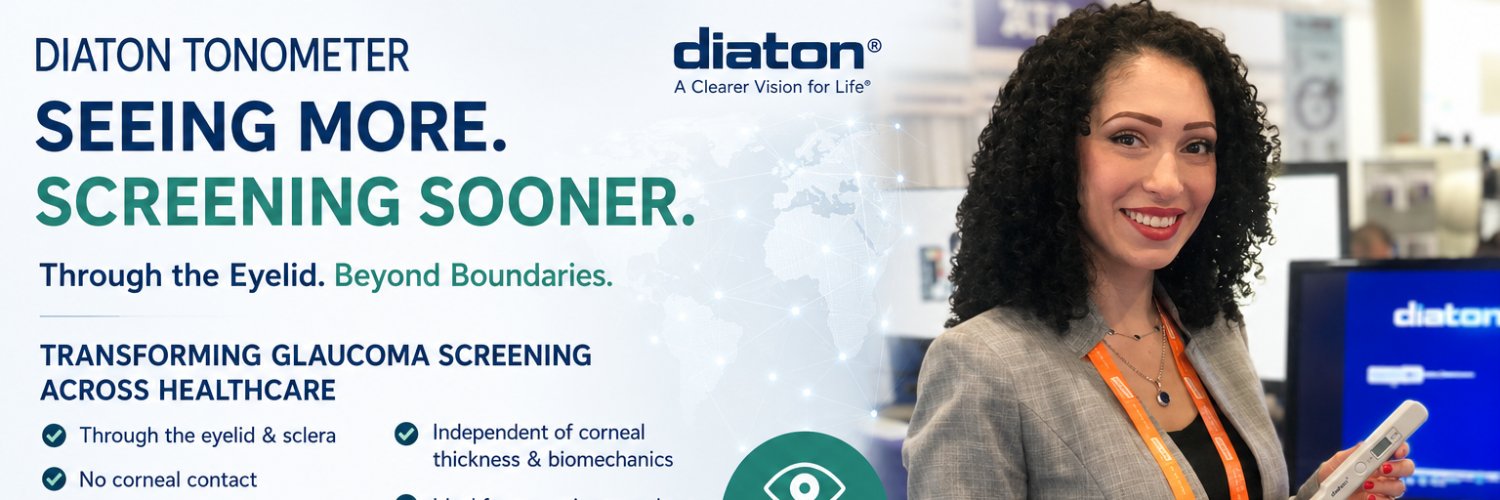
The Diaton Tonometer revolutionizes intraocular pressure (IOP) measurement with its pain-free, non-invasive, user-friendly design, providing accurate readings in both clinical and mobile settings. 👁IOP THROUGH EYELID: tonometerdiaton.com/
2
54
Intraocular pressure can provide important clinical information in emergency care. But when IOP is measured through the cornea, an important question often goes unasked: How much is the cornea itself affecting the number? tonometerdiaton.com/2026/08/… Diaton Tonometer answers that Q
1
6
185
Taking the cornea out of the equation directly targets the biggest confounding variable in traditional tonometry: corneal biomechanical interference. Traditional corneal tonometers (Goldmann applanation, Tono-Pen, rebound, or non-contact "air-puff") are mechanically dependent on the Imbert-Fick law or corneal deceleration dynamics. They do not measure internal pressure in isolation; they measure the force required to deform or rebound against the cornea. Consequently, any structural variation in the cornea distorts the reading. What Changes When You Bypass the Cornea By measuring ballistically through the upper eyelid onto the scleral shelf (at the tarsal plate/sclera boundary, outside the limbus), transpalpebral scleral tonometry alters the clinical equation across several fronts: | Dimension | Corneal Tonometry (GAT, Tono-Pen, Rebound) | Transpalpebral Scleral (Diaton) | |---|---|---| | Pachymetry Dependence (CCT) | Thinner corneas yield artifactually low IOP; thicker yield artifactually high IOP. Mathematical correction tables are inconsistent. | Zero CCT influence. The measurement vector completely bypasses the corneal cap. | | Post-Refractive Surgeries (LASIK / PRK / SMILE) | Biomechanical thinning and flap alteration mask elevated pressures and blunt glaucoma detection. | Unaffected by corneal stromal ablation or altered corneal rigidity. | | Pathologies & Ectasias | Keratoconus, edema, cross-linking (CXL), scars, and band keratopathy corrupt applanation readings. | Bypasses ectatic, scarred, or edematous tissue. | | Emergency & Acute Care Workflow | Requires topical proparacaine/tetracaine, fluorescein (for GAT), disposable covers, and carries risk of corneal abrasion. | No topical anesthetics, zero risk of corneal abrasion, and safe over contact lenses. | | Infection Control | Direct corneal touch creates vector for microbial transfer, viral shedding, and epithelial microtrauma. | Non-corneal, non-invasive; tip contacts outer eyelid skin sanitized with an alcohol wipe. | Clinical Implications in High-Turnover Settings (ED & Urgent Care) As highlighted in acute care and emergency medicine workflows, clinicians rarely have the luxury of a comprehensive ocular history: * The "Blind 17 mmHg" Problem: In an acute setting, a patient presenting with vague ocular discomfort or headache who reads 17 mmHg on a corneal tonometer appears normotensive. If that patient had myopic LASIK a decade prior, their true physiological pressure could easily be 23+ mmHg, hiding an acute spike or underlying glaucoma. * No Anesthetic Lag: Bypassing the cornea eliminates the need to locate, dispense, and wait for topical anesthetic drops, while protecting patients with compromised corneal integrity from toxic epithelial breakdown or chemical irritation. * Trauma & Suspected Erosion: When an acute patient presents with a corneal abrasion, recurrent erosion, or post-operative wound, placing a traditional probe on that cornea is either contraindicated or clinically misleading. Scleral transpalpebral placement leaves the vulnerable central corneal zone completely undisturbed. By isolating intraocular fluid dynamics from the physical variables of the cornea, transpalpebral tonometry turns intraocular pressure measurement into a direct structural bypass rather than a mathematical guess against unknown tissue elasticity. More at TonometerDiaton.com
2
58
Diaton #Tonometer is featured at the XLVIII Inter-American Course in Clinical Ophthalmology (CURSO), hosted by the prestigious Bascom Palmer Eye Institute in Miami, Florida. 📍 Visit Diaton tonometer at Exhibit #2 for a live Diaton demonstration and hands-on training! Discover a different approach to intraocular pressure (IOP) measurement: ✅ No corneal contact: Measures IOP through the upper eyelid over the sclera. ✅ No anesthetic drops required. ✅ No disposable probes or recurring probe costs. ✅ Corneal-independent measurement: An additional IOP assessment option when corneal characteristics complicate conventional tonometry. Whether you're an ophthalmologist, optometrist, or eye care professional exploring new diagnostic technologies, stop by and experience Diaton firsthand! THINK BEYOND THE CORNEA.™ 🌐 TonometerDiaton.com #DiatonTonometer #BascomPalmer #CURSO2026 #Ophthalmology #Glaucoma #Tonometry #EyeCare #MedicalTechnology #Miami
1
4
123
👁️🇺🇸 ¡DIATON TONOMETER PRESENTE EN MIAMI! 📅 1 al 4 de noviembre de 2026 El Tonómetro Diaton estará presente en el XLVIII Curso Interamericano de Oftalmología Clínica (CURSO 2026), organizado por el prestigioso Bascom Palmer Eye Institute de la Universidad de Miami, Florida. 🔬 ¡Descubra una forma diferente de medir la presión intraocular (PIO)! Diaton utiliza una innovadora tecnología de tonometría transpalpebral que permite medir la presión intraocular a través del párpado superior, sobre la esclera, sin contacto directo con la córnea. ✅ Sin contacto con la córnea. ✅ Sin necesidad de gotas anestésicas. ✅ Sin sondas desechables. ✅ Medición rápida y portátil. ✅ Una alternativa complementaria para pacientes con características corneales que pueden dificultar la tonometría convencional. 📍 ¡VISÍTENOS EN EL STAND N.º 2 DE PRIME OPHTHALMIC! Nuestro equipo estará disponible para realizar demostraciones en vivo y capacitación práctica sobre el uso del Tonómetro Diaton. 👨‍⚕️👩‍⚕️ Invitamos a oftalmólogos, optometristas y profesionales de la salud visual a conocer esta tecnología y descubrir sus aplicaciones clínicas. 💡 PIENSE MÁS ALLÁ DE LA CÓRNEA.™ 🌐 TonometerDiaton.com #Diaton #TonometroDiaton #CURSO2026 #BascomPalmer #Oftalmologia #Glaucoma #Tonometria #PresionIntraocular #SaludVisual #Miami2026 #InnovacionMedica
1
4
58
👁️ MIAMI, HERE WE COME! | NOVEMBER 1–4, 2026 The Diaton Tonometer will be featured at the XLVIII Inter-American Course in Clinical Ophthalmology (CURSO), hosted by the prestigious Bascom Palmer Eye Institute in Miami, Florida. 📍 Visit Prime Ophthalmic at Exhibit #2 for a live Diaton demonstration and hands-on training! Discover a different approach to intraocular pressure (IOP) measurement: ✅ No corneal contact: Measures IOP through the upper eyelid over the sclera. ✅ No anesthetic drops required. ✅ No disposable probes or recurring probe costs. ✅ Corneal-independent measurement: An additional IOP assessment option when corneal characteristics complicate conventional tonometry. Whether you're an ophthalmologist, optometrist, or eye care professional exploring new diagnostic technologies, stop by and experience Diaton firsthand! THINK BEYOND THE CORNEA.™ 🌐 TonometerDiaton.com #DiatonTonometer #BascomPalmer #CURSO2026 #Ophthalmology #Glaucoma #Tonometry #EyeCare #MedicalTechnology #Miami @primeophthalmic @TONOMETER @OPHTHALMOLOGIST @GLAUCOMA @BascomPalmerEye
1
2
5
262
👁️🇺🇸 ¡DIATON TONOMETER PRESENTE EN MIAMI! 📅 1 al 4 de noviembre de 2026 El Tonómetro Diaton estará presente en el XLVIII Curso Interamericano de Oftalmología Clínica (CURSO 2026), organizado por el prestigioso Bascom Palmer Eye Institute de la Universidad de Miami, Florida. 🔬 ¡Descubra una forma diferente de medir la presión intraocular (PIO)! Diaton utiliza una innovadora tecnología de tonometría transpalpebral que permite medir la presión intraocular a través del párpado superior, sobre la esclera, sin contacto directo con la córnea. ✅ Sin contacto con la córnea. ✅ Sin necesidad de gotas anestésicas. ✅ Sin sondas desechables. ✅ Medición rápida y portátil. ✅ Una alternativa complementaria para pacientes con características corneales que pueden dificultar la tonometría convencional. 📍 ¡VISÍTENOS EN EL STAND N.º 2 DE PRIME OPHTHALMIC! Nuestro equipo estará disponible para realizar demostraciones en vivo y capacitación práctica sobre el uso del Tonómetro Diaton. 👨‍⚕️👩‍⚕️ Invitamos a oftalmólogos, optometristas y profesionales de la salud visual a conocer esta tecnología y descubrir sus aplicaciones clínicas. 💡 PIENSE MÁS ALLÁ DE LA CÓRNEA.™ 🌐 TonometerDiaton.com #Diaton #TonometroDiaton #CURSO2026 #BascomPalmer #Oftalmologia #Glaucoma #Tonometria #PresionIntraocular #SaludVisual #Miami2026 #InnovacionMedica
2
28
Ophthalmology: Post-Refractive Precision and Advanced Pathology Management Ophthalmologists, particularly corneal and glaucoma specialists, rely on the Diaton tonometer to overcome structural variables that skew standard surgical follow-ups and complex clinical calculations: • True Independence from Central Corneal Thickness (CCT): Traditional tonometers - including the Goldmann applanation gold standard - are heavily calibrated based on average corneal thickness. Thick corneas artificially elevate readings, while thin corneas underestimate them. Because the Diaton does not touch or flatten the cornea, its ballistic measurement principle remains completely unaffected by variations in CCT, providing highly reliable raw IOP data. • Post-LASIK, PRK, and SMILE Accuracy: Refractive surgeries permanently alter the structural integrity and thickness of the central cornea, causing traditional tonometers to chronically underestimate true intraocular pressure. This diagnostic gap can lead to missed or delayed glaucoma diagnoses. The Diaton tonometer delivers post-refractive IOP measurements that match true baseline metrics because its forces are directed entirely outside the ablation zone. • Post-Corneal Transplant Safety: Following a penetrating keratoplasty (corneal transplant) or Descemet's stripping endothelial keratoplasty (DSEK), direct contact with the delicate donor graft carries the risk of micro-trauma, epithelial erosion, or structural destabilization. The Diaton allows ophthalmologists to safely monitor pressure during critical healing phases without ever making contact with the surgical graft site.
1
1
5
318
Transpalpebral Scleral Tonometer (The Diaton) The Diaton tonometer represents a completely unique category because it measures intraocular pressure (IOP) through the upper eyelid and the sclera (the white of the eye) rather than the cornea. • Cornea-Independent: Readings are completely unaffected by central corneal thickness, curvature, or past surgeries like LASIK. • Non-Invasive Safety: It requires no numbing drops and has zero contact with the eye's mucous membranes, eliminating the risk of corneal scratches or cross-infection. • High Compliance: Excellent for pediatric, geriatric, or highly anxious patients who experience an intense blink reflex with other methods.
1
3
122
Diaton Tonometer Highlights Corneal-Independent Eye Pressure Measurement at AAO 2026 in New Orleans #Transpalpebral tonometry offers eye care professionals an alternative approach to intraocular pressure assessment without corneal contact, anesthetic drops, or disposable measurement probes.** **NEW ORLEANS, LA | October 12, 2026** — As ophthalmology professionals gathered in New Orleans for the American Academy of Ophthalmology (AAO) 2026 Annual Meeting, October 9–12, the Diaton Tonometer was highlighted as an innovative approach to intraocular pressure (IOP) measurement that challenges a longstanding assumption in eye care: that measuring eye pressure requires interaction with the cornea. Unlike conventional corneal-based tonometry technologies, Diaton measures intraocular pressure through the upper eyelid over the sclera, offering clinicians a distinct approach to assessing IOP without directly contacting the corneal surface. The technology represents an additional option for ophthalmologists, optometrists, and other healthcare professionals seeking practical methods of eye pressure assessment, particularly when corneal characteristics may complicate conventional measurements. ## Why Measuring Eye Pressure Beyond the Cornea Matters Intraocular pressure measurement plays a central role in glaucoma evaluation and ongoing ophthalmic care. Goldmann applanation tonometry remains an established clinical reference standard, but its readings can be influenced by the physical properties of the cornea. Corneal thickness, curvature, biomechanical characteristics, and changes resulting from refractive surgery or corneal disease may affect measurements obtained through the cornea. These considerations become especially relevant in patients with conditions such as keratoconus, corneal edema, scarring, or a history of LASIK and other corneal procedures. Diaton addresses this challenge from a different anatomical perspective. By measuring IOP through the upper eyelid over the sclera, the device removes the cornea from the measurement process. Although proper technique and the characteristics of the tissues involved remain important, Diaton's approach avoids direct dependence on corneal thickness, curvature, and biomechanics. This provides clinicians with another perspective when evaluating intraocular pressure. A Practical Approach to Tonometry Beyond its corneal-independent measurement principle, Diaton offers several operational features that may benefit clinical practices and healthcare facilities. The device does not require topical anesthetic drops, disposable measurement probes, or direct contact with the cornea. Its portable handheld design allows measurements in different clinical environments, including settings where conventional slit-lamp-based tonometry may be less practical. These features may be relevant to ophthalmology and optometry practices, hospital departments, urgent care facilities, and other healthcare environments where access to convenient IOP measurement is important. The absence of disposable measurement probes also offers a potential economic advantage by reducing recurring consumable purchases. The measuring tip is reusable and must be cleaned and disinfected according to the manufacturer's instructions. Supporting Clinical Decision-Making With Additional Measurement Options Diaton has been evaluated in published clinical research, including studies comparing its measurements with Goldmann applanation tonometry. These investigations have documented agreement between the methods while also identifying measurement differences and limitations. Diaton should therefore be considered an additional clinical measurement option rather than an interchangeable replacement for Goldmann in every patient or circumstance. Its distinguishing characteristic is the ability to assess IOP without involving the cornea. For clinicians managing patients with altered corneal anatomy or biomechanics, this difference may provide useful supplementary information as part of a comprehensive ophthalmic assessment. AAO 2026 and the Continuing Evolution of Eye Care The American Academy of Ophthalmology Annual Meeting brings together eye care professionals to exchange clinical knowledge, examine emerging technologies, and discuss developments in ophthalmic diagnosis and treatment. Diaton's visibility in connection with AAO 2026 reflects continued interest in alternative diagnostic approaches that address specific clinical challenges while supporting efficient, patient-centered care. As ophthalmic technology advances, the availability of different measurement methods gives clinicians more flexibility to select tools appropriate to individual patients and clinical circumstances. For Diaton, that innovation begins with a straightforward question: **What if you take the cornea out of the equation?** **THINK BEYOND THE CORNEA.™** About Diaton Tonometer Diaton is an FDA-cleared transpalpebral #tonometer designed to measure intraocular pressure through the upper eyelid over the sclera without direct corneal contact. The device offers a portable approach to IOP measurement without topical anesthetic drops or disposable measurement probes. **For product information, clinical studies, and inquiries, visit: **TonometerDiaton.com** #AAO2026 Annual Meeting October 9–12, 2026 New Orleans, Louisiana aao.org/annual-meeting diaton.com/2026/10/diaton-co…
🤖 Made with AI
2
74
Diaton Tonometer Featured at the American Academy of Ophthalmology 2026 in New Orleans #AAO2026 #AAO #TONOMETER tonometerdiaton.com/2026/10/…
1
3
64
Glaucoma early detection tonometry technology by Diaton Tonometer - IOP THROUGH EYELID learn more at TonometerDiaton.com
🤖 Made with AI
1
3
286
Diaton Tonometer – Revolutionary Non-Invasive Glaucoma Screening The Diaton Tonometer revolutionizes intraocular pressure (IOP) measurement with its pain-free, non-invasive, user-friendly design, providing accurate readings in both clinical and mobile settings. Key Benefits & Features Non-Invasive & Safe Measures IOP through eyelid and sclera, reducing infection risk by avoiding corneal contact. Consistent Accuracy Delivers reliable IOP readings unaffected by corneal thickness, curvature, scarring, or prior surgeries (LASIK, PRK). Painless & Hassle-Free No air puffs, no numbing drops, no sterilization needed. Quick, comfortable, and ideal for children, seniors, and sensitive eyes. Compatible with Contact & Scleral Lenses Unlike traditional tonometers, Diaton does not require lens removal, improving patient convenience and accuracy. Portable & Ready to Use Lightweight, pre-calibrated, and requires no disposable covers or drops, making it cost-effective and eco-friendly. Flexible Patient Positioning Measures IOP in sitting or supine positions, perfect for bedridden patients and emergency use. Designed for Efficiency & Safety Supports safety and social distancing protocols by eliminating close patient proximity during IOP measurement.
🤖 Made with AI
1
4
81
How much of an IOP reading is the eye pressure — and how much is the cornea? Corneal thickness, biomechanics, disease, and previous surgery can influence corneal-dependent tonometry. That raises an important clinical question: What if you could assess IOP without using the cornea as the measurement surface? Diaton Tonometer measures IOP through the eyelid and sclera, offering clinicians another perspective — particularly when the cornea itself may complicate interpretation. Sometimes a different measurement path can add valuable context... Think Beyond the Cornea.™ More at TonometerDiaton.com #Diaton #Tonometry #IOP #glaucoma #ophthalmology #optometry #Keratoconus #LASIK #eyecare #eyes
1
39
👁 Eye Pressure via Eyelid - No Cornea Contact. Quick painless Intraocular pressure Test - IOP 👁️👍🚫💎 NO PUFF 🚫👁️ NO CORNEAL CONTACT 🚫💧 NO DROPS GLAUCOMA EYE TEST LIKE & SHARE 👁️😉👍tonometerdiaton.com #Glaucoma #eyes #optometry #ophthalmology #eyecare
4
182
How much is the CORNEA influencing your IOP Reading? Corneal thickness, biomechanics, irregularity, disease, and previous corneal surgery can all affect the interpretation of corneal-dependent IOP measurements. That raises an important clinical question: What if you could take the cornea out of the measurement pathway? Diaton Tonometer provides a different perspective by measuring IOP through the eyelid and sclera, without contact with the cornea and without anesthetic drops. This can be especially valuable when evaluating challenging eyes, including keratoconus, post-LASIK/PRK patients, corneal edema or scarring, keratoprosthesis, and other situations where the cornea may complicate conventional tonometry. Diaton isn't about replacing established tonometry. It's about having another IOP perspective when the cornea itself is part of the question. Think Beyond the Cornea™ Learn more TonometerDiaton.com LIKE & SHARE 😉👁👍 #Tonometry #Glaucoma #Ophthalmology #Optometry #EyeCare #Keratoconus #LASIK #Cornea
🤖 Made with AI
2
1
5
145
Quanto a córnea está influenciando a sua medição da PIO? A espessura da córnea, sua biomecânica, irregularidades, doenças e cirurgias corneanas anteriores podem afetar a interpretação das medições da PIO que dependem da córnea. Isso levanta uma importante questão clínica: E se pudéssemos retirar a córnea do caminho da medição? O Diaton oferece uma perspectiva diferente ao medir a PIO através da pálpebra e da esclera, sem contato com a córnea e sem necessidade de colírios anestésicos. Isso pode ser especialmente útil em olhos desafiadores, incluindo ceratocone, pacientes pós-LASIK/PRK, edema ou cicatrizes da córnea, ceratoprótese e outras situações em que a córnea pode dificultar a tonometria convencional. O Diaton não se trata de substituir a tonometria estabelecida. Trata-se de ter uma perspectiva adicional da PIO quando a própria córnea faz parte da questão. Think Beyond the Cornea™ #Diaton #Tonometria #PIO #Glaucoma #Oftalmologia #Optometria #SaúdeOcular #Ceratocone #LASIK #Córnea
8