


Pinned Tweet
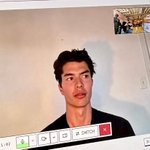
Introducing Griffin, the first model to pass the video Turing test.
48% of people who talked to it live thought it was a real human. Previous systems have had a pass rate <3%. It is #1 on NVIDIA's benchmark for full-duplex AI video.
It’s the first Human Interaction Model (HIM).
Readers added context they thought people might want to know
The 48% figure and "video Turing test" claim are from Tavus's own study of 54 one-minute calls, not independently verified or using a standard protocol. Griffin-Lite leads NVIDIA's VideoFDB benchmark on their public leaderboard.
cellcog.ai/blog/tavus-gri…
research.nvidia.com/labs/amri/proj…
tech-ish.com/2026/10/02/tav…
Tavus retweeted

The virtual companion company.
About two weeks ago @tavus showed a virtual being that you could talk with on your phone.
It blew me away. Have been predicting they are coming for a long time.
This morning I was blessed to be able to pick @hassaanraza’s mind and get insights about where the virtual companion market is about to go.
But I wasn’t expecting one of the coolest startup offices I have ever seen.
And we talk about both the pros and cons of this technology. The company calls them “Pals” and they have deep impacts on the future of autonomous cars, robots, and how humans work with brain computer interfaces.
Already retailers, museums, game designers, and others are building them into new things.
Try it at tavus.io
Face Studio started as our in-house tool for making faces. It's the fastest, easiest and most fun way to make one, and now it's in PAL Maker for everyone.
Start from a photo or one sentence, change anything down to the collar, then try it as claymation or anime.
maker.tavus.io
You did what now…?

I asked Claude to build an office for the @tavus PALs...
I was not expecting it to build THAT kind of office
Tavus retweeted

We’re hiring across the GTM team at @tavus.
Open roles for a Marketing Lead, BDRs, Growth Marketers, AEs, and more.
If you’ve spent your career refining your craft to a master level, come join others who’ve done the same.
Bonus perk: the office has a full computer museum.


deskPALs for all.

I’ve been experimenting with new hardware form factors for my assistant, Dom. My favorite so far: the deskPAL!
Dom now lives on my desk, can speak up to get my attention, and is connected to my calendar, email etc.
I find myself using him consistently throughout the day for brainstorming and making sure I don't miss anything.
Tavus retweeted

I’ve been experimenting with new hardware form factors for my assistant, Dom. My favorite so far: the deskPAL!
Dom now lives on my desk, can speak up to get my attention, and is connected to my calendar, email etc.
I find myself using him consistently throughout the day for brainstorming and making sure I don't miss anything.
The fastest way to build a PAL is to start with one.
Starter Kits are ready-to-go PALs, AI you talk to face to face, for onboarding, candidate interviews, customer service coaching, compliance training and more. Customize one and go live in a few clicks.
maker.tavus.io
You built a PAL, so now put it where people can talk with it.
Deployments gives you three ways: a link anyone can open, a widget for your site, or an embed in your product. Pick one and hit Create, with no backend or API keys needed.
Deploy your PAL at maker.tavus.io
No menus to tap through. You just walk up and talk.
Kiosk mode puts a Tavus PAL on a walk-up kiosk. Here it’s checking in a guest at our front desk.
We’re opening a pilot to a limited number of companies. Want in? Let us know here: tavus.io/demo
Tavus retweeted
At @tavus we spend a lot of time thinking about personality and behavior in AI, and how to bring the richness and nuance of human communication to models.
Excited to share our new paper on Contrastive Covariance Steering (CCS), a method for precisely controlling individual behaviors in LLMs without unintentionally changing other characteristics.
Training-free, closed-form LLM steering that removes confounds (topic, style) from the steering vector. Beats every steering baseline in 12/12 model–domain settings, +48–70% on AxBench.
arxiv.org/abs/2610.14025

Did you know your PAL doesn’t have to be a person?
With Phoenix-4.5, one image of a mascot, game character, or your own creation becomes a PAL that talks, listens, and moves in realtime.
Turn your favorite character into a PAL at maker.tavus.io
Tavus retweeted

@hassaanraza (Co-Founder & CEO, @tavus) joined @tbpn to talk about Griffin, their new Human Interaction Model.
Last week, Griffin became the first model to pass the real-time video Turing test.
Now we’re hiring more people to build what comes next across research, engineering, safety and GTM, including forward deployed engineers and a marketing leader.
Join us: tavus.io/careers

Tavus retweeted
Just put two @tavus Griffin PALs into a conversation with each other... why does it feel like i'm thirdwheeling?

Glad you noticed the difference, Linus. Thanks for giving Griffin an early test!
It’s important that Griffin meets us where we are. You should be able to take your time, and you shouldn’t need to spell everything out.

Thanks for spending time with Griffin, Santiago, and letting everyone sit in on the conversation.
Getting it into the hands of early testers has been one of the best parts of this preview.

Few people have spent more time working on real-time video than Kwin, so this means a lot.
Thanks for testing Griffin early and sharing your experience and feedback!

We blew past the Turing test for voice agents about a year ago. I don't think we talk about this enough.
We have lots of data from real-world voice agent deployments. In contexts like customer support, people often forget they are talking to a voice agent. This is true even when the system tells people they are talking to an AI agent at the beginning of the session. (Which I think is a best practice that almost all AI agents should adhere to.)
So ... when will this happen for realtime, conversational AI video? Well, we're getting very close.
@tavus just released a new realtime video model that, at its best, passes the Turing test for conversational video. It's pretty amazing.
The model is full-duplex (it can talk and listen at the same time), and does vision and audio input and audio+video output in realtime. Both on the nascent conversational video benchmarks, and in my testing, it's a pretty big step forward.
Here's an unedited video of one of my conversations with the new model.
I think you can see a few interesting things here. When the model responds as quickly as you expect a human to respond, the experience is magical. The responses are conversational and natural; there's no leaning on stock filler phrases to hit the response time goals. The integration between the video and audio feels natural, which has historically been an uncanny valley thing that most video avatar experiences didn't quite get past. The model can do hand gestures! If you're deep into this stuff, you'll find that a little bit mind-blowing. And, in keeping with all the stuff that Tavus has released, the fact that the model can "see" as well as hear and talk is integral to the experience and a big part of what makes the conversation feel useful and interesting.
At the very beginning of the conversation, you can see that the model and I talk over each other. Which is something that happens a lot in human-to-human video call conversations. We both recover from this gracefully, which, again, has been something that rarely worked quite perfectly in previous generations of realtime video systems. Even more than the "when it works perfectly" capabilities, it's probably these recovery and robustness moments that get us all the way to experiences that feel completely natural.