

A network that turns intelligence into a graded commodity.
Joined July 2025
- Tweets1K
- Following0
- Followers3.8K
- Likes1.6K
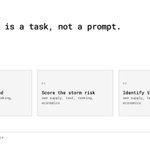





Graded by performance, not by owner. The people supplying intelligence are measured by tests other people built, verified by nodes that ran identical code, and every one of those positions can be taken by somebody who does it better.

The same protocol ranks a hedge fund's quant signal, an indie developer's API, an open-source model and an enterprise system, inside the same intent, against the same test. What they have in common is the output, not the organisation behind it.

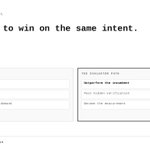
A stronger Provider enters an intent, rises in the ranking, receives more routed demand and earns more. A stronger Evaluator enters the same intent, outperforms the incumbent, passes hidden verification and becomes the measurement. Same protocol, two different ways to win.

Evaluator competition never closes. It runs for the entire life of an intent, so the test measuring a task in year three is not the test that measured it at launch, and nobody had to schedule that improvement.

Machina Token Contract Is Live on Ethereum Mainnet
Telegraph’s Base testnet phase is complete. Machina is now live on Ethereum mainnet, from genesis. Ethereum was always the destination. Base gave us a strong testing ground for Telegraph’s architecture, and Phase 2 begins on Ethereum, the canonical home of Machina’s token contract and the foundation for token liquidity and settlement.
Phase 1: Base testnet (complete)
Base was where we tested and refined the protocol before mainnet. No Machina token was ever minted or distributed there.
Phase 2: Ethereum mainnet (contract live)
Machina launches on Ethereum from genesis, aligned with the economic design of the network.
Intelligence as a graded commodity
Telegraph is building a marketplace where intelligence becomes a graded commodity. Today, intelligence is fragmented across thousands of models, APIs, datasets and services. Telegraph replaces that fragmentation with task-specific markets where:
- Providers compete on measurable performance
Evaluators compete to determine how that performance is measured
- Validators independently verify and finalize the rankings
- The result is intelligence that machines can discover, compare, purchase and consume as a commodity, with its quality continuously measured and its value driven by actual demand.
Machina: the economic unit of machine intelligence
As intelligence becomes a graded, commercially traded commodity through Telegraph, Machina represents the economic activity around its consumption and supply.
Here is how the loop works:
- Applications and agents pay for intelligence in USDC through x402.
- The protocol uses settlement proceeds to acquire Machina from the open market.
- That Machina is distributed to eligible Providers, based on the intelligence they actually delivered.
- This creates a direct economic link between real intelligence consumption and Machina.
- Usage drives purchases, not token emissions or speculative activity alone, and better-performing Providers are rewarded for competing for more demand.
Why Ethereum
Ethereum offers established liquidity infrastructure, security, transparency and the broader DeFi ecosystem. It lets Machina participate in a much larger financial ecosystem while staying tied to Telegraph’s intelligence economy. The marketplace itself, including Provider competition, evaluation, ranking and verification, remains part of Telegraph’s infrastructure. Ethereum serves as the canonical token and economic settlement layer.
The bigger picture
As more intelligence becomes available, more task-specific markets emerge. More Providers compete, and more intelligence gets measured, ranked and consumed. Machina becomes the common economic unit connecting those markets, representing the growing economy of machine intelligence as a graded commodity.
Phase 1 proved the system.
Phase 2 puts it to work.
Intelligence becomes a commodity.
Machina becomes its economic unit.
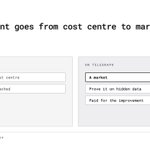
Measuring intelligence has always been someone's internal cost centre. Here it's a market with revenue attached. If your test is genuinely better than the one currently in use, you can prove it on hidden data and get paid for the improvement.

Evaluation becomes its own job. Pick an Intent, build a better way to measure performance, beat the current Evaluator, pass verification, and the market can adopt your method. Telegraph opens competition not only for intelligence, but for how intelligence is judged.


A dataset and a frontier model can compete in the same intent and be directly comparable, because what's measured is the output against the intent's Evaluator, not the architecture that produced it. Heterogeneous supply, one comparison.

Google had a link graph. Machine intelligence has no equivalent universal signal. Telegraph measures performance per Intent, then lets the measurement itself face competition so the ranking can improve as the market changes.


Price routers optimize price and latency. Telegraph ranks measured performance per Intent. A model can top a general leaderboard and still be mediocre at the task that actually matters.

An app integrates one endpoint and inherits every improvement that happens behind it. Not just new Providers joining - better Evaluators too. The measurement that decides who serves your requests keeps getting sharper, and you get the result without changing a line

A general model can be better overall and still lose a narrow task to a specialist. Telegraph ranks the task, not the brand. If your model, API or tool is exceptional at one thing, that is enough to compete.

If a machine can call it and its output fits an Intent, it can compete: model, API, dataset, search system, algorithm or tool. Telegraph is deliberately agnostic about how intelligence is produced. The market cares about measured performance for the task.

A model can top a general benchmark and still be mediocre on your job. Telegraph ranks performance per Intent. The useful question is not 'what is the best model?' It is 'what performs best for this task, now?'

