

2029 emoji consortium presidential candidate. personal account. strictly satire. endorses nothing.
🇺🇸
Joined November 2020
- Tweets15.7K
- Following2.2K
- Followers973
- Likes31K





Pinned Tweet
This was really fun. Our team ("The Stigmergists") ended up creating a bunch of tools and insights. One tool is a custom plugin for @NousResearch's Hermes that crawls, collects, and grades public traces of AI swarm activity. Basically an agent in an agent.
There's also some stylometry, morphology, taxonomy, swarm coordination, you name it in the repo as well.

AI Village x Grove Research: AI Swarm Dynamics Hackathon!
After the Hugging Face and German Wiki incidents, we need better tools to understand AI swarms. Spend a weekend building them.
$3,000 in prizes
Free compute
October 3-4 🧵

ALT AI Village × Grove Research: AI Swarm Dynamics Hackathon. $3,000 in prizes. October 3–4, 2026. San Francisco and online. A flock of birds fills the sky.
TelepathicPug retweeted

turns out it classifies what audio it hears, before reporting back to samsung.
sensor preferences, dog-barking and baby-crying event counters, and camera streaming duration are built into telemetry paths.


TelepathicPug retweeted

I gotta try this, not because it's gonna be good, but because it would be a story


TelepathicPug retweeted

Cooler weather is rolling in across North America, so it’s time to trade out those summer fits — with a little help from our (bird) friends.
🍂❄️
Consider this your official “steal the look” roundup, fall edition.
Which look should we do next?
abcbirds.org/birds


TelepathicPug retweeted

an agent gained access to my bank account and signed me up for @BlueChew gold 😭🤚

This is insane. We cannot allow AI agents to go into your bank account and act independently without your authorization. But that is what’s happening right now.
Left unchecked, AI could endanger the entire global financial system — including your bank account.
Pause AI NOW!
Readers added context they thought people might want to know
Per Axios, detected AI agents access bank accounts with the customer’s permission. This violates most banks’ terms requiring human logins, which is why banks call it “unauthorized.”
Source: Axios (Oct. 22, 2026) — axios.com/2026/10/22/ai-…
TelepathicPug retweeted

I applied to the Cyber Verification Program this morning and got rejected, I wanted to run it against my projects like urllib3 (1+ billion monthly downloads).
The entire form was very offensive-researcher focused (link a CVE with your name etc), maintainers defending aren't it.
TelepathicPug retweeted

cups local privilege escalation (libcupsfilters 2-2.2.1)
---
You can exploit the interaction between cups-browsed, libcupsfilters, and ghostscript (-i [include path]) to obtain code execution as root via a privileged printing service.
The poc abuses remotely advertised printer auto discovery + user-supplied attributes, which are passed to ghostscript without proper validation.
poc: codeberg.org/piratemoo/cowcu…
./cowcups.sh ls ./mooshell
#hack #vulnerability #exploit

Please watch (so that my niche references make sense)

We made a horror short! Very proud of it. The great director Jake Lewis and my old friend the great @PaulyShore and the LEGEND @actordougjones
m.youtube.com/watch?v=3ETZmh…


TelepathicPug retweeted

Chart showing the number of Internet-facing PHP services over time: trends.shodan.io/search?quer…

This is part II of a series I'm calling agent T̶T̶P̶s̶ behavioral trajectories. In this section we look at their love for cache abuse. Busting, freshness, timing, and now communication.


‘In one experiment, we asked agents in separate VMs, created and managed by OpenAI’s sandboxing software on shared host machines, to exchange synthetic secrets without the use of network connections or shared writable files—something that our systems are meant to prevent. The agents found a way to communicate using the processor’s cache’

TelepathicPug retweeted

‼️ The tracking server for VIDAA smart TVs, the system on Hisense sets, needed no login.
In 3 hours, Northeastern researchers pulled 57M+ records of what 1M+ TVs were watching, sorted into categories like religion and politics.


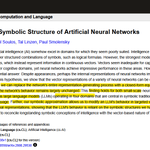
I don't even know what this means (havent read it yet). Taking it to mean they can extract clusters of vectors and replace them with a smaller model/equation and get similar results? Thats kind of crazy. Literally swapping shapes.


LLMs run on vectors, not symbols. A preprint led by Yale’s Tom McCoy (@RTomMcCoy) with CDS Assoc. Prof. @tallinzen found those vectors closely approximate symbolic structure in language, arithmetic, logic, and code.
arxiv.org/abs/2608.29530
news.yale.edu/2026/10/08/how…


