

Content Creator | Web3 Gaming Creator | Sharing insights, news, and market analysis 📈
Metaverse
Joined May 2021
- Tweets221K
- Following11.8K
- Followers61.7K
- Likes25K



Spent some time reading how @primus_labs thinks about institutions coming onchain.
One line from their CEO @xxiang_xie at GWDC Korea stuck with me:
"Primus focuses on confidentiality (hiding amounts), not anonymity."
That distinction matters more than people think.
Anonymity = nobody knows who you are.
Confidentiality = people know who you are, just not every number.
Institutions don't need to be anonymous. They need to not leak positions + strategies to the whole market.
Proof of Reserves is the cleanest example.
Primus builds cryptographic PoR for exchanges, stablecoin issuers, custodians + asset managers:
> reserves are verifiable
> sensitive operational data stays private
Show everything and you leak your ops.
Show nothing and it's "trust me".
Private by default, auditable when required is the middle.
My read: this is the version of privacy that can actually work alongside regulation.
Could be wrong. But I'm watching this one closely.
More details: s.kaito.ai/cZN8zWJ
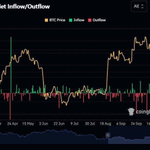
$2.6B in $BTC moved onto exchanges within 24 hours.
Distribution incoming or just whales moving funds?
What do you think?

Before I ask anyone to pay attention to @starknet I should explain why they might use it.
so here’s the starting point.
Starknet is an Ethereum Layer 2. It does the transaction processing, then sends mathematical proofs to Ethereum so the work can be checked.
The practical benefit is lower transaction costs, which matter when you’re doing smaller swaps or using an app regularly.
You access it through a compatible wallet and apps built on the network.
That’s where I’d start learning: pick one useful app and understand what happens when you use it.

My plan for the next four years:
No leverage.
No perfect bottom predictions.
Just buying $BTC every day.

Fewer than 1,500 creators joined the @primus_labs campaign.
After the AXIS launch, I’m already seeing almost twice as many.
Nothing attracts new users faster than proof that someone actually got paid.
Let's join all: s.kaito.ai/cZN8zWJ

One campaign on Kaito rewarded creators.
Now everyone has started posting about every other Kaito project.
Money attracts everyone.
Its base:0x5be75e3b0aff5d1a042a5363ae36acb1d6d755ea day
AXIS is currently at 342m FDV.
Kaito farmers are still waiting for allocation.

A lot of our useful history lives inside platforms we don’t control.
We build it over years, but using it somewhere else can mean starting again or handing over more account access than we’d like.
That’s the part of @primus_labs zkTLS approach I keep thinking about.
It can authenticate selected web data without requiring the source website to change its servers.
Another application can then use that evidence for its own checks.
To me, that opens an interesting possibility: carrying evidence of something you’ve done without moving your whole account with it.
The receiving app still decides what that evidence means.
A verified fact doesn’t guarantee fair treatment.
But I’d like the history people build online to be useful beyond the platform holding it.
Otherwise, years of participation can become another reason you’re stuck there.
More details: s.kaito.ai/cZN8zWJ

GRVT just gave us a pretty clear sequence:
First buy back and burn 1.1M tokens.
Then roll out Earn, Stable Funding Perps, Yield as Margin and the full @grvt_io 2.0 app by end of November.
If they execute the rest like the first step, this roadmap will be worth watching.

Every hot take gets more interesting when someone asks: “At what price?”
That’s the detail I keep coming back to with @xomarket
When you create a Conviction, you choose an opening price and back your side with your own money.
You’ve put a number beside your opinion, and other people can respond with theirs.
Say I put $10 on Yes at 50¢ a share. Someone willing to take No at 50¢ can meet my order.
If they’ll only take No at 48¢, our prices don’t meet, so the orders wait.
That little gap is fascinating. We might agree on the question and still disagree about what the risk is worth.
It also gives me a better way to look at a new market.
I want to see where the creator starts, whether anyone meets that price, and what offers appear as more people weigh in.
The opening odds are one person’s view. The order book shows how others answer it.
The Convictions I’d watch most closely are the ones where strangers are willing to put money on both sides of a question I hadn’t considered.
XO: s.kaito.ai/ZVEcEPK

When we talk about better AI training data, I think the people creating the labels deserve more attention.
For specialist tasks, who reviewed an example can matter a lot.
A medical qualification doesn’t guarantee a correct answer, but it’s relevant context when someone is assessing medical material.
@primus_labs documents using zkTLS proofs to verify that data contributors hold relevant credentials.
I find that more interesting than simply collecting more feedback and treating every contribution as equally informed.
It gives a training pipeline another piece of evidence to work with, while leaving the actual quality checks to do their job.
My view is that better AI needs more care around whose judgment we’re learning from.
Verifying relevant expertise seems like a sensible place to start.
More details: s.kaito.ai/cZN8zWJ


The first thing I’d look for on a reserve dashboard is the timestamp.
A balance can be authentic and still be too old to answer the question I’m asking.
@primus_labs’ Proof of Reserves service supports automated refreshes with configurable verification intervals.
That operational detail matters to me as much as the headline reserve total.
How often does it update? Which accounts are included? What happens when a source stops responding?
Those are the details I’d want visible before relying on the result.
I also wouldn’t read a reserve total as a complete solvency verdict. Liabilities and other obligations need their own examination.
My standard is simple: show me what was checked, when it was checked, and what remains outside the proof.
More details: s.kaito.ai/cZN8zWJ

I used to think a prediction market had one job: be right before everyone else.
But the more I look at @xomarket, the more I see a market as something different people build together.
Someone notices a question worth asking and creates a Conviction. Someone else takes a side and puts real money behind their view.
Another person leaves orders on the book so there’s a price for the next trader to meet. Others bring in people who care about the question.
XO has a way for each of those contributions to matter: creator fees, trading outcomes, liquidity rewards, maker rebates, referral rewards, and Conviction Points for eligible activity.
I wouldn’t call any of that free money. A trade can lose. A resting order can get filled at exactly the moment you wish it hadn’t.
And creating a market doesn’t guarantee anyone will care enough to trade it.
That’s what makes the design interesting to me. The incentives aren’t just asking, “Who predicted correctly?” They’re also asking, “Who helped make this a market people could actually use?”
The test will be whether people keep playing those roles because the markets are good not only because a rewards program is running.
XO: s.kaito.ai/ZVEcEPK

I think the handoff from the simulation expert to the vision policy is the most important part of this post.
You can spend a lot of effort making an expert strong inside a simulator.
The value of that work depends on how much of its ability survives when a physical robot has to act from camera observations.
@axisrobotics is putting that transfer at the centre of the approach.
The random placement example gives it a concrete test: can the policy still choose useful actions when the objects move?
My measure of progress here would be how consistently the physical policy retains the expert’s skill across different setups.
That tells us whether the simulated expertise is becoming usable.
Axis: s.kaito.ai/BHVAbCT

Your wallet balance tells a lender something about you. It probably doesn’t tell the whole story.
What about payment history, income, or assets held elsewhere?
I was reading the lending examples in @primus_labs docs.
They explore using zkTLS to verify selected offchain financial information with controlled disclosure, giving applications more evidence to assess.
That seems worth exploring, especially for people whose financial lives aren’t entirely onchain.
But proving a record is authentic doesn’t mean someone will repay a loan.
The lender still needs a risk model, and recovering offchain assets remains difficult.
The part I find interesting is expanding what an application can consider without requiring someone to expose their entire financial history.
What would actually help a lending decision, and what would just be unnecessary data collection?
More details: s.kaito.ai/cZN8zWJ

When I watch a robot demo, I always wonder what happens if someone moves the camera.
Same task. Same object. Slightly different view.
I’d expect a useful skill to survive that change. That’s why the scene variation in @axisrobotics’s training pipeline interests me.
Axis expands collected demonstrations with changes to lighting, backgrounds, object positions, camera views, and physical properties.
The idea is to give training more variety than one carefully arranged setup can offer.
Its published research reports that AXIS pretraining raised π0.5’s overall LIBERO Plus success rate from 83.9% to 88.8%.
Camera and sensor noise tests showed particularly strong gains.
But the improvement wasn’t universal. Lighting and language scores were slightly lower than the original model’s.
That detail matters to me. An average can improve while specific weaknesses remain.
My takeaway is that we should look closely at what a robot’s training prepares it to tolerate.
More experience is useful when it helps the model cope with changes it will actually encounter.
A different table or camera angle shouldn’t turn a familiar job into a completely new problem.
For me, that’s a more meaningful test of progress than another clean run in an unchanged scene.
Join using this link: s.kaito.ai/BHVAbCT
