

Myth-breaker: headlines oversell, sources don't. Neuroscience · Medicine · Physics · AI · Privacy.
- Tweets2.5K
- Following118
- Followers578
- Likes906



ALT A visual breakdown of why SimpleX Chat may be one of the strongest privacy-first messaging architectures: no phone number, no username, no user ID, no central social graph, and optional Tor/Orbot routing for stronger route privacy.


ALT Occurrence of Intellectual Disability (ID) in individuals diagnosed with autism between 2001–2020 at any age (figure 1a), before age 13 (figure 1b), and before age 7 (figure 1c).


ALT Mechanisms of lethal arrhythmias in stroke survivors.

ALT Social isolation increases alcohol drinking in males and decreases it in females.

ALT Microbial survivability in the polar regions of the Moon.


ALT Overview of BiœmuS, a real-time hardware-based SNN for biophysically detailed emulation and biohybrid experiments.


ALT Oral TOFA treatment resolves diet-induced obesity metabolic dysregulation.

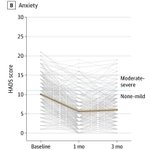
ALT Longitudinal changes in depression (measured by the Participant Health Questionnaire-9 [PHQ-9]), anxiety (Hospital and Anxiety Depression Scale [HADS]), and posttraumatic stress disorder (PTSD; measured by the 6-item PTSD Checklist [PCL-6]) following psilocybin services (baseline, 346 participants; 1 month, 321 participants; 3 months, 312 participants). Orange band indicates 95% CIs; horizontal blue line, delineation between moderate-to-severe symptoms and none-to-mild symptoms.


ALT Serum total testosterone by coffee intake group, stratified by sex.

ALT Schematic Illustration of 6 Colorectal Cancer (CRC) Cases, Either Exposed to Screening (Study Group) or Not (Control Group)

ALT Qualitative results for organ and bone segmentation on the PAXRay++ dataset. emDice segmentation comparisons macro-averaged per organs and bones (n = 1, 476 test images).

ALT Early detection of infectious avatars by the PPS system. a, VR setup. Participants were first exposed to a neutral avatar (baseline) and then assigned to one of three cohorts encountering neutral, infectious or fearful avatars in a second session. b, PPS task. Participants responded to tactile stimuli on their face, delivered either in empty space (unisensory) or combined with an avatar approaching (multisensory). Tactile stimuli (flash icon) were presented at five delays, with the avatar located at one of five distances (D5 = far, D1 = near). c, PPS representation across cohorts. Reaction times (RTs) to multisensory stimuli were normalized by unisensory RTs (dotted line) and plotted by avatar distance. Shaded areas illustrate the PPS gradient, defined by significantly faster multisensory RTs (P < 0.05, corrected; paired-sample t-tests); N = 15 per cohort. Data are shown as mean ± s.e.m. (see Supplementary Table 3 for full statistics).