

Marketing leader turned AI builder. Practical AI for marketing and business. Could we work together? Start a chat on my site ↓ https://teapawt.org/t.co/egzkJKjcu8
New York
Joined September 2025
- Tweets1K
- Following607
- Followers1.6K
- Likes1.1K




Pinned Tweet
The person who owns weekly reporting for a behavioral health marketing team used to spend about 10 hours on it. Now it's about 2.
I built a workflow that pulls all their data sources into one store and generates the report from there. They still read it and make the calls. They just don't spend most of a day building it.
I'm basically the AI guy for their marketing team now.
If your team has a report that eats a day every week, there's a chat on viableedge.com where you can walk through it with me.

Why your next AI tool will fail, here's what I keep seeing with clients:
They buy the seats, run a prompt workshop, roll out a chatbot, and three months later the output is still generic or wrong.
The tool usually isn’t the problem, the AI can’t see or access what the company knows.
Here’s the exercise I run with every new client 👇

Last: who keeps it current?
With most clients, at least one answer comes back “nobody.” That’s the first thing to fix, AI or not.
An AI pulling an answer nobody maintains will give a confident wrong answer.
There must be an owner, and if there isn't I strongly advise assigning one.
I've even seen "knowledge manager" roles get created around this, new jobs!
What you end up with is a short list: the knowledge your AI needs, where it is now, and what it takes to keep it right.
It costs nothing but time and focus and gives you the foundation for mapping out a system (as opposed to a workflow)
Tools may be amazing, but they'll only perform as good as the knowledge that's fueling them.
Took a dead site that had been offline for months, pointed a Claude Code project running OpenSEO at it, and let it work.
Under 3 weeks later: 0 to 23.1K Google impressions.
Clicks? 54. Here’s why that’s the number I care about least right now 👇

The part that surprised me: the agent’s top page is “Pet-Friendly Laundromats Near Me.”
I never would have prioritized that. It found the niche angle on its own, and that page is already pulling the most clicks.
SEO used to feel like a technical specialty. Keywords, page optimization, backlinks, you needed a person for that.
Now it's just part of the language a marketer speaks. Nobody puts "knows what a backlink is" on a resume anymore.
I think AI fluency is going the same way. Connectors, agents, building a workflow in Claude Code. Right now it still reads like a specialty. In a few years it's table stakes, and the bar for every marketing role moves up with it.
That's uncomfortable, especially for people who were never expected to learn this stuff. I get it. I'm not technically trained either. I spent two decades in enterprise brand, digital and eCommerce, and now I build these systems inside marketing teams in Claude Code and Codex, inside their IT and compliance guardrails.
What changed for me was dropping the question "how do we do this process faster." We don't think in terms of human process anymore, we think in terms of the outcome and how we can engineer that outcome with these tools.
That's a skill you can learn without a CS degree. You just have to start before it's expected of you.
Did you know Claude Code Projects can update its own instructions?
Set a weekly routine to assess the last week's productivity and efficiency, and to recommend updates to the project instructions.

Great way to start Friday, opened Slack to this feedback from my client:
"This is exactly what I envisioned when we started building the knowledge architecture behind this system. It's actually using the institutional knowledge we've built into the system."
Most marketing associates I work with are so talented, wise, creative and experienced.
They're short on hours.
And many of those hours are not spent on impactful outcomes, they're spent doing mundane and tedious tasks necessary to produce the actual work.
They know MCP connectors and agents exist. They want to learn them. They're still living in one disposable chat session because they simply don't have the time, or know where to start.
So the first thing I usually do is give them hours back. The weekly report for a behavioral health marketing team went from about 10 hours a week to about 2, and with a better report product!!
Then they have to get comfortable spending those 8 hours on something new, and not let the old work quietly fill them back up. Finding something new is not an issue, it's backlog relief in a lot of cases.
Honestly that's most of why I'm there and it's so rewarding to get the reactions.
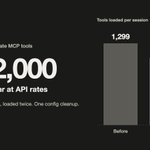
⚡️Hot Tip: Claude Code session context gets bloated with tools, and over time can add up to costly waste.
Here's a simple prompt that could save you $$$:
Disable all connectors with zero calls in the last 30 days.
I found unused and duplicate connectors, collectively reducing tool load by almost 25%.
This adds up to roughly $2,000 reductioin in API costs annually (Opus 5.5) based on my personal usage rate!
You can put this on a monthly schedule to keep it clean. The connectors are not removed, just disabled and can be flipped back on right from the prompt bar menu.

AI's impact on marketing departments from a contractor's view.
I help marketing teams adopt and transform with AI and these are some anecdotal observastions based on my journeys with clients, prospects, and networking.
This is not scientific, just one dude's observations, so take it with a grain:
1. Headcount is remaining mostly flat, but roles are changing.
2. AI / AEO Dedicated roles are replacing content manager, customer lifecycle.
3. Paid media roles are still in demand and adopting AI more quickly than other marketing functions.
4. Migration from older tools to AI native tools is a capability gap that contractors and agency/vendors are filling.
5. Creative roles are expected to leverage AI, not necessarily for creation, but for supplementing the work around managing and deploying creative assets.
6. Creatives feel pressured to keep up with AI driven volume and speed but can't, and are skeptical of internet gurus (1000's of ads and campaigns in market, etc)
7. In-house video and motion creators feel emboldened by new tools and capabilities because they can create, prototype, conceptualize and present a selection of proposed executions very cheaply and quickly.
8. Associates at all levels are largely still spending their day inside one disposable chat session, but are acutely aware and interested in figuring out MCP connectors, autonomous agents, and skilling up - they just dont have the time (unless it's structured with my guidance).
9. Less "magic bullet" syndrome - I'm seeing a lot more normies with a realistic perspective on AI's capability, this time last year many considered it a magic bullet that would solve their problems overnight, now there's a much more realistic stance on AI's value contribution and what it can do.
10. Claude is king, most if not all of my professional engagements (non-individuals) are using Claude as their platform of choice.
Are you seeing the same thing? Share what you're seeing!
I run a lot of bots and I don't read most of what they do.
Each initiative has one "CEO" bot. The CEOs can spin up their own bot teams, and to be honest I ignore those teams completely. I only pay attention to the CEO.
Above them sits a Chief of Staff bot. It writes me a daily brief from what the others did, plus a weekly scorecard. There's also a shared "SEO agency," a bot team running OpenSEO locally on my machine through docker and tailscale. The CEOs and the Chief of Staff coordinate on that between themselves.
That's what keeps things moving when I go heads-down. I surface for the brief and for approvals, and nothing goes out without my OK.
If you're just starting, don't build this. I got here one job at a time. Support and tasks are a good first pair. Add the brief once there's enough happening that you need someone to summarize it.
Great breakdown. Prompts are basicall trivial at this point.
What makes a bot team work well are deceptively simple instructions that assign one clear job per bot, approval checkpoints before anything goes to market, and similarly with posts or spends.
That's what I set up for small businesses in a week.
Also in Hermes and Claude Code Projects if Grokbot isn't your tea.
teapawt.org/milesdeutscher/status/…


A behavioral health marketing team was tracking how they show up in AI search across 15 prompts. Now it's 95.
In healthcare, the marketing team can't just open ChatGPT and start pasting things in. So I set up a HIPAA-compliant Claude Enterprise workspace for them first. Once they had somewhere they were actually allowed to work, the monitoring could grow past a short list someone checked by hand.
They still decide what to do with what they see. Now they're looking at a lot more of it.
If you're in a regulated space and stuck at the "we're not allowed to use it" step, there's a chat on viableedge.com where you can talk through your version with me.
These 10 prompts are really SOPs. Notice every one ends with "ask me before you submit or pay." That's the whole game for a small business: write down the steps and the stop-and-ask rules first, or the model just clicks through someone's guesses. Every agent I run drafts and waits for my OK. teapawt.org/KanikaBK/status/211500…

