

Haig & Isabel Berberian Professor of Armenian Studies @Fresno_State; @PembrokeOxford @StAntsCollege @BritishAcademy_ Chess FIDE Master. Views are my own.
Fresno, CA – Oxford
Joined April 2012
- Tweets7.2K
- Following724
- Followers1.1K
- Likes9.7K






Pinned Tweet
You can now download my book 'Women, Too, Were Blessed: The Portrayal of Women in Early Christian Armenian Texts' from brill.com/view/title/57649 if your institution has access to Brill's 'Armenian Texts and Studies' series.

David Zakarian retweeted

Official word is in! 🏔️✨
National Geographic has named Armenia one of the Best Places in the World to Visit for 2027!⚡️
From ancient monasteries hidden in lush forests to epic mountain trails and world-class ancient winemaking regions, Armenia is quickly becoming the ultimate dream destination for adventure travelers.
Who’s ready to pack their hiking boots? 🥾🍷
🔗 nationalgeographic.com/trave…


David Zakarian retweeted

Well. Here it is: a new book that has been keeping me busy for a while. The Seventh Continent: Antarctica and the Southern Oceans. Past, Present and Future 1/5


David Zakarian retweeted

Pix of Dadivank (meaning “Monastery of Dadi” in Armenian) during Soviet Azerbaijani occupation and after the liberation of Karvachar and the restoration of the monastery by Armenians. But please let the people whose ancestors invaded & sacked the area make claims about “looting.”


Azerbaijan Escalates Cultural Genocide, Files Interpol Claim Accusing Armenia Of "Looting" Occupied Dadivank Monastery
➖➖➖
Azerbaijan's cultural heritage agency accused Armenians on Monday, September 21, 2026, of "looting" Dadivank, the 9th to 13th century Armenian Apostolic monastic complex in occupied Artsakh (Nagorno-Karabakh), as Armenian forces withdrew from the Karvachar (Kalbajar) district under the November 2020 ceasefire that ended the 44-Day War. The accusation lands 9 days after Azerbaijani presidential aide Hikmet Hajiyev personally led approximately 150 representatives of 58 countries' diplomatic corps and 9 international organizations on a two-day tour of occupied Artsakh, during which he rebranded Dadivank and Gandzasar as "ancient Caucasian Albanian Christian" sites.
Sabina Hajiyeva, who heads Azerbaijan's State Service for the Protection, Development and Restoration of Cultural Heritage, said crosses, bells, and "other elements belonging to the complex" were taken. "The frescoes were also cut from the walls and stolen, and were later displayed at various exhibitions abroad as 'works of art of Armenia,'" she said. Hajiyeva named no inventory of missing objects, no photographic record of the walls before and after the handover, and no exhibition at which the frescoes were said to have been shown.
Baku filed the claim with Interpol's Stolen Works of Art Database on October 9, 2025. Hajiyeva also claimed that Armenian "restoration" work at Dadivank was carried out between 1997 and 2011 at the expense of the Republic of Armenia and the Armenian Apostolic Church, and that Armenian "restoration" of the monastery's frescoes began in 2014. The two claims contradict each other. Baku accuses Armenians of both looting the frescoes and restoring them.
Armenian specialists have documented the opposite pattern at the site. The Geghard Scientific Analytical Foundation has described Azerbaijan's approach to Dadivank as a standing propaganda method, arguing that Baku recasts the monastery's Armenian inscriptions as modern forgeries inserted between 1993 and 2020, and calling the practice "denialism and the invention of non-existent facts."
Armenia's Foreign Ministry has not issued a formal statement on Baku's heritage attacks. Foreign Minister Ararat Mirzoyan told reporters last week that the Pashinyan government was "very satisfied with the position and conduct of the Matenadaran," which had issued its own institutional response to Hajiyev's September 12 propaganda tour.
Dadivank stands above the Tartar river gorge in the Kalbajar district of occupied Artsakh. The surviving complex dates mainly from the 9th through 13th centuries. Its main church, St. Katoghike Astvatsatsin, was built in 1214 by Princess Arzu-Khatun, wife of Prince Vakhtang Vakhtangyan of Upper Khachen, in memory of her husband and their two sons, Hasan and Grigor, who fell fighting Turkish invaders. Her Armenian inscription, which covers the entire entrance wall of the cathedral, reads in part: "My first-born Asan martyred for his Christian faith in the war against the Turks, and, three years later, my younger son Grigor also joined Christ." The monastery is named for St. Dadi, a disciple of Thaddeus the Apostle, who spread Christianity in Armenia in the 1st century AD. Dadivank has served as an active center of the Armenian Apostolic Church for more than a millennium, with an uninterrupted Armenian liturgical tradition.
Azerbaijani officials call the site "Khudavang" and present it as Caucasian Albanian rather than Armenian, a state-manufactured revisionist framing that Azerbaijan has aggressively promoted since 2020 to detach Armenian religious heritage from Armenian identity. Azerbaijan's Udi community held services at Dadivank in 2021, and in 2024 the Vatican's official newspaper described the monastery as Albanian heritage, a characterization Armenian scholars rejected as unsupported by the site's own Armenian epigraphy. On September 12, 2026, Hajiyev told the foreign diplomatic delegation at Gandzasar that "Nagorno-Karabakh has been, is, and will remain the cultural heart of Azerbaijan and the Azerbaijani people," and accused Armenians of altering both monasteries through what he called "external intervention" under the guise of "restoration."
The Interpol filing is part of a wider Azerbaijani escalation. On the same day Hajiyeva announced the "looting" claim, she publicly called for "research into Caucasian Albania's heritage" to be conducted inside the Republic of Armenia itself. On September 21, Baku's state-organized "Western Azerbaijan Community" announced the creation of a working group to study "Albanian heritage in present-day Armenia," building toward the territorial claims Azerbaijani President Ilham Aliyev has made on the Republic of Armenia as "Western Azerbaijan."
The pattern documented on the ground contradicts Baku's cultural heritage claims. Cornell and Purdue Universities' Caucasus Heritage Watch, which monitors 518 cultural heritage sites in occupied Artsakh using satellite imagery, has documented the destruction of the 177-year-old St. Hovhannes Mkrtich Church, known locally as Kanach Zham, in occupied Shushi between December 28, 2023 and April 4, 2024. Caucasus Heritage Watch has also documented the destruction of the 18th to 19th century Ghazanchetsots cemetery in Shushi within the same time frame, damage to the archaeological remains of the 1838 Meghretsots Holy Mother of God Church, and the destruction of the Yerevan Gate cemetery. The U.S. Commission on International Religious Freedom placed Azerbaijan on its Special Watch List in its 2025 Annual Report, specifically citing Azerbaijan's "organized destruction of Armenian religious and cultural heritage in Artsakh."
The accusation lands 3 years after Azerbaijan's September 2023 ethnic cleansing forcibly displaced 120,000 Armenians from occupied Artsakh, following a nine-month blockade that former International Criminal Court prosecutor Luis Moreno Ocampo concluded constituted genocide under the Genocide Convention. Nineteen Armenian hostages, including former Artsakh military and political leaders Ruben Vardanyan, David Babayan, and Davit Ishkhanyan, remain unjustly imprisoned in Baku. The International Committee of the Red Cross, the last independent body with access to the Armenian hostages, was expelled from Azerbaijan in September 2025. In December 2021, the International Court of Justice ordered Azerbaijan to prevent and punish acts of vandalism and desecration against Armenian cultural heritage. Azerbaijan has never complied.
Foreign Minister Ararat Mirzoyan and Prime Minister Nikol Pashinyan are in New York for the high-level segment of the 81st session of the UN General Assembly, September 22 to 25. Mirzoyan has said Azerbaijan's conduct on heritage questions works against the peace process the two governments are negotiating.

I’ll be in New York on Monday to give a lecture at Columbia University’s Armenian Studies programme, focusing on the colophons of medieval Armenian manuscripts. If you are around NYC and free that evening, please feel free to drop by. It would be wonderful to see you there!

David Zakarian retweeted

An embarrassing exercise in state identity-building, and a desperate attempt at narrative-construction. This is textbook behavior for regimes that suffer from ontological insecurity. For such regimes, where identity construction is incoherent, revisionist, and conflict-driven, it must constantly engage or initiate charades that can induce manageable conflict. As such, being conflict-prone becomes inherent to the very identity that it is seeking to construct. States that suffer from identity-induced ontological security problems become attached to some modality of conflict-persistence as an extension of their state identity. In the Aliyev regime, its state identity is constructed on the Nagorno-Karabakh conflict and some configuration of anti-Armenianism. Without these two factors, the Aliyev regime loses agency, for it deepens its identity crisis and enhances its ontological security dynamics. What Hikmet is doing is he is inversely mocking his own regime through cringe diplomacy.

Together with the diplomatic corps, we visited the Ganjasar and Khudavang churches — an integral part of the ancient Albanian Christian heritage.
Ganjasar was established in the 13th century by Hasan-Jalal Dawla, the Caucasian Albanian ruler, and stands as an important testament to the centuries-old Christian heritage of Caucasian Albania.
During the years of occupation, these monuments were subjected to external interventions under the guise of makeshift “restoration,” compromising their architectural authenticity and original character.
Every historical, cultural and religious monument on the territory of Azerbaijan, irrespective of its origin or religious affiliation, forms an integral part of our country’s rich cultural heritage. The Azerbaijani state is committed to their protection, preservation and restoration.
Azerbaijan’s experience in safeguarding its multicultural and multireligious heritage has earned international recognition. We stand ready to share this experience with other countries, including our neighbors.
We also invite media outlets engaged in spreading fake news and misleading narratives on this issue to visit these sites and see the reality on the ground for themselves.
Seeing is believing.
#ChristianChurch #Christianity
David Zakarian retweeted

My new op-ed on the grotesque spectacle of Western diplomats touring an emptied Nagorno-Karabakh, dancing, posing at monuments to ethnic cleansing built over the ruins of Armenian homes, while lending their presence to Baku’s historical revisionism.
civilnet.am/en/news/1014118

David Zakarian retweeted
I struggle to think of anything more shameful, indecent, and cringy I've seen recently than Western diplomats visiting ethnically cleansed Nagorno-Karabakh and willingly allowing themselves to be used as extras in the shitshow orchestrated by Baku.
David Zakarian retweeted
Four years ago today, Azerbaijan launched a major two-day invasion of Armenia, seizing strategic border heights. This gave Baku significant coercive leverage, placing them in a position to easily sever Armenia's south (Syunik). The blockade of Karabakh followed 3 months later.

ALT via https://civilnet.am/en/news/980654 https://www.google.com/maps/d/viewer?mid=1L-IXrgLL_gD-Gu6PoXuI2ZN0oC7ab4U&femb=1&ll=39.56491372327362%2C45.72478560904364&z=9

ALT Aliyev https://web.archive.org/web/20230111072736/https://president.az/en/articles/view/58555

ALT Crisis Group https://www.crisisgroup.org/rpt/europe-central-asia/caucasus/nagorno-karabakh-conflict/266-averting-new-war-between-armenia-and-azerbaijan
David Zakarian retweeted

some results of the ruscists' attack in the #Odessa #Odesa 🇺🇦 city center, not too far from our place (photos by Michael Shtekel): facebook.com/mishajedi/posts…

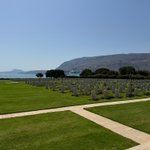
A week ago I visited the beautifully maintained Suda Bay War Cemetery in Chania, Crete, where 1,527 Commonwealth servicemen of the WW II are buried.
UK: 862
New Zealand: 446
Australia: 197
South Africa: 9
Canada: 5
India: 1
Others: 7
– 780 service personnel remain unidentified


David Zakarian retweeted

10 years ago my wife, the mum of our kids & the MP for Batley&Spen was killed by a far right extremist.
At anniversaries I try to be optimistic about the future. But not this time. In the ten years since she was killed we have gone backwards & I fear our democracy is now at risk

David Zakarian retweeted
Very moving memorial service @KebleOxford for the late great Professor Dame Averil Cameron. An honour to give the address about her career as a scholar.


David Zakarian retweeted

The Republic Day in Armenia is celebrated with an impressive military parade in the Republic Square of Yerevan.
Happy Republic Day, Armenia!

On the last day of the semester, I stopped to photograph the pomegranate tree beside the Armenian Genocide Memorial at California State University, Fresno, only to catch a cheeky visitor helping itself to the still-unripe green pomegranates. 🍃🐿️


David Zakarian retweeted

Dan Gallaher and I are pleased to announce the second workshop on Transmitting and Preserving Languages in the Medieval and Early Modern Mediterranean
👉 @BalliolOxford, 4 June 2026
Full programme: balliol.ox.ac.uk/events/2026…
Speakers & Registration ⬇️

David Zakarian retweeted
On 5 June 2026, there will be an exhibition and workshop on Greek and Armenian Manuscripts from the Bodleian Libraries on 5 June 2026. It is co-organised by Nina Sietis (The University of Cassino and Southern Lazio) and David Zakarian @The_Archpoet (@Fresno_State)
David Zakarian retweeted
not gonna miss the chance to repost the majestic trio


👁 Another masterpiece set in a gorge among red cliffs - the Noravank monastic complex, built in the XIII - XIV centuries on lands that belonged to the Orbelyan princes. #Armenia
