

Cognitive psychologist and decision scientist @TU_Muenchen. Risk, attention, adaptive cognition, computational modeling, process tracing, research methods.
Berlin, Germany
Joined November 2021
- Tweets36
- Following101
- Followers408
- Likes76
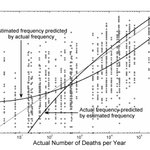


The widely cited study by Lichtenstein et al. (1978) concluded that people overestimate the frequency of dramatic causes of death (e.g., Tornado). A new article in @CognitionJourn finds that these results do not replicate (Open Access):
sciencedirect.com/science/ar…
🧵1/5

@kevinetiede bridges the description-experience gap, just by mixing the two learning modes #spudm23


New publication in JEP:General (with J. Groß, @bk_kreis, H. Blank) demonstrating that hindsight bias—commonly viewed as reflecting a mental flaw—results from beneficial knowledge updating. 1/3
We are hiring! The Chair of Behavioral Research Methods @TU_Muenchen has openings for 2 postdoc or predoc positions (100%) on computational modeling of behavior. Application deadline is September 22. For more information: msl.mgt.tum.de/en/brm/job-op…

Join our team @TU_Muenchen! The Chair for Behavioral Research Methods is offering two postdoc or predoc positions (100%) on computational modeling of cognition. Application deadline is April 14. More information can be found here: msl.mgt.tum.de/en/brm/job-op…

New article in Cognitive Psychology. It challenges the common assumption that when all attribute information is openly displayed (i.e., decisions from givens), people generally rely on automatic compensatory decision strategies. 1/4 Read it here: authors.elsevier.com/a/1f92A…
In our children sample (5–9 years) we find that risk taking increases with age in a description-based task (gamble task), whereas in an experience-based task (BART), risk taking decreases with age. We examine these task-dependent age trends with computational modeling. 🧵2/2
2
New article in the Journal of Experimental Child Psychology on “Developmental differences in description-based vs. experience-based decision making under risk in children” (with J. Rolison, T. McCormack, & A. Feeney). authors.elsevier.com/a/1egJI… 🧵1/2
We compare lay adults, adolescents, and experts. Results show that “naturalness” is a key factor in all three respondent groups. Adolescents’ food perception is already quite elaborate, but their responses show larger heterogeneity than that of lay adults, and experts. 2/2
New paper in JEP:Applied with Sonja Perkovic and Tobias Otterbring. What factors shape people’s cognitive representation of common food products? And what predicts the subjective healthiness of a food? psycnet.apa.org/fulltext/202… 1/2
5
Congratulations to @VZilker from @arc_mpib for winning the 2021 Gender-Forschungspreis awarded by the @FU_Berlin for her fabulous dissertation on "Measuring and modeling the construction of preferences in decision making under risk"! So well deserved.🎉🎲