

Every stock has a story 🗞️ Shop 1,000s of original Wall Street Collectables. https://xitter.cf/t.co/ChJcahZTmY
Wall Street
Joined December 2013
- Tweets20.1K
- Following686
- Followers108K
- Likes106K





Pinned Tweet
In the late 1800s, oil tycoon John D Rockefeller invested in railroads and other supporting industries like the Northwest Equipment Co in Minnesota to diversity his wealth beyond oil.
In the 1880s, his fortune was so vast it would be like controlling ~$430 billion today, more influence than any present-day billionaire. He was diversifying well before antitrust scrutiny hit, Rockefeller made sure he’d stay rich even if, and eventually when, Standard Oil was broken up in 1911.
Ticker History 🗞 retweeted

It started by accident. In 1886, as the Statue of Liberty was unveiled, Wall Street brokers got so caught up in the excitement they started hurling ticker tape out their windows onto the crowd below. New Yorkers loved it so much, they never stopped.
Since 1886, over 200 ticker tape parades have marched through the Canyon of Heroes by honoring military victors, athletes, explorers, and public figures for extraordinary achievements.
Wall Street didn't just build American finance. It built a community that knows how to celebrate.
Join NYSE tomorrow as we do exactly that for the champs 🏆 @nyknicks


Long time Elon Investor Ron Baron compared SpaceX’s IPO to the early days of the Dutch East India Company’s (VOC) 21 year shipping monopoly in 1602.
Peak VOC inflation-adjusted valuation, was ~$8.2 trillion. 4–5x larger than SpaceX’s current ~$1.8–2T valuation.
VOC employed 70,000 people globally (nearly 400 years ago).  SpaceX employs roughly 13,000 today.
The VOC created its own military forces, and even initiate wars around the world. 
The VOC at its peak controlled an estimated half of all global maritime trade.
Can $SPCX 10x?


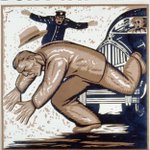
"Jaywalking" was propaganda created by big auto, resulting in one of the fastest shifts in public opinion ever recorded.
In 1905, if you stood on a busy American city block, the street was a commons. Vendors worked the middle of the road. Kids chased each other between horse carts. Nobody owned it.
Then came the car, along with lawyers, the lobbyists, and the propaganda.
In 1923, newspapers blamed drivers for pedestrian deaths. By 1924, they were blaming jaywalkers.
The secret weapon was a slur. Calling someone a "jay" in the 1920s meant calling them a hick. Too dumb for city life. Stick it in front of "walker" and you didn't have a victim anymore. You had an idiot who deserved what he got, a Jaywalker.
Historians call it one of the most dramatic shifts in public opinion ever recorded.


Ticker History 🗞 retweeted

I bought and framed some cool old stock certificate from Ticker History if that’s what you’re into


“I am an optimist because I don't see the point in being anything else” - Abe Lincoln.
Born 217 years ago, today.

"You have to have something powerful for transportation. Purple and red are something you remember. We talked about the feeling we would like people to have on the train. Finally, we coined a phrase that we wanted the cars to be 'conservatively groovy.'"
Carolyn Settles, Auto-Train Designer, 1970s (h/t Peter Dibble YT)


If you're a NYer who fled to Florida via the Auto Train, you'd appreciate this
youtu.be/7MZpRoC4g5w?si=ZjfY…


🚨 Going live with Mr. Financial History (@InvestorAmnesia) tonight.
Come and get a piece of stock market history and learn a thing or two.
6:30PM EST !
whatnot.com/s/VW27t2mz

Ticker History 🗞 retweeted
Stock exchanges are so boring compared to this 1600s alternative...
The Dojima Rice Exchange in 17th century Japan (aka world’s first futures market) had some crazy quirks:
Opening bell? Lame!
• Each day, officials lit a cord on fire, and trading continued until it went out.
• Price at extinguishment = official closing price.
• Still trading after close? Officials dumped water on such traders.
Investors gaming the system:
• Traders on a hot streak would fan the flame to keep the fire burning longer.
• Traders losing money would blow the flame out to end trading.
Ticker History 🗞 retweeted

29 years I debated whether I could afford to spend $50K to buy the domain name I really wanted for Netflix (replay.com). I decided that was crazy money. Netflix it was.
Now they can afford to pay 70 Billion for something.
Who woulda thunk.
Imagine you're an investor in 1610.
You and your boys are proud owners of Dutch East India Co. stock, which was granted a monopoly on all Dutch trade in Asia by the government. Bullish.
And yet, even after raking in profits since its 1602 IPO, the company refuses to pay a dividend. Stingy.
The first activist investor, Isaac Le Maire, starts publicly calling out management for enriching themselves at shareholders' expense and shorts the stock.
As momentum builds, management finally agrees to pay out dividends to shareholders. Nice!
There's just one catch...
It was paid out in spices. Not cash.
Shareholders received "mace at a value of 75% of the nominal capital".
That's right, the first dividend in history was paid in spices. How far we've come!

We can't' offer you 17th century spices, but if you love this type of investing and stock market history...
Why not own a piece of your own?
We have everything from original Standard Oil certificates to Enron shares.
shop.tickerhistory.com/

Ticker History 🗞 retweeted

one of my favorite episodes in financial history.
the reason they paid the dividend in spices was to burn short sellers who had to deliver those spices in kind to the people they had sold to. and isaac lemaire was shorting because he wanted to find his own path to the east indies, which he did. and then the dutch government said nah and he died penniless.
you can’t arbitrage the government.
Imagine you're an investor in 1610.
You and your boys are proud owners of Dutch East India Co. stock, which was granted a monopoly on all Dutch trade in Asia by the government. Bullish.
And yet, even after raking in profits since its 1602 IPO, the company refuses to pay a dividend. Stingy.
The first activist investor, Isaac Le Maire, starts publicly calling out management for enriching themselves at shareholders' expense and shorts the stock.
As momentum builds, management finally agrees to pay out dividends to shareholders. Nice!
There's just one catch...
It was paid out in spices. Not cash.
Shareholders received "mace at a value of 75% of the nominal capital".
That's right, the first dividend in history was paid in spices. How far we've come!