

Aerospace Engineer, Physician, Author? Not trying to sell you anything, come learn for free 👇
Joined August 2026
- Tweets230
- Following600
- Followers199
- Likes339




Pinned Tweet
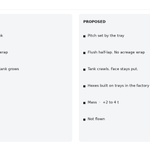
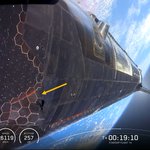
A testable solution to Starship’s heat-shield problem that does not treat wrap as a forever part.
Proposal: hex pitch on a tray. 301 crawls in the slots. Felt is an attic, not 18,000 gaskets.
Hexes stay put on a tray. Trays walk a few mm.
Trays get tiled in the factory.
@elonmusk @SpaceX

Inspiring!

Stanford Medicine orthopaedic surgeon and U.S. Army veteran Constance Chu, MD, uses advanced imaging technologies to detect early signs of joint disease and improve patient care, including for fellow veterans. Learn how her military experience continues to shape her clinical practice and research.
med.stanford.edu/news/insigh…

4
332
Clever!

How to explant an abdominal aortic endograft using the syringe technique! @pferrada1 @SWexner @TomVargheseJr @juliomayol @CiruAndes2 @BJSAcademy

1
22
What a golden opportunity for @Rivian and others. As Tesla abandons the consumer passenger vehicle market, who will step up to fill the void?
61
The best Powerscribe feature is when you say, for example, "macro spine" and instead of inserting your spine macro it literally just spells out "macro spine" on the screen.
It's like the ultimate power move. Maybe that's why they call it Powerscribe.
3
13
569
At some point you realize life passes in the blink of an eye. If you don't slow down and stop focusing on task after task, chasing project after project, you'll miss out on the real beauty in life... Time with those you love, enjoying a sunset without phones or other distractions, or even just sitting outside and appreciating the beehive of activity constantly surrounding us, whether in the middle of a city or deep in an undisturbed forest.
So you tell yourself this is going to be the last one. After this current project gets finished or goal gets met, you're going to back off and make time to enjoy the simpler things in life. And when that day finally arrives, you feel good you've accomplished your goals and look forward to what the next day brings in a carefree world.
Then you wake up the next day and start your new project.
7
379
There's a non-zero probability the entire world economy momentarily crashes the day GTA6 is released.
2
150
Why is phone autocorrect still so bad?? In the world of AI where you have chatbots indistinguishable from humans and programs that can translate whatever you say into another language (even in your own voice!), how is it that the device billions of people interact with everyday hasn't substantially improved in decades?? Bring back T9 or the Blackberry 😂
1
1
159
THE TIME HAS FINALLY ARRIVED!
How are MRI images ACTUALLY created? You’ve heard the Fourier Transform does something then out pops an image, but since we can’t ask Monsieur Fourier himself what the heck is going on, we’re going to have animate the process ourselves using cold hard math and programming.
No vibe coding here, just good vibes and good animations. By the end of the lecture, you’ll see this beautiful process in its truest form and life will never be the same, so buckle up for the magnum opus of MRI Physics EXPLAINED!
Full lecture link 👇
youtu.be/0sxbHRQE8bw
1
99
Could this trial even be performed in the US??

Original Article: Mechanical Thrombectomy 24 to 72 Hours after Large-Vessel Ischemic Stroke (LATE-MT trial) nej.md/3VWTUpV
Editorial: Expanding the Evidence and Indications for Thrombectomy in Ischemic Stroke nej.md/4hWsxVs
#Neurology #Surgery

ALT Bar graph showing the percentage of patients on the Modified Rankin Scale, comparing "Intervention" (N=167) and "Control" (N=167). Scores range from 0 to 6. The distribution is labeled with percentages for each category.

ALT This image shows a forest plot comparing the intervention and control groups. Subgroups include age, time from onset to randomization, and type of stroke. Hazard ratios with 95% confidence intervals are displayed, indicating whether the intervention or control is better for a primary outcome.
2
1,096
As a huge sci-fi fan, the closure of BioWare and with it the Mass Effect IP is especially heartbreaking. Mass Effect 2 was an absolute masterclass of sci-fi world-building and storytelling, at one point even being honored by the Smithsonian. If you haven’t experienced it yet, I highly recommend you check it out. The worlds and set-pieces alone were enough to be a hit, but it was the deep story examining everything down to what it means to be human that sets it in a league of its own.
Perhaps the greatest reminder in all of this is that we often mistakenly associate works of great video game and cinematic art with the studio that develops them. BioWare, Rockstar, Pixar... all household names, but can you name the people that were actually behind all their hits? A little more difficult, isn’t it?
And that’s the problem at hand. There were actually very specific people working for these studios that are truly the ones responsible for taking these stories and elevating them to greatness. Even if just a few of them leave, the impact can be devastating, akin to baking a recipe with a key ingredient missing. You can continue to dress these IPs up with the same visuals, put in familiar characters and story elements and throw hundreds of millions of dollars at them and still fail to recreate that magic.
BioWare is not the only one to fall victim to this. Ask George Lucas and Disney. A GTA without Dan Houser and other key figures may meet a similar fate. It’s hard enough for band members who’ve been together for decades to produce hit after hit, so why should we assume a video game or movie will be great just because a studio name is attached to it?
Maybe that’s the biggest lesson of all. We should be putting more emphasis on the actual individuals making these products rather than the corporate corporate entities behind them. You know what you’re getting with a Christopher Nolan movie. You can’t say the same for faceless IPs. And that’s exactly why I decided to start writing the stories I’d like to see and put myself out there so I can control the IP and stand behind it whether it’s great or if it sucks.
If you haven’t yet, check out what I’ve got so far over at timothykerriganmd.com/
The latest episode of MRI Physics EXPLAINED will be released this Sunday!
It's the longest and (imo) greatest lecture yet. I've literally been waiting years to show you all these custom animations where we build an image data point by data point in real time and can't wait for you all to see them.
While waiting, why don't you check out the previous episode on K-Space as a refresher? Link below. See you all Sunday!
youtu.be/uIIjWp6TEZc?si=HDl6…

1
6
403
This is one of the most insightful and on-point Radiology versus AI analysis I've seen.

Great post…thanks for sharing your thoughts. If I may opine on this as a radiologist with some technical understanding of LLMs/VLMs: I agree radiologists will not be automated away anytime soon. Your elastic demand point is mostly right (some modalities impart ionizing radiation so there is a good reason to not scan as frequently as you want), and I’d add a more fundamental one.
The current transformer-based AI algorithms are extremely sample-inefficient compared to humans, especially when it comes to vision tasks (as opposed to text-based tasks). When I was a radiology resident, I read maybe 3000 CTs of the chest, abdomen and pelvis to reach expert/attending level. I can also make a rare-disease diagnosis after having seen 1 example study (or none; I can make a real-life diagnosis purely from reading and seeing an example case from a textbook). Currently, the best radiology VLM models, such as Nvidia’s NV-Reason-CT model, do not reliably call even some of the most common pathologies, despite having trained on >70,000 CTs that surely contain many examples of a common finding (macro-F1 of 0.614). I can think of several reasons for this: these models usually leverage weakly supervised learning such as CLIP, pairing radiology reports with the images, since wide-scale expert annotation is impractical for every study for every finding (Radiology’s Bitter Lesson, if you will; however, the signal that can scale is the noisy one). To scale, the model(s) will need to learn to associate image findings with words in the radiology reports. However, using radiology reports as ground truth can substantially limit learning. (1) As any radiologist will tell you, we don’t mention everything that we see. Otherwise, your radiology report would be like 30 pages long and not clinically useful. We mostly call the things that matter (for the most part). Sometimes, we don’t even call things that matter. Thus, some reports may mention “diverticulosis” when there is diverticulosis, while other reports don’t, even if there are findings of diverticulosis in the images. (2) Another limitation is that the actual real ground truth is never confirmed, which I suspect is a much bigger problem and harder to correct. When I was a radiology resident, I saved many cases in which my attendings and I made a certain call, and I was curious if those were correct. Right before I was about to graduate, I checked every case I had logged. Many calls were incorrect (and I trained at a major academic center in which subspecialized radiologists read their part of the body, so the attendings making those calls are above-average radiologists; real-world data is likely much worse). (1) and (2) make training very difficult when there is so much incorrectness, ambiguity and noise in the training data.
The above observations are pretty self-evident when you look at other vision tasks, such as self-driving, for which there is (1) ample data with predominantly correct actions (labels), and (2) known ground truths (the task of driving is, for the most part, unambiguous. You see a red light, you stop. You want to make a left turn? You signal and yield to passing cars before turning. Those are universally agreed-upon “correct” actions). To use Tesla FSD as an example: even with the best compute, engineers and data, it took over a decade to reach limited, geofenced driverless service. And this is despite the fact that driving has a much shorter tail than radiology does. Further, self-driving usually has one correct action at a time. In radiology, that’s not true. There are so many different radiological appearances of one disease, as well as the same appearances of different diseases. And various diseases can involve the same anatomical location (for example, look up adrenal collision tumor).
To “automate radiology” is also a huge simplification. The vast breadth of radiological studies is seldom mentioned. For a single modality of a body part, there are so many different variants. Say, for example, CT of the abdomen and pelvis: there are at least 10 different flavors of this. To name a few, there is the non-contrast CT, the portal venous phase CT (bread-and-butter workhorse), and then there are specialized versions such as the liver mass protocol, CT angiogram GI bleed protocol, pancreatic mass protocol CT, adrenal mass protocol CT, kidney mass protocol CT, and CT urogram, each of which contains 3-4 phases and is tailored to answer a specific question. All of this is just one modality for one section of the body. Now do ultrasound, X-rays, gamma studies, PET studies, and MRI. And then consider all the other body parts (brain, head and neck, chest, etc.).
I’ve only touched upon the surface of all the nuances, but I think the current capability gap and your demand argument point the same way: radiologists will be busy for a long time.

I love this video because it shows this weird part of the human psyche that I'm not sure even has a name but on face value seems to go against survival and evolution.
As she stands on the ledge and looks down into the sea, you can see every cell in her body screaming danger, don't do this. And that's the correct biological response, why you do something that has a high rate of instantly killing you?
But then something takes over. An urge that I MUST do this. Two contradictory thoughts and emotions battling each other, one logical, the other highly illogical, playing out above the swelling ocean waters below. And in a select group a people, the illogical urge is the one that actually wins! She goes through her routine, calms herself down, and nails the jump.
You've all felt this as some point in your life. Maybe it was as a kid on your bicycle, staring at a jump that scared you to death and contemplating if you should try it anyway. Or maybe it's skydiving, on the tarmac staring at the plane that's going to take you to your doom. A lot of people listen to their gut and recede from the danger. Others throw caution to the wind and "dive" right in.
What is that and why do we have it?

1
193