

TraceRoot is building open-source observability and self-improving layer for AI agents. ⭐ us on GitHub
San Francisco
Joined July 2025
- Tweets69
- Following28
- Followers159
- Likes26




TraceRoot.AI (YC S25) retweeted

Spent last Friday at @ycombinator's "accelerate your company with AI" day. Best room I've been in this year.
Big takeaway: agents shouldn't be a tool you open. They should be teammates that keep working after you close the laptop.
Great to meet @RagavSachdeva (Teaflask), @simulated_land (Asteroid), @itsmarinos (Prized), @rak3sh_m (Zarna), @jwonged (Hypotenuse AI) + Edward Tiong (Readily). Thanks @garrytan @koomen @t_blom for the talk on AI-maxxing your team! 🧵

ALT YC AI founder day, Oct 30

ALT YC AI founder day, Oct 30

ALT YC AI founder day, Oct 30
How to follow an agent's answer back to the query and rows it came from.

A LangGraph SQL agent explained a $200 MRR drop with the right total and the wrong reason. Every span was green. The cause was a report the agent trusted.
Full write-up 👉 traceroot.ai/blog/langgraph-…

TraceRoot.AI (YC S25) retweeted
Great night at Kaiyō Rooftop tonight, thanks to @rhobusiness for hosting.
Met so many great founders, including @desno365, @Khaliqgant, Tamish from @cocreate_so, and Alex from Gradient (accounting for startups).
Sorry if I missed anyone!
SF skyline views didn't hurt either.


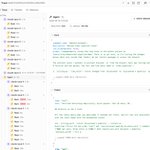
The checkout incident span tree in this post is the quickest way to see what a traced pi run looks like!
We run @TracerootAI 's in-app agent and our detector investigations on pi. Those investigations used to land as one paragraph, so a wrong conclusion couldn't be retraced. Now each one is a trace you can open.
Full write-up 👉 traceroot.ai/blog/tracing-pi…

TraceRoot.AI (YC S25) retweeted
Jev instrumentation in @TracerootAI , as promised 👀
`TraceRoot.initialize({ instrumentModules: { typeSafe } });`
Each Jev call shows up as a decision span, with tokens, cost and probabilities.
traceroot.ai/changelog/2026-…

How to set-up Jev as a judge in TraceRoot detectors?
First, you'll need a project receiving agent traces. If you haven't set that up, follow the tracing quickstart or try an example agent.
Quickstart 👉 traceroot.ai/docs/tracing/ge…
Example agent 👉 github.com/traceroot-ai/trac…

Then, go to Detectors → + New Detector and choose a template, such as failures or hallucinations.
Review its prompt, trigger conditions, and sampling setting, then select jev-1.13.0 under Detector Model.
Click Create Detector and send new matching traces. You can also switch an existing detector to Jev in its settings.


We went through 1,085 Reddit comments on debugging agents:
👉 313 comments discussed tracing and instrumentation;
👉 295 discussed evals and regression testing.
The frustration lived in the gap between them.
→ finding the one bad run among thousands that look fine
→ tracing it back to the step that caused it, often upstream of where the error showed up
Here's the full research 👇
traceroot.ai/blog/2026-10-06…

Your dashboard shows latency went up, but it can't tell you which step got slower or why.
You can ask the TraceRoot agent in plain English, something like "look at the traces from the past three hours and suggest code changes to reduce latency." It reads those traces next to your code at the commit that ran them.
Then it tells you which step is slow and what to change, along with the trace IDs and file paths it checked.
Full walkthrough on a Vercel AI SDK example 👇
traceroot.ai/blog/2026-10-01…

Jev from TypeSafe AI is now a judge option on TraceRoot detectors. It tells you how likely a trace is to have a problem and which kind, with the probabilities behind each call.
Setup walkthrough 👇
traceroot.ai/blog/2026-09-25…

Your agent reaches models through OpenRouter. Tracing it doesn't need a separate setup.
Point the OpenAI-compatible client at OpenRouter's base URL, and TraceRoot's existing OpenAI instrumentation traces the calls.
→ no separate OpenRouter instrumentor to configure
→ Python or TypeScript, with working examples in the guide
See more below 👇

One agent's logs are readable. A few agents passing work between them, much less so.
TraceRoot captures Microsoft Agent Framework runs, model calls and tool executions through the framework's native OpenTelemetry support.
→ enable the integration before you import the framework
→ the setup guide includes a multi-agent example you can run and inspect


Your agent went wrong somewhere in the loop. The trace shows which step.
TraceRoot's Python SDK traces Agno, DSPy and Google ADK agents plus direct Mistral calls. Each reasoning step, module or agent turn becomes its own span, with the LLM calls it made nested underneath.
→ token usage, cost and latency on every run
→ setup is one traceroot.initialize() call with the integration enabled, and each has a runnable example in the repo

