

Associate Professor of Economics @BrandeisU, interested in microeconometrics, applied econometrics, causal inference, and economic history.
Cambridge, MA
Joined April 2020
- Tweets347
- Following420
- Followers1.4K
- Likes657




Pinned Tweet
I am very happy to announce that my paper, "Interpreting OLS Estimands When Treatment Effects Are Heterogeneous: Smaller Groups Get Larger Weights," is forthcoming in @restatjournal. Below, I explain its contribution & implications for applied work.
doi.org/10.1162/rest_a_00953
1/n

Tymon Słoczyński retweeted

I'd like to announce that drlate, a Stata module for doubly robust estimation of the local average treatment effect (LATE) and the local average treatment effect on the treated (LATT), is now available in SSC.
Tymon Słoczyński retweeted

Professor @TymonSloczynski presented his paper, "Quantifying the Internal Validity of Weighted Estimands" (with Alexandre Poirier), at the 2026 Interactions Conference, which was hosted by the Becker Friedman Institute for Economics at the University of Chicago on May 15, 2026.

Tymon Słoczyński retweeted

Forthcoming in the AER: "The Effect of Omitted Variables on the Sign of Regression Coefficients" by Matthew A. Masten and Alexandre Poirier. aeaweb.org/articles?id=10.12…

Tymon Słoczyński retweeted

I’m really excited about this paper! Some of my work has pointed out problems in empirical work, but this one is all about new 🔧s.
If you (or your referees) want to know about the mechanisms by which a treatment affects an outcome, you may be interested. A 🧵.

Want to know about the mechanisms by which a treatment affects an outcome? This paper develops tools for testing hypotheses about mechanisms under weak assumptions. Check it out!
New paper by @jondr44 and Kwon:
restud.com/testing-mechanism…
#REStud
#EconX
#EconTwitter

Revised version out: Quantifying the Internal Validity of Weighted Estimands (w/ Alex Poirier, Georgetown)
We study when weighted estimands such as OLS/2SLS/TWFE can be read as ATEs for a subpopulation, and how big that subpopulation can be.
Link below. 1/13
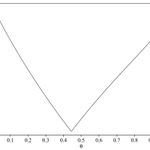
Example (3 time periods): internal validity is highest when two-thirds of units are treated in the last period – that's when TWFE weights become uniform. 12/13
Tymon Słoczyński retweeted
@TymonSloczynski , @sderyauysal, and I have an improved version of our covariate balancing paper:
arxiv.org/abs/2310.18563
The results are elegant (🙂) and practical. We show a particular covariate balancing propensity score, inverse probability tilting, has nice properties.

Tymon Słoczyński retweeted
In a study published in the American Economic Review, Prof. @aaehawkins finds that a large cash transfer to families of low-weight infants didn't "undo" long-term disadvantages.
aeaweb.org/articles?id=10.12…

Tymon Słoczyński retweeted

“The Long-Term Effects of Income for At-Risk Infants: Evidence from Supplemental Security Income” with @aaehawkins (@BrandeisEcon) @chrishollrah @smilleralert @mitchwongmdphd, and Gloria Aldana is now out in the American Economic Review! aeaweb.org/issues/816