

The World's First Open Platform for Researchers and Entrepreneurs Focusing on the #SDGs Research and Projects. Managed by Unify Platform AG. 📩[email protected]
Zug, Switzerland
Joined November 2021
- Tweets901
- Following88
- Followers367
- Likes9






Pinned Tweet
Officially open since Sept 28, 2021, UNIPLAT offers a novel way for researchers and entrepreneurs to publish their research and get support from all over the world (companies, institutes, etc.) in an equal environment.
URL to the platform on our bio.
#SDGs #researchers
𝐒𝐨𝐦𝐞𝐭𝐢𝐦𝐞𝐬, 𝐭𝐡𝐞 𝐦𝐨𝐬𝐭 𝐦𝐞𝐚𝐧𝐢𝐧𝐠𝐟𝐮𝐥 𝐥𝐞𝐬𝐬𝐨𝐧𝐬 𝐢𝐧 𝐥𝐢𝐟𝐞 𝐜𝐨𝐦𝐞 𝐟𝐫𝐨𝐦 𝐭𝐡𝐞 𝐦𝐨𝐦𝐞𝐧𝐭𝐬 𝐰𝐞 𝐥𝐞𝐚𝐬𝐭 𝐞𝐱𝐩𝐞𝐜𝐭.
We are delighted to congratulate UNIPLAT Advisory Board member Daniel on the publication of his first book, 𝘼𝙎 𝙄 𝙒𝘼𝙎 𝙋𝘼𝙎𝙎𝙄𝙉𝙂…
Drawing on decades of personal and professional experiences, Daniel takes readers on a reflective journey through human connections, personal growth, resilience, loss, kindness, and the quiet moments that shape who we become.
Rather than offering definitive answers on how to live, the book invites readers to reflect on their own experiences, appreciate the beauty of everyday moments, and rediscover what truly matters.
As Daniel beautifully puts it:
“I am not writing to tell you how to live your life. I am sharing what I have learnt while living mine.”
We are proud to celebrate this personal milestone and wish him every success as an author.
Discover his reflections and get your own copy on Amazon:
🔗 amazon.com/AS-WAS-PASSING-Jo…

𝐆𝐫𝐞𝐚𝐭 𝐢𝐝𝐞𝐚𝐬 𝐜𝐚𝐧 𝐜𝐨𝐦𝐞 𝐟𝐫𝐨𝐦 𝐚𝐧𝐲𝐰𝐡𝐞𝐫𝐞. 𝐓𝐡𝐞 𝐫𝐢𝐠𝐡𝐭 𝐩𝐚𝐫𝐭𝐧𝐞𝐫𝐬𝐡𝐢𝐩𝐬 𝐜𝐚𝐧 𝐭𝐚𝐤𝐞 𝐭𝐡𝐞𝐦 𝐞𝐯𝐞𝐫𝐲𝐰𝐡𝐞𝐫𝐞.
We are pleased to share that UNIPLAT Co-founder Hr. Dr. Takahisa Karita has been featured in an exclusive cover story by GulfArticles, titled “Shaping Global Growth Through Vision and Partnerships.”
Drawing on more than three decades of entrepreneurial experience across biotechnology, pharmaceuticals, education, finance, AI, and Web3, he shares his perspectives on turning innovation into sustainable business, building lasting international partnerships, and connecting emerging innovation ecosystems across Asia and the Gulf.
He also reflects on the importance of bringing researchers, entrepreneurs, and investors together to transform promising discoveries into solutions that benefit society.
His vision reflects the very purpose behind UNIPLAT: creating opportunities for innovators to connect, collaborate, and bring their ideas to the world, regardless of geographical boundaries.
Read the full interview to discover his entrepreneurial journey, leadership philosophy, and vision for the future of global innovation.
🔗 gulfarticles.com/journey-of-…

𝐄𝐋𝐄𝐂𝐓𝐑𝐈𝐂 𝐃𝐎𝐄𝐒𝐍'𝐓 𝐀𝐋𝐖𝐀𝐘𝐒 𝐌𝐄𝐀𝐍 𝐂𝐋𝐄𝐀𝐍.
Electric vehicles, smarter buildings, and advanced technologies are helping the world move away from fossil fuels.
But there's an important question we don't discuss enough:
Where does the electricity powering all this innovation come from?
As COP31 enters its final week in Türkiye, countries are discussing a proposal to increase electricity's share of global energy consumption to 35% by 2035.
It's an ambitious direction. But the proposal doesn't explicitly require the additional electricity to come from clean energy sources.
And that distinction matters.
Electrification can improve energy efficiency and reduce emissions, even before electricity grids become fully clean. But its climate benefits grow significantly when combined with renewable energy, modern infrastructure, and responsible energy policies.
This is why the energy transition cannot depend on technology alone.
It requires collaboration among researchers, governments, industries, and investors to make clean energy more accessible, affordable, and reliable.
The goal isn't simply to use more electricity. It's to build an energy system that supports a more sustainable future.


𝐉𝐔𝐒𝐓 𝐁𝐄𝐂𝐀𝐔𝐒𝐄 𝐈𝐓'𝐒 𝐕𝐈𝐑𝐀𝐋 𝐃𝐎𝐄𝐒𝐍'𝐓 𝐌𝐄𝐀𝐍 𝐈𝐓'𝐒 𝐓𝐑𝐔𝐄.
Every day, we encounter health advice online. Some of it is useful. Some is misleading. And sometimes, it's difficult to tell the difference.
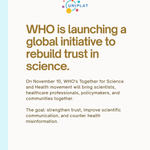
On November 10, the World Health Organization (WHO) is launching Together for Science and Health, a global initiative to strengthen trust in science, improve communication, and address health misinformation.
It's a reminder that access to information alone isn't enough. We also need the ability to recognize credible evidence and make informed decisions.
Before sharing a health claim, take a moment to check its source, look for supporting research, and question promises that sound too good to be true.
But the responsibility doesn't rest with individuals alone.
Scientists, healthcare professionals, policymakers, and communicators must work together to make reliable information accessible, understandable, and relevant to the communities they serve.


𝐖𝐄 𝐊𝐍𝐎𝐖 𝐏𝐋𝐀𝐒𝐓𝐈𝐂 𝐈𝐒 𝐄𝐕𝐄𝐑𝐘𝐖𝐇𝐄𝐑𝐄. 𝐁𝐔𝐓 𝐃𝐎 𝐖𝐄 𝐊𝐍𝐎𝐖 𝐖𝐇𝐀𝐓 𝐈𝐓'𝐒 𝐃𝐎𝐈𝐍𝐆 𝐓𝐎 𝐔𝐒?
From drinking water to food packaging, plastic is part of our everyday lives.
But scientists are still uncovering how tiny plastic particles, known as microplastics, may interact with our bodies.
Recent research highlighted by The Washington Post suggests that certain microplastics can generate reactive chemicals when they come into contact with water. These chemicals have the potential to damage important biological molecules.
While more research is needed to understand the long-term health implications for humans, the findings raise an important question:
How much do we really know about the materials we use every day?
This is why scientific research matters.
Understanding potential risks is essential to developing safer materials, improving product standards, and making informed decisions about public health.
It also reminds us of the importance of SDG 3: Good Health and Well-Being and SDG 12: Responsible Consumption and Production.
Protecting human health and building a more sustainable future require collaboration among scientists, policymakers, industries, and consumers.
Because innovation should not only make our lives more convenient. It should also help make them safer.
Source: The Washington Post, October 25, 2026.

𝐖𝐡𝐚𝐭 𝐝𝐨𝐞𝐬 𝐢𝐭 𝐭𝐚𝐤𝐞 𝐭𝐨 𝐛𝐮𝐢𝐥𝐝 𝐨𝐩𝐩𝐨𝐫𝐭𝐮𝐧𝐢𝐭𝐢𝐞𝐬 𝐛𝐞𝐲𝐨𝐧𝐝 𝐛𝐨𝐫𝐝𝐞𝐫𝐬?
For Takahisa Karita, the journey began far from the world of international business.
From coaching volleyball in Japan to leading a pharmaceutical company at just 27, his career has been shaped by curiosity, resilience, and the willingness to explore new possibilities.
Today, his work spans multiple industries and countries, with a shared purpose: helping entrepreneurs and researchers turn their ideas into meaningful impact.
As a co-founder of UNIPLAT, Karita envisions a world where opportunities are not limited by geography, and where knowledge, innovation, and collaboration can move freely across borders.
In a feature by The Euro Magazine, he shares the experiences, challenges, and philosophy behind his journey—and why he believes meaningful progress comes from empowering others to succeed.
Discover the story behind his vision for a borderless future:
theeuromagazine.com/journey-…

𝐍𝐀𝐓𝐔𝐑𝐄 𝐃𝐎𝐄𝐒𝐍'𝐓 𝐍𝐄𝐄𝐃 𝐌𝐎𝐑𝐄 𝐏𝐑𝐎𝐌𝐈𝐒𝐄𝐒. 𝐈𝐓 𝐍𝐄𝐄𝐃𝐒 𝐀𝐂𝐓𝐈𝐎𝐍.
This week, countries have gathered in Yerevan, Armenia, for COP17, the United Nations Biodiversity Conference.
The mission? To assess progress on global commitments to protect biodiversity, restore degraded ecosystems, and address the continuing loss of nature.
In 2022, countries agreed on an ambitious global biodiversity framework, including a target to conserve at least 30% of the world's land and waters by 2030.
Four years later, the question is no longer just what governments have promised.
It's how those promises are being translated into action.
Scientific research helps us understand biodiversity loss, identify threatened ecosystems, and develop effective conservation strategies.
But research must be accompanied by policies, funding, accountability, and meaningful implementation.
And protecting nature is not something governments can accomplish alone.
Scientists, businesses, conservation organizations, Indigenous Peoples, and local communities all have important roles in building solutions that last.

𝐀 𝐒𝐓𝐑𝐎𝐍𝐆 𝐒𝐎𝐂𝐈𝐄𝐓𝐘 𝐍𝐄𝐄𝐃𝐒 𝐌𝐎𝐑𝐄 𝐓𝐇𝐀𝐍 𝐎𝐑𝐃𝐄𝐑. 𝐈𝐓 𝐍𝐄𝐄𝐃𝐒 𝐃𝐈𝐀𝐋𝐎𝐆𝐔𝐄.
France has witnessed some of its largest protests in years.
What began as student demonstrations over inadequate school conditions has grown into a nationwide movement expressing concerns about rising living costs, public spending cuts, and access to essential services.
While hundreds of thousands have demonstrated peacefully, parts of the unrest have escalated into violence, property destruction, and clashes with police.
Beyond the headlines, these events raise an important question:
What happens when people feel their concerns are not being heard?
Public trust is an essential foundation of a functioning society. When people have meaningful opportunities to participate in decisions that affect their lives, governments can better understand public needs, address grievances, and develop more responsive policies.
This is closely connected to SDG 16: Peace, Justice and Strong Institutions, particularly Target 16.7, which promotes responsive, inclusive, participatory, and representative decision-making.
Protecting peaceful expression, maintaining public safety, and addressing public concerns are not mutually exclusive responsibilities.
Strong institutions require accountability, transparency, and continuous dialogue between governments and the communities they serve.
Because lasting social stability depends not only on maintaining order, but also on building public trust.

DOCUMENTING THE TRUTH SHOULD NEVER COST SOMEONE THEIR SAFETY.
On October 16, Washington Post photographer Heidi Levine was seriously injured in an attack by masked Israeli settlers while covering Palestinian farmers during the olive harvest in the occupied West Bank.
A day later, European diplomats and other visitors supporting Palestinian harvesters were also attacked in Taybeh.
These incidents raise urgent questions about the safety of journalists, civilians, and those working to observe and document events in conflict-affected communities.
Journalists play an essential role in keeping the world informed. Civilians must be able to carry out their daily lives without fear of violence. And those responsible for attacks must be subject to credible investigations and due process.
Under SDG 16: Peace, Justice and Strong Institutions, protecting fundamental freedoms and strengthening accountability are essential to building peaceful societies.
Condemnation matters. But so do transparent investigations, effective protection, and meaningful accountability.
Because peace is not only the absence of conflict. It also requires institutions that protect people's rights and safety.


𝐐𝐮𝐞𝐬𝐭𝐢𝐨𝐧 𝐭𝐨 𝐀𝐝𝐯𝐢𝐬𝐨𝐫
“You’ve seen UNIPLAT evolve since 2023. What stands out to you about its journey—and where do you see it going next?”
For UNIPLAT Advisor Belinda Wong, the journey goes back to 2023, when she served as a business-category judge in UPD (UNIPLAT Pitch Deck), evaluating pitches from students and young entrepreneurs in the Philippines integrating the UN Sustainable Development Goals into their project models.
Since then, she has watched UNIPLAT expand on multiple fronts—from the creation of UPT and the establishment of a research presence at Karolinska Institutet’s Working Lab, to strategic investments and partnerships spanning several continents.
Her view on what comes next:
“With these advancements, it is time for UNIPLAT to relaunch its platform to spread its wings wider and further to upgrade the services to researchers and investors for the betterment of our lives.”
As UNIPLAT enters its next chapter, we’ll be sharing more perspectives from the advisors, partners, and people who have been part of its journey.


Our Business Partner, SHIRUSHI Inc., has been featured by Business Insider.
The feature covers SHIRUSHI’s global debut of its ultra-compact Web3 Maker mining machine and its strategic partnership with UNIPLAT, including the planned addition of UPT as a mining reward.
Read the full article:
markets.businessinsider.com/…

74 Advisory Board members. 27 countries. Diverse expertise.
UNIPLAT’s Advisory Board brings together 60 Senior Advisors and 14 Youth Lead Advisors with experience across finance, technology, education, healthcare, entrepreneurship, sustainability, social impact, media, and policy.
Beyond expertise, our advisors contribute industry insights, strategic perspectives, international networks, mentorship, and opportunities for collaboration and partnerships.
Together, they help strengthen connections between researchers, entrepreneurs, investors, and organizations across borders.

Congratulations to @taka_uniplat on his latest feature in CEOInsider.
CEOInsider is an executive media and intelligence platform examining how consequential business decisions are made.
The feature, “The Integrator Approach to Global Entrepreneurship,” explores Dr. Karita’s career across pharmaceuticals, biotechnology, finance, education, AI, Web3, and international business—and his approach to connecting people, technology, knowledge, and opportunities across borders.

Congratulations to @taka_uniplat on being featured by Frontier Blaze!
Frontier Blaze is a digital magazine highlighting the stories, achievements, and insights of executives, innovators, and industry leaders.
The article highlights his work behind UNIPLAT and his philosophy of building connections between researchers, entrepreneurs, investors, corporations, and other stakeholders across borders.

Welcoming our newest Advisor, Dr. Seshadrri Iyer, to UNIPLAT.
With 32+ years of experience across banking, investment, strategic advisory, and business development, Dr. Iyer brings extensive expertise in impact investment, sustainable investment, and global capital mobilization.
We look forward to his valuable contribution to the UNIPLAT ecosystem.


