

@USFWSNortheast
🇺🇸Account based in
About this account
- Account based in
- United States
- Connected via
- Web
Account-level information from X, not a live location or the device used for a specific post.
Working with others to conserve nature for wildlife and people from ME to VA
Hadley, MA
Joined July 2009
- Tweets10.6K
- Following1.3K
- Followers23.3K
- Likes1.9K




Due to the federal government shutdown, this account is not being actively updated.
For more information, please visit: doi.gov/shutdown
Mourning Cloak butterflies are believed to have the longest life span among the butterfly species of North America. With an estimated 10-12 months of adulthood, this caterpillar is only getting started!
📸Matt Whitbeck/USFWS

ALT a black caterpillar climbs up a green plant stem
The National Fish Hatchery System has been swimming the waters of conservation for 153 years so a birthday shoutout to the NFHS mission and the incredible efforts of staff, friends and volunteers!
fws.gov/visit-us

ALT a colorful fish rests on a rock

ALT vibrant orange fish eggs with tiny eye spots
DYK Service depends on many volunteers to assist with habitat plantings, wildlife monitoring and invasive species management? Many of these volunteers are retired biologists who continue to use their expertise to help conserve our nation’s wildlife.

ALT a person with a hard hat puts his hands out towards four fluffy raptor chicks, high up on a building
Many of these volunteers are retired biologists who continue to use their expertise to conserve our nation’s wildlife. Such is the case with raptor biologist Craig Koppie who, after 39 yrs as an employee, continues to volunteer his time and knowledge to conserving raptor species

For Parker River NWR in MA, the first plover chicks of the season have hatched! Did you know piping plovers are precocial, meaning they are basically independent on day one? Plover parents do not feed their young, these little fluff balls are already out foraging on the beach.

Jack-in-the-pulpit can be found across eastern North America. It gets its name from its unique flower structure resembling a preacher "jack" standing in a pulpit. These flowers are pollinated by gnats and beetles.
📷 Courtney Celley/USFWS

ALT a green plant with three leaves and a flower resembling a pitcher with a lid
When glossy ibises are hungry, they probe their bills through water and wet soil to feel for prey. This gives them access to a variety of different foods including worms, certain insects and amphibians, crabs, and even crawfish! 📸Holly Keepers/USFWS

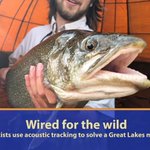
In the cold blue depths of Lake Erie, where so many questions have gone unanswered for so long, lake trout and cisco work begins with a simple signal: one fish, one ping, one clue at a time. ow.ly/GObR50W0ckh

USFWS Northeast retweeted
It's a shell-ebrity sighting.
Diamondback terrapins are the only turtles in North America that thrive in the brackish estuaries along the Atlantic & Gulf of America coasts. Named for their diamond-like markings, no two are exactly alike & markings are different for each turtle.
USFWS Northeast retweeted
A sandhill crane's bright red patch can make them easier to spot and if you look closely you'll notice that this isn't actually feathers - it's skin! Have you seen any sandhill cranes lately?
📷 courtesy of Gordon Garcia

ALT Portrait of a sandhill crane
USFWS Northeast retweeted
Do you love wildlife watching? Plant a pollinator garden! You can help create a healthy habitat, whether a container garden on a balcony or an entire acre in your backyard. fws.gov/story/how-build-poll…
Video: a white-lined sphinx moth feeds on a milkweed plant, Tom Koerner/USFWS
It's baby bird season! Many birds are experts at building secretive, well protected nests to keep their young safe from predators and harsh weather. Keep an eye out in shrubby bushes and trees, and watch for adult birds frequenting the same spots.

ALT baby birds tucked away in a nest in a tangle of branches
Most artists dream of having their work displayed where thousands of people will see it. For Margaret Lepeshkin, it’s equally important that her artwork be seen by birds. ow.ly/f47M50VSNsJ

Although lake trout are native to Lake Champlain, they disappeared in the early 1900s. Biologists from New York and Vermont released hatchery-raised fish into the lake for decades but discovered invasive sea lamprey were preying on them and growing in number. 📸Jay Flemming/NPS

ALT an underwater image of trout swimming near rocky substrate
Thanks to nearly 25 years of sea lamprey control by the Lake Champlain Fish and Wildlife Management Cooperative, lake trout have rebounded. With a wild population, stocking is no longer needed. 📸Jay Flemming/NPS fws.gov/story/where-wild-fis…


If you think you've found an orphaned or injured wild animal, what should you do? We know that it’s natural to want to help. Here are a few things you should know to keep the animal safe and avoid breaking the law. ow.ly/CEH250VNGLk
