

Data Science & Artificial Intelligence. Views my own. @ubk22@mas.to
Aachen, Germany
Joined October 2014
- Tweets6.9K
- Following952
- Followers348
- Likes30.9K






Order to limit Starshield for Ukraine came from inside White House, sources say reuters.com/world/europe/ord…

Ulrich Kerzel retweeted

This framing assumes over prioritising safety has no downside. It means telling a stage 4 cancer patient they can’t take a drug that passed a phase 3 trial, and must die of their cancer instead, while experts debate how it works. It’s their body and their choice.
For that patient the choice isn’t wait safely vs take a risky drug. It’s die waiting vs a chance of living. That’s why patients already inject untested compounds at unregulated clinics in Mexico.
Millions die while we wait and nobody gets blamed. If 100 people died from an AI designed drug it would be called a catastrophe, even though most of them would have been dead within months anyway.
Patients know new drugs can go wrong. The alternative is extreme suffering or death. We aren’t impatient because we want the next shiny update, we’re impatient because many of us will die before it arrives.
Drug regulation is already too strict. With AI now moving biology this fast, the priority should be loosening it, not tightening it. Right now a patient who will die from their disease in a few months, or take their own life because of the suffering, usually can’t get access to promising drugs still in trials or try combinations that might work better together but carry more side effect risk. They just have to die.
If we were being logical, those patients could enroll in a program, try the drug or any combination they want, and record the outcome so it feeds back into the science. Relying on slow, admin heavy trials with tightly selected groups as the only way to learn about new treatments is the least efficient and least ethical option we have. It exists to protect pharma and regulators from blame, not to reduce suffering and death. Now that some people could realistically be cured in the next decade instead of waiting 20 years for trial funding and long term outcome studies, we should be moving away from it fast.
For weight loss or baldness, be as rigorous as you like. Framing this around stage 4 cancer is detached from what patients actually face. The people debating it don’t pay for the delay, the patient does.


Ulrich Kerzel retweeted
As a patient, I would inject any substance on earth if it had passed a phase 3 clinical trial for my disease successfully.
I’ll go even further. I’d probably inject it if it had positive phase 1 signals.
I don’t need anyone to know why it works, I just need to not be ill.
I wish Claude wasn't so careless.... It's great for frontend work but these: you might want to rotate your API keys or, I slipped and called rm -f which wasn't allowed...
We should, probably, offer emotional support to all the mathematicians in the coping and grieving phase as they realise only today that their field has to change, like so many other fields before them and many more to follow.


Ulrich Kerzel retweeted

Sport ist hilfreich bei fast allen psychischen und vielen somatischen Erkrankung.
Leider führt es zur Fehlannahme, dass das bei ME/CFS auch so sei. Fehldiagnostik und Psychologisierung von ME/CFS vergrößern das Problem.
Sport ist kein Allheilmittel und kann Nebenwirkung haben.

Ulrich Kerzel retweeted
The paper of the (negative) ME/CFS rehabilitation study is finally out:
"At 12 months, no statistically significant difference in SF-36 physical functioning scores was observed between groups. Secondary outcomes also showed no substantial between-group differences." (1/2)

Ulrich Kerzel retweeted
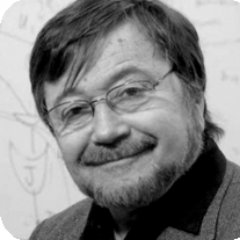
My email archive holds exchanges with dozens of statisticians, including legends like David Cox, Arthur Dempster, and David Freedman.
Future historians would be amazed at the narrow dogmatic thinking that traditional statistical education can foster--all due to the assumption that probability distributions, once fully estimated, can represent scientific knowledge.

Most students in the quantitative sciences are forced to start their education with statistics, which is a grave mistake, with deep harmful consequences on the way students view science and reality. The next generation should start with causation, to get a scientific view of reality and, only then, take stat-101, for students who want to decorate their papers with p-values and regression analysis. Not sure the imperial forces of statistics would welcome this commonsensical transformation. @soboleffspaces @f2harrell @DagobertIX
Ulrich Kerzel retweeted

After 25 years of being told that theoretical physics isn’t mathematics because we prioritize understanding over proofs, I find the math-AI debate rather heartwarming. Suddenly, many mathematicians are explaining that mathematics is about understanding, not just proofs. Welcome!

Things are heating up on Terry Tao’s blog. In “If Math Is More Than Proof, We Need to Better Celebrate the Rest of It,” Grant Sanderson of @3blue1brown proposes “open exposition problems” -- rewarding the work of making math genuinely understandable.
terrytao.wordpress.com/2026/…

Ulrich Kerzel retweeted

Just got this incredible news from UCLA Math Circle.
Two high school students, Aayush Bathija and Prince Rohatgi, working with postdoc Daniel Soskin through the UCLA Math Circle, have solved a problem that Fields Medalist June Huh had previously worked on without solving.
The paper was heavily AI-assisted.
Whatever your view on AI in mathematics, enabling high school students to push the frontier of mathematical research is something worth celebrating.
arxiv.org/abs/2609.05341

Ulrich Kerzel retweeted
The simplest way to understand what's wrong with the letter is to swap their words for oncology.
"The push by AI companies to cure cancers as a benchmark is detrimental to the science of oncology. For students we often suggest cancers to work on with the intention of developing their skills. Curing cancers is only a proxy for the primary goal of understanding tumour biology. The mass production of cures at a faster and faster pace could destroy fertile ground."
You could argue that isn't a fair switch, but they concede in the letter itself that maths is the basis for progress in science and technology. Maths feels abstract, but its outputs flow straight into engineering and medicine. There's just enough distance between the two that the connection stops feeling attributable.
I do understand where they're coming from. Spending years inside a problem, then the talks and the arguments and the slow process of a result becoming something a student can learn from, is a wonderful way to live. But if AI can solve the maths, and then use that maths to solve disease, then a preference for the culture of a mathematical profession doesn't hold up against the millions of people who die from delay. If the AI can go the whole way, we should let it go the whole way, and then take our time understanding what it did afterwards, for the intellectual pleasure of it, without slowing it down (unless for safety reasons).
Ulrich Kerzel retweeted
I'm a patient. Whether I'm alive in ten years depends on how fast science moves, and nothing moves it faster than AI.
Chasing a problem for the understanding, not the answer, is beautiful. It's also a preference held by people whose lives don't depend on the answers arriving.
I think every scientific field is about to face a question it has never had to say out loud. Is the work for the people outside the field whose lives it changes, or is it for the people inside it, who get to spend their lives on the most satisfying kind of thinking there is? For most of history you never had to choose, because the satisfaction drove the work and the benefit came along behind it. When you're the patient the two come apart, because the benefit stops being an abstraction and becomes you.
Every year a cure arrives later, people who would have lived instead die. We don't really count them, because we're very good at separating deaths from doing and deaths from not doing. Clinical trials are the clearest example. Keeping a risky combination therapy away from a dying patient protects them from a death by action while quietly accepting a death by inaction, and we weight the first heavily and barely count the second. Slowing AI down works the same way. Pushing the cure for most major diseases from the next decade to the one after is not a careful default. It kills people, it's just that nobody has to sign their name to it. Banning frontier AI in any meaningful capacity would be a decision to let millions of people die on schedule. The better path is infrastructure, meaning verified access for good actors, government capacity to audit what the leading systems are doing, and real consequences for labs that cut corners.
On the letter itself, the mathematicians are right about the specifics. A proof announced in 88 hours with no proper writeup and no credit to the work it stands on is a bad way to do mathematics. But that's an output problem rather than a speed problem. Require the model to cite prior work and write the full argument and it's fixed within a quarter. What the letter is really protecting is a culture, and I understand that, but I still think the weight falls on adaptation rather than protection. Traditions built over centuries matter a great deal and they still aren't worth millions of lives. The job for mathematics now is to become the field that turns machine-generated results into ideas humans can actually understand and use, which is still mathematics, and might be the most important version of it.
If the machines eventually get better at that too, I'd look at retirees. Most go through a period of agitation and then slowly lose the belief that meaning requires a nine to five. They keep reading, keep learning and keep arguing about ideas, they just stop doing it for a paycheck. I don't think that's a tragedy. I think it might be where all of this ends up.
So for anyone weighing how fast this should go, put the hidden deaths from delay next to the visible risks from action every time. It's the only way to account for everyone with a stake in this, including the ones who won't be around to complain if we get the timeline wrong.

Ulrich Kerzel retweeted

1. "The creation of slop mathematics and the exacerbation of a market-driven arms race. Undergrad participants may lack the expertise to carefully verify the results they produce. Participants are not required by the rules of the competition to communicate their results on ArXiv after the event is over. It will again fall to the mathematical community to carefully verify hastily-produced AI-generated results."
No one is forcing mathematicians to do anything here. Math academia has to decide for itself how to adapt verification labor norms in the era of cheaply produced mathematical outputs. And isn't the ArXiv *non-requirement* better for keeping it safe from unverified outputs?
2. "Intrusion of corporate interest. Events like these provide further financial and social leverage for AI corporations over mathematics. The goals of these corporations are not necessarily aligned with the aims of scientific research. As an independent scientific community, it is incumbent upon us to engage critically with AI companies and their tools. It is doubtful that such critical engagement will be incubated at the Mathathon."
Sorry but math academia does not have a monopoly on mathematical practice. As labs become increasingly mathematically productive, they do, in fact, an interest in engaging with aspiring mathematicians. Trying to prevent them from interacting with undergrads is foolhardy.
3. "Conditions unlikely to foster mathematical understanding. As most mathematical researchers would agree, forty hours is not enough time to deeply understand, solve, and communicate a problem. The industrialized production of AI-generated mathematical content on extremely shortened timescales does not add value to our community. Such activities in fact carry broadly negative impacts."
One does not become a research mathematician in 40 hours, no matter how they spend it. This would be a brief exposure to an essential modern tool to supplement their 4-year math major curriculum.
4. "Damaging misinformation about research mathematics. This event is likely to feed into detrimental narratives about our research community. As a case in point, the website of the Mathathon explicitly asks “What is the role of a mathematician when AI can solve conjectures faster?” The claim that AI can solve conjectures faster than human mathematicians appears both motivated and empirically dubious."
Grasping at straws. Someone in the future might make a bad narrative because of this 3-day event? That's an argument?
All the other comments are paternalist bullshit convinced they know better than undergrad math majors how they should be engaging with the changing landscape and deciding for them that they will be harmed by $20k in AI credits to explore what has quickly become an essential tool for math research.
Y'all should be ashamed of yourself for signing this bullshit.

Ulrich Kerzel retweeted

Sorry, but I find "the primary goal of conceptual understanding and insight" to be elitist and entitled.
And "We are witnessing a general threat to intellectual work" rather short-sighted and lacking creativity.

New post by Terry Tao, and a new declaration on AI and mathematics signed by 25 Fields Medalist
terrytao.wordpress.com/2026/…

Ulrich Kerzel retweeted

The main points of misalignment that Terrence Tao and other Fields Medalists find in the AI use in mathematics, as I understand them, are:
1. Advancing understanding of mathematics: (1) solving problems is a proxy for developing theories and methods that advance understanding, and (2) the AI solutions may be unreadable/incomprehensible.
2. Training of mathematicians: AI that is stronger than humans and which solves the human-accessible open problems reduces the incentive of training mathematicians in constructing hard proofs.
These are weak arguments:
1. On understanding:
- Mathematicians themselves have shown low interest in communicating their results in an understandable way. Even among professional top mathematicians, understanding the results of a mathematical field outside their expertise is a struggle!
- AI will potentially vastly improve the understanding of math. Just like AI can be trained to write proofs, AI will be trained to digest proofs in a comprehensible way, connect results to other results and to physical phenomena better than humans can, and explain mathematics to each human in a custom way optimized for their level of mathematical training.
2. On training mathematicians:
- The important skills of mathematicians will change. The current most important skill, genius proof craftsman, will be devalued. I see no problem with that. Photography devalued the skills of painters of portraits. Different times, different skills needed.
I see this open letter as an attempt of a guild to hold on to its prestige and value.
Those who truly love mathematics as the pursuit of truth and beautiful structure, should love AI in math.

Ulrich Kerzel retweeted

from Richard Hamming’s 1995 lecture “Experts”, on how senior mathematicians at Bell Labs resisted the arrival of computers.
“They saw, every one of them, the computer as being inferior… and… possibly in direct competition with them”

Ulrich Kerzel retweeted

I rarely put things this strongly, but as a biologist, the idea of holding back scientific progress to protect professional roles or personal fulfilment horrifies me.
Let’s take cancer research as a thought experiment. Imagine AI could help us develop effective treatments much faster, but researchers wanted to hold it back because it threatened their profession or the satisfaction they get from their work. Patients would bear the cost of protecting the people whose work is supposed to help them.
That would be morally indefensible.
The declaration quoted raises concerns about understanding and education, and those deserve answers (as for attribution, I think it’s a non-issue). My worry is that these concerns could become a justification for protecting existing professional roles at the expense of discovery.
If AI can help us solve problems much faster, benefiting humanity as a whole (including the very people who oppose it!), we should be ready to adapt our professions, or even our sense of identity, to that possibility.
The prospect of getting this backwards really scares me.
Ulrich Kerzel retweeted

Two things to distinguish:
Did any human or agent look at user data as part of the Navier Stokes effort? No.
Do we use user feedback and de-identified data to improve ChatGPT and Codex in a holistic way? Yes. And so does every LLM company.

“we cannot rule out that de-identified data derived from their usage of our products helped improve our models.”
i mean props to them for straight coming clean.
(so far the proof looks more along the lines of another euler blowup proof we had, off of whose ansatz naming we were making really stupid puns like “smooth criminale”, unlike the much better “ideal fluids explode”, Tristan)
so i’ll now give a bit on my thinking here. i actually woulda been pumped to collaborate on this, there are a lot of people at oai i like (ok, clearly some were indirectly dicks to me because of being part of the whole situation, but im a big boy, i still like them), idgaf about authorship on that step anyway, coulda been me Tristan and every fte at oai for all i care (on that Tristan would disagree:p). but on hearing the loud convo in the hallway, especially the part where a millennium prize was offered if i’d just be removed from the paper, it was kinda clear the die had been cast and things were locked. pretty wacky, unstrategic, and unnecessary, since on my side things were mostly me and claude having a good time yoloing random stuff in the corner rather than anything institutional. i also like the idea of the labs cooperating, and even better on scientific progress. it’s a shame!