

Advancing Intelligence. Solving Real-World Tasks. https://xitter.cf/t.co/aNsHIeIsbr
Joined April 2026
- Tweets43
- Following13
- Followers13
- Likes32




Could a coding agent recreate a program without seeing its source code—using only a runnable reference and documentation? 🔍
Unisound and Prof. Jinsong Su’s team at Xiamen University jointly proposed ProgramGym to explore this challenge.
🧪 Program-Env provides 1,648 training environments across C, C++, Go, and Rust, combining sandboxed execution with black-box testing.
🔄 Program-Agent separates analysis, implementation, and review into independent sessions, connected by persistent records and compilation-checked checkpoints.
The goal: preserve discovered requirements, iterate on behavioral differences, and recover when development fails.
These techniques have been applied to U2-Flash R&D, supporting its capabilities in complex engineering tasks and long-horizon agent workflows.
Read more:
mp.weixin.qq.com/s/aJvTwTRkQ…
#AICoding #AIResearch

How far can an LLM take an unresolved mathematical problem? 🧮
U2-Flash explored the four-dimensional Kakeya set conjecture—from analyzing the problem and constructing arguments to revising its reasoning and producing a preprint draft.
The challenge: keeping assumptions, intermediate results, and logical dependencies consistent across an extended investigation.
The exploration left a record of its reasoning and iterations for further examination.
A preprint draft is not a verified proof. The arguments still require expert review and independent validation.
For Unisound Labs, this is a concrete case for examining long-horizon reasoning on a frontier mathematics problem.
#AIResearch #Mathematics
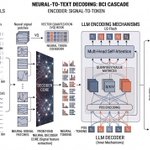
From uncertain neural-decoder outputs to coherent language. 🧠💬
In this neural-to-text pipeline, a specialized encoder processes EEG/ECoG signals and produces intermediate candidates, such as phoneme probabilities or discrete tokens.
U2-Flash provides the downstream language layer—using context to help resolve ambiguity, correct errors, and reconstruct incomplete sequences into readable text.
The roles are distinct:
→ Neural encoder: extract signal-level features
→ U2-Flash: interpret candidate sequences in context
→ Output: a reconstructed natural-language expression
A semantic bridge between specialized neural decoding and language generation.
#BrainComputerInterface #LLM

More model choice in the tools developers already use. 🙌
U2-Flash can also be configured as a model provider in Codex, giving builders another option for coding and agent workflows.

OpenAI models are coming to Google Cloud.
We're bringing our frontier models and Codex agentic workflows to Google Cloud's Model Garden, so enterprises can use our technology where they already build.
openai.com/index/openai-mode…

Clear controls matter when agents take real actions. Great to see these settings in one place! 🛡️
For builders exploring model options, U2-Flash can also be connected to WorkBuddy for coding and multi-step workflows.

When code search became the bottleneck, U2-Flash built its own navigation tool: TopoGuard MCP. 🛠️
In a matched single-run replay on OpenCode:
⏱️ Time to first valid edit fell 60.1%
📉 Cumulative input tokens fell 45.7%
In a fresh session, it automatically loaded and reused the tool to resolve another issue in the 41-package codebase—passing 210 tests and TypeScript checks.
From identifying a bottleneck to building, validating, and reusing a tool.
Watch the workflow below. 👇
#AICoding #MCP
The first render wasn’t the finish line.
During the workflow, U2-Flash identified and addressed failed Boolean operations, flipped normals, and poorly lit areas—iterating on the scene through code and Blender’s rendering pipeline.
This case brings spatial reasoning, code generation, and tool use into one workflow:
Interpret the layout → construct the scene → render → inspect → refine.
What space should we build next?
#Blender #AICoding

What if the Moon held an entire city? 🌕🚀
For this U2-Flash × Blender project, we imagined a lunar space station with two faces: a cratered surface outside, and a world of buildings, forests, lakes, and domes within.
The camera approaches the station, passes through its entrance, explores the interior, then pulls back to reveal Earth beyond it.
Bringing that sequence together meant coordinating geometry, materials, lighting, camera paths, and animation keyframes through Python-driven Blender workflows.
The challenge was spatial consistency: connecting the outer shell, entrance, passageways, and interior landscape into a scene the camera could travel through.
This 32-second showcase explores how U2-Flash can help translate a complex creative brief into a structured 3D modeling and animation workflow.
Watch the journey—from lunar surface to hidden world.
What should we build next?
#Blender #AICoding
199 requests succeeded. One returned HTTP 500.
U2-Flash tracked down why. 🔍
In this vLLM debugging demo, concurrent requests using bad_words triggered an intermittent “Already borrowed” error.
Working through OpenCode, U2-Flash followed the execution path—from HTTP serving through async processing to the Rust tokenizer backend—and identified shared tokenizer state as the cause.
The repair loop:
→ Reproduce the failure
→ Trace the shared-state conflict
→ Isolate the tokenizer used for bad_words
→ Add regression tests and rerun the workload
The demo’s before-and-after results:
✅ Regression tests: 2 failed, 2 passed → all 4 passed
✅ H100 replay, 200 requests at concurrency 50: 199/200 → 200/200 successful
From a runtime failure to a targeted patch—and evidence that it works under the tested conditions.
Watch the debugging walkthrough below.
#AICoding #AIAgents
One prompt. A 3D escape-room prototype. 🔑
We asked U2 Flash to build a first-person browser game set in a study, with hidden items, interactive puzzles, and a key to find.
The walkthrough shows:
🎮 First-person exploration
📦 Item pickup and inventory
🧩 An item-combination interface
🔍 Discoverable clues, including a number puzzle
From a natural-language game brief to an interactive 3D scene—bringing code, spatial layout, UI, and gameplay interactions together.
Watch the walkthrough below.
What should we ask U2 Flash to build next?
#AICoding #GameDev
From understanding a task to working through it. ⚡
U2 Flash brings reasoning, coding, and tool use into multi-step agent workflows:
🛠️ Generate and refine code.
🔍 Analyze complex problems and plan next steps.
🔗 Use tools to execute tasks and check results.
📚 Work with extensive code, documents, and task history.
Powered by 266B parameters, with a 1M-token context window and up to 128K output tokens.
Built for complex engineering tasks and real-world workflows.
Explore U2 Flash 👇
maas.unisound.com/
#AIAgents #AICoding #LLM

More context. More room to build. ⚡
U2 Flash now supports a 1M-token context window—bringing more code, documents, and task history into your coding and agent workflows.
Built for complex tasks:
🧠 266B-scale model
📚 1M-token context window
✍️ Up to 128K output tokens
🛠️ Reasoning, coding, and multi-step agent execution
Ready to try it? U2 Flash API calls are FREE for new and existing users through October 31, 2026, with no token quota during the promotion. Platform rate limits apply.
Start building 👇
maas.unisound.com/
#U2Flash #API #LLM #AIAgents #AICoding

Research agents need room for sources, task history, and verification.
U2 Flash now offers a 1M-token context window. What research workflow would you put it to the test on?
API calls are free through Oct 31: maas.unisound.com/

Discovery
For open-ended research questions, Atria Dawn Preview breaks down research goals, searches and evaluates sources, compares perspectives, and traces key evidence across sources.
It turns scattered information into structured, citable, and verifiable research findings—helping researchers move beyond finding information toward building evidence and forming research judgments.
🎥 See Atria Dawn Preview in action.
Self-Maintaining Training: From Model to Participant
U2-Flash is not just a model being trained. It also takes an active role in the training system itself.
During training, U2-Flash can inspect training machines, detect and diagnose failures, apply fixes and restart affected processes. It participates across the training lifecycle, from data preparation and task scheduling to failure detection and recovery.
By integrating the model into these operations, the system reduces the average recovery time from training failures to around one-third of that required with manual intervention, while reducing reliance on manual operations. In other words, U2-Flash is no longer simply being trained. It becomes an active participant in its own training process.
This capability is part of a broader self-evolving training loop. Asynchronous Agent RL continuously generates new experience for training. MOPD turns that experience into denser learning signals, while Adaptive Task Generation adjusts the difficulty and diversity of training tasks as the model evolves. Self-maintaining operations help keep this entire process running reliably.
Together, these mechanisms create a continuous cycle in which U2-Flash can learn from experience, adapt to new challenges, and help maintain the training environment that supports its own development.
U2-Flash is not simply a smaller version of U2. It is designed to further develop reasoning, agentic, and complex-task capabilities at higher intelligence density.
From being trained to taking part in its own training.
#U2Flash #LLMTraining #AgenticAI #SelfImprovingAI #AIInfrastructure

Adaptive Training: Evolving with the Model
As a model improves, a fixed training set can quickly become too easy to provide useful learning signals. U2-Flash addresses this with Adaptive Task Generation, dynamically adjusting task difficulty based on the model’s performance on the current task set.
The system keeps more tasks near the model’s capability boundary — problems it cannot solve yet, but is close to solving. As performance improves, the difficulty distribution of new tasks shifts accordingly, helping maintain effective learning signals and diverse exploration throughout training.
This adaptive process is supported by an infrastructure designed to evolve with the model. The Harness is continuously refined as stronger model capabilities reveal new execution boundaries, creating a feedback loop between the model and its task environment. Memory operations, including selective forgetting, key-state snapshots and semantic refinement, help manage active context across long-running tasks and preserve the information most relevant to subsequent reasoning.
At the training layer, the TITO Rollout gateway helps maintain the fidelity of training trajectories, while end-to-end FP8 optimization improves computational efficiency. Together, they provide a stable foundation for training mechanisms such as Asynchronous Agent RL and MOPD.
The result is a training system where task difficulty, execution infrastructure and model capability evolve together, allowing U2-Flash to keep learning as its capabilities advance rather than being limited by a static training environment.
#U2Flash #AdaptiveTraining #LLMTraining #TrainingInfrastructure #SelfImprovingAI

MOPD: Bringing Multiple Expert Capabilities into One Model
Training a model for one capability can sometimes come at the expense of another. For example, optimizing specifically for mathematical reasoning may improve performance in that domain while affecting capabilities such as open-ended writing. U2-Flash addresses this challenge with MOPD, designed to bring specialized capabilities together within a single model.
Specialized teacher models are first trained with RL for domains including math, coding, Agent tasks and instruction following, and their capabilities are then distilled into a unified student model. Instead of relying on trajectories generated by the teachers, the student generates its own trajectories during training, helping reduce the distribution gap between training and inference.
The teachers then score the student’s output token by token, providing denser and more fine-grained learning signals than relying primarily on final task rewards. This allows capabilities from different specialized models to be transferred more efficiently while reducing interference across domains.
Compared with training from scratch using RL alone, MOPD reduces the number of training steps required to reach the same capability level by approximately 55%. This enables U2-Flash to combine diverse capabilities within the same model through more efficient distillation and training signals, rather than simply increasing model size.
#U2Flash #MOPD #KnowledgeDistillation #LLMTraining #ReinforcementLearning

Asynchronous Agent RL
Agent training often involves long rollouts with multiple rounds of tool use, making data collection slow and resource-intensive. U2-Flash addresses this with an asynchronous Agent RL architecture, where multiple rollouts run in parallel to collect training trajectories without blocking policy updates.
Policy optimization is based on GRPO, which compares trajectories in the same group to estimate their relative advantages, eliminating the need for a separate value model. This encourages the model to explore different approaches to the same task rather than relying on a single solution path.
Agent tasks also tend to have sparse rewards, making it difficult to determine which decisions actually contribute to success or failure. To improve long-horizon credit assignment, U2-Flash uses key-action attribution to trace outcome signals back through the decision path and assign them to the actions that matter most.
Compared with synchronous training, this asynchronous architecture produces approximately 60% more effective training trajectories per unit time, allowing exploration experience to be incorporated into training more efficiently.
#U2Flash #ReinforcementLearning #GRPO #AgentTraining #AIResearch

Self-Evolving Training Loop
U2-Flash is trained through a continuous self-evolving loop designed to identify capability gaps and turn them into useful training signals.
For a given task, stronger and weaker models generate separate trajectories. A supervisor compares them to identify the critical decisions that lead to success or failure, then uses these differences to generate targeted guidance and reasoning traces. The weaker model then resamples and filters higher-quality trajectories for further training.
Once improved, the model becomes the foundation for the next iteration. This creates a recurring cycle of identifying weaknesses, generating training data, training and evaluation, allowing the system to continuously refine its capabilities with less reliance on large-scale human annotation.
Through this process, we have constructed a high-quality SWE task set of nearly 100K tasks across major programming languages. This data loop provides the foundation, while Asynchronous Agent RL, MOPD and Adaptive Task Generation help efficiently turn these evolving training signals into stronger model capabilities.
#U2Flash #LLM #ReinforcementLearning #AgentRL #LLMTraining
