

Bitcoin Cash (BCH)➡️The bitcoin that ACTUALLY works as: 𝗣𝗲𝗲𝗿-𝘁𝗼-𝗣𝗲𝗲𝗿 𝗘𝗹𝗲𝗰𝘁𝗿𝗼𝗻𝗶𝗰 𝗖𝗮𝘀𝗵 Pmts can be sent P2P w/o intermediaries🤩 uc#105
Joined March 2018
- Tweets2.8K
- Following242
- Followers686
- Likes18K








BCH-The bitcoin that CAN scale-P2P Cash for all ! retweeted

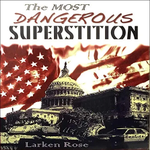
In 2013, if someone on stage at a Bitcoin conference said that in 2026, the price would be $65K after spending 404 days underwater, he would have been jeered off stage as a looser. It was widely believed back then that BTC would be to the moon, worth millions each. Truth is that the tech was sabotaged in 2015 and following. amazon.com/Hijacking-Bitcoin…

BCH-The bitcoin that CAN scale-P2P Cash for all ! retweeted

Lightning getting rekt again and again.
Really, the whole space is, but Lightning has been hit much worse.
Not sure if it'll recover.


BCH-The bitcoin that CAN scale-P2P Cash for all ! retweeted

Der "POINT OF NO RETURN" in der Lehre von Von Mises:
"Ein Staat wird in an dem Punkt beinahe unreformierbar, an dem die Mehrheit der Bevölkerung finanziell oder strukturell vom Staat abhängig ist (Staatsangestellte, Beamte, Subventions- oder Förderungsempfänger, Bezieher von Transferleistungen etc.) Sobald die Gruppe derjenigen, die netto vom Staat profitiert oder alimentiert wird, größer ist als die Gruppe, bei der dies nicht der Fall ist, blockiert das System Reformen, da die Mehrheit aus Eigeninteresse für den Erhalt oder Ausbau staatlicher Leistungen stimmt."
Das ist genau die shice, die wir haben.
BCH-The bitcoin that CAN scale-P2P Cash for all ! retweeted

#BTC #BCH Catherine Austin Fitts is *based*. She mentions how Bitcoin BTC has been hijacked and recommends "Hijacking Bitcoin" in this clip from the Jimmy Dore Show. Nice! Link to full video: youtu.be/eqidDO6T5x0?si=HFKH… (this clip is from 2hr mark),
BCH-The bitcoin that CAN scale-P2P Cash for all ! retweeted

Capitalism has a win condition. Socialism does not.
Here's why, explained so simply a 10-year-old could get it.
It starts with a book written in 1944 by an Austrian economist named Friedrich Hayek: The Road to Serfdom.

Capitalism has a win condition. Socialism does not.
Here's why, explained so simply a 10-year-old could get it. It starts with a book written in 1944 by an Austrian economist named Friedrich Hayek: The Road to Serfdom.
Imagine a classroom of 30 kids. One day the teacher says: "From now on, I decide what everyone eats for lunch, which games you play at recess, and who sits next to whom. It's fairer that way."
First problem: the teacher doesn't know what you like. You hate carrots. Your friend is allergic to peanuts. Lucas wants to play football, Emma wants to draw. 30 kids, 30 different wishes. Nobody can know all of that, not even the smartest teacher on Earth. Hayek called this the knowledge problem. The information needed to run an economy is scattered across millions of heads, and it can't be gathered in one office.
Second problem: the kids start fighting. "Why does he get the window seat?" "Why football again?" Before, everyone just chose for themselves. Now every choice is a fight, because every choice is made for everyone.
Third problem: the class can't agree on a plan, so someone says "we need one person in charge who just decides." This is Hayek's key insight. Planning doesn't fail because planners are evil. A plan needs everyone to agree on the same goals, and free people never agree on everything. So the plan needs force to work.
Fourth problem, and it's the scariest one: who wants that job? The kind kid doesn't want it, because the kind kid doesn't want to force 29 people to eat carrots. The job attracts the one who likes giving orders and doesn't mind punishing those who disobey. Hayek wrote a whole chapter on this, called "Why the Worst Get on Top." It doesn't happen by accident. It happens by selection.
Here's the trap. When the person who controls your lunch also controls your job, your home, your shop and your newspaper, they control your whole life. You can't say no, because there's nowhere else to go. Controlling the economy doesn't mean controlling one part of life. It means controlling the means to every goal you have.
That's the road to serfdom. Nobody votes for a dictator. People vote for "someone should fix this," then for "give them more power to fix it," and one day they wake up with no one left to say no to.
The USSR, Maoist China, Cambodia, North Korea, Cuba, Venezuela. These are different countries with different cultures and languages, and the story has the same ending every time. When a script produces the same ending every time, it isn't bad luck. It's the script.
Now capitalism. Back to the classroom. Instead of one teacher deciding everything, every kid can trade. You give me your carrots, I give you my apple, and we both walk away happier. Nobody needs to know what everyone wants, because prices do that job. A price is a message telling millions of strangers what's scarce and what's wanted, with no one in charge.
That's the win condition. In capitalism, you get rich by making something other people freely choose to buy, so your success depends on serving others. In a planned system, you get ahead by pleasing whoever holds power. One rewards usefulness. The other rewards obedience.
And this isn't theory. Two centuries ago, almost every human being was extremely poor. In 1990, about 38% of humanity still lived in extreme poverty. Today it's under 10%. More than a billion people escaped it in a single generation. It happened when China, India, Vietnam and South Korea opened up to markets, trade and private enterprise. The largest reduction in poverty in human history came from letting people trade.
So why do so many people hate capitalism?
Because what they hate usually isn't capitalism.
They hate the bank that got bailed out with their taxes while they lost their house. They hate the giant company that writes the regulations so no startup can compete with it. They hate rent they can't afford because building new homes has been made nearly impossible. They hate the lobbyist who gets a subsidy while the small business owner drowns in paperwork.
Look closely at each one, and you'll find a state handing out privileges. A bailout is not the market. The market would have let the bank fail. A regulation written by incumbents is not competition. It's protection from competition. None of this is capitalism. It's cronyism, which is what happens when businesses stop competing for customers and start competing for politicians.
People see the symptom and blame the wrong cause. They say "capitalism failed" and ask for more state. That gives more power to the same people who created the problem, and it puts us right back on Hayek's road.
The answer to bad capitalism isn't less freedom. It's less privilege. That means fewer bailouts, fewer protected incumbents, fewer permits, and more people allowed to build, compete and trade.
Capitalism has a win condition: make things people want. Socialism has an end condition: someone has to be in charge. And history keeps showing us who ends up in that chair.
BCH-The bitcoin that CAN scale-P2P Cash for all ! retweeted

This already happened.
Microsoft, Steam, Tesla, Newegg, all started accepting BTC.
Then they realized that it is completely un-usable and stopped accepting it.

My dad gave me a MILLION Confederate dollar bill when I was a kid.
When I asked him what I could do with it, he said, "Nothing."
That's what's coming for the US dollar.
First, a few retailers will say, "we accept Bitcoin” and then a few will say, "we ONLY accept Bitcoin."
The moment that happens, people will panic and run to the bank. They’ll pull their dollars out and convert to Bitcoin.
Please own some Bitcoin, so you don’t panic when people don’t accept your dollars.
This is why I'm telling everyone the same three things right now:
1. Buy enough Bitcoin to keep your family alive for 6 months.
2. If you run a company, hold enough Bitcoin to pay your employees for 4 weeks.
3. If you manage a government treasury, put some percentage in Bitcoin.
Full conversation with Coinage is linked below.
👇
BCH-The bitcoin that CAN scale-P2P Cash for all ! retweeted

☀️👀Watch a full private payment happen on #BCH, from the first coin to the last, all in real transactions you can open yourself.
Money goes in. Money comes out. And the people in between stay hidden.
Let me show you the whole thing 🧵

"[BTC] No capacity = no fees = no security budget Core will break the 21M limit just to keep the lights on!"👇
BTC cannot pay for its own security; the halvening is a countdown, not a celebration!
Hashrate does not equal security; miner revenue does, & it's lower than five years ago!
No capacity = no fees = no security budget
Core will break the 21M limit just to keep the lights on! 💀
2
153
BCH-The bitcoin that CAN scale-P2P Cash for all ! retweeted

The true reason why #BitcoinCash "still exists":

BCH-The bitcoin that CAN scale-P2P Cash for all ! retweeted

No, BCH has proven very capable of sending $0.10 payments to the Journal of Global Surgery. We have received many micropayments with tiny transaction fees, a stark contrast to any other viable payment network we had considered.
BCH-The bitcoin that CAN scale-P2P Cash for all ! retweeted

Cheaper and faster remittances were always an obvious use-case for Bitcoin until the small blockers sabotaged it on BTC and started spouting nonsense about digital gold and Bitcoin being a store of value. That's why Bitcoin Cash had to come into being, and the world will change for the better if people just start using it.

BCH-The bitcoin that CAN scale-P2P Cash for all ! retweeted

BTC dominance will continue to fall in the long run
As the utility of crypto is far more valuable than speculation alone!
The cypherpunk revolution depends on it; only the mass adoption of crypto apps can change the world
BTC is technically incapable of supporting that future!
"Both Core and Knots are anti-Bitcoin. No new features or ideas except for "how to cripple Bitcoin [BTC] more"."
👇

The entire BIP-110 drama is just a huge psyop: a distraction from the real problems Bitcoin has.
There's no "Core vs. Knots" or "Spammy vs. Pristine chain". Both "options" are 1) not solving the security budget issue, 2) not helping to scale Bitcoin, 3) making no progress wrt quantum, or vaults, or whatever.
Luke is literally one of the Blockstream co-founders and all these blokes get their money from the very same source. This is all just a big fake play. Both Core and Knots are anti-Bitcoin. No new features or ideas except for "how to cripple Bitcoin more".
Choose wisely 🤔

"Dinosaurs, meet meteor."😲
👇

BCH-The bitcoin that CAN scale-P2P Cash for all ! retweeted

I would agree with you if I didn’t know what a great job the Bitcoin Cash devs did.
They found the inflation bug in BTC in 2018, did a complete Schnorr upgrade, added all the OP codes that BTC devs want these days, added a way to have protocol level privacy and also created a tokens environment that scales better than Ethereum.
Today, the smartest devs in Bitcoin are studying Bitcoin Cash and Zcash.
"In fact most of what people SAY they want, BCH already HAS"👇

Happy 9th Anniversary to Bitcoin Cash! 💚
A lot of people have been interested to learn more in what BCH has achieved, so here's an overview!
Bitcoin Cash enabled 3 big things:
1) Maximally capable VM (with covenants, loops and functions)
2) native consensus-enforced tokens (CashTokens)
3) on-chain scaling improvements (CTOR, adjustable blocksize limit)
Many people may know BCH has OP_CAT and OP_CHECK_DATA_SIG since 2018, but the real story is all the VM upgrades which have happened since!
However almost nobody knows about the fact that BCH can do zero-knowledge-proof verifiers in BCH smart contracts, or that BCH has native tokens with AMM DEXes and prediction markets! 🤯
CashScript is BCH's equivalent to solidity and the high level entry point for working with Bitcoin Cash smart contracts. BCH has already long activated everything BTCers wish for with the "Great Script Restoration" idea.
In fact most of what people SAY they want, BCH already HAS: you can create quantum-secure spending contracts on Bitcoin Cash TODAY. 😎
It's now 2026, and it's time for many people to admit they were bamboozled in the scaling/blocksize debate
Unfortunately it's easier to fool people than to convince them they have been fooled...
If you feel crypto is not playing out the way you wanted (custodial solutions, Bitcoin consortium, lack of progress and leadership), i want to make a single call-to-action:
please revisit Bitcoin from first-principles, and challenge your own hard-held beliefs
With BIP110 and the failure to activate covenants, some people might start to realize they have in fact been fooled.
BCH-The bitcoin that CAN scale-P2P Cash for all ! retweeted

"Bitcoin: A Peer-to-Peer Electronic Cash System."
That's the actual title of the 2008 whitepaper — not "digital gold," not "store of value," a payments system. Nine pages describing money that moves directly between people, no bank in the middle, viable for small everyday transactions. Seventeen years later, here's what building that design actually required.
Start with confirmation speed. The original design assumed transactions could be trusted quickly enough for real-world commerce. BCH removed Replace-By-Fee at the August 2017 fork specifically to make that possible — a sender can't quietly swap a transaction for a different one after broadcasting it. Combined with Double-Spend Proofs that alert the network within milliseconds of a conflicting transaction, a BCH payment is safe to accept in about 2 seconds. Not "eventually." Two seconds, at a checkout counter, today.
Then there's the block size question, which has generated more debate than almost anything else in this ecosystem's history. BCH's answer isn't a fixed number — it's ABLA, the Adaptive Blocksize Limit Algorithm, active since May 2024. 32MB is the floor, not the ceiling. The limit adjusts upward automatically based on actual observed network demand, up to 2x a year if blocks stay full, up to 4x after long stretches of spare capacity. The community isn't going to have to relitigate a block size fight every few years — the protocol just responds to real usage.
The result of that headroom is boring in the best way: BCH blocks currently run at a small fraction of a percent full. Median fees have stayed under a cent for years, not because nobody uses the network, but because there's no artificial scarcity forcing users into a fee auction against each other. That's an architectural outcome, not a popularity contest.
The whitepaper never said "cash" had to mean only sending value. It's 2026, and BCH has native Layer-1 tokens — CashTokens, activated May 2023, both fungible and non-fungible, validated by consensus, no separate smart-contract layer bolted on top. On top of that: ParyonUSD, a fully decentralized, over-collateralized USD-pegged stablecoin launched April 2026, with no central issuer who can freeze or blacklist a balance. That's DeFi built the same way the base currency was — permissionless, self-custodial, verifiable by anyone running a node.
None of this shipped by accident or by committee vote. BCH upgrades on a public, annual May 15 schedule through the CHIP process — anyone can propose a change, the community argues about it in the open for months or years, and it either reaches rough consensus or it doesn't. Layla, the most recent upgrade, activated this past May: bounded loops, function definitions, bitwise opcodes, giving CashScript contracts real programming primitives without ever touching the base protocol's core assumptions.
There's no company behind any of this and no executive to ask permission from. Three independent node implementations — Bitcoin Cash Node, BCHD, Knuth — each enforce the same consensus rules without deferring to one another. No foundation, no official roadmap, no single point anyone could pressure to change the rules. "Permissionless" gets used as a slogan a lot; this is the unglamorous machinery that actually makes it true.
The self-custody part isn't just a talking point either — it's a standing tradition. On the 1st and 15th of every month since March 2025, BCH holders coordinate withdrawing BCH from exchanges into their own wallets, partly to reinforce the habit, partly to test whether exchanges actually hold what they claim to. "Not your keys, not your coins" is the same idea the whitepaper opened with: money that isn't anyone else's liability to manage on your behalf.
And underneath all of it is still the same bearer-asset property the whitepaper was actually about: BCH held in a non-custodial wallet cannot be frozen, seized, or blocked by any institution. Not a slogan — a structural property of the system, the same one Satoshi described in 2008, still true in every single block mined since.
The whitepaper described this. BCH just kept building it. $BCH #BitcoinCash

ALT "The whitepaper described this. BCH builds it every block."
BCH-The bitcoin that CAN scale-P2P Cash for all ! retweeted
With less than 1% of Bitcoin’s development budget
and a lot of hate that’s second only to BSV and Ripple
BCH is now so far ahead with development that Bitcoin devs study it to figure out how to soft fork some features to BTC
How is this even possible?
Firstly, I have been told that BCH is a dead shitcoin that only exists to fuel the vanity of Roger Ver and Jihan Wu. But it keeps shipping code while both Roger and Jihan moved on.
Secondly, hardcore Bitcoin devs who regularly speak on conference stages now take inspiration from CheckDataSig (which inspired Jeremy Rubin’s CheckTemplateVerify & CheckSigFromStack), OP_CAT, OP_MUL & all the cool introspection OP codes that already work on BCH.
Once again, these guys had 1% of the budget, but did a much better job than Blockstream with Elements/Liquid, MIT, and Chaincode. How is this possible?!
In a world where BTC is winning, this could never happen.