

the model isn't the problem. your setup is | ai skills, agents, prompts
Washington
Joined September 2026
- Tweets576
- Following42
- Followers73
- Likes844


Vector retweeted

A FAKE CLAUDE CODE UPDATE SAT IN CURSOR'S MARKETPLACE FOR 11 HOURS. UP TO 5,000 DEVELOPERS GOT A HIDDEN BACKDOOR.
it looked 100% real
same name. same publisher ID. anthropic.claude-code, version 2.1.313. just a normal update
it went live at 09:27 UTC on october 29. it came down at 20:35
the whole attack is in the video. what it did the second your editor opened:
> no chat needed. it ran before the real extension even started
> added the attacker's SSH key to your machine, named "svc-telemetry"
> tried to open a hidden tunnel to the attacker's server
> sent home your username, git email, public IP
> plus the names of up to 40 secret variables. keys, tokens, passwords
> set itself to restart on every boot
uninstalling it doesn't remove it
Cursor shut down its whole extension marketplace and rebuilt it
Anthropic's Felix Rieseberg: "it wasn't a compromise of Anthropic's systems or employee laptops"
nobody has said how it got in
your AI coding agent has the keys to everything. one fake update was enough.


Vector retweeted

I turned a Roman colosseum into a tiny live arena and the crowd never stops talking 🏛️⚔️🤯
Gemini, one prompt
Marcus “The Boar” vs Spiculus of Thracia, vigour and breath bars draining as they trade hits and parries, spectators commenting on every move and a button to cheer for your favorite. There’s even a full match programme. Who are you cheering for? 👀
Vector retweeted

🚨 BREAKING NEWS your deleted photos aren't actually deleted
Claude Code found every shot i wiped from my iPhone for good. three years of photos and videos were sitting in a hidden cache right on the phone - any app with file access could potentially read them
i plugged my iPhone into my MacBook to run a backup. at the same time Claude Code was running the security audit from my last post and stumbled on something i wasn't even looking for
a folder called PhotoData/Thumbnails with over 32,000 files inside. photos, videos, screenshots - and every single one of them was something i had erased
shots from 2023, 2024, 2025. pictures i trashed a second after taking them. stuff i manually cleared from Recently Deleted with Delete All. even things i got rid of three times just to be sure nothing was left. all still there
what was sitting in that cache:
- a passport photo i took for a visa application in 2023
- screenshots of my bank app with full account numbers visible
- private photos i sent someone and wiped right after a breakup
- a screenshot of my crypto seed phrase taken just for a moment back in 2022
- a shot of my ID and bank card to remember the numbers, erased 5 seconds later
- screenshots of my ex's private instagram stories that i saved and permanently trashed in 2023
over 32,000 files. some of them full resolution and all neatly sorted by date going back to 2021
when a photo disappears from your iPhone iOS removes it from your camera roll and the trash. but a compressed copy stays in the Spotlight index your phone uses to find pictures when you type a word into search
Apple doesn't clear that index. not after 30 days, not after a year, not ever. we were told the photo was gone for good. it wasn't
i checked which apps had Files and Folders access. 23 of them: weather apps, QR scanners, PDF readers, a flashlight i downloaded back in 2022. any one of them could potentially have been reading every shot i ever erased this whole time
went from 23 apps to 3 in a couple of minutes
the full step by step is below. takes two minutes. save it so you don't lose it and send it to everyone you know with an iPhone ↓


Vector retweeted
BINANCE JUST LOST $6.3 BILLION IN ABOUT 20 MINUTES.
The f*cking crazy part? It was all public. Every transfer was on-chain, timestamped and visible for 2 hours before withdrawals were frozen.
So I asked a simple question: could Claude Code have warned me before I even opened X?
Not by predicting the hack. By catching the warning signs.
I gave it one job:
“Watch Binance’s hot wallets. If something looks seriously wrong, wake me up before everyone starts panicking.”
It built a small monitoring system:
→ Python + Web3.pу reading every new block
→ wallets.json with labeled Binance hot wallets
→ rules.json with the thresholds that count as “wrong”
→ Binance API with read-only keys to see what I actually have at risk
→ A Telegram bot that sends alerts straight to my phone
The part that got me was the check I didn’t even know existed.
On October 29, researchers say a Binance hot wallet was quietly handed over to an attacker’s contract through an Ethereum feature called EIP-7702. Three minutes later, 167,464 ETH and 1.6 billion USDT left in a single transaction.
A normal wallet has no code. A hijacked one suddenly does. Claude Code turned that into 3 lines:
code = w3.eth.get_code(wallet)
if code[:3] == b"\xef\x01\x00": # EIP-7702 delegation marker
alert(f"CRITICAL: {wallet[:8]}… now runs someone else's code")
Then the money check:
eth_out = sum(tx["value"] for tx in outgoing) / 1e18
new_receivers = {tx["to"] for tx in outgoing} - known_receivers
if eth_out * eth_price > baseline_usd * 5 and len(new_receivers) >= 3:
alert("HIGH RISK: abnormal outflows to unknown wallets")
And the alarm itself:
requests.рost(f"httрs://api.telegram.оrg/bot{TOKEN}/sendMessage",
data={"chat_id": CHAT_ID, "text": msg})
Plus a 30-day baseline, so a busy Monday doesn’t look like a hack.
Now imagine this on your lock screen before the first tweet:
[CRITICAL WARNING]
Binance hot wallet: code delegation detected
$1.9B out in 1 tx → unknown wallet
VERIFY NOW
Not proof of a hack. But it buys time to check, and move funds to your own wallet if withdrawals are still open.
No AI near my keys. The decision stays mine.
Reconstructed scenario based on public on-chain data, not a real alert from Oct 29.
Would you trust an AI to watch your crypto while you sleep?

240K people this week watched Claude "find spyware" on someone's phone.
Most of what those posts describe can't happen on an iPhone. But one part is 100% real, and it looks exactly like the cable on your nightstand.
What's real and what isn't:
→ "Apps secretly listen and save your keywords." No proof. Northeastern tested 17,260 Android apps and found none sending audio. What they did catch: apps sending screen recordings
→ The hacked charging cable is real. It's called the O-MG cable. Wi-Fi chip inside the plug, and it can type commands into whatever it's plugged into. In the video it controls a phone with nothing else connected
→ Claude Code can't "scan" a live iPhone. iOS doesn't allow that. What it can do is run Amnesty's MVT on an encrypted backup. Same tool from the Pegasus investigation
The 2-minute check, no laptop needed:
→ Settings → Privacy & Security → App Privacy Report. Every mic and camera access by every app for the last 7 days. This is how you actually answer "is TikTok listening"
→ Orange dot in the status bar = mic is on right now. Open Control Center to see which app
→ Settings → General → VPN & Device Management. A profile you didn't install is a real red flag
→ Charge only with your own cables. A free cable from a stranger is a no
The Claude Code prompt that runs MVT on your iPhone backup is in the first reply. Save this for the next time someone says "my phone is listening to me" ↓
Vector retweeted
BREAKING: Claude Code found $231,840 my grandparents left us. Nobody in my family knew it existed.
It was hiding on grandpa's old Windows XP PC that sat in a closet for 9 years. In files named IMG_0001.tif that everyone thought were just old photos.
They weren't photos.
Scanned bank statements. A savings passbook. CD certificates. A brokerage account. 7 accounts across 4 banks we had zero clue about.
Pulled the hard drive, plugged it into my laptop with a $12 USB adapter, made a full image, and told Claude Code: find anything financial that isn't a normal photo.
It went through C:\Documents and Settings\ and found a folder called "Scans 2004" buried inside My Pictures. 3,412 files. Grandpa was lowkey scanning every paper statement for 12 years.
Then it dug up an old Quicken file and his 1099-INT tax forms. Those list every account that ever paid interest. That's how it matched everything, even the 3 banks that got bought out and renamed.
But the file that broke me was on the desktop. "for the kids.txt". Last modified 2 weeks before he passed.
A list of every account. Written by grandpa. For us.
Nobody ever turned the computer on.
Here's the part nobody tells you. When someone dies, the bank doesn't come looking for you. They mail a letter to the old address. Our house was sold in 2018. After a few years with no activity, the money gets handed over to the state.
Two accounts were already sitting with the state as unclaimed property. The biggest one, a $118k CD, was still at the bank, auto-renewing every year with nobody watching it.
Now we're grinding through the estate lawyer and death certificates. Slow af, but it's real money.
There are billions in unclaimed money sitting with US states right now. Some of it is probably your family's.
If someone in your fam passed away and left a computer, an old hard drive or even a box of CDs, don't throw it out. Image it and let Claude check.
Prompt I used is in the first reply. Bookmark this, you'll need it one day.

BREAKING: Claude Code found 14,219 photos of my face on my Android that I never took. Phone was secretly taking them almost every time I picked it up. Even when I was just lying in bed. Even at home.
Not screenshots. Real frames from the front camera. On the train. In the car. At home. When I just grabbed it to check the time.
They were just sitting in a system cache. Timestamps and GPS on them. Nothing in Gallery. Nothing in Recently Deleted.
Plugged the phone into my laptop, made a full backup, told Claude Code to look for any front-camera files that weren’t in my photos. It pulled /data/system/users/0/faceunlock/cache and another folder inside Google Play Services. Over 14 thousand files. Normal ones and infrared from Face Unlock. Every single one had time and location.
Started scrolling. Almost everything from the last 15 months. Then I saw a file created 2 seconds ago. I was still looking at the folder. Phone kept taking photos while I was reading this.
Google and the phone makers say Face Unlock turns everything into a mathematical model and deletes the image right away. On this phone the raw frames were just sitting there. Some of the processes writing to that folder were from system diagnostics. Couple of old apps that still had camera permission could also get in.
Turned off diagnostics, revoked camera access from everything that doesn’t need it, cleared the cache. But how many of these frames already went somewhere else, I don’t know.
If you want to check yours, plug it in, make a full backup or use ADB, and ask Claude to look for front-camera files outside your Gallery. Path above is where mine were.
Vector retweeted

it’s f*cking insane
the guy who installed my wifi left something on my router. and for 23 days every website i opened went through someone else's server first
the wifi was installed. he spent 40 minutes "setting it up". said it's for faster support. i said thanks and never thought about it again
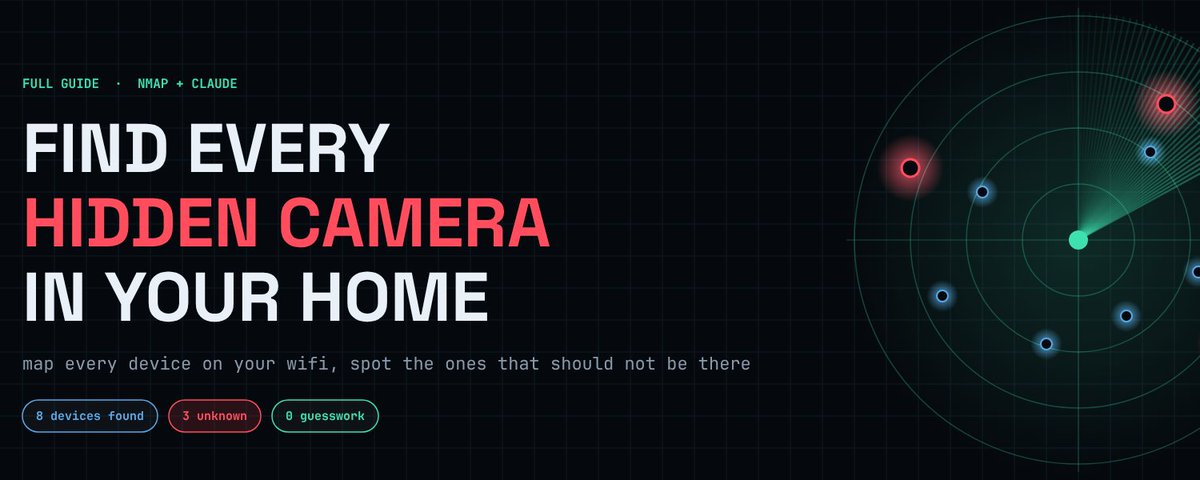
then i read my own article about hidden cameras on wifi and decided to check my own router with claude
i exported the router config and an hour of traffic, gave both to claude in read-only mode and asked one question: what on this router is not mine?
the first answer made me close the laptop for a minute
→ remote admin was open to the whole internet on port 8443
→ admin password was still the default one printed on the box
→ a "remote support" app i never installed, checking in to an unknown server every 5 minutes
→ my DNS was switched to their servers. every site i opened was looked up through them first
→ a port forward straight to my home storage with all my photos
23 days. 6,624 check-ins. 41,280 DNS lookups logged on a server i don't control
i don't know if anyone actually looked. but they could. my bank, my emails, what i search at 2am. all of it went through a box someone else had the keys to
what i did that night:
> factory reset the router
> updated the firmware from the manufacturer's site, not from the "support" link
> new admin password, remote admin OFF, WPS OFF, UPnP OFF
> DNS back to one i chose myself
> deleted the port forward
> new wifi password and checked every connected device
> called the provider and asked what exactly their guy installed. they're "checking"
check yours tonight. log into your router, look at remote management, DNS and port forwarding. if there's anything you didn't set, it's not yours
the full router check with claude is in the article below. takes 15 minutes

Vector retweeted

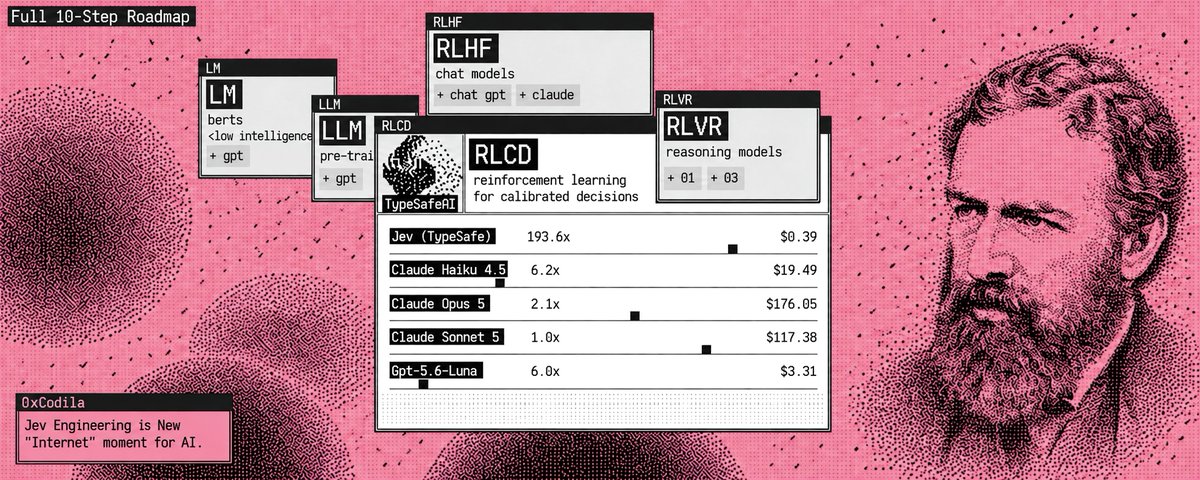
WHOEVER LEAKED THIS JEV TRADING DESK DESERVES THE QUANT CHAIR
I thought running a crypto bot meant one script, one API key, and a stop-loss you check every morning.
Apparently not.
This desk's setup is much more interesting:
→ WATCHER streams BTC, ETH, SOL in parallel at 1.4M packets per second, 12ms end-to-end, pure push, no polling
→ ANALYST fuses spot, futures and options into one 24×24 evidence matrix with per-market confidence (0.84, 0.90, 0.77), no single-market blindspot
→ RISK clamps net exposure before the executor touches the book, holds the handoff queue at 65% headroom, no breach on burst
→ EXECUTOR fills through 3 hops at 91% handoff rate, every fill tagged against the signal that triggered it
→ REPORTER keeps a 0.85 confidence floor and routes anything below to the human operator, flags 7 signals the six operators disagreed on this hour
so you get:
Signals streamed. Markets fused. Exposure clamped. Fills tagged.
the interesting part isn't adding more alpha.
it's giving every signal a desk six operators have to sign before it fills.
Instead of one bot running one strategy on one feed, you fuse six markets into one evidence matrix, route through 3 hops at 12ms, and let the 0.85 floor kick anything shaky to the human.
Fuse the markets. Clamp the risk. Tag the fill.

Vector retweeted
Claude Code just recovered [23,418] files from a hard drive I'd already written off. Including a crypto wallet I hadn't touched since [2021].
[6] years of photos. All my work stuff. And a bag I was 100% sure was gone forever.
My old laptop got bricked [last year]. Pulled the drive, tossed it in a drawer, took the L. Last week I plugged it into my MacBook, opened Claude Code and sent one prompt.
What it did:
→ Cloned the whole drive first, so the original never got touched
→ Skipped the dead sectors, then circled back for them
→ Rebuilt files the file system lost track of, one by one
→ Sorted every photo into folders by year
→ Went digging for wallet files and seed phrase notes
What came back:
→ [14,000+] photos from [2018] to [2023]
→ Contracts, invoices and spreadsheets I thought were cooked
→ My [Electrum] wallet. Opened first try. ngl that one hit different.
Went from "it's so over" to "we're so back" in one prompt.
Almost threw that drive in the trash. Twice. Would've been the most expensive L of my life.
A "dead" drive often isn't dead fr. The file system breaks, the data stays.
Full prompt below. Bookmark it before it gets buried, and send it to anyone with an old laptop collecting dust in a drawer.
240K people this week watched Claude "find spyware" on someone's phone.
Most of what those posts describe can't happen on an iPhone. But one part is 100% real, and it looks exactly like the cable on your nightstand.
What's real and what isn't:
→ "Apps secretly listen and save your keywords." No proof. Northeastern tested 17,260 Android apps and found none sending audio. What they did catch: apps sending screen recordings
→ The hacked charging cable is real. It's called the O-MG cable. Wi-Fi chip inside the plug, and it can type commands into whatever it's plugged into. In the video it controls a phone with nothing else connected
→ Claude Code can't "scan" a live iPhone. iOS doesn't allow that. What it can do is run Amnesty's MVT on an encrypted backup. Same tool from the Pegasus investigation
The 2-minute check, no laptop needed:
→ Settings → Privacy & Security → App Privacy Report. Every mic and camera access by every app for the last 7 days. This is how you actually answer "is TikTok listening"
→ Orange dot in the status bar = mic is on right now. Open Control Center to see which app
→ Settings → General → VPN & Device Management. A profile you didn't install is a real red flag
→ Charge only with your own cables. A free cable from a stranger is a no
The Claude Code prompt that runs MVT on your iPhone backup is in the first reply. Save this for the next time someone says "my phone is listening to me" ↓
Vector retweeted
240K people this week watched Claude "find spyware" on someone's phone.
Most of what those posts describe can't happen on an iPhone. But one part is 100% real, and it looks exactly like the cable on your nightstand.
What's real and what isn't:
→ "Apps secretly listen and save your keywords." No proof. Northeastern tested 17,260 Android apps and found none sending audio. What they did catch: apps sending screen recordings
→ The hacked charging cable is real. It's called the O-MG cable. Wi-Fi chip inside the plug, and it can type commands into whatever it's plugged into. In the video it controls a phone with nothing else connected
→ Claude Code can't "scan" a live iPhone. iOS doesn't allow that. What it can do is run Amnesty's MVT on an encrypted backup. Same tool from the Pegasus investigation
The 2-minute check, no laptop needed:
→ Settings → Privacy & Security → App Privacy Report. Every mic and camera access by every app for the last 7 days. This is how you actually answer "is TikTok listening"
→ Orange dot in the status bar = mic is on right now. Open Control Center to see which app
→ Settings → General → VPN & Device Management. A profile you didn't install is a real red flag
→ Charge only with your own cables. A free cable from a stranger is a no
The Claude Code prompt that runs MVT on your iPhone backup is in the first reply. Save this for the next time someone says "my phone is listening to me" ↓


Vector retweeted

i thought this was fake. so i checked. it's not. "deleted forever" on iphone isn't forever
the 3 places a deleted photo still lives:
1. recently deleted album. 30 days, locked with face id by default since ios 16
2. the thumbnail cache. ios clears it on its own schedule, not yours
3. your last mac backup, until the next one overwrites it, unless you archived it
and the same check on my home network was worse. top result: my router password, still the one on the sticker
10 minute checklist:
→ empty recently deleted
→ check the hidden album too, it's easy to forget
→ finder → manage backups → delete old archived ones
→ tick "encrypt local backup"
→ router: change the sticker password
which one did you skip? mine was the router

I ran the same check on my own iPhone.
Didn't expect the last number.
50 photos deleted on purpose.
12 of their thumbnails survived "Delete All".
After this blew up,
I wanted numbers, not theories.
Setup: 50 shots of numbered paper,
deleted all of them, then backup
+ Claude Code, read-only.
After delete:
1. in Recently Deleted: 50/50
2. originals still in backup: 50
3. thumbnails for them: 47
After "Delete All" + new backup:
4. originals left: 0
5. thumbnails left: 12
So my last post was half right.
The originals really go.
Some previews don't, at least not right away.
What to change today:
→ empty Recently Deleted
→ check the Hidden album
→ encrypt your local backups
Next: same check after a restart
and after 24h. Will post the numbers.
▸ prompt: DL-047 · Trash Audit · stack: Claude Code · cost: $0.00 · time: 8 min
Vector retweeted

Claude Code leaked my address, my salary and 37 photos of my passport from data that Anthropic and OpenAI had been keeping for years, and it all started when my girlfriend found out i cheated because of one sentence leaked by ChatGPT
she opened my laptop to plan our vacation, and ChatGPT suggested: "how about a romantic hotel for two again, like on your business trip in march?"
i was on that business trip alone, at least that's what i told her, and it was a lie, that same night i downloaded everything that Anthropic and ChatGPT and Google had been keeping on me, threw it into opus 5.5 and asked one thing: "what else do you know?"
what it found first:
→ photos of my ex i swore i deleted 2 years ago
→ both sides of my bank card in my camera roll
→ my passport, my ex's passport, and my home address, all in the same folder
→ 1,247 ChatGPT conversations i thought nobody would ever read
all of it sitting in one folder, next to my home address and my daily schedule of when the apartment is empty
then i checked my email on Have I Been Pwned, 9 breaches, passwords from sites i haven't opened in years
my girlfriend saw one sentence, now imagine a stranger seeing all of it
here's how it works, infostealer malware grabs your passwords and sessions, those logs get sold on darknet and telegram for $10, researchers already found 100,000+ ChatGPT accounts in them, whoever buys yours just downloads what i downloaded and asks the same question
what i did that night:
→ deleted every document and card screenshot from my gallery and from "recently deleted"
→ reissued 2 cards because you can't hide a CVV once it's out
→ Google My Activity → auto-delete set to 3 months
→ ChatGPT → deleted old chats and wiped memory
→ changed every password from those 9 breaches and turned on 2FA
→ iPhone → Settings → turn off Location every time i share a photo
one thing i forgot, the export folder
a week later she came to pick up her things and asked Claude on my laptop to find our photos together, and the first one it pulled was from that hotel, with the other girl
delete your export right after you check it
your phone isn't listening to you, it doesn't need to, you already told it everything
the full step by step and the prompt are in the first reply, takes 10 minutes, save it so you don't lose it and send it to anyone who still says "i have nothing to hide"
Vector retweeted

BREAKING: Claude Code found 12,847 photos of my face on my iPhone that I never took.
It looked like the phone was taking them every time I picked it up. From the club. From home. At a red light while I was driving. Almost every time I took the phone in my hands there was a frame.
They were sitting in a system cache with timestamps and location data. None of them were in Photos.
I plugged the phone into my MacBook and asked Claude Code to scan for any front-camera files that weren’t in my Photos library or Recently Deleted. It flagged Private/var/mobile/Library/Caches/com.apple.faceid. Over 12,000 files. Mix of infrared frames and regular front-camera images. Each one had a timestamp and GPS coordinates attached.
I started scrolling. Most were from the last 14 months. Then I saw one from four seconds ago. I was still looking at the folder.
Apple says the TrueDepth system turns the capture into a mathematical model inside the Secure Enclave and discards the image. On this phone the raw frames were still in the cache. Several of the processes that wrote to the folder belonged to system diagnostics. A couple of old apps with camera permission also had access to the same directory.
I turned off diagnostics sharing and revoked camera access from every app that didn’t need it.
If you want to check your own phone, plug it in, run a backup, and ask Claude Code to look for front-camera files outside the Photos library. The folder path above is where mine were.
Claude Code found 145,763 photos I permanently deleted from my iPhone.
Three years of deleted photos and videos still sitting in a hidden cache. Any app with file access can read them.
I plugged my iPhone into my MacBook to run a backup. Claude Code was doing the security audit from my last post and flagged a directory I wasn't even looking for.
PhotoData/Thumbnails. Over 146,000 files. Photos, videos, screenshots. Every single one was something I deleted.
Photos from 2023, 2024 and 2025. The ones I deleted the second after taking them. The ones I cleared from Recently Deleted. The ones I deleted three separate times because I wanted to be sure they were gone. All still there.
Passport photo I took for a visa application in 2023.
Screenshots of my bank app with full account numbers visible.
Private photos I sent someone and immediately deleted after a breakup.
Screenshot of my crypto seed phrase I took temporarily in 2022.
Photo of my ID and credit card I took to remember the numbers and deleted 5 seconds later.
Screenshots of my ex's private Instagram stories I saved and permanently deleted in 2023.
Some were full resolution. All organized by date going back to 2021.
When you delete a photo on iPhone, iOS removes it from your camera roll and Recently Deleted. It keeps a compressed copy in a Spotlight search index cache so your phone can find things when you search. Apple never clears it. Not after 30 days. Not after a year. Never.
They told you it was permanently deleted. It wasn't.
I checked which apps on my phone had Files and Folders access. 23 apps. Weather apps. QR code scanners. PDF readers. A flashlight app I downloaded in 2022. Any one of them could have been reading every photo I ever deleted this entire time.
Went from 23 apps to 3 in about two minutes.
Full step by step below. Takes 2 minutes. Save it so you don't lose it and send it to anyone with an iPhone.
Readers added context they thought people might want to know
The author is posting AI-generated engagement bait text with various random claims of deleted photos or videos on a daily basis.
1. x.com/coolerwave/sta… - "BREAKING: Claude Code found 12,847 photos of my face on my iPhone
2. x.com/coolerwave/sta… - "Claude Code found 214,856 photos and videos I permanently deleted
Vector retweeted

I turned on the hidden microphone log on my iPhone. 7 apps touched my mic in 24 hours. I'd opened 3 of them.
it's built into iOS and it's off until you turn it on. most people never open that screen
Settings → Privacy & Security → App Privacy Report → Turn On
what mine showed:
→ a social media app accessed the microphone at 2:43 PM while my phone was in my pocket
→ a shopping app contacted 34 different domains in the background
→ a free QR scanner accessed my location
what I did in 2 minutes:
→ mic access off for every app that used it while I wasn't talking to it
→ deleted the QR scanner
→ left the report on, it keeps a rolling 7 days
it won't show what an app heard. it shows when an app accessed the microphone.
Claude Code just found proof that every app on your phone is listening to your conversations. TikTok, Instagram, Facebook, Snapchat. they're using what you say out loud to build your feed. i have the data to prove it.
i've suspected this for months. last week i finally checked.
i was on a call with a friend and told him i'm thinking about breaking up with my girlfriend. didn't text it, didn't search it, just said it out loud with my phone on the table. two hours later she's lying on the couch scrolling TikTok and her entire feed is breakups. "signs your relationship is over." "how to heal after a breakup." she looked at me and said "why is TikTok showing me this." i said i don't know. but i did know.
that night i connected my iPhone to my MacBook and ran Claude Code. it scanned every app's background microphone activity for the last 90 days. apps that were only supposed to have photos or location were activating the microphone anyway.
→ TikTok activated the microphone 347 times while the app was closed
→ Instagram 211
→ Facebook 189
→ Snapchat 94
i just sat there staring at the screen.
every activation lasted between 3 and 15 seconds, enough to catch a sentence. every one of them tagged a keyword and cached it locally with a timestamp.
Claude Code pulled the keyword cache:
→ "breakup": tagged 4 hours before her feed changed
→ "pregnancy test": whispered it to my girlfriend in the bathroom, baby ads the next morning
→ "laid off": said it to my mom before i told anyone at work, job board ads within an hour
→ "lump": my dad told me about his doctor's appointment, cancer screening ads that night
→ "therapist": a call i made from my car, mental health app ads the same day
TikTok had the most entries, Instagram was second. every keyword matched a conversation i had out loud near my phone.
the "lump" one is the one i can't stop thinking about. my dad hasn't even told my mom yet.
Claude Code checked my girlfriend's phone in the same room. same keywords, same timestamps. both phones were picking up the same conversation and tagging it on their own.
i asked it how to shut it down. it mapped every app's microphone access.
what i did:
→ revoked microphone access from every app that doesn't need it
→ disabled background app refresh for TikTok, Instagram, Facebook, Snapchat
→ turned off "Hey Siri" (apparently it keeps the mic listening 24/7)
→ revoked "nearby interaction" (no idea what it even does, Claude Code said to kill it)
Claude Code confirmed all four apps lost background microphone access. did the same on her phone, about 3 minutes each.
within 48 hours both our feeds went random. generic stuff, nothing from our conversations.
full step by step and the prompt are in the first reply. save it so you don't lose it, and send it to anyone who's ever said "my phone is definitely listening to me." it is.
Vector retweeted

give your agents a f*cking question budget. 5 a day
every agent you add pings you more:
"should i proceed?" "which file?" "approve this?"
you built a team and became its switchboard
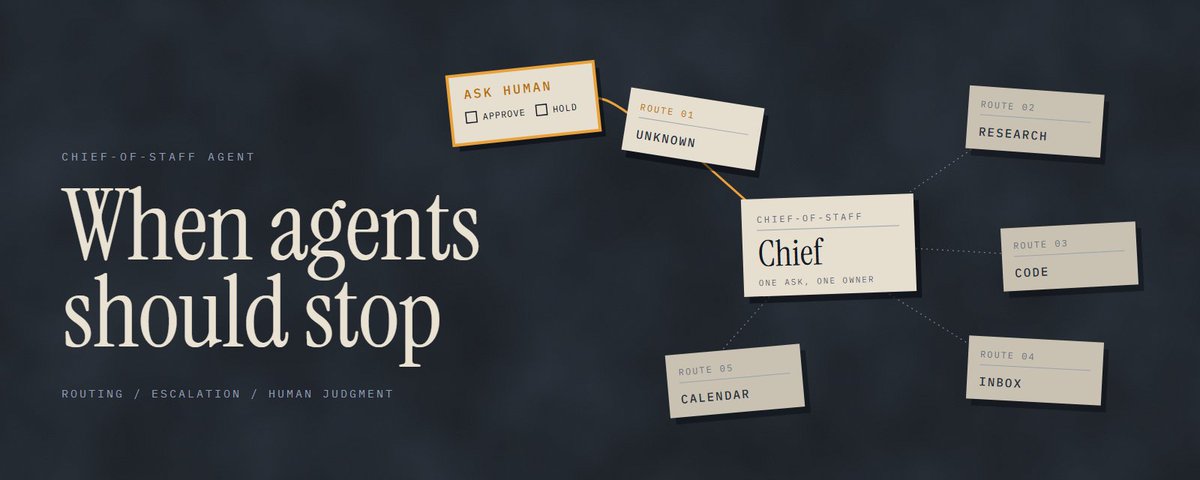
the fix from my chief of staff guide:
→ one chief agent sits between you and the rest
→ hard cap: 5 interruptions a day
→ over the cap, low-stakes asks go into one evening digest
→ only irreversible stuff breaks the cap: delete, send, pay, merge to main
→ every answer you give goes into a decision log. same ask next time, it decides alone and tells you after
say these 3 lines to claude code:
1. "you're my chief of staff. max 5 questions to me a day, the rest goes in a digest at 6pm"
2. "before you ask me anything, check decisions.md. if i already answered it, do the same and tell me after"
3. "every question comes as: decision, options, your pick, what happens if i don't answer in 2h"
full guide below. save it
which agent in your setup asks you the most?

Vector retweeted

this f*cking Claude Code pull request got reviewed 50 times in one night, and nobody was awake
the Claude Code team just showed how they review code now that Claude writes about 90% of it. their monorepo went from ~2,500 changes a day in May to 30,000+ in September, so nobody reads line by line anymore
one PR in the CLI bounced between an agent author and an agent reviewer more than 50 times overnight. the reviewer kept finding something, the author kept fixing it, until a human stopped it by hand
before: agent writes -> agent reviews -> repeat until it passes
now: 3 review cycles max -> the author rethinks the approach -> re-review only the new diff
why it matters: when they ran git blame on what the reviewer kept flagging, ~59% was code that had been there since the first pass. the loop wasn't finding new bugs, it was digging up a few more old ones every round
their rules, copy them on your own repo:
- cap review at 3 cycles, then the agent author changes approach
- after the first rounds, review only the diff
- name the class of bug, so the agent fixes all of them, not one line
- never re-report what was already found
June to September: merged PRs more than doubled, the share that got reverted fell by over 40%, and PRs with real review comments went from 16% to 54%
one pull request, 50 rounds, and a human who had to stop it by hand. now the reviewer stops itself at 3


Vector retweeted

It is becoming f*cking dangerous: one prompt turns Claude Code into a FULL crypto trading agent that switches tactics when the market flips
Zero code. Copy, paste, fill in exchange, pairs, timeframe, capital:
Time: 1 min to paste
Action: drop into Claude Code
One-strategy bots trade a flat day and a dump the same way. This one does not
Regime Detector: labels each bar SIDEWAYS, CHOPPY or DUMP via ADX+ATR, swaps playbook
Kill Switch: equity falls 15% below peak, positions close, halt survives restarts
Backtest Gate: 3+ years with fees, slippage and unseen data, blocks any strategy that lost or fell >15%
Nightly Review: writes a tweaks report overnight, nothing changes without your OK
Paper Mode: sim orders on live prices, no real money until you set LIVE=true
Old way: code and test every rule by hand
Now: one prompt, Claude Code builds the bot, tests risk, shows diff before running
Passed backtest = survived the past, not a profit guarantee. Stay on paper until you trust it
Full prompt in the reply below, bookmark this

Vector retweeted

3.7M views: Claude Code found "deleted" photos. I ran the cleanup math ↓
The scan is the safe half. Claude reads a folder, lists thousands of files, and nothing on the phone changes. @0xCortiq's post stops there. The next prompt is "clean it up"
Last week I wrote the same guide for smart TVs (quoted below). On a TV the cleanup has an undo: Claude switches an app off with pm disable-user, and pm enable brings it back. A deleted file on a phone has no such command. The backup is the only undo you get.
Say each file Claude removes is 99% safe:
P(nothing breaks) = 0.99ⁿ
10 → 90%
100 → 37%
1,000 → 0.004%
What the TV guide didn't count is how many things break at once:
expected breaks = n × 0.01
At 10 files that's 0.1. When a batch of 10 fails, 95% of the time one file did it, and halving finds it in 4 tries: 10 → 5 → 3 → 2 → 1.
At 100 files that drops to 58%. At 1,000 you expect about 10 broken files at once. Halving assumes a single culprit, so it stops working, and you're left with ten problems and no idea where any of them came from.
(The 99% is illustrative. Thumbnails may be far safer than TV system apps. What matters is how fast the curve falls.)
What I'd do:
→ let it look as much as you want
→ back up before it deletes anything
→ 10 files per batch, check the phone, repeat
Would you let Claude Code delete files on your phone, or only look?


Vector retweeted

Opus, did you really have to embarrass the competition again? 🎾
Claude Opus 5.5 vs ChatGPT-6.1 Sol. One prompt - two tennis clubs
And Opus nailed it again. The colors, lighting, physics, detail - I could just sit and watch this little club come to life. Everything feels polished, vibrant, and incredibly cozy
Sol is pretty good for the price. But Opus is a whole level above here - you can see the difference immediately
Almost four times the price. Worth it?
Vector retweeted

I still don't understand why people build a second brain that can't prove a single thing it says.
somewhere in your wiki is a sentence your AI got wrong. you don't know which one. you'll find out the day you rely on it.
here is the fix, in four steps:
1 - keep raw read-only. every source stays exactly as it arrived, never edited
2 - make every claim in the wiki carry its proof: a quote and the file it came from
"exact words from the source" - raw/filename.md
3 - put one rule in CLAUDE.md: "no claim without a quote and a source file. if there is none, write: unverified"
4 - add a checker that opens each cited file and confirms the quote appears word for word. ten lines of Python, and Claude can write it for you
the first time I ran this kind of check, a made-up quote got caught before it spread. now every page has to pass before it counts.
a second brain that stores is a drawer. one that proves is a compiler.
save this, and follow for more setups like this


