

Strengthening democracy for all voters by promoting the responsible use of technology in elections for 20+ years. Subscribe: https://xitter.cf/t.co/pvv64wp4An
Philadelphia, PA
Joined May 2009
- Tweets5.5K
- Following2K
- Followers6.3K
- Likes422





Pinned Tweet
Find us across platforms:
☑️Bluesky: bsky.app/profile/verifiedvot…
☑️LinkedIn: linkedin.com/company/verifie…
☑️Instagram: instagram.com/verifiedvoting…
☑️Threads: threads.com/@verifiedvoting
☑️Sign up for our newsletter: eepurl.com/dHMBDn
ATTENTION VOTERS: before you cast your vote, take a moment to double-check your paper ballot for any errors. Whether you fill it out by hand or with a machine, make sure it matches your selections before you submit it. It’s the easiest way to make sure your vote counts. 🗳️
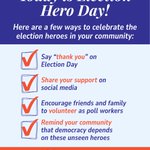
Happy #ElectionHeroDay! Behind every election are people testing equipment, securing ballots, running audits, & answering voters' questions. Thank you to the bipartisan election officials & poll workers who make it happen. 💙
Tag an election hero in your community 👇

Happy #ElectionHeroDay! 🦸 Meet the Election Heroes at Verified Voting who’ve served as clerks, registrars, election supervisors, and poll workers. Thank you to everyone who runs our elections! #ThankYouElectionHeroes


📢 We’re thrilled to welcome Matt Crane to the Verified Voting Board of Directors! With 26 years of election administration & security experience, Matt brings a front-line perspective to our mission.
🔗 Read more: bit.ly/4hWOMun

10 days until #VoteEarlyDay! 🗳️ Election Day is just the LAST day to vote. Find out when & where you can vote early in your state and make your plan today. @voteearlyday
🔍 voteearlyday.org/vote
Once you cast your vote, how do voting technology and election laws protect access and democracy?
Watch Verified Voting’s Mark Lindeman join @EFF, the Brennan Center & TechEquity on election cybersecurity ahead of the midterms.
🎥 Watch: bit.ly/4yHbpsQ

98% of voters now cast a paper ballot. That's decades of work by election officials, advocates, and voters. Thanks for the shoutout, @stephen_richer!

11 reasons why you can have confidence in the upcoming American elections. What would you add?
1) Paper ballots
According to Verified Voting, 98% of Americans vote using a paper ballot. Paper ballots can’t be hacked or otherwise digitally manipulated. And they produce an auditable record.
Some voters hand-mark a paper ballot (Arizona). Others use a touchscreen that then prints a ballot receipt (Georgia). Either way, the voter has a paper record, against which he can confirm his selections, and the ballots can be audited after machine tabulation.
*Louisiana is the only state that doesn’t broadly use paper ballots.
2) Post-election audits
In 2008, fewer than half the states required post-election tabulation audits. Now all 50-states have laws for post-election audits.
Post-election hand-count audits dispel allegations of tabulation manipulation or error. If tabulators “flipped votes” from one candidate to another, or if tabulators failed to read votes for one candidate, it’s revealed in a professional post-election audit.
3) Federalized elections
People often imagine rigging an election like the scene in Tom Cruise’s first Mission Impossible movie, in which Cruise is suspended from the ceiling while he hacks into a central computer to obtain the “NOC list.”
But there is no central computer. There is no national voter registration database. There is no central results server. There is no single tabulation software.
There are over 9,000 voting jurisdictions in the United States. They are subject to 50 different sets of state law. Different counties have different election contests, different ballot formatting, different ways of confirming identity, and different tabulation software.
These local jurisdictions (often counties) run the election. Not the state. Not the federal government.
4) Bipartisan workers
None of the 9,000+ election jurisdictions is run entirely by Republicans or entirely by Democrats. Bipartisanship is built into every jurisdiction and is a productive tension. For example, in Arizona, mail ballots must be removed from their envelopes by two workers of different political affiliation. And if the top official at a voting location is a Republican, the second-in-command can’t be a Republican.
The best part is: you can join (and maybe get paid!). Election offices hire lots of temporary workers.
5) Watchful eyes
Elections are more transparent than ever. For example, in Maricopa County, you can livestream all critical stages of the ballot tabulation process. In Los Angeles County, there’s an observation deck at the central counting facility.
State law usually allows for political party observers at all voting locations and central counting facilities. Nonpartisan observers are often allowed as well. In recent years, both major political parties have aggressively recruited election observers.
6) Disaggregated voting behavior
A lot of the disaster scenarios envisioned by Democrats – for example, ICE at the polls – contemplate American elections as they existed 30 years ago when almost everyone voted on Election Day.
That’s no longer the case.
In November 2024, only 37.4% of Americans voted in person on Election Day. 35.2% voted early in person. 30.3% voted by mail ballot.
Of those who vote in person on Election Day, that’s done across approximately 95,000 different voting locations.
In many counties, you can vote at any voting location within the county. If there’s a disruption at one voting location, you can drive a bit further to another voting location.
7) We don’t just turn the machines on and hope for the best
Yes, we have post-election hand-count audits that reveal errors. But tests happen before the election as well. There are state certifications and federal certifications. Election officials test every piece of equipment before putting it in the field.
Does that mean it always works perfectly? No.
But there is always a backup plan.
8) The primaries went well
Almost nobody cried foul during the primaries. They went very, very smoothly across the United States. The same people are running the general election, and they’re using the same equipment.
9) You have to register to vote
49 states require voters to register before voting (North Dakota doesn’t). This means there’s a record of who can vote. It’s a public record.
There’s also a record of who does vote. It’s also a public record.
You can compare the registration file with the voted file. If more people vote than are registered, you’ve got a problem.
10) Data nerds
Data nerds use these voter files to map voting behavior. If Steve Kornacki of NBC News saw a massive influx of Republican votes in, say, Oakland, California, he’d probably ask some questions, and people would look into it. Ditto if Kornacki saw a big blue density coming out of Provo, Utah.
This is one of the reasons why it’s hard to “inject ballots into the system.”
11) Lawyers and lawsuits
There are lots and lots of lawyers involved in American elections. Lawyers for the political parties. Lawyers for the candidates. Lawyers for voting rights groups. Lawyers for election integrity groups.
This is a good thing (usually).
If those lawyers see something that they think is material fraud or error, they can file a lawsuit and have it adjudicated in state or federal courts.
………………………………..
There’s been a lot of noise about why you can’t trust American elections.
Confidence among both Democrats and Republicans has gone down significantly since the immediate aftermath of the November 2024 election.
But the mechanics of American elections are the same now as they were in 2024.
And they were sound then. They’re sound now.
Tell me what elements I left off that should be on this list!
Happy voting!
Stephen
Verified Voting retweeted

11 reasons why you can have confidence in the upcoming American elections. What would you add?
1) Paper ballots
According to Verified Voting, 98% of Americans vote using a paper ballot. Paper ballots can’t be hacked or otherwise digitally manipulated. And they produce an auditable record.
Some voters hand-mark a paper ballot (Arizona). Others use a touchscreen that then prints a ballot receipt (Georgia). Either way, the voter has a paper record, against which he can confirm his selections, and the ballots can be audited after machine tabulation.
*Louisiana is the only state that doesn’t broadly use paper ballots.
2) Post-election audits
In 2008, fewer than half the states required post-election tabulation audits. Now all 50-states have laws for post-election audits.
Post-election hand-count audits dispel allegations of tabulation manipulation or error. If tabulators “flipped votes” from one candidate to another, or if tabulators failed to read votes for one candidate, it’s revealed in a professional post-election audit.
3) Federalized elections
People often imagine rigging an election like the scene in Tom Cruise’s first Mission Impossible movie, in which Cruise is suspended from the ceiling while he hacks into a central computer to obtain the “NOC list.”
But there is no central computer. There is no national voter registration database. There is no central results server. There is no single tabulation software.
There are over 9,000 voting jurisdictions in the United States. They are subject to 50 different sets of state law. Different counties have different election contests, different ballot formatting, different ways of confirming identity, and different tabulation software.
These local jurisdictions (often counties) run the election. Not the state. Not the federal government.
4) Bipartisan workers
None of the 9,000+ election jurisdictions is run entirely by Republicans or entirely by Democrats. Bipartisanship is built into every jurisdiction and is a productive tension. For example, in Arizona, mail ballots must be removed from their envelopes by two workers of different political affiliation. And if the top official at a voting location is a Republican, the second-in-command can’t be a Republican.
The best part is: you can join (and maybe get paid!). Election offices hire lots of temporary workers.
5) Watchful eyes
Elections are more transparent than ever. For example, in Maricopa County, you can livestream all critical stages of the ballot tabulation process. In Los Angeles County, there’s an observation deck at the central counting facility.
State law usually allows for political party observers at all voting locations and central counting facilities. Nonpartisan observers are often allowed as well. In recent years, both major political parties have aggressively recruited election observers.
6) Disaggregated voting behavior
A lot of the disaster scenarios envisioned by Democrats – for example, ICE at the polls – contemplate American elections as they existed 30 years ago when almost everyone voted on Election Day.
That’s no longer the case.
In November 2024, only 37.4% of Americans voted in person on Election Day. 35.2% voted early in person. 30.3% voted by mail ballot.
Of those who vote in person on Election Day, that’s done across approximately 95,000 different voting locations.
In many counties, you can vote at any voting location within the county. If there’s a disruption at one voting location, you can drive a bit further to another voting location.
7) We don’t just turn the machines on and hope for the best
Yes, we have post-election hand-count audits that reveal errors. But tests happen before the election as well. There are state certifications and federal certifications. Election officials test every piece of equipment before putting it in the field.
Does that mean it always works perfectly? No.
But there is always a backup plan.
8) The primaries went well
Almost nobody cried foul during the primaries. They went very, very smoothly across the United States. The same people are running the general election, and they’re using the same equipment.
9) You have to register to vote
49 states require voters to register before voting (North Dakota doesn’t). This means there’s a record of who can vote. It’s a public record.
There’s also a record of who does vote. It’s also a public record.
You can compare the registration file with the voted file. If more people vote than are registered, you’ve got a problem.
10) Data nerds
Data nerds use these voter files to map voting behavior. If Steve Kornacki of NBC News saw a massive influx of Republican votes in, say, Oakland, California, he’d probably ask some questions, and people would look into it. Ditto if Kornacki saw a big blue density coming out of Provo, Utah.
This is one of the reasons why it’s hard to “inject ballots into the system.”
11) Lawyers and lawsuits
There are lots and lots of lawyers involved in American elections. Lawyers for the political parties. Lawyers for the candidates. Lawyers for voting rights groups. Lawyers for election integrity groups.
This is a good thing (usually).
If those lawyers see something that they think is material fraud or error, they can file a lawsuit and have it adjudicated in state or federal courts.
………………………………..
There’s been a lot of noise about why you can’t trust American elections.
Confidence among both Democrats and Republicans has gone down significantly since the immediate aftermath of the November 2024 election.
But the mechanics of American elections are the same now as they were in 2024.
And they were sound then. They’re sound now.
Tell me what elements I left off that should be on this list!
Happy voting!
Stephen
📅 It’s Day 3 of National Voter Education Week, so it’s time to make a plan to vote! Many states offer early voting, check if it's available where you live & learn when you can cast your ballot.
🗳️ Find your state's options: bit.ly/46WxVBO
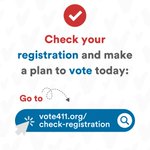
Moved, changed your name, or just haven't checked your voter registration in a while? National Voter Education Week is a great time to #CheckYourReg.
✅ Verify your registration: bit.ly/46WxVBO
Verified Voting retweeted

It’s Voter Education Week! 🗳️
This week, we’re sharing simple ways to get informed, make a plan, and feel confident when it’s time to vote. Follow along and pass on the power.
#VoterEducationWeek #VoteUtah

Verified Voting retweeted

It’s National Voter Education Week! Be sure to check out our voter education video series on Vote.NJ.Gov to learn more about the voting process and have all your questions answered. #NJVotes #NationalVoterEducationWeek

Verified Voting retweeted

National Voter Education Week starts TODAY! 🗳️
All week, we’re sharing actions to help you get ready for November 3rd.
DAY 1️⃣: REGISTER TO VOTE.
👀 Find your state
📅 Know your deadline
✅ Check your registration
Don’t wait for your deadline: FeelGoodAction.org


Verified Voting retweeted

What does it take to help voters get #VoteReady? 🗳️
Accessible voting options. Ballot tracking that keeps voters informed. Clear election results. Reliable audits.
Enhanced Voting builds technology that helps election officials deliver all of the above, supporting voters throughout the election process.
This National Voter Education Week, we’re proud to provide election officials with tools that help create a more transparent and informed voting experience. 🇺🇸
Verified Voting retweeted

Happy National Voter Education Week!
* Monday, Oct 5: Register to Vote
* Tuesday, Oct 6: Get to Know Your Ballot
* Wednesday, Oct 7: Make a Voting Plan
* Thursday, Oct 8: Understand the Process
* Friday, Oct 9: Share your Plans!
vote411.org/nvew @VOTE411

Verified Voting retweeted
Happy National Voter Education Week!! Together, let's encourage citizens to find their polling location, understand their ballot and make a plan to vote.
Become an Ambassador of Voting in your community for every election! nationalvotereducationweek.o…

📅 It's National Voter Education Week, and we're kicking things off with a simple, but very important question: have you checked your voter registration?
Check your status today and make sure you're #VoteReady.
🔍Check your registration: bit.ly/46WxVBO
Looking for ways to get involved in the midterm elections? Sign up to be an election observer and get a front row seat to how our elections work.
👀 Read more about election observation FAQs in our blog here: bit.ly/4z8xbFv

“All across this country, there are people working hard on every single possible scenario that could arise.”
Watch Verified Voting's Pamela Smith discuss the efforts being made ahead of the midterms to uphold our democracy and ensure voters have access to free & fair elections.
A state-level error in Texas left tens of thousands of voter registration’s unprocessed. Counties are racing to clear the backlog before early voting starts Oct. 19.
📋 In Texas? Confirm your registration status now: bit.ly/3TRsbpN