Abandoned by wolves and raised by my parents, which accounts for my unusual perspective. I later wandered into science, where oddball ideas are tolerated.
Joined March 2016
- Tweets272
- Following147
- Followers148
- Likes572

Shouldn't post before my first espresso has jump-started my brain. Great collaborative project on the analysis of hyper-thermostable nanotubes whose surprising existence was first noticed by researchers at the University of Regensburg over 40 years ago. @EmoryChem
Vincent Conticello retweeted

Exciting opportunity to join the University of Bristol as a BBSRC-funded Research Associate (4 years) working between us and @MarkDodding's lab. The post is on designing de novo peptides and proteins using both rational design and computational design and protein biochemistry.

Donor Strand Complementation and Calcium Ion Coordination Drive the Chaperone-free Polymerization of Archaeal Cannulae biorxiv.org/content/10.1101/…
Happy that the preprint is now published. Great collaboration with fantastic colleagues. @conticellolab @EmoryChem


Vincent Conticello retweeted
Please retweet!📢📢
We are looking to appoint a BBSRC-funded post-doctoral research associate to work in the area of de novo enzyme design with alpha-helical barrels using computational design, protein biochemistry, and directed evolution. More details below
Vincent Conticello retweeted

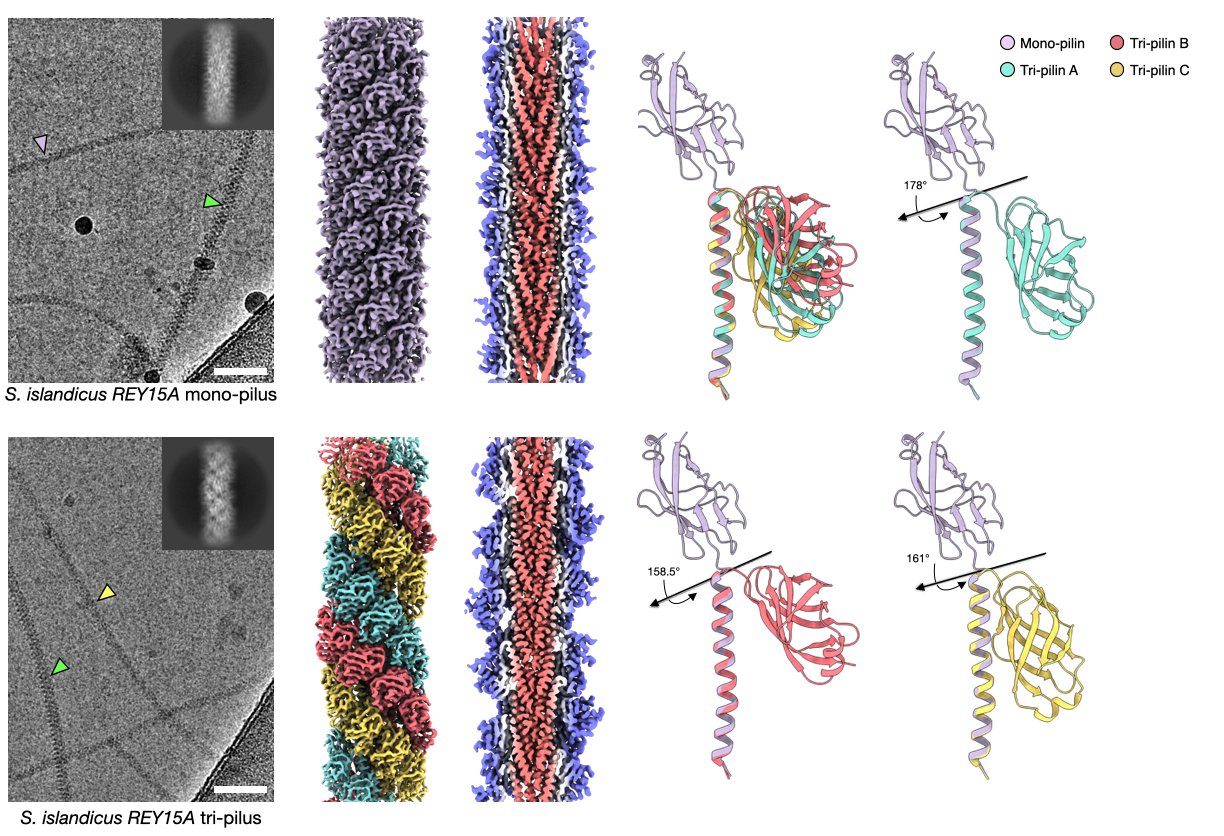
Mono-pilus (found in both rich and poor media) conforms to canonical archaeal T4P structures where all subunits are equivalent, whereas in the other filament, the tri-pilus (only found in poor media), its outer domain flips almost 180° and trimerizes on the pilus surface.
Vincent Conticello retweeted

Here is our paper showing microbial nanowires are ubiquitous and not restricted to Geobacter.
cell.com/cell/fulltext/S0092…

Vincent Conticello retweeted

Extraordinary crystal structure displays abiotic foldamer with unprecedented complexity: chemistryworld.com/news/extr…

Vincent Conticello retweeted

Super cool use of #AlphaFold from the world famous @zhangf lab to help them develop a novel molecular syringe that could act as a new type of drug delivery system that could potentially target things like cancer cells!
genengnews.com/insights/natu…


Delivery of therapeutic molecules is a major bottleneck for treating a wide range of diseases. Today we describe a new modality for delivering proteins based on an engineered contractile injection system @nature nature.com/articles/s41586-0…

Vincent Conticello retweeted
Check out our latest paper on @ACSSynBio about designing phosphorylation-responsive coiled coil assemblies. Many congrats to Harry and co! Read it here: scholar.google.com/scholar_u…

Vincent Conticello retweeted
Here is our reply to Derek Lovley where we challenge the existence of conductive e-pili
cell.com/trends/microbiology…
Vincent Conticello retweeted

Congrats, truly seminal work! Since our initial discovery of bacterial histones, we too worked on the very same histone protein & now present its crystal structure & DNA-binding properties. Great work by Yimin, Birte & collaborators @HartmannLab @MPI_Bio
doi.org/10.1101/2023.02.26.5…

This Post is from an account that no longer exists. Learn more
Peptide-based nanomaterials: Building back better sciencedirect.com/science/ar… This article was finally published...now I can temporarily retire from writing reviews. @conticellolab @EmoryChem
Vincent Conticello retweeted

Our paper on using Gln side chain to main chain hydrogen bonds to design customizable single α-helices for different applications is online in @NatureComms at rdcu.be/cZYtl
Vincent Conticello retweeted

The DBC is pleased to announce that J. Martin Bollinger of Penn State University has been chosen as the winner of the 2023 Abeles and Jencks Award for the Chemistry of Biological Processes. Congratulations to Prof. Bollinger!

Vincent Conticello retweeted

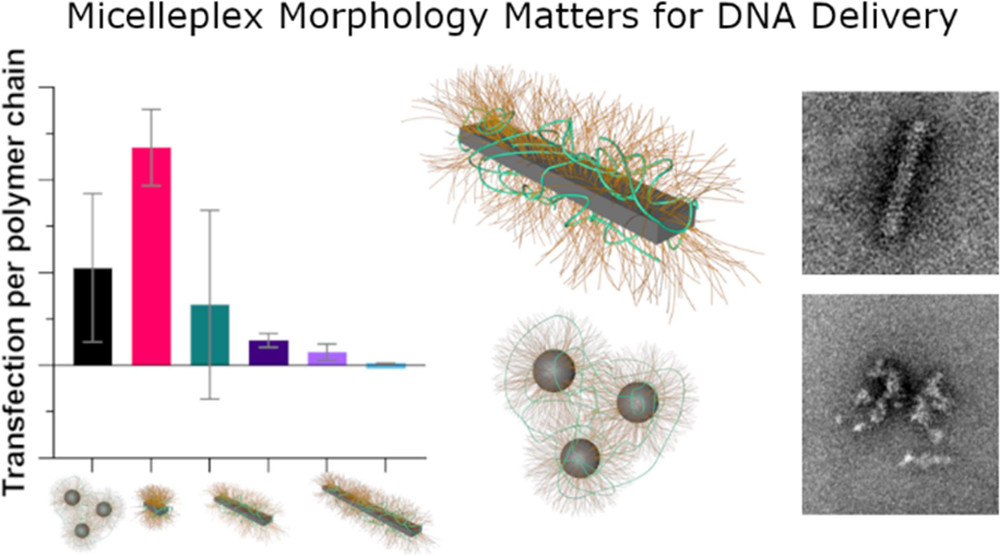
Steve's @Street_Research paper,
our first on gene transfection using length-controlled nanofibers, is out in @J_A_C_S! Collaborations included the Willerth Group (@DrWillerth) at
@UVicScience and Rob Harniman and others at @BristolChem in the UK!
doi.org/10.1021/jacs.2c06695