Brent Garry retweeted
Meet Brent & Kat’s robotic science assistant: LiDAR! This device uses millions of tiny laser beams to map the inside of the crater in 3D. (LiDAR = Light Detection And Ranging.)
We'll compare this volcanic landscape with places on the Moon that may have a similar history.
Brent Garry retweeted
Ernie hikes back and forth across the landscapes he studies, collecting evenly spaced lines of data. When this volcanic crater cooled, each landform was left with an invisible magnetic field. Ernie's backpack-mounted detector measures the strength of the field along his path.
Brent Garry retweeted
This crater, Kīlauea Iki, was once filled with molten lava. Brent & Kat use a portable laser scanner to make a 3D map of the area while Ernie measures the magnetic field near a hill of volcanic rock. (Note: We're working at this site with special permission from @Volcanoes_NPS.)
Brent Garry retweeted
We’ve been testing this magnetic field detector all year and working hard to make it better– we can already collect measurements 10x faster than a few months ago. This is just one of the tools that the next Moon explorers could use to detect caves hidden under the lunar surface.
Brent Garry retweeted
We can’t see it from here, but another giant tunnel lies beneath this lava landscape. The Mag Team is using a portable magnetic field detector to look for telltale signs from above ground. When the team walks over the cave roof, the detector’s readout changes.
Brent Garry retweeted
Hi from HI! We’re the Goddard Instrument Field Team (and friends), and we study Earth’s most otherworldly places. This week we’re in Hawaii working to answer questions about our solar system’s history and the search for life beyond Earth. Follow along for updates.
Brent Garry retweeted
JUST IN: We’ve selected Draper of Cambridge, Massachusetts to deliver three #NASAScience investigations by 2025, under @NASA’s Commercial Lunar Payload Service (CLPS) initiative, to the Schrödinger Basin — a lunar impact crater on the Moon’s far side! go.nasa.gov/3PHzGrG
Staring at the first @NASAWebb images be like ..
👀 Sneak a peek at the deepest & sharpest infrared image of the early universe ever taken — all in a day’s work for the Webb telescope. (Literally, capturing it took less than a day!) This is Webb’s first image released as we begin to #UnfoldTheUniverse: nasa.gov/webbfirstimages/

ALT The background of space is black. Thousands of galaxies appear all across the view. Their shapes and colors vary. Some are various shades of orange, others are white. Most stars appear blue, and are sometimes as large as more distant galaxies that appear next to them. A very bright star is just above and left of center. It has eight bright blue, long diffraction spikes. Between 4 o’clock and 6 o’clock in its spikes are several very bright galaxies. A group of three are in the middle, and two are closer to 4 o’clock. These galaxies are part of the galaxy cluster SMACS 0723, and they are warping the appearances of galaxies seen around them. Long orange arcs appear at left and right toward the center.
Brent Garry retweeted
The sci-fi film "Tron" staring Jeff Bridges debuted in theatres today in 1982. #80s #80smovies #1980S
Brent Garry retweeted
Introducing the Sedgwick's very own pride flag!
(We told you there was more to the polls)
Made using photos of your favourite rocks, we are thrilled to finally reveal the results of this project with you!
#Pride #PrideMonth #PrideMonth2022 #LGBTQIA #MovingAMountain
Brent Garry retweeted
No other profession is talking about arming their employees.
But because it's teachers, people feel like they can ask them to do even more.
Watched Star Wars Episode VII…in a giant theater…all by myself.
No one else in the audience.
It. Was. Awesome!
Brent Garry retweeted
🔵 This week's comic:
Richard Scarry's Busy, Busy 21st Century Classroom
-
(IH: bit.ly/TeamDancingBug)
read it right here👇
Brent Garry retweeted
Bill & Ted Day is NEXT WEEK, dude! 🎸⚡
Retweet, and invite a friend to party on with us! fb.me/e/3WUsjyusk
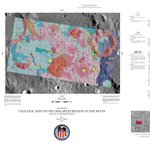
Sneak peek of the renovated #apollo16 pre-mission Geologic Maps of the Descartes Region of the Moon (Milton & Hodges, 1972) at 1:250k & 1:50k. @USGS_AstroGeo @NASAMoon