

The Churchill Society of Pennsylvania is the official Pennsylvania Chapter of the International Churchill Society (ICS). We maintain the legacy of Churchill.
Pennsylvania
Joined March 2022
- Tweets713
- Following229
- Followers140
- Likes1.2K





Churchill Society of Pennsylvania retweeted

SECRETARY RUBIO: In Defense of Western Civilization statedept.substack.com/p/in-…

The latest issue of Finest Hour is out! It celebrates Churchill’s deep connection to the U.S. and America’s 250th Anniversary! It gives a preview of the subjects explored at our 43rd International Churchill Conference in Philly, Oct 15th - 17th, ‘Churchill & America’. ✌️🎩 🇺🇸

Churchill Society of Pennsylvania retweeted

This week, @hughhewitt and I continue our discussion of Churchill’s The Second World War: how weakness invited danger, how Britain came to stand nearly alone, and what statesmanship requires in times of great peril.
I hope you will listen.
Churchill Society of Pennsylvania retweeted

Ronald Reagan on the American people: "It's true; we are an easygoing people, slow to wrath, hesitant to see danger looming over every horizon. But it's also true that when the emotions of the American people are aroused, when their patriotism and their anger are triggered, there are no limits to their national valor nor their consuming passion to protect this nation's cherished tradition of freedom."
We Will Never Forget. 🇺🇸
Churchill Society of Pennsylvania retweeted

Remembering all those affected by the tragic events of 9/11, 25 years ago today.
A commemorative Guard Change took place on the forecourt of Buckingham Palace this morning, during which The Duke and Duchess of Gloucester took the Royal Salute on behalf of The King.
The ceremony included performances of both US and UK National Anthems, Hymn to the Fallen and Amazing Grace.
Earlier this year, Their Majesties paid their respects at the 9/11 Memorial in New York, as part of the State Visit to the United States.
“We are oppressed by a deadly fallacy. Socialism is the philosophy of failure, the creed of ignorance and the gospel of envy. Unless we free our country while time remains from the perverse doctrines of Socialism, there can be no hope for recovery.”
- Sir Winston Churchill, ✌️🎩

Churchill Society of Pennsylvania retweeted

Pol Pot forced communism onto the Cambodian people, and the results were catastrophic.
The regime abolished private property and money, closed schools, banned religion, and sent entire cities into labor camps.
Scholars estimate that 20%-25% of the population died at the hands of the Khmer Rouge.


Churchill Society of Pennsylvania retweeted
Winston Churchill understood the threat of socialism, communism, and the ideas of Marx.

Churchill Society of Pennsylvania retweeted
Churchill understood that winning a battle is not the same as winning a war.
On Hillsdale Dialogues, @hughhewitt and I discuss how Churchill looked beyond immediate victories to the political ends of the war and the principles that free nations must preserve if they are to endure.
I hope you will give it a listen.
Churchill Society of Pennsylvania retweeted
I have written a piece in @dcexaminer about why our Declaration of Independence still matters and what it has to teach us about living a good life.

"...the Declaration is controversial, as it is in every important time. It is a revolutionary document."
@DrLarryArnn of @Hillsdale explains why this is so, even today.
washingtontimes.com/news/202…

Churchill understood that the relationship between America and Britain was an investment. He was basically its first portfolio manager. ✌️🇺🇸 🇬🇧
madaboutchurchill.substack.c…
Churchill Society of Pennsylvania retweeted
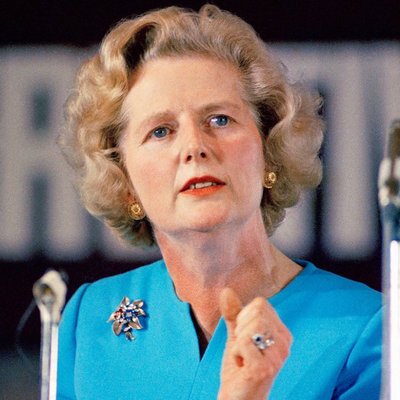
Communism held its people in a grip of terror. It brought neither dignity nor prosperity and in the end it collapsed under the weight of its own failure.

“A great harmony exists between the spirit and language of the Declaration of Independence and all we are fighting for now…”
On America’s 250th Birthday, read the beautiful words Winston Churchill said about our Declaration on our 142nd Birthday. ✌️🇺🇸 winstonchurchill.hillsdale.e…
Churchill Society of Pennsylvania retweeted
The artist Helen Cammock, who slandered Winston Churchill, has asked for her work to be removed from the National Portrait Gallery. She says there is great pressure on artists to bend, which she will not. The strongest pressure she faced came from Andrew Roberts, historian and friend, now Lord Roberts of Belgravia. He simply pointed out that the charge she made was not true. One of the reasons I like studying history is that it is finished. However loudly we argue, we do not change events. We only try to understand them. Whatever pressures may exist in the present, they do not alter the past. In this case, Ms. Cammock got the story wrong. I've placed a link below.
Churchill Society of Pennsylvania retweeted
My friend @hughhewitt and I discussed Churchill and the strange burden of leadership in times of war.
Churchill knew that victories are not won by weapons alone. A free people must know what they are fighting for, and why it is worth the cost.
The questions leaders face in such moments are rarely easy. The consequences can endure for generations.
I enjoyed the conversation and hope you will give it a listen.

Churchill Society of Pennsylvania retweeted
I suppose politics is always like this, but today, just about any slander against anything traditional is acceptable. Even, or rather especially, the best established and polite of societies commit them.
One such slander recurrent in bad history is that Winston Churchill deliberately starved several million people in India during the Second World War. The slander was recently repeated in passing by Helen Cammock, whose work is being shown at Britain’s National Portrait Gallery.
The dispositive answer to the charge is given by historian and Churchill biographer Andrew Roberts, The Lord Roberts of Belgravia. Andrew has mastered the difficult task of writing history that is true and compelling. His letter is linked below. I commend it to you.
Churchill Society of Pennsylvania retweeted

As we honor the anniversary of D-Day, we might also see in Eisenhower's example the model of leadership that might see us through the 250 years to come. | James H. McGee
nationalreview.com/2026/06/a…

Churchill Society of Pennsylvania retweeted

What happens when free nations convince themselves they can negotiate with dictators?
In this clip, I revisit one of the most important lessons of the 20th century: Winston Churchill's warning about Joseph Stalin. While many Western leaders believed they could work with the Soviet dictator, Churchill understood the reality of totalitarian regimes. He knew Stalin wasn't interested in peace—he was interested in power.
History proved Churchill right.
After World War II, Stalin consolidated control across Eastern Europe through intimidation, occupation, and phony elections, creating the Iron Curtain that divided the continent for decades. Today, the same fundamental question remains: Can aggressive authoritarian regimes be trusted to honor agreements, or do they simply use negotiations to buy time and expand their influence?
Watch the entire episode:
Rumble: rumble.com/v7aznww-ep045-roa…
YouTube: youtu.be/IhF46cr0SyU
Churchill Society of Pennsylvania retweeted
Victory alone was not enough to secure American liberty. Many nations have won independence only to lose it again.
America needed a man who understood that power must be restrained, even when it is rightfully his. George Washington had the character to surrender power when he could have kept it. That act helped establish a government of laws rather than men.
In our latest “Story of America,” Matthew Spalding of @HillsdaleInDC reflects on Washington’s indispensable role in the founding and the character that made American self-government possible.