
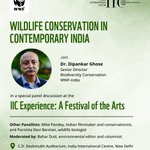






Join Dr. Dipankar Ghose, WWF-India, for a special panel discussion on Wildlife Conservation in Contemporary India at the IIC Experience: Festival of Arts.
📅 31 Oct | 10:30 am
📍 India International Centre, New Delhi
@dipankarghose | @IIC_Delhi

(1/2) Celebrate Diwali with WWF-India at The Green Collective on October 28th and 29th from 10am to 5pm. Browse eco-friendly handmade items from communities connected to our Threads initiative and others — and let your festive shopping make a positive impact on nature and people.


(2/2)
Date: 28-29 October
Time: 10am to 5pm
Venue: WWF-India, 172B, Lodhi Road, Delhi
#GreenDiwali #WWFIndia #Handmade


Speaking at a COP17 Armenia side event on "Wetlands for Biodiversity, Climate and People", Vishaish Uppal, Senior Director, Governance, Law & Policy at WWF-India, highlighted that wetlands are critical for both people and wildlife.

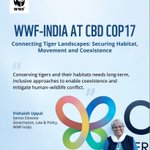
At the COP17 Armenia side event on connecting tiger landscapes, participants shared experiences on transboundary connectivity for tiger recovery.
As Vishaish Uppal, Senior Director, Governance, Law & Policy at WWF-India highlighted, conservation is also a social process.

In the high-altitude rangelands of Ladakh, the future of snow leopards and Changpa herders is closely linked. Discover how over thousands of voices have shaped a longterm vision for Changthang’s rangelands, wildlife and communities.
Learn more: wwfindia.org/?28622/A-commun…


WWF-India retweeted

India’s Ramsar site tally reaches 103 🇮🇳🌿
India continues to strengthen its commitment to wetland conservation, with Sukhna Lake in Chandigarh and Sauj Jheel in Uttar Pradesh becoming the latest additions to the list of Ramsar Sites.
This milestone highlights the importance PM Shri @narendramodi ji’s government has been laying on wetlands in conserving biodiversity, enhancing water and climate security, and sustaining local livelihoods.
These additions reaffirm India’s ongoing efforts to conserve its rich wetland ecosystems and strengthen the ecological, climatic and livelihood benefits they provide. 🌏💧
I congratulate Uttar Pradesh and Chandigarh for this feat.
Dear travellers, do visit Sukhna and Sauj next time you have a couple days at hand.
#AmritDharohar


For three decades, WWF’s Living Planet Report has tracked the decline of nature. The latest edition shows wildlife loss continues at an alarming rate, but also highlights that nature can recover when we act together.
Read the findings: zurl.co/z7shu
#WWF #WWFIndia

WWF’s Living Planet Report 2026 points to habitat loss and degradation as the most frequently reported threat affecting monitored wildlife populations. But the report also charts a way forward through the science of hope.
Read here: zurl.co/60CSc
#WWFIndia #WWF

The Living Planet Report (LPR) notes that freshwater species are faring the worst.
But not all species are declining. In fact, around half the populations in LPI are stable or even increasing. Read about the science of hope: zurl.co/RNvIc
#WWFIndia #WWF


The report also highlights the science of hope: Nature can still recover if we act together and follow clear pathways to trigger positive tipping points in the energy, food and finance systems.
Read more here: livingplanet.panda.org/en-IN…
WWF-India retweeted

Nearly 6,000 monitored vertebrate species across more than 35,000 populations declined by an average of 73% from 1970 to 2022, the World Wide Fund for Nature said in its latest Living Planet Report published on Thursday. reut.rs/4ycOhkK reut.rs/4ycOhkK

WWF-India retweeted

India stands out as a bright spot amid the rapid decline in global wildlife populations, according to an international report released on Thursday.
#wildlife #India
telegraphindia.com/india/liv…
