

Senior Research Engineer @synthesiaIO | Ex-Research Fellow @KingsCollegeLon Text-to-Video | Generative Models | Medical Imaging
London, UK
Joined October 2009
- Tweets3.6K
- Following728
- Followers1K
- Likes7K



Walter Hugo Lopez Pinaya 🍍 retweeted

FinePhrase, our synthetic pretraining dataset, has passed 2.8 million downloads on @huggingface!
Amazing to see so many people interested in synthetic data. 🤗
FinePhrase was created by rewriting FineWeb-Edu documents into FAQs, math problems, tables, and tutorials.
Dataset: huggingface.co/datasets/Hugg…
Walter Hugo Lopez Pinaya 🍍 retweeted

Lean Verified Precision (w/ @Robertljg)
Recently, "A Fix for Softmax" demonstrated a surprising bug in the textbook softmax implementation. How do we avoid having subtle bugs in the world's most expensive software? 🧵

Walter Hugo Lopez Pinaya 🍍 retweeted

how should multimodal models encode visual input?
→ pretrained encoder?
→ encoder-free?
→ before the LLM?
published models bundle these choices together. we trained 200+ models from scratch to see which of these choices matters
only one of them does
🧵 [1/n]
Walter Hugo Lopez Pinaya 🍍 retweeted

Labs disagree on vision encoders for MLLMs! ⚔️
Gemma 4 12B scrapped the encoder.
Kimi K3 dropped encoder pretraining.
Inkling 2 Small revived the encoder Inkling killed.
We trained 200+ models in a controlled study to settle it:
✅ Keep vision parameters, skip the pretraining. And they don't have to be an encoder! 🤔
Paper: arxiv.org/abs/2611.17334 🧵

Walter Hugo Lopez Pinaya 🍍 retweeted

G-STAR: 20x faster autoregressive image generation
Peking University and Meituan Longcat present a spatial-group co-scaling framework that achieves 32x and effective 64x compression while generating 1024² images in 2.5 seconds on one H200.
Walter Hugo Lopez Pinaya 🍍 retweeted

Can use just 10 images to teach a model what a sea anemone looks like?
In our #neurips2026 paper, "Dataset Distillation via Drifting," we distill ImageNet's 1,300 images per class down to just 10, optimized from noise.
drifting-distillation.github…
More info in thread! ⬇️
1/N
Walter Hugo Lopez Pinaya 🍍 retweeted

🍌 What if an image generator could see?
@GoogleDeepMind's Vision Banana showed it can, but kept data, recipe and weights closed. So we rebuilt it fully open:
✨ FLUX.2 Klein 4B/9B finetune w/ public data only
✨ 73.9 vs Vision Banana’s 69.9 mIoU zero-shot on Cityscapes
✨We release code + 148 checkpoints for the community/
Aaand we innovate:
📈 We develop a new test-time scaling recipe we call “legend-ensembling”: this gives strong gains by applying more compute without retraining anything.
🔗 openvisionbanana.github.io
📄 arxiv.org/abs/2611.15844
A @FunAILab work from A. Jadon, @v_pariza, @FragileGoodwill, @jonaruthardt, @ASophiaKoepke, @abursuc and me.
Walter Hugo Lopez Pinaya 🍍 retweeted

“Real-time” video models are finally real-time!
Introducing PixVid: lifting a latent video model to generate one frame at a time, in pixel space. No VAE, no temporal compression.
The payoff? Fast high-res generation, precise editing, and ultra-low control-to-screen latency!
Walter Hugo Lopez Pinaya 🍍 retweeted

Synthesia has been named to the inaugural AI 100, the definitive ranking of the top 100 private AI companies in the world 🎉
Video used to take weeks. Now it takes minutes with Syren - our new AI video agent.
Thank you to our customers and to the team building every day.
We’re just getting started!

ALT Banner with a dark background displaying "The AI 100" at the top. Below, the logo and name "Synthesia" are shown, with the text "Named a Top 100 Private AI Company." At the bottom, logos for "Bessemer Venture Partners" and "newcomer" are present.
Walter Hugo Lopez Pinaya 🍍 retweeted
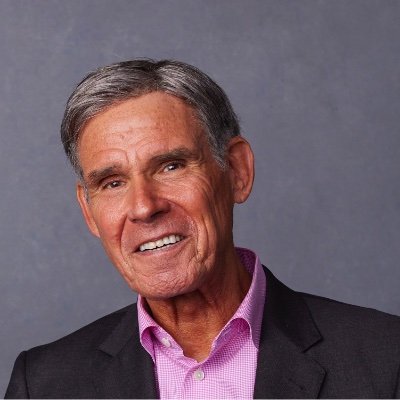
How multimodal AI, combined with blood test omics via "liquid biopsies," will transform cancer monitoring and enable earliest detection.
open-access @CellCellPress
cell.com/cell/fulltext/S0092…

Walter Hugo Lopez Pinaya 🍍 retweeted

proteomics during clinical trials is the future.
@PheironAI can use that proteomic signature to predict trial readouts at high accuracy.
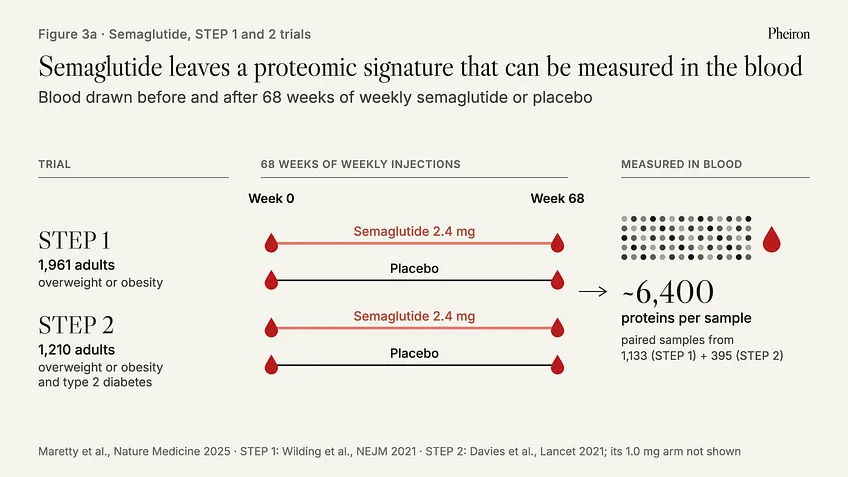


The drug changes the biology. But will it change the disease?
Looking back at semaglutide, our scores pointed the same way as its later outcome trials.
Our Co-founder and CSO Jakob Steinfeldt on why the first trials can tell us far earlier: pheiron.substack.com/p/engin…

Walter Hugo Lopez Pinaya 🍍 retweeted

Folks often point to the speed of clinical trials as a reason why AI won’t result in more drugs. We’re building the foundational predictive capabilities that will resolve this bottleneck, using actual biology.
Advances in biostats and trial regulation allow us to directly convert predictive signal into smaller, cheaper, faster trials without compromising safety — more on this to come.

Today, we are excited to introduce Ladon, a state-of-the-art biological foundation model that predicts disease trajectory and treatment response in patients. There is immense complexity in the individual biology of every patient. Two patients can have the same diagnosis and receive the same treatment, yet have very different outcomes: one responds well and lives for years, while the other’s disease continues to progress. Understanding and resolving this heterogeneity to predict outcomes is how we accelerate our delivery of medicines for patients and unlock clinical trial abundance.
Ladon is our first step towards this future: one where we can learn more from every patient enrolled so that we can run smaller, faster trials with higher success rates. We built it to give drug developers quantitative support on billion-dollar clinical trial decisions. Today we're excited to share Ladon's capabilities in our blog and technical report.
Ladon is a 3B parameter model trained on millions of RNA-seq samples spanning decades of technical and biological variation across tissues and species. Ladon beats gene expression baselines, established biomarkers, and existing RNA foundation models at predicting patient prognosis and therapeutic response in 140+ oncology tasks, including external validation on past clinical trials. This is significant because clinical trials are fundamentally generalization problems. We show that Ladon-derived predictions are robust across indications, treatments, and sequencing platforms.
Reach out if you’d like to get started with the model today!
Read more about Ladon in the blog: blank.bio/introducing-ladon
Find more technical details in the white paper: blank.bio/introducing-ladon

Walter Hugo Lopez Pinaya 🍍 retweeted

Today, we are excited to introduce Ladon, a state-of-the-art biological foundation model that predicts disease trajectory and treatment response in patients. There is immense complexity in the individual biology of every patient. Two patients can have the same diagnosis and receive the same treatment, yet have very different outcomes: one responds well and lives for years, while the other’s disease continues to progress. Understanding and resolving this heterogeneity to predict outcomes is how we accelerate our delivery of medicines for patients and unlock clinical trial abundance.
Ladon is our first step towards this future: one where we can learn more from every patient enrolled so that we can run smaller, faster trials with higher success rates. We built it to give drug developers quantitative support on billion-dollar clinical trial decisions. Today we're excited to share Ladon's capabilities in our blog and technical report.
Ladon is a 3B parameter model trained on millions of RNA-seq samples spanning decades of technical and biological variation across tissues and species. Ladon beats gene expression baselines, established biomarkers, and existing RNA foundation models at predicting patient prognosis and therapeutic response in 140+ oncology tasks, including external validation on past clinical trials. This is significant because clinical trials are fundamentally generalization problems. We show that Ladon-derived predictions are robust across indications, treatments, and sequencing platforms.
Reach out if you’d like to get started with the model today!
Read more about Ladon in the blog: blank.bio/introducing-ladon
Find more technical details in the white paper: blank.bio/introducing-ladon
Walter Hugo Lopez Pinaya 🍍 retweeted

Just Image Transformers with Late-Stage Pixel Refinement
TL;DR: Improves JiT with a lightweight convolutional pixel head activated only during the final 20% of sampling. Refines fine details efficiently, reducing ImageNet 256² FID from 2.34 to 1.78 without perceptual or adversarial losses.
arxiv.org/abs/2611.13120

Walter Hugo Lopez Pinaya 🍍 retweeted

AlphaGenome 2: condition on cell state, and causal variant recall nearly doubles (30% vs 16%). Feed it a few dozen cells and it predicts unseen states with no retraining. In-context learning, but for the genome.
Hopefully Google will open source it ! 🔥

Walter Hugo Lopez Pinaya 🍍 retweeted

Introducing e-means, an algorithm beating k-means in 10x fewer epochs.
With order of magnitude wall-clock speedups, e-means is released in FAISS and needs no hyperparameter tuning beyond k. It is robust to various scales and datasets. Still skeptical ? Just try e-means [1/10]🧵
Walter Hugo Lopez Pinaya 🍍 retweeted

Introducing pi-H3⚡, the fastest MiniMax H3 yet. 10 s of 768p video with audio generated in 9.2 s on a single B200.
How we did it:
Direct pixel output in 2 or 4 steps, no video VAE decoder.
Blog: hanshengchen.com/blog/pi-h3/
App: huggingface.co/spaces/Lakoni…
@StanfordAILab @LumaLabsAI
Walter Hugo Lopez Pinaya 🍍 retweeted

Finally, here’s a visualization of the patch features.
I compare LeJEPA, JEM with and without LayerScale, and the supervised DINOv3 checkpoint from Pl@ntNet as a reference.
Interestingly, even though LeJEPA performs worse, its features still look crisp, especially since it’s only trained through its global embedding and never gets a loss on its patch tokens.
Also, removing LayerScale from JEM was the right move. Without it, the maps are smoother and segment leaves and flowers cleanly.


I finished training JEM for 100 epochs, and the results are actually better than I expected. It's only 1 point away from a fine-tuned DINOv3 (which has seen WAY more data). I'm pretty sure it could beat it with more training.
It took a bit more than 20 H100 hours to train for 100 epochs on the dataset (~250k training images), and as you can see, my LeJEPA is still undertuned (Claude is currently working on it to get a better baseline).
The main problem, though, is with rare classes, but that's expected. It might be a sampling issue. For example, I could continue training while oversampling rare classes, but that's not really what I want.
All plants kind of look the same, so I'm wondering if we could make the algorithm better at capturing fine-grained details and the patch-level loss already helps a lot imo. But tbh, the dataset is so hard that I'm not even sure there's much room for improvement on rare classes.


Walter Hugo Lopez Pinaya 🍍 retweeted

Really excited to introduce Cassandra, our Generative World Model for Healthcare!
Trained to predict the next behavioural token, Cassandra learns to understand residents' behavior and predict what happens next. Such as predicting a residents fall risk.
Walter Hugo Lopez Pinaya 🍍 retweeted

Our #NeurIPS2026 paper: Analytical Correction for Subsampling Bias in Drifting Models.
Minibatch drift is biased. ABC fixes it with 2 extra lines of code: bias O(1/n) → O(1/n²), lower FID & faster training. Try it!
📄 arxiv.org/abs/2604.27239
💻 github.com/lan-qing/Drifting…