





Pinned Tweet
The second chapter of our story, tracing the Kamma houses, their rulers, warriors, and the society they shaped across medieval Andhra.
The story continues. Part II.

We Kammas retweeted

Contributions of the late Ramoji Rao Garu to the Telugu people, language, and culture. I divided this thread into three major parts:
> One, Financial Aid & Economic Contributions
> Two, Telugu Language & Cultural Preservation
> Three, Achievements & Legacy
𝟏. 𝐅𝐢𝐧𝐚𝐧𝐜𝐢𝐚𝐥 𝐀𝐈𝐃 & 𝐄𝐜𝐨𝐧𝐨𝐦𝐢𝐜 𝐂𝐨𝐧𝐭𝐫𝐢𝐛𝐮𝐭𝐢𝐨𝐧𝐬
> Diviseema Cyclone (1977): A ₹25,000 (₹7.9 lakh) seed fund grew to ₹3,73,927 (₹1.18 Cr), funding the rebuilding of Palakayatippa as Paramahamsapuram, with 112 houses constructed. Eenadu staff also distributed food parcels to 50,000 people, using Dolphin Hotels in Visakhapatnam as the central kitchen.
> 1996 Cyclones: Eenadu started a relief fund with ₹25 lakh (₹1.55 Cr), which grew to ₹60 lakh (₹3.72 Cr). Money was used to build 60 “Surya” buildings across villages, serving as disaster relief shelters and schools during normal times.
> 2009 Floods: Floods in Kurnool & Mahabubnagar, Eenadu distributed over 1.2 lakh food packets and raised ₹6.05 crore (₹17.26 Cr) in donations. It also provided looms to 1,110 handloom families and spent ₹6.16 crore (₹17.55 Cr) on building houses in Visakhapatnam & Srikakulam districts.
> COVID-19 (2020): Ramoji Rao donated ₹10 crore each to the Andhra Pradesh & Telangana CM Relief Funds, contributing ₹20 crore in total.
> Flood Relief (2020 & 2024): In 2020, the Ramoji Group announced ₹5 crore in relief for Telangana flood victims. In September 2024, after Ramoji Rao's passing, the group announced another ₹5 crore through the Eenadu Relief Fund for flood victims in Andhra Pradesh & Telangana.
> Village Adoption: Through the Ramoji Foundation, Ramoji Rao adopted two villages: Pedaparupudi in Krishna district and Naganpalli near Nanakramguda in Ranga Reddy district. He also built old-age homes at a cost of ₹5 crore.
> After his death, on 27 June 2024, his family donated Rs 10 crore to the Andhra Pradesh government for developing Amaravati.
𝗛𝗲 𝗿𝗲𝗮𝗰𝗵𝗲𝗱 𝗯𝗲𝘆𝗼𝗻𝗱 𝗧𝗲𝗹𝘂𝗴𝘂 𝘀𝘁𝗮𝘁𝗲𝘀
> Gujarat earthquake 2001: Rs 25 lakh grew to Rs 2.12 crore, building 104 houses.
> Tamil Nadu tsunami 2004: Rs 25 lakh grew tenfold, with 104 houses in Cuddalore and 60 in Nagapattinam.
> Kerala floods 2018: Rs 3 crore grew to Rs 7.77 crore.
Read More👇


We Kammas retweeted
A detailed and well-researched article exploring the origins of the Kammavaaru, a community that has produced great leaders, warriors, military commanders, and rulers!
This articles covers :
> Origin of the name “Kamma”
> Kammanadu, its borders & history
> Why Kammas were never “Kapus”
> So called “Kamma” subgroups
> Genetic evidence
> The earliest Kamma Royals
> Early Kamma founders in village records
> The early Kammas as a military class
> Why the British listed Kammas as a warrior caste
At the end, the identity, origin and early occupation of the Kammas!


Before we were a name, we were a land. The first chapter of our story, told from the stones of Kammanadu.
This is where it begins. More will follow.
We Kammas retweeted
𝐘𝐒𝐑𝐂𝐏 𝐌𝐋𝐀𝐬
Reddy-49 | Kapu-22 | OBC-28 | Kamma-6 | SC-27 | ST-7
𝐓𝐃𝐏 𝐌𝐋𝐀𝐬
Kamma-32 | Reddy-28 | Kapu-16 | OBC-30
SC-22 | ST-6
Vysya + Raju - 8/9
Spreading hatred against Kammas is the only tool @YSRCParty is left with to stay relevant. They have nothing else to offer the public. All they do is label successful people by caste to deflect attention from their own failures.
Brother TONY has Y. S. Raja Reddy in his banner, the same person who led a group that burnt down over 150 houses belonging to Erukala tribal (ST) families.


We Kammas retweeted
> Kamma Population in Andhra Pradesh: 4%
> Kamma Population in Telangana: 1%
> Combined Kamma Population in Telugu States: 2.5%
> Telugu Population in the USA: 0.35%
Most Kammas are occupied with their businesses, education, jobs, politics, families and personal ambitions. We have our own lives to lead. Caste meetings and community organisations aren't a priority for many. We interact with people from diverse backgrounds, and caste is hardly a regular subject of discussion in many Kamma households.
Yet, I find it interesting how online narratives targeting Kammas are disproportionately amplified. Why is the same scrutiny not directed towards Reddys, Kapus, Velamas, Rajus, Brahmins or other OBC communities?
Kammas have increasingly become an easy scapegoat for pushing narratives around caste discrimination. Anti-Kamma rhetoric has been normalised across social media, from casual remarks like "Kammaga Cheppavu Chowdhra" to openly casteist slurs targeting even random women, such as "Chow Munda."
For those engaging in this behaviour, would you tolerate the same treatment if it were directed at you? Imagine Kammas normalising caste based slut-shaming of your women & hurling insults like “Kulam takkuva naa kodaka” whenever we wish.
Several online groups have actively fabricated stereotypes on Kammas, in the process, an entire community is being demonised, including people who have little interest in caste politics and simply want to go about their lives.
The YCP, through its political cadre and media ecosystem, actively promoted this narrative for years. Subsequently, sections of other caste groups have amplified it further, casually labelling successful Kammas as casteists and reducing their identities to derogatory internet slang like "Chow."
At times, I'm genuinely surprised by how closely some Non-Kammas follow us. They know every Kamma businessman, politician & celebrity, just to dismiss their hard work & success as caste privilege, which in 99% of cases doesn't even exist.
Imagine being so consumed by caste that you spend more time tracking the achievements of another community than focusing on your own.
Such relentless stereotyping will achieve nothing beyond alienating Kamma youth who would otherwise have no particular interest in caste based mobilisation. Eventually, it risks creating the very caste consciousness that these narratives claim to oppose.
Ultimately, Kammas should recognise that our strength lies in unity, education, economic progress and institutional influence. We must build a community confident enough to stand up against misinformation, challenge false allegations and protect its dignity without resorting to the same divisive behaviour we criticise.

We Kammas retweeted
It's sad to see the Kapu youth of AP becoming so radicalised that they dismiss great leaders simply cause they belong to another caste.
In this thread, I'll highlight how Sr. NTR has benefited the poor across OBC, SC/ST & Kapu communities, even at the expense of his own people.


Chennai Drinking Water సమస్య తీరిందంటే ఆ Credit NTR గారిదే!
Regional Leader అయినా NTR ఆలోచనలు National Level!
-@VPIndia
1/3
1. The historian excerpts were included to show that this position is accepted by virtually every reputable historian who has studied the period, not because they are the core argument. The fact that you couldn't grasp something that basic is telling.
2. The post does not rest on the “assumption” that the Musunuri Nayakas' surname was Musunuri; it rests on the fact that it was. Your argument exposes a complete lack of familiarity with the subject. The Musunuri Nayakas of recorded history did not live in Musunuru, even if their origins traced back to it. If anything, that only strengthens the case that Musunuri was an inherited family name derived from their place of origin.
Unlike the Belur Nayakas, who neither originated from Belur nor used it as a surname, the Musunuri Nayakas explicitly used Musunuri and even identified it as a “Vamsha” in the Vilasa Grant itself. That single fact alone dismantles your entire comparison. They explicitly claimed to belong to the Musunuri Vamsha. This was not some village label adopted later. The fact that you're still comparing them to the Belur Nayakas only shows that you haven't bothered to read the primary material. Rulers of that era recorded vamsha (lineage), not caste. The loss of several Musunuri copper-plate inscriptions is well known, so pretending that the absence of a surviving caste reference somehow proves your point is historically illiterate.
3. I did not “cleverly” rule out Reddys; I ruled them out because the evidence does. More importantly, Reddys have no inherent connection to the so-called “Kapu” caste. Kapu was historically a designation associated with protection and cultivation, not some primordial caste category you keep imagining. Treating Kapu as an ancient, fixed caste without evidence is bad history.
The Kakatiya-era Reddys and Telangana Reddys did not identify themselves as Kapu. At best, you can point to a handful of later Andhra inscriptions where the term appears in its occupational sense. Meanwhile, we have Kakatiya-period inscriptions explicitly referring to the “Reddy caste.” (refer below). The earliest Reddy inscriptions neither describe Reddy as an office nor connect it to Kapu.
As shown by inscriptions (see below), even a Brahmin protecting a temple could be called Kapu. That alone destroys your attempt to treat it as an exclusive caste label. If a primordial Kapu caste truly existed, then produce a single inscription where present-day Kapu communities identify themselves as Kapu by caste, or where Balijas explicitly call themselves Kapu. You cannot, because such evidence does not exist.
Ironically, those who demand inscriptional proof for everything suddenly abandon inscriptions and run to folklore when discussing Kapu origins. There is no evidence that present-day Kapu castes formed a distinct political group under the Kakatiyas unless the goal is simply to appropriate the history of other communities. The major Kakatiyan Nayaka lineages were drawn from Kamma, Reddy, and Velama groups. Ravella and Ravuri Nayakas are just two well-known Kamma examples.
Even then, your argument collapses on its own terms. The present-day so-called Kapu caste does not have “Musunuri” as a surname in the first place. What exists is “Musnu,” which is not even the same word. Treating Musnu and Musunuri as identical simply because they sound vaguely similar is just desperation not evidence.
4. You clearly did not read the section on Uppuluri Ganapati Shastry. This is not a matter of “mere words.” Ganapati Shastry recorded a detailed genealogy from hereditary family palm-leaf manuscripts and published it in Veda Sara Ratnavali. What makes it significant is that later epigraphic discoveries independently matched the genealogy he preserved.


This Post is from a suspended account. Learn more
2/3
His nephew, a senior government officer, publicly defended the authenticity of those records in 1985 and explicitly stated that they came from long-preserved family manuscripts. I attached that discussion in the same thread, which you apparently overlooked. Ganapati Shastry did not just mention these traditions; he constructed a genealogy from them, and that genealogy aligns with remarkable precision to the one later reconstructed from inscriptional evidence.
You can keep dismissing it as “circumstantial” if you want, but when hereditary manuscripts, published genealogies, family testimony, and epigraphic evidence all converge on the same conclusion, calling it weak evidence does not look like skepticism but rather like bad-faith denial.
Just because a group does not possess continuous genealogical records today does not automatically mean they are not descendants of a historical lineage. Many royal, noble, and ruling families throughout history lost records due to wars, migration, political decline, neglect, or simple passage of time. For example, the descendants of the Reddy Kingdom's rulers likely still exist, yet most cannot be conclusively identified because genealogical records were not preserved. Therefore, the lack of surviving genealogy alone is insufficient grounds to dismiss a claimed descent. The burden is on providing positive evidence against the claim, not merely pointing to missing records.
5. And you conveniently ignored one of the strongest pieces of evidence altogether: the 1652 Khaifiyat of Pemmasani China Thimma Nayudu, which addresses the “Musunuri varu” as Asahaya Soorulu and puts them under Rajabandhus. That is direct evidence of clan memory surviving roughly 285 years after the fall of the Musunuri chiefs. Martial and royal lineages routinely preserved such memories, and this document is a clear example of that continuity in practice.
You keep demanding genealogies preserved by purohits, yet casually dismiss a contemporary historical reference that explicitly remembers the Musunuris as a distinguished martial lineage related to a Kamma Royal Family.
And even if, for the sake of argument, I accepted your claim that the present-day so-called Kapu caste had some connection through surname, which they do not since “Musnu” and “Musunuri” are not the same thing, you would still have to explain why a martial and royal memory is being preserved around the Musunuris in the first place. Ignoring evidence that contradicts your position while endlessly raising the bar for everything else is not historical analysis.
6. About Grok, nice strawman. I never used Grok as evidence. I used inscriptions, grants, genealogies, and historical documents as evidence. Grok was asked to review those sources, not replace them.
If your response is "AI sycophancy," then point out a specific factual error, mistranslation, or misreading in its analysis. Otherwise you're arguing with a reviewer because you cannot deal with the material being reviewed.
My point was simply that a neutral review of the sources is more reliable than the opinion of someone who has spent this entire discussion starting from a predetermined caste conclusion and working backwards. If Grok got something wrong, demonstrate it. If you cannot, then "AI sycophancy" is just a convenient excuse to avoid addressing the evidence.


3/3
I've entertained this discussion far longer than it deserved. At this point, you've demonstrated two things beyond any doubt: you have little understanding of the historical material under discussion, and you have either failed to read my posts properly or failed to comprehend them.
A large portion of your replies are directed at arguments that exist only in your own imagination, while some of the strongest arguments actually presented were ignored altogether. That is not debate. That is someone arguing with a version of the conversation that exists only in their head.
The evidence has been laid out in full: inscriptions, grants, contemporary references, and scholarly works. Yet instead of engaging with them, you continue recycling the same claims after they've already been answered. It only means you have nothing new to offer except making your twisted castiest agenda clearer.
Anyone reading the thread can decide for themselves whose arguments were supported and whose consisted largely of misunderstanding, misrepresentation, and repetition.
I see no reason to continue explaining the same material to someone who has shown neither the knowledge nor the comprehension necessary to discuss it seriously.
Feel free to continue. You'll be doing so without me.
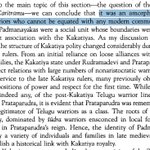
Firstly, the inscription you are citing does not belong to the Musunuri Nayakas. It does not mention any gotra. It does not say Penundula, Penumangala, or Penumadala. It only says “Penungula Vamsha”.
It also doesn’t say “Musunduri Maccha Nayaka” - it only mentions Maccha Nayaka of “Jaya Musunduri Anvaya”
You are being extremely cunning here, intentionally twisting and distorting names in an attempt to force a match with your Kapu bunch and this is not the first time you are doing this.
Stop playing word games with inscriptions. The evidence does not bend to your convenience.
It is for a reason historians who deeply researched about the Musunuri Nayakas never quoted it.
1. The inscription reads Musuṇḍūri, not Musunūri. These are different forms both orthographically and phonetically: Musuṇḍūri contains the retroflex cluster ṇḍ, whereas Musunūri does not.
There is no proof whatsoever that this so called Maccha Nayaka of “Jaya Musunduri Anavya” was related to the imperial Musunuri Nayakas because inscription is from the 13th century, one century before the emergence of Musunūri Prōlaya Nāyaka and Musunūri Kāpaya Nāyaka, and Imperial genealogy of the Musunuri does not connect the two of them.
2. The inscription reads “Jaya Musuṇḍūri Anavaya”, not “Musunūri Vaṃśa” like the Musunuri Nayakas.
Jaya Musunduri Anvaya ≠ Musunuri Vamsha
In Sanskrit and epigraphic usage, anvaya has also meant association and affiliation; it is much broader than a dynastic vaṃśa.
3. The inscription associates the individual with lineage markers such as Manuma-kula and Penungula Vamsha, which are totally absent from the known Musunūri royal records and on contrary the royal Musunūris only claim “Musunūri Vaṃśa”.
Neither Penungula Vamsha nor “Jaya Musunduri” is found among the so called Kapu castes of present day.
Manumakula was a common title used in relation to have served the Manumasiddhi rulers and is among diverse castes, it is not a lineage indicator.
4. The titles were common titles of few Kakatiyan families, interestingly both the name and titles rather match the ancestor of Recherla Reddis, Muccha I, its most likely that this inscription was of him but the Shaka year was not discerned properly like it happened usually with inscriptions (refer the below snippet).
5. There is no such thing as “Kapu Telaga Nayakas” in history. Period. If they did, Show me even one inscription, one copper plate, or one contemporary literary record that explicitly says “Kapu Telaga Nayaka.”, you can’t because this entire thing is fabricated bullshit.
Claims on caste website is not evidence, because that way several castes claim several Royals anyways.
6. Korukonda chiefs have zero proof of being Telaga. None. But there is no inscription, no contemporary record, and no solid evidence that proves they were Telaga. These are just more caste-based revisionist claims with nothing concrete behind them. Repeating it loudly on the internet doesn’t make it true.
All you have are empty claims.

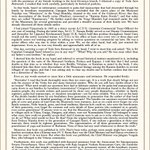
ALT The original inscription which is being quoted.

ALT The genealogical chart of the Musunuri Nayakas.

ALT The Vilasa grant of Prolaya Nayaka which only mentions “Musunuri Vamsha” and no other Vamsha.

ALT Muchcha I, the ancestor of Recherla Reddys
This Post is from a suspended account. Learn more
We Kammas retweeted

Musunuri Prolaya Nayaka
Musunuri Kapayya Nayaka from Todays Eluru region ❤️❤️
After the fall of the Kakatiya Empire, when the Delhi Sultanate’s armies had overrun much of the Deccan and the Telugu land lay devastated, one group rose in defiance.
The Musunuri Nayakas did not just resist foreign rule, they became one of the earliest organized forces in South India to successfully challenge and push back the Delhi Sultanate’s control over the Deccan.
They recaptured Warangal, united scattered chieftains, restored Vedic Dharma and sustained resistance for decades when much of the subcontinent had already submitted.
While it’s widely known and accepted they are Kammas. This thread presents comprehensive, multi source evidence that only tells the why of it.
This is the story of who they really were. 🧵

ALT A stylised reconstructed portrait of Musunuri Kapaya Nayaka based on existing portraits.
We Kammas retweeted

A very well researched, detailed thread about Musunuri Nayaks!
After the fall of the Kakatiya Empire, when the Delhi Sultanate’s armies had overrun much of the Deccan and the Telugu land lay devastated, one group rose in defiance.
The Musunuri Nayakas did not just resist foreign rule, they became one of the earliest organized forces in South India to successfully challenge and push back the Delhi Sultanate’s control over the Deccan.
They recaptured Warangal, united scattered chieftains, restored Vedic Dharma and sustained resistance for decades when much of the subcontinent had already submitted.
While it’s widely known and accepted they are Kammas. This thread presents comprehensive, multi source evidence that only tells the why of it.
This is the story of who they really were. 🧵
ALT A stylised reconstructed portrait of Musunuri Kapaya Nayaka based on existing portraits.
24/24
The evidence presented in this thread is already substantial and multi-dimensional; it comfortably proves that the great Musunuri Kings were Kammas. Regardless, it is the general historical consensus that the Musunuris belong to the Kamma caste.
However, we are still examining additional inscriptional records and primary sources.
More material will only add further weight to what is already evident.
This thread is Part 1. Part 2 will follow with additional sources.
We will continue to make several threads on the greatness of the Musunuri clan.
All Hail the Great Musunuri Nayakas!