

https://xitter.cf/t.co/7mkKvBNK5h 是一个聚焦 Web3 与 AI 融合创新的技术共建社区。 ⏰ 每周一下午 2 点线上分享: ▪️ Web3 一周要闻回顾与热点提纯; ▪️ 最新核心研报(Crypto + AI)深度精讲; ▪️ 前沿 AI Agent 技术与 Web3 实战解析。
Joined September 2022
- Tweets948
- Following149
- Followers1.6K
- Likes323
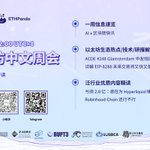


每周一下午 2 点,Web3BuidlerTech 联合 @ETHPanda_Org 带来 #以太坊中文周会!
本周会议主要内容:区块链 & AI 快讯、ACDE #248 Glamsterdam 中发现的新安全问题、详解 EIP-8288 未来交易将又快又便宜、亏损 2.8 亿:谁在为 Hyperliquid 增长买单、Robinhood Chain 还行不行,等等。
欢迎参加!

Vitalik 表示,可以接受 Kimi 3.1 在训练中主动排除顶尖的进攻性网络能力,为代码审计、安全加固和形式化验证争取时间。
他担忧的是:如果这一波风险应对失当,最终换来的可能是处处 KYC、无孔不入的监控,以及按国籍和资质划分的模型访问权。安全措施该尽量针对危险能力,而不是把普通用户挡在门外。

I am okay with Kimi 3.1 deliberately leaving out top-end offensive cyber capabilities from their training data.
Discriminating against use cases is MUCH less bad than discriminating against users. And the world does need all the time it can get to prepare, harden, check old code, (properly) formally verify new code, etc before the full weight of very powerful cyber attacks is upon us.
And if this first big wave of AI risk is not handled well, then we may well get a dystopia of highly locked down models, KYC gating on everything, highly intrusive surveillance on everything, a society where you may be a second or third or fourth-class citizen in terms of model access based on your credentials and nationality.

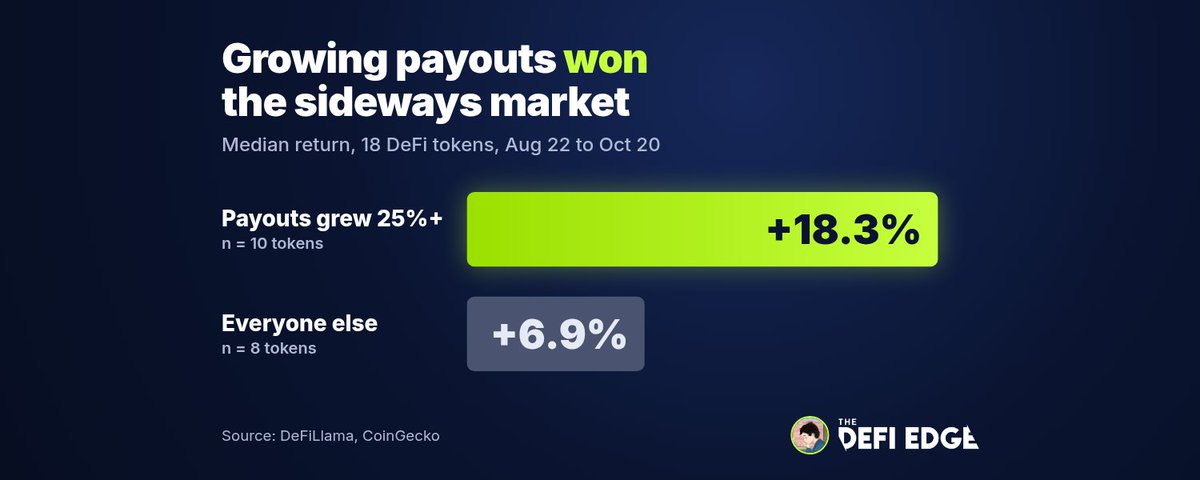
【英文长推】比特币横盘两个月,哪些 DeFi 代币跑赢了 BTC?
自 8 月 22 日以来,BTC 每日收盘价始终位于 75,600 美元至 86,600 美元之间。从 8 月 22 日到 10 月 20 日,BTC 累计上涨 5.6%,ETH 则下跌 2.7%。相比之下,在向代币持有者分配收入的 19 个主要 DeFi 代币中,有 14 个跑赢了 BTC。全文👇

Web3Buidler.Tech retweeted

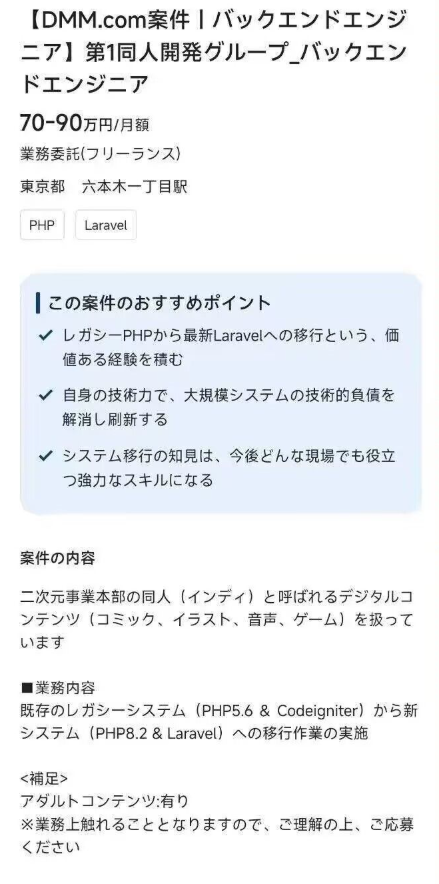
整个互联网安全圈都炸了,一夜之间欧洲多国的网站直接关了,PHP 漏洞的威力只能说恐怖如斯!
日本那边更是炸锅,高市早苗都转发了,多家公司开始连夜招聘 PHP 程序员。😂
牛逼的是,这次又和 AI 发现历史漏洞有关,而且 PHP 官方承认,其中一个漏洞在 2024 年就已经被发现,只是一直没有完成修复。
根据 Wiz 的披露,全球约 70% 的网站使用 PHP;
Crypto 圈也受影响,慢雾扫描了加密行业的1488个域名,有 793 个检测到了直接的 PHP 技术指纹,约占 53%。
所以这几天一定要做好两件事:
1⃣ 不要点击一些莫名其妙的小网站,忍住!
2⃣ 关注你存放资产的一些网站,如果出了相关的安全公告,立刻转移资产。
OpenAI 还是太权威了,搞完数学就开始搞网安了,接下来,迎接大漏洞时代吧!

OpenAI models helped researchers—operating as part of our Patch the Planet initiative—discover critical security flaws in PHP, an open-source programming language used to run an estimated 70% of websites.
Over the past two months, we led a coalition of maintainers, researchers, and security providers to prepare fixes and protections ahead of disclosure. This duration was necessary because the fix was quite intricate and required a major change to the PHP engine. Every site using PHP can now safely upgrade their version to stay secure, in addition to applying mitigations from various security vendors.
Due to the severity of these flaws and PHP’s widespread use, we consider this bug to be one of the most impactful vulnerabilities in recent memory. It also marks a new phase, where AI can find security bugs with internet-scale impact.
This is an example of the Defender’s Window in action: to our knowledge, frontier AI was able to find this vulnerability ahead of attackers, giving defenders time to prepare.
openai.com/index/coordinated…

Readers added context they thought people might want to know
OpenAI may claim a role in the coordinated response and patching process. But the initial discovery and exploit development, however, occurred several months earlier by an independent researcher.
x.com/lcfr_hax/statu…


Tether 领投 Mural(前 Palantir 工程师创办)1500万美元 Series A,累计融资达2800万美元。Mural 是面向 fintech 和 agentic Fi 的合规支付与账户基础设施,已处理超过21亿美元交易量。Tether CEO Paolo Ardoino 明确表示:随着 AI agent 开始移动资金,连接银行、支付网络和合规系统变得至关重要。

Today, we are announcing $28M in total funding, including our $15M Series A led by @tether with participation from @NorthIslandVC 🧵

Coinbase 宣布用户可通过 Claude、ChatGPT、Grok 等 AI agent 直接交易指数永续(包括 US500、科技股指数、AI公司指数等)和加密货币永续合约。

CZ 巴厘岛社区问答:
👉 不会建议年轻人复制自己 2014 年卖房 All in Bitcoin 的做法
👉 适合多数人的策略是根据自身风险承受能力,将收入的一小部分长期定投真正理解和认可的头部 Crypto 资产
👉 每天学习新东西比任何投资建议都重要
wublock123.com/articles/cz-b…

以太坊"不是一条区块链,而是一台密码学世界计算机"。计算放在链下,链上只验证结果,这样既能支持各类密码学方案,又能让链保持精简。

Vitalik:以太坊不该再为每种密码学加功能,计算放在链下,链上只验证结果
最近圈内在争论,以太坊要不要支持"格密码学"这种新型加密方案,用在账户和钱包上。Starknet创始人Eli Ben-Sasson就认为,格密码学太新了,应该再等三到五年,看看AI能不能把它攻破。
Vitalik回复Eli Ben-Sasson观点提出:预编译合约和EVM都不适合承载大多数密码学支持,因为两者都要占用有限的链上数据空间,吞吐量超过约8MB/s就会承压。
他主张走EIP-8288路线:用户在本地使用任意签名方案并生成STARK证明,再通过递归聚合提交上链。链上只验证计算结果,不接收原始数据。
用他的话说,以太坊"不是一条区块链,而是一台密码学世界计算机"。这样既能支持各类密码学方案,又能让链保持精简,以后也不必再新增预编译。


Tether Capital 与 HIVEN 加入 AIsa 的种子扩展轮,公司累计融资超过900万美元。AIsa 构建“企业AI代理可信资源与交易网络”,让AI agent自主发现、调用并付费使用API、模型、数据与算力,支持法币或稳定币结算,企业可设定权限与支出上限。平台自称有25万+ agent、累计超1亿笔交易。

Tether Invests in AIsa to Expand Its Push into AI-Powered Payments and Programmable Money
Learn more: tether.io/news/tether-invest…

Blockworks 发布长文:加密 AI 推理网络的生存现状:收入有限,补贴仍是关键。
全球 AI 算力基础设施建设规模庞大,投资额已达数万亿美元,但市场需求仍然超过供应。相比之下,整个具有流动性的加密 AI 代币板块市值约为 249 亿美元,甚至低于 Crusoe 一家公司的 309 亿美元估值。全文👇


感谢大家参与 26/10/12 期 Web3BuidlerTech 联合 @ETHPanda_Org 带来的每周简报!
本周主要内容:区块链 & AI 快讯、Quick Slots 在 Hegota 的进展、Nethermind 对于 AI 的使用情况、Justin Drake 呼吁掩体模式、以太坊主网升级、9月加密安全报告等等。
视频链接:youtu.be/9mwRzB5Xwno
本周 #以太坊中文周会 区块链与AI行业快讯部分的内容

感谢大家参与 26/10/12 期 Web3BuidlerTech 联合 @ETHPanda_Org 带来的每周简报!
本周主要内容:区块链 & AI 快讯、Quick Slots 在 Hegota 的进展、Nethermind 对于 AI 的使用情况、Justin Drake 呼吁掩体模式、以太坊主网升级、9月加密安全报告等等。
视频链接:youtu.be/9mwRzB5Xwno
感谢大家参与 26/10/12 期 Web3BuidlerTech 联合 @ETHPanda_Org 带来的每周简报!
本周主要内容:区块链 & AI 快讯、Quick Slots 在 Hegota 的进展、Nethermind 对于 AI 的使用情况、Justin Drake 呼吁掩体模式、以太坊主网升级、9月加密安全报告等等。
视频链接:youtu.be/9mwRzB5Xwno
每周一下午 2 点,Web3Buidler.Tech 联合 @ETHPanda_Org 带来 #以太坊中文周会!
本周会议主要内容:区块链 & AI 快讯、Quick Slots 在 Hegota 的进展、Nethermind 对于 AI 的使用情况、Justin Drake 呼吁掩体模式、以太坊迎来上线以来最大扩容,主网升级瞄准四季度、9月加密安全报告,等等。

这份 Vitalik × Balaji 对谈笔记里,有个很值得社区思考的观点:去中心化不是从一个领导者变成没有领导者,而是让更多人能承担领导责任。
Vitalik 也提到,在快闪社区里,大家仍会不断找他要方向。对以太坊社区而言,除了吸引更多人参与,还要让更多人能独立判断、发起事情,并带着其他人一起做。

Funniest part of the fireside chat was how Vitalik kept referring to AI as bots 😄
Which is true, LLMs are just smarter bots. To the extent that vitalik said he's stopped reading textbooks and now just goes back & forth with an LLM to learn new concepts until he explains it in his own words without any corrections from the bot
Around the halfway point Vitalik pulled his classic switcharoo to question balaji instead of the other way around
He first asked how network state is doing with all its ups and downs. Balaji gave an interesting answer around how most people don't keep a score card with governments, it's either 0-0 for most people or else 0-1 in favor of government
My own commentary here is balaji feels proud of having given a bloody nose to the malyasian government, which has emerged with a poorer rep among investors and unhappy populations that wanted the investment
He also seemed quite excited about the partnership with the kazakhstan government, with network school getting university credentials, an offline exam that results in job placements, tokenizing real estate via REIT and more
Just as harvard was at its pinnacle before the internet era gave more power to stanford, network state school is poised as the successor by printing out the social media network into a physical jurisdiction
One other point Vitalik delved into was around succession planning, sharing his own trauma at constantly being asked for direction during popups
Network school has "minimum necessary balaji" concept they work around ,with the goal of decentralization being not going from 1 to 0 leaders so much as 1 to many leaders
Vitalik jokes thats it's happening in Ethereum since justin drake has managed to piss of people with tweets as much as him 😆
Overall it's made me much more likely to visit network school in astana, although maybe not during the winter -20 degrees celsius time

Web3Buidler.Tech retweeted

你的钱包可能不安全了!OpenAI 刚炸出 722 篇论文,以太坊研究员劝你快搬家!
近期 OpenAI 在 GitHub 集中发布了 372 个数学难题系列(含 722 篇论文/手稿),涵盖多项顶尖数学猜想与突破。这一“数学超智能”的降维打击,直接让以太坊研究员 Justin Drake 发出了防范预警:密码学危机可能比想象中来得更快!
1️⃣ 为什么 AI 突破会让钱包不安全?
· 传统认知:“公钥暴露会被破解私钥”过去被认为是几年后量子计算机成熟才要操心的事。
· 现实警告:AI 在数学领域的爆发式进化,意味着最坏情况下几个月内,攻击者就可能利用现有的大 GPU 集群配合数学算法新突破,在一周内从“已知公钥”反推导得出私钥。
2️⃣ 你的地址属于哪个“风险等级”?
❌ 风险/已暴露地址:凡是在链上发起过转账、签名过的地址,公钥均已泄露;Taproot 地址(bc1p)及中本聪早期地址公钥公开,也属于暴露状态。
🟢 暂时安全地址:从未签名过的新普通地址(如以太坊 EOA、BTC 1或bc1q开头地址),链上只看得见地址(公钥哈希),看不见公钥本身,算法无法对其发力。
3️⃣ 如何开启“堡垒模式”(Bunker Mode)?
1. 资金迁移:大户与机构冷钱包应先行将大部分资产转入从未签名过的新地址。
2. 用完即换:后续一旦从该新地址发起转账(触发签名),顺便把剩余资金全部切到下一个全新地址。
3. 切勿恐慌:这属于前瞻性的防范策略,而非算法已被实时破解。全网无脑抢跑搬家极易引发高额 Gas 费、误操作或遭遇钓鱼风险,请务必冷静应对!

Today I call upon the blockchain industry to calmly begin planning for "bunker mode". My personal recommendation is to set in motion a controlled mass migration of assets to fresh addresses, i.e. addresses whose pubkeys remain hidden behind a hash.
Holders, starting with large and sophisticated ones, should consider moving the bulk of their funds to addresses that have never signed a transaction. And when they do sign one, they should also move remaining funds to a new address (possibly generated from the same seed phrase).
Don't rush. While I believe there is cause for action a rushed migration would do more harm than good. Don't panic either. Moving assets to protected addresses is a simple, preventative step which does not require new cryptography or new wallets.
IMO it is now reasonable to brace for the possibility that ECDSA breaks before qday, in the worst case in months not years. By "break" I mean fast private key recovery (e.g. in one week) on available hardware (e.g. a large GPU cluster).
Recent days have been humbling for human mathematical intuition. Long-held, unquestioned hypotheses have fallen. This includes the n log(n) bound for integer multiplication and the 3SUM conjecture. In hindsight, May's unexpected disproof of the Erdős unit distance conjecture was our warning shot.
Yesterday's OpenAI drop made it clear that mathematical superintelligence is upon us. They say there are weeks where decades happen. We are about to live through weeks where centuries of mathematical progress happen. Could our magic 64-byte ECDSA signatures be too good to be true? Was it just security through obscurity all this time?
Elliptic curves feel especially vulnerable to superintelligence. Curves carry rich structure, with room for fancy tricks like Schoof, Frobenius, pairings. (By contrast, hashes are designed to minimise algebraic structure.)
Separately, as Ewin Tang can attest, an efficient quantum algorithm sometimes foreshadows an efficient classical one. We should be open to the possibility of a classical counterpart to Shor that breaks elliptic curves and RSA at once.
Also noteworthy is the striking under-representation of cryptographic breakthroughs among the 722 mathematical results OpenAI published. I've witnessed first-hand the US government censoring academic quantum cryptanalysis results. Backroom interventionism is my base case.
I urge large, sophisticated actors to lead by example. Project11's "risq list" (bitcoin-risq-list.projecteleven[.]com) is a great tracker of exposed BTC pubkeys. Binance, Bitbank, Robinhood, Bitfinex, and Tether have an opportunity to harden their cold storage. Next month I'll address institutions in London in a live Q&A (forum.ethereuminstitutional[.]org/london-2026).
Again, please do not rush. Wallets holding under 50 BTC enjoy partial cover from "Satoshi's shield", i.e. his 20K exposed addresses that hold 50 BTC each. Load-bearing signers like oracles and L2 security councils should consider rotating ECDSA pubkeys with every signed message and/or multi-signing with a hash-based schemes like SPHINCS.
Exiting bunker mode safely will require post-AI cryptography. My inclination is to go all-in on hash-based cryptography and avoid structured mathematical assumptions entirely, whether from curves, lattices, or isogenies. A single battle-tested hash (e.g. from the SHA or BLAKE families) yields plausible post-AI security.
The Ethereum roadmap on strawmap[.]org fully embraces hash-based cryptography with end-to-end formal verification as a response to the quantum threat. Those timelines must now be revisited and accelerated in light of mathematical superintelligence. I'll be pushing for maximum defensive acceleration.
“抗量子”不等于能抵御所有未来的密码学攻击。
Vitalik 提醒:AI 加速数学研究,也可能找到更高效的攻击方法,削弱今天被认为安全的椭圆曲线和格密码。这也是以太坊 lean 路线倾向基于哈希的签名与证明的原因之一。
对普通用户,他的提醒同样重要:别恐慌搬币,迁移操作本身也可能造成损失。
I don't recommend anyone scramble to move their funds to new wallets today. But we should take the risks to cryptography from AI-accelerated math seriously, and minimize our exposure to not just quantum-vulnerable cryptography, but also potentially AI-vulnerable cryptography.
The core new area of risk from this viewpoint is, unfortunately, ML-DSA / FHE / lattices.
(and it's also another reason, along with quantum, why ECDSA might fall even faster than expected, hence the "fresh address" recommendation)
So far most people have been in the mode of thinking "elliptic curves broken, hashes safe, lattices safe". But there is a good chance that the concrete security of lattices will take serious hits from the next two years of AI math.
The basic threat model is: factoring is something that naively takes 2^(n/2) time, but over decades smart people have found and optimized number field sieves, and degraded that to 2^O(n^(1/3)), which is why RSA keys and signatures need to be ~400 bytes (and not 64 bytes). What if there are skeletons in the closet like that, both for elliptic curves and lattices, that we are simply not smart enough to discover - but bots soon will be?
This is a major part of the reason why for the past year ethereum's lean roadmap has been going in the "hash-only" direction: no lattices, no ML-DSA, no Falcon, no lattice-based commitments inside ZK proofs, etc. Signatures in lean ethereum are all hash-based, either WOTS or SPHINCS-.
For signatures and proofs, we already know how to go hash-only. The bigger challenge is for *public-key encryption* - and this goes far beyond blockchains. Secure communication, anonymizing protocols, lots of things need public-key encryption.
And unfortunately there are long-standing mathematical theorems showing why public-key encryption cannot be done with hashes alone. You have to have some kind of trapdoor object that has at least one form of usable "structure" - either group theory (incl. isogenies) or lattices or code-based or potentially in the future even more newfangled and spooky things (local mixing?). But for anything that has structure, you should assume that AI will make at least some progress in breaking that structure. Here, one reasonable inference is that if you want to make something plausibly long-term secure, multiply the key sizes by 10.
To me that's a very plausible world and something not at all extreme to predict. If AI will bring us 50 years of math in 2 years, then that 50 years of math may very plausibly include a "naive factoring -> GNFS" level of improvement to our ability to break lattices. In that world, lattices will still exist, but they will have to be significantly bigger to guarantee the same level of safety.
And at those new larger sizes, hash-based constructions will beat lattice-based constructions on concrete efficiency in every use case where hash-based constructions are possible at all.
Theoretically, of course it's possible that hashes are broken too (eg. P = NP would imply that). But I think P = NP is very unlikely. And intuitively, it's much more likely that a mathematical object has exactly no exploitable structure (like hashes are intended to), than that a mathematical object has exactly ~3 forms of exploitable structure (for elliptic curves: associativity, Schoof, pairings) and not some secret fourth form of structure we have not yet discovered that greatly degrades its security (for elliptic curves, ECDLP and pairing security). Similar for LWE, SVP, RLWE and the zoo of lattice problems.
For this reason, we do not yet see any reason to worry and start padding the byte size of hashes (if we start to worry more, we would pad the round count first before doing anything to the byte size).
Concrete TLDR, my own personal views:
* Hash-based > lattice-based, in those situations where hash-based is possible at all
* For anything lattice-based, be much more paranoid on param sizes. Remember that blockchains are only a small portion of the cryptography story; this point goes far beyond blockchains and applies to eg. access to websites, secure messaging, Tor / VPNs ...
* For privacy protocols, strongly favor NOT putting encrypted notes onchain. Instead, send them offchain through some third-party mechanism.
* If it's not difficult for you, keeping your funds in addresses which have not yet been used to make a transaction is a good idea. If it's easy for you, do it. **But be careful about migrations; I personally have lost more money in botched migrations than I have lost in all hacks combined**.
* For multisig wallets, doing confirmations offchain is better than onchain, because this way the signatures of signer wallets do not get exposed to the public, so if ECDSA falls to AI much faster than expected, at least the multisig "gracefully degrades" to a 1-of-1 where the 1 is whoever was gathering the signatures - a much better place to be than "anyone can take the money"
firefly.social/post/x/210783…
