

Exploring the habitats, wildlife, and plants of the Adirondack Mountains in upstate New York.
Lake Placid, NY
Joined May 2018
- Tweets5.1K
- Following140
- Followers1K
- Likes3.8K


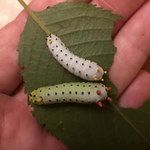




DEC Announces $45 Million Awarded to Support Tree Nursery and Forest Product Markets. Projects Will Support New Green Jobs and Workforce Development, Strengthen New York State’s Tree Supply Chain, and Reduce Tree Costs for Consumers. dec.ny.gov/news/press-releas…

Winter Survival in the Adirondacks: The Mourning Cloak survives Adirondack winters by retreating to hollow trees and woodpiles for the winter months. They emerge from hibernation in April. Some sources indicate that a portion of the population migrates southward. Mourning Cloak, Cemetery Road Wetlands, Keene, NY (5 April 2022) wildadirondacks.org/adironda…

How Native Species Benefit Wildlife. Northern Woodlands. Summer 2026.
northernwoodlands.org/knots_…

There are two main peatland types in the Adirondack Park: bogs and fens. Bogs are acidic, nutrient-poor, and precipitation-fed, while fens receive more nutrients from groundwater and streams, supporting greater plant diversity. Both provide important habitat for boreal species at the southern edge of their range. Barnum Bog from the Boreal Life Trail at the Paul Smith's College VIC (19 October 2023). wildadirondacks.org/adironda…

Northern Forest Atlas Video. Lakes and ponds of the Northern Forest. Northern Forest Atlas Video. Lakes and ponds of the Northern Forest. northernforestatlas.org/2021…

Winter Survival in the Adirondacks: Eastern Chipmunks spend the early fall before temperatures plunge frenetically searching for and hoarding food, which is stored in the food chambers of its burrow. They retire to their burrows later in the fall (usually in late October or early November in the Adirondack region) and spend most of the winter there, going into a state of torpor for several days at a time, until the warmer days of spring. Eastern Chipmunk, Lake Placid, NY (3 November 2023) wildadirondacks.org/adironda…

The Curious Case of Eastern Canines. Northern Woodlands. Summer 2026.
northernwoodlands.org/articl…

10
232
Common Milkweed provides food for a wide variety of insects, including butterflies, bees, and moths. It is especially important to Monarch butterflies, whose caterpillars feed exclusively on milkweeds. Common Milkweed, John Brown Farm, Lake Placid, NY (30 June 2021). wildadirondacks.org/adironda…

The Evening Grosbeak Project. International Road to Recovery. The Evening Grosbeak has declined 92% since 1970 and is listed as a species of conservation concern. finchnetwork.org/projects/th…

Winter Survival in the Adirondacks: Most forest-floor plants in our region either die back or retreat underground as winter approaches, but the Christmas fern survives Adirondack winters primarily as a low-growing evergreen that shelters under the snowpack in the warmer subnivean zone at the bottom of the snowpack. Christmas Fern on the Heaven Hill trails, Lake Placid, NY (29 November 2020). wildadirondacks.org/adironda…

Marshes are mineral-rich wetlands dominated by herbaceous (rather than woody) plant species, such as grasses, rushes, or reeds. These productive wetlands provide important habitats for a wide variety of Adirondack plants and wildlife. Heron Marsh from Shingle Mill Falls at the Paul Smith’s College VIC (12 June 2025). wildadirondacks.org/adironda…

COMMENTARY: Calls continue for protecting Whitney Park adirondackexplorer.org/commu…

New York’s Environmental Conservation Agency has issued a new State Wildlife Action Plan. The plan targets 570 at-risk wildlife species. The Monarch butterfly was upgraded to high priority: the Common Loon remains on the list. The document can be found here: dec.ny.gov/sites/default/fil…

2
17
369

Ring-billed Gulls are frequently seen throughout the Adirondacks during the warmer months. Once lakes freeze over in the Adirondack interior, these gulls will gradually leave for warmer areas (like Lake Champlain) in search of open water. Ring-billed Gull, Lake Flower Boat Launch, Saranac Like, NY (29 October 2026). wildadirondacks.org/adironda…

7
275
Heron Marsh at the Paul Smith’s College VIC, Franklin County, NY (29 October 2026). wildadirondacks.org/adironda…

This Red Squirrel scolded me nonstop for having the audacity to walk by his tree. Red Squirrel, (Tamiasciurus hudsonicus), Paul Smith’s College VIC, Franklin County, NY (29 October 2026). wildadirondacks.org/adironda…

Fall Foliage Update: Tamaracks along the Chubb River on the Adirondack Rail Trail in Lake Placid, NY (28 October 2026). wildadirondacks.org/adironda…

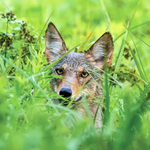
Although most of the Eastern Coyotes we catch on our trail cameras are moving at night, daytime activity is not unusual. Eastern Coyotes, Lake Placid, New York (25 October 2026). wildadirondacks.org/adironda…