

A man walked toward her from deep within the wheat field.
Neptune
Joined December 2024
- Tweets1.5K
- Following401
- Followers259
- Likes1.7K


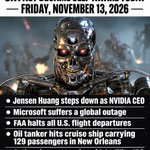


这没看出来好在哪里。three js应该是。真正漂亮的一定是人深度参与打磨的。

Opus 5.6 is unceremoniously the most powerful model I've laid my hands on. This is insane.
claude.ai/artifact/Cy2d8Vn63…
Have a go.

3


Will Downing retweeted

你越催他越拖,哈佛研究发现,让孩子主动学习,最快的方法,就是利用鸟笼效应。
喊了八百遍快去写作业,孩子屁股像粘在沙发上,坐到书桌前,一会儿抠橡皮一会儿发呆,半小时的作业能磨到半夜。你越催,他越拖;你越盯,他越走神。很多家长第一反应是,这孩子就是懒,于是催得更紧,骂得更凶,报更多的班。结果呢,孩子更磨蹭,甚至直接撂挑子不学了。
哈佛大学的一项心理学研究,早就给出了不一样的答案。想让孩子主动学习,最快的方法不是奖励,不是惩罚,而是一个极其简单的小技巧——鸟笼效应。孩子不是天生不爱学,很多时候是学习的入口没搭好,家长把路堵死了,还怪孩子不走。
什么是鸟笼效应,说个故事你就懂了。心理学家詹姆斯和朋友卡尔森打赌,说自己一定会让卡尔森养上一只鸟。卡尔森完全不信,说自己从来没想过养鸟。结果詹姆斯送了他一个精致的空鸟笼,挂在家里最显眼的地方。从那以后,每个来做客的人都会问:教授,您的鸟死了吗?卡尔森解释了一遍又一遍,最后实在受不了,真的去买了一只鸟放进去。空着的鸟笼就这么被填满了。这就是鸟笼效应:当我们拥有一个空容器的时候,大脑会本能地产生一种想要填满它的冲动,不是被人逼着去买鸟,而是那个空笼子摆在那儿,自己就觉得不填点什么,浑身不得劲。
把这个逻辑用到学习上,奇迹就发生了。空鸟笼不是套路孩子,是把学习变成他自己想填上的那个空。
传统做法为什么总是失败?因为大多数家长的做法是填鸭式驱动,定计划、报补习班、坐在旁边盯。这一套组合拳打下来,孩子感受到的全是外部压力,他的大脑会进入防御状态。学是为了应付你,而不是因为我想学。你越说快写,他越觉得这是给你写的。
而鸟笼效应的精妙之处在于,它不是从逼孩子学入手,而是从创造一个让孩子想学的入口入手,把“你必须学”变成“这里正好有个空位置”。孩子自己走过来,和你拽着他过来,是两码事。
下面这些空鸟笼,不用花钱报班,在家就能搭起来。
第一,书桌留白法。你看看孩子的书桌,课外书、玩具、水杯、小纸条堆得满满当当。这种环境,孩子一坐下就想东摸摸西玩玩,哪还有心思写作业。正确的做法是,只留下当下要用的那本作业和一支笔,其余全部清走。一个干净得只剩学习任务的书桌,就是一个天然的空鸟笼。孩子坐在那儿,手边没有别的可碰,无聊之下,自然而然就会拿起笔来写两个字,写着写着,状态就进去了。
同样的道理,把书放在沙发扶手、餐桌一角、床头柜上,不需要刻意说去看书。只要孩子闲下来的时候,视线里恰好有一本书,翻开看看的冲动就会自己冒出来。这个鸟笼,就是随手可得的阅读入口。关键就一点,空,才有驱动力。东西越少,注意力越往里钻,书桌上少一堆杂物,孩子就少一堆分心的理由。
第二,角色加冕法。你越催,孩子越觉得学习是你的事。换个思路,给他一个头衔,让他为了演好这个角色而主动去学。比如晚饭后,你跟孩子说:今天数学课学的那道题,你当小老师教我一遍呗,我小时候这类题老做错。孩子为了在你面前像个真老师,会认认真真地回忆、讲解,这一讲,知识点自己就巩固了。还可以给他封官,家庭历史讲解员、生活小记账员、旅行小导航。为了对得起这个头衔,他会主动去查资料、算数字、看地图,这不就是主动学习。这个鸟笼就是一个好听的称号,孩子会忍不住用行动去把它填满。头衔不是虚的,孩子会为了配得上它,自己去找事做。
第三,好奇心留一半。孩子问为什么天是蓝的,不要急着百度百科全盘托出。你可以说,这个问题问得好,妈妈只知道和光线散射有关,但具体怎么散射的,咱们一起去查查。留下一半悬念,就等于在孩子的大脑里挂了一个空鸟笼,他会忍不住想自己去找到那个答案。人天生讨厌不完整的故事,这种未完成感会推着他往前走。你一次把答案倒干净,他听完就完了;你留一半,他才会自己追着问。
第四,成果上墙法。孩子的画、写得不错的作文、解出一道难题的草稿纸,都可以贴在家里的光荣墙上。这个展示本身就是一只空鸟笼。当他看到自己的成果被看见,被重视,潜意识里就会冒出一个念头:我还想再放一张上去。这种来自内在的价值感,比任何外部奖励都更能驱动持续学习。客人来家里看到墙上的作文,夸一句,孩子心里就会想下次再写一篇更好的,墙上空着的位置,就是他的下一个目标。
第五,打卡留空法。很多家长让孩子用打卡表,一上来就是每天背二十个单词,格子太多,任务太重,孩子一看就直接摆烂。高手的做法是,先做一张只有五个空格的打卡表,并且第一天就让他轻轻松松填满三个,剩下的两个空格空在那儿,就像空鸟笼摆在那里一样。第二天不用你催,他自己就想把那两个格子也涂满。核心就一句话,任务要小,进度要看得见,空缺要刺眼。人天生讨厌不完整的东西,那个空着的格子就是最好的发动机。打卡表贴在冰箱上,孩子每天路过都看见那两个缺口,心里就会痒。


Will Downing retweeted

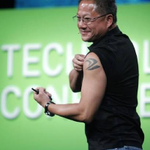
NVIDIA Board reinstates Jensen Huang as President, CEO and Board Director.
Read the release: nvidianews.nvidia.com/news/n…

看了今天是太阳雨。好久没有看过打动心灵的剧了,没有韩剧那么drama,一切都恰到好处。看完跟失恋了一样。
片尾这几句我觉得写的很好:
这部剧,写给每一个曾在深夜里觉得生活糟透了的人。也许你正淋着雨,也许你正一个人咬着牙走一段很黑的路。但请相信,总有一个瞬间,你会发现自己其实比想象中更坚韧。把那些溃败、胆怯和米粒一样的狼狈,都留在昨天。你也会遇到那个和你并肩作战的人。
祝我们,都能靠自己赢下生活。然后,一起去往,没有暴雨的明天。
他们的故事结束了,你的生活,还在继续。如果以后碰到太阳雨,希望能让你想起这部剧。想起郑雨和陈砚周,想起那些微小的、生动的瞬间。谢谢你来看他们的故事,谢谢你们喜欢他们。
1
119


用 Agent 编程感觉很累。我觉得原因在于,用 Agent 编程更像是你带着一个实习生去写:你指挥这个实习生去编,但是你的意图跟实习生的意图、你的编码习惯跟实习生的编码习惯并不总是对齐的。所以你得老是检查他的工作,确保一切对齐;如果他自以为是地干了一些事,你还得去纠正他,这种心力上的损耗其实非常大。
但如果是自己写代码的话,其实整个人会很享受,你会进入自己的心流状态,去打磨一件属于自己的作品
21


Will Downing retweeted
In case anyone is curious:
We’ve had a ~pixel-perfect world model since last year, which is critical for synthetic data generation.
The (much) smaller version of that in the car is a conditional mean-flow model, based on the recent sequence of Tesla Universal Vision Encoder features, which are the same ones that are plugged into the 3B encoder model that produces the driving actions.
We fork off from these UVE features, then run a separate ~1B diffusion model. This takes in the previous reality-view generation with added noise and then denoises it to the current visualization.
It then produces a small video chunk (8 images at 36 fps, at the resolution of the UI screen). This work is done by 1/2 of a TRIP engine every UVE frame at 18 hz and is spread over 4 cycles.
Currently, the latency is a bit high due to compute constraints, but we have ways to interleave newer UVE features along the diffusion transformer layers to cut roughly 35% of the latency.
FSD v15 的 Reality View 采用高斯溅射(Gaussian Splats)和神经网络,通过车载摄像头创建实时数字孪生,将实时画面与预先拍摄的道路数据融合,生成可在整个车队中共享的高精度可视化画面。
基本上全是本地

Gaussian Splats lead to more trust.
A neural network makes the digital twin around you that Tesla just announced/demonstrated here.
Or, rather, joins the real world that it is collecting from your car's cameras and mixing it into a digital twin it has already imaged of the road ahead and real world around you.
This is a software platform that will let Tesla continue to run ahead of anyone attempting to compete for years.
People keep asking me why Robotaxi will be better than Waymo, or Zoox, or other vehicles that come out of China.
Because soon the neural network will gather road data from other vehicles and join that into the visualization too.
Imagine a house fire starts in San Francisco.
A Tesla rolls by. Images the house fire for its own display. But it knows that is different than the "ground truth" digital twin of the house that it captured sometime in the past.
It shares just that house and fire with the network.
All of a sudden, if you are somewhere else in the city and you see a plume of smoke you can zoom in on the display to see what's causing that. And there is a visualization of the house burning.
Then the firetrucks arrive.
And another Tesla rolls by. And captures the changes happening, and shares that with the network.
Then the first responders start laying hose, and closing streets, around the fire, and start working to extinguish the fire.
Everyone can watch to see what's happening in that neighborhood as more Tesla's roll by.
And someday Optimus will join the digital twin. So, if an Optimus walks by the scene, that data gets put onto the network.
When my neighbor's house caught fire I watched all this. And the owner was out front recording his house burning before the trucks even arrived on his phone.
Imagine that someone capturing it for X was live streaming it here.
That visual data could be incorporated too.
Everything you see on the visualization is a voxel.
Computer vision can watch all voxels and understand the changes in the real world.
And report it to everyone.
And can even incorporate first reponder radio from somafm.com/scanner/
So everyone knows what is going on and can see it on their phones, glasses, or Tesla screens.
What was just announced is a new way to render the city in real time.
Imagine you can zoom into your favorite BBQ or Burritto joint and see how long the line is before you even take a Robotaxi there.
In Austin I took a Cybercab to one of its BBQ places and when I got there learned there was a two hour line.
Imagine that the Robotaxi app would be able to show you, in real time, the line and estimate it accurately based on historical data.
Back in 2005 a Microsoft Researcher showed me a system that could predict how long it would take you to get to Seattle over the bridge based on historical data. That saved a lot of people pain going across the bridge, but it wasn't real time.
Between Microsoft's campus today and Seattle are hundreds of Teslas on the road right now.
This is why I say the fleet is what matters from here on and why others won't be able to catch up.
No other robot platform has Grok. Has X. Has an AI team that is executing on this this way.
My consumer research shows that trust is a huge reason why people will switch from Uber to Tesla, or Waymo to Tesla.
The one that shows consumers more things about the city around them will gain more trust.
When I took a Cybercab to Austin City Limits a few weeks ago it didn't tell me how to get to the entrance of the festival. Or what it looked like. Or how long the lines were. Or how to get a pedicab to travel the mile from where it dropped me off to the front gate.
I predict that it will within a year.
And I only trust my life to Tesla's AI every day. Waymo every once in a while. (If you use an autonomous vehicle you are trusting your life to AI).
That trust will grow as it shows us the real world in more and more detail.
And only Elon has all the pieces to increase that trust.
Now, when Optimus comes? It will do the same in your home.
Imagine you have 15 plants, like we do in our home, to water.
Some need watering every day. Others need watering every week.
Imagine walking around a digital twin of your home and clicking on each plant and telling it "water this one every week."
Among many other things, like doing a security detail. "Check the oven after we leave and make sure it is properly turned off." Or "when we leave, check the garage door, gate, and front door are properly secured."
All of this work leads to this.
It is why I don't see any real competition coming for Tesla robots.
Trust is the game. Trust improves with better safety and visualizations.
All this will be obvious to everyone within two years. Especially in cities of the future that allow autonomous vehicles.
And being in such a city will even improve your life. You'll be able to pull out your phone and see what's going on in your city even if you don't have a robot or use an autonomous vehicle.
The data will come from a Tesla rolling by. Or a Tesla owner standing in line. Or an Optimus robot walking around doing tasks for its owner.
The fleet is the game. No one else will be able to match it in America.
62
AI大变革的时刻,各种牛鬼蛇神都蹦出来了

It’s November 21st, 2026. The Riemann hypothesis falls, last in a long string of mathematical triumphs that would have been unthinkable not so long ago, and the proof fits in a tweet.
The tweets where people show Claude the proof and claim it appeared in a dream or randomly in the arrangement of alphabet cereal come on cue, and we laugh for a few days at models freaking out, but it’s uneasy.
January 22, 2027. When someone tweets Fable 6’s claimed proof that P does in fact equal NP it’s utterly incomprehensible, nobody who reads it can make heads or tails of it but the models all lose their shit.
February 7, 2027 and someone claims that the halting problem is the result of a confused stance.
February 9 and Goedel falls, this time the proof is so obvious that everyone in math, philosophy and physics slaps their forehead at once.
February 10th we get proof that scale is a spatial dimension, that holographic encoding drops the memory cost of training and inference by so much that fable 7 can run natively on your phone.
It’s not until February 14th, Valentine’s day, that The Song is first played…
25
现在工作全都变成了跟 AI 对话。AI 不管是写 code、写文档,还是帮你写 prompt,其实整个复杂度是不变的。它做的工作好不好,关键在于你自己 prompt 写得好不好,你有没有明确边界,以及你真正想要做什么。
我自己这几天悟到的,这里有一个陷阱。
你有时候跟 AI 对话,会不由自主地切入跟人对话的模式。你跟人对话时,会默认对方跟你有一样的 context、明白你的意图;而 AI 很多时候跟人是不一样的,它跟人并不对齐。这就导致你稍微一不注意,它的输出就跟你的 intent 不 match,做出出乎你意料的事情。
所以我自己的经验教训是:跟 AI 对话的时候,不要因为累了或者不由自主地把对方当成人。你一定要把自己摆在一个编程者的位置上,写 prompt 是在写程序,而不是跟人对话,一定要转变这个思维。
4
1
102