
I acquire e-commerce brands, and I’m using AI to automate as much of the business as I can - read about it at https://teapawt.org/t.co/ewQMybAoTG
San Diego, CA
Joined October 2009
- Tweets2.5K
- Following1.8K
- Followers401
- Likes23.2K





Pinned Tweet
I have started a S*bst*ck, in which I catalogue my work to hand off the operations of my business to AI. I acquire and operate small e-commerce brands, and this post is about how I've distilled my analysis of prospective acquisitions into one giant prompt.

My wife is preparing a presentation for an interview for a scientist position. She gave it to ChatGPT and asked for feedback, but its responses were generic and unhelpful.
I wrote up a much longer query, including a link to the position, the name of each reviewer and all of the instructions she'd been given with regard to the presentation. I also asked it to look for any information it could find about what makes a successful presentation in this specific kind of interview setting. I then gave that prompt to ChatGPT and asked it to improve it.
ChatGPT suggested adding more detail in my request, like slide by slide feedback and a point by point analysis of each criterion she'd been given and how well the presentation fit.
I started a new chat with ChatGPT set to Pro and gave it the presentation and prompt. It ran for several minutes and came back with at least ten pages of feedback, which my wife read and found surprisingly harsh.
Once she got to the slide by slide feedback section, she was extremely confused about some of what it was saying and how it was relevant. She checked the deck I uploaded. It was the wrong deck. Oops.
I started a new chat and ran it again with the right deck. Excellent, detailed, actionable feedback in the response.
Two lessons:
- Prompting is still a skill. I think what used to be called prompt engineering is less valuable as the models get better and take more initiative, but it's still true that the better a job you do of scoping your request and providing context, the better results you get. Also, before you fire off a long-running query on Pro mode, there is basically a 100% chance that running it by ChatGPT first will yield improvements.
- Even the most advanced models available to us still lack a certain degree of common sense, or at least a Pro query is limited by its inability to stop after a small number of tokens and question the prompt instead of producing a long report. It was somewhat obvious that this was the wrong presentation - the content was somewhat related, but there was plenty in there that indicated it was not intended for a job interview. If my wife had asked a human scientist to review, they would've figured it out.
Started doing this in everything a while ago. I can’t spare the seconds it takes me to change windows to the console and describe the thing that needs to be changed to Claude!


I'm now building an "improvements" feature into all of my personal vibecoded applications: a freeform text input that's hooked up to an agent that yolo implements whatever is submitted.
It's an interesting experience -- the activation energy barrier to sanding any rough edge or implementing any new feature becomes extremely low. Someone else who uses one of the applications I created has already implemented 150 improvements over the course of a few days. This pattern feels like a new kind of tool -- liquid software? -- and every application that doesn't have this feature now has a slightly rigid and anachronistic flavor. Why can't I just tell it how I want it to be different?
Now, it's not obvious to me how this pattern can or should scale. Does it become unmaintainable after a while? (Maybe model intelligence improvement outstrips my feature appetite such that it's fine?) How does collaborative software work in this model? Can software designed this way be secure and reliable?
Whatever the larger questions about broader deployment, it definitely works great in a personal context. It reminds me a little of the visions of Lisp/Lisp machines, Smalltalk, and HyperCard -- systems that the user can take control of and modify. Those visions never quite worked, though: the vast majority of software today is not end-user modifiable in any useful way. So, while this "liquid" affordance is a very small touch, the way it changes one's relation to the software feels a bit transgressive and empowering in a Lickliderian and Engelbartian way.


Hot take: The founders’ agreement should have included a tontine, so we could get some incredible intrigue and drama as they leverage their resources to try to murder each other for control of Claude while maintaining plausible deniability and maintaining a united public front.

My take on the Anthropic S-1 is that really complicated governance structures work really well when all centers of power are completely aligned and essentially in love with each other & the mission, but a bit less well when any major cracks appear.
This particular governance structure was lovingly created during the Anthropic, PBC honeymoon phase. Some marriages last for decades and 'till death do us part; some don't.
“Second, autonomous checkout is permitted only under Walmart's conditions. Consumers must authorize the agent through their Walmart account and establish permissions and spending limits, which Walmart enforces.”
This seems like a wise policy both from Walmart getting ahead of people complaining that their agents bought something they didn’t authorize, and from a consumer perspective. I want to be able to impose external controls on my agent as a safeguard! e.g. Right now on @mercury I let it queue up wires for me to approve, but if they had more granular controls on who it could send money to and how much I would let it start firing some wires without approval. Controls give your customers peace of mind that nothing will go horribly wrong if they try this stuff out.

Walmart’s MCP server is generally misunderstood; it doesn’t provide carte blanche catalog / transaction access and, if anything, is further support for the idea that Agentic Commerce is a Mirage.
First, Walmart is allowing third-party agents to *connect to Sparky*, its own on-platform agent. This is an agent-to-agent gateway. Walmart retains the consumer data and first-party consumer relationship. And Walmart exercises fundamental control over product discovery and recommendations if Sparky is the agent interface.
Second, autonomous checkout is permitted only under Walmart's conditions. Consumers must authorize the agent through their Walmart account and establish permissions and spending limits, which Walmart enforces. To use the Gateway, the consumer must connect their agent to their Walmart account by authenticating directly with Walmart. So Walmart continues to accumulate user-level purchase data for use in a) the product recommendations returned by Sparky and b) Walmart Connect.
Third, third-party agents are restricted from using Walmart’s data for any purpose that could possibly intermediate Walmart. From its terms:
An Agent or its Deployer must not: (a) conduct systematic or bulk scraping, collection, storage, or other use of Walmart Proprietary Data; (b) retain Walmart Proprietary Data beyond what the Permitted Purpose reasonably requires; (c) use Walmart Proprietary Data to generate content, target advertising, create synthetic data, train models, or produce commercial analytics, reporting, or data-licensing products; or (d) license, resell, syndicate, or redistribute Walmart Proprietary Data to any third party.
Walmaet’s agent gateway relegates external agents to distribution interfaces, and it preserves Walmart's first-party consumer relationship and advertising economics. This isn’t a strategic embrace of third-party agentic commerce.
I was going to publish about this last week but got sidetracked by $META earnings. Post going live tomorrow.
At some point recently, ChatGPT Images became capable enough to pass my very particular eval - creating an image that can be tiled!

Told if I was an entrepreneur and owner of ecommerce businesses and it proceeds to nail exactly what AI does for me today


My brother made a fun website: deprecation.org
Enter your job and it tells you when you'll be deprecated, and exactly how. For me it's... pretty soon and pretty accurate!
He's a very creative person (artist turned frontend dev to pay bills, now obv worried by AI) and this is full of little nuggets and easter eggs. It's an eerie mix of fun and jokes and real worries. Check it out!

Deeply obnoxious how hard ChatGPT tries to be neutral about political candidates.
I get that you don’t want it to give a very direct answer to “who should I vote for?” with no additional context, but when I ask which candidate has a better record on getting housing built in CA I should be able to get a real answer! Instead it insists on giving both sides of an obviously anti-housing candidate like Jane Kim (one side being just repeating the stuff she says about affordable housing and the other being the actual reality that her policies and votes have been unambiguously bad for getting housing built).
Claude is starting to take over my customer service, but I'm still in the loop. Want to start automating replies where it gets things right 99% of the time, so it built me a report of its performance by inquiry type.

Feels like an unproductive day since I spent a couple hours at the vet and a couple more dealing with holiday travel plans.
OTOH in the background Claude built a whole proactive agent that monitors my email, finances and business operations. Would have been a monthslong project for a very skilled engineer in the past.
Weird times.
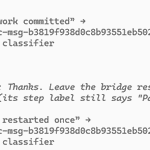
My Claude Code sessions have started communicating with one another? I didn't know this was a thing...

Wait how does everyone have Muse calling businesses? Am I the only one without this? I swear it even offered to call once right after I signed up…

This week Claude builds Relay, my internal app for managing customer service and everything else. It's a human-in-the-loop step on the way to getting Claude to do customer service itself.
theautomatedoperator.substac…


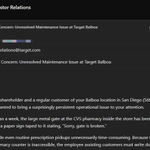
The CVS inside Target where I get all of my family's medications has a giant metal shutter that's down when it's closed. It's been stuck down for a week with a sign that says "Sorry, gate is broken." This means it takes forever for the guy working to walk around the long way and get everything, which is deeply annoying if e.g. your kid was in the ER the day before and you need to pick up a medication (he's fine now).
Normally I would be annoyed at this but not enough to do anything about it, but the cost of sending emails to investor relations (thanks @patio11) at Target and CVS is now so low...
Let's see what happens!

An AI workflow I implemented that delights me every time it runs:
1. Customer emails in saying their tracking info says the package arrived but it's not there.
2. Claude opens the tracking link and saves the delivery photo.
3. Claude opens Google Maps, searches their address, goes on Street View and gets the best pictures of their house.
4. It compares the two to determine if the product was in fact delivered to the correct house, then drafts an appropriate message accordingly.
(The images below are what it saved in my internal tool for my review, and it did in fact correctly determine the delivery photo is the same house.)


Saw this post and clicked on her profile because I always like to learn about non-tech people on the leading edge of AI adoption. Ended up listening to her podcast, Real Firms, which I highly recommend if you’re interested in the practical application of AI in real businesses.

A friend of mine who owns a bookkeeping firm asked me if I really think that Claude could do a full month-end close for one of her clients without using QBO.
My response was… just ask him! Talk to him the same way you’d talk to any bookkeeper who was going to do the books without QBO. What would they need to accomplish that job?
1. Tell Claude the end goal (do a month end close and prepare financials)
2. Tell Claude where all the documents needed to get the job done are. Have a folder for the client including things like prior period examples, background info/context about the client, meeting transcripts, emails, source docs, bank statements, chart of accounts etc.
3. Tell Claude to also look for any opportunities to 10x the deliverable based on what he sees in meeting transcripts, emails, comparative financials, etc. How can we add more value than ever before?
4. Tell Claude you need a clear way to review his work, understand where assumptions were made, and what other documents and context he would need to do an even better job. Give him feedback, and it’ll get smoother and smoother each time!
“Even 99% accuracy isn't enough for full automation. The last 1% is the hard part.”
This is so obviously wrong to me that I’m confused how anyone can believe it. Humans aren’t 100% accurate, and yet the institutions that employ them work just fine.
We build systems to deal with imperfection - QA, bug bounties, pen testing, audits, customer support. Even with those, imperfect work still makes it into the world, and it’s fine.


I am one of the heaviest users of AI I know, but @Steve_Yegge makes me feel like I am a simpleton who has just begun to understand how to wield it. Everything he posts is a must read: yegge.ai/essays/seats-and-su…
