

®️™️ Original voluntary group. Estd 1990. Community archaeology. History & heritage of Wirral. #SearchForTheBattleofBrunanburh ®️™️ #CheshireShore #RomanRoad
Wirral, UK
Joined April 2018
- Tweets3.9K
- Following249
- Followers878
- Likes3.1K


Wirral Archaeology retweeted

What if the Sumerians didn't invent everything they knew? What if they inherited it from people who survived a drowned world?
Around 14,600 years ago, something extraordinary happened. The planet was coming out of the last Ice Age, and an enormous amount of meltwater entered the oceans. Scientists call it Meltwater Pulse 1A.
Over roughly 350 years, global sea levels rose somewhere around 14 to 18 metres. That's roughly the height of a five storey building.
Today, we build our cities along rivers and coastlines. We always have. Fresh water, fishing, transportation, fertile land. It's where people naturally settle.
Our ancestors were no different.
Before the oceans rose, enormous areas of what is now the seafloor were dry land. The North Sea, Southeast Asia, Australia, and perhaps most interestingly, the Persian Gulf.
Yes, the Persian Gulf.
Much of that massive body of water between modern Iran and the Arabian Peninsula was once an exposed landscape. Ancient rivers crossed it, including systems connected to the Tigris and Euphrates. There may have been freshwater springs, lakes, wetlands and places perfectly suitable for people to live.
Archaeologist Jeffrey Rose even published research examining the possibility that this region once served as a refuge for prehistoric human populations.
Now consider what happened as the ice melted.
The water kept rising. Not all at once, and not everywhere at the same rate. Over generations, entire landscapes disappeared. Places where people hunted, gathered food, raised children and buried their dead were gradually swallowed by the sea.
Where did those people go?
They didn't all just stand there and drown. Many would have moved. And they would have taken something with them.
One of the earliest great urban civilizations, with monumental architecture, complex administration, mathematics, astronomy and eventually writing.
The Mesopotamians preserved stories of extraordinary teachers known as the Apkallu. In later Babylonian accounts, a being called Oannes emerged from the sea and taught humanity the foundations of civilization.
A culture living near a region that had been progressively swallowed by the ocean preserved traditions about ancient figures associated with water who brought knowledge to humanity.
I'm asking whether mythology could preserve a distorted memory of something that really happened.
Could displaced populations from a now-submerged landscape have carried older traditions into Mesopotamia? Could those traditions have survived for thousands of years, eventually becoming stories about divine teachers and the origins of civilization?
There is a serious problem with this idea, and I'm not going to pretend otherwise.
Meltwater Pulse 1A happened thousands of years before Sumerian civilization emerged. The Persian Gulf also flooded gradually, with major stages occurring long after the original meltwater pulse. We have no archaeological evidence establishing that survivors from that early period became the teachers described in Mesopotamian mythology.
Here's what we do know.
The land existed and the rivers existed. Human populations occupied the wider region. The seas rose. And a considerable part of the prehistoric landscape is now underwater.
We also know that humans were far more capable before agriculture than they are often given credit for. People were making bread like foods in the Levant around 14,400 years ago, thousands of years before farming became established there.
So why do we assume that all the knowledge behind civilization had to originate in the places where we eventually find its surviving ruins?
Maybe some of it came from places we haven't excavated because they're now sitting beneath tens of metres of seawater.
Perhaps the people who helped lay the foundations of Sumerian culture were descendants of populations displaced from the ancient Persian Gulf, carrying knowledge that had been passed down for thousands of years.
And perhaps some of those memories eventually became the stories of the Apkallu.
It's a hypothesis. It needs evidence. But the geography gives us a legitimate reason to investigate.
We're trying to reconstruct the beginning of civilization while enormous sections of the world our ancestors inhabited remain underwater.
I can't help wondering how much of our own history we're missing simply because we've been looking for it on dry land.

Wirral Archaeology retweeted

Today is the feast of St Clement, 1st-century pope. It's one of several festivals in November and December when there was an old custom of children going door to door, singing songs and begging for treats. On St Clement's Day they called it 'clemancing'. archive.org/details/englishf…


'Cattern and Clement be here, be here,
Some of your apples and some of your beer...'
Cheering up the cold days of late November with Stir-up Sunday and Sts Cecilia, Clement and Catherine: patreon.com/clerkofoxford/po…


Wirral Archaeology retweeted

On this day, 23rd November 1939, a British passenger liner with 8 old guns fought 2 German battleships with 18. As they closed in, her captain was heard to say: "We'll fight them both, they'll sink us, and that will be that. Good-bye." He was right about all of it.
The liner fought until every gun she had was knocked out. Captain Edward Kennedy, aged 60, went down with her, and so did most of his crew.
Her name was HMS Rawalpindi. 3 months earlier she had been a passenger liner on the run to India and the Far East. The Navy took her, mounted 8 guns left over from the First World War, and sent her to patrol the gap between Iceland and the Faroes. Kennedy had been retired for 18 years.
That afternoon, as the light went, Scharnhorst and Gneisenau found her. Each had 9 guns of 11-inch calibre against her 6-inch. She was ordered to stop, then to abandon ship. Kennedy signalled the Admiralty that he had sighted the enemy, and kept going. At about 4 o'clock the Germans opened fire, and Rawalpindi fired back.
The third salvo killed her lights and her ammunition hoists. The fourth destroyed her bridge. She hit Scharnhorst once. Then, one by one, her guns were knocked out, until the whole ship was ablaze but her bow and her stern.
The Germans ceased fire and picked up survivors, until a British cruiser came up out of the dark and they broke away. Rawalpindi burned until 8 o'clock that night, then rolled over and sank. Of about 276 men aboard, 238 are usually counted dead.
Kennedy's signal brought the Home Fleet out, and the 2 German ships turned for home. They had been sent to break the British patrol line. They had sunk 1 converted liner. Kennedy had said exactly what would happen, and fought anyway.
I'm on a mission to build the largest British history brand in the world. Stand with me — become a guardian of history and help tell our story, truly and without apology: thestoicenglish.com/guardian…

Wirral Archaeology retweeted

HOLY SHIT! This is wild.
Max Tegmark, renowned MIT physicist, just said this 👇
“I talk to people who work for Anthropic, after they’ve had a couple of drinks, the conversation often gets into overthrowing the US government and taking over the world.
For a while I couldn’t figure out why more people didn’t react. They’re talking about taking over the world…
But then I realized why. It’s because they speak in code.
They tend to not use words like “coup” and “overthrow the US government.”
They’ll instead use the code phrase “alignment without control.”
So let me translate what that means.
You know, if it’s controlled… by then, if they had a plan for actually this being controlled, then the US government could control it.
It could shut it down, they could have kill switches, et cetera, et cetera. But they don’t want that. They basically stopped talking about it.
Instead, they talk about alignment, which very loosely speaking, [means] the AI should be nice somehow, according to some values, which will probably be quite influenced by the particular values that they have.
But not controlled.
That means that we get the sort of future that Alan Turing predicted, where it’s gonna be Anthropic’s machine god running Earth, and then the rest of us just have to hope that somehow it’s going to be nice.
Call me old-fashioned, you know, but I have a soft spot for democracy. The idea that if you want to actually overthrow a democratic set of institutions, you should have a referendum on it.
But these companies really don’t seem to like that. They have lobbied really hard to even prevent any meaningful government oversight on them.
Here in the US, you know, Anthropic and OpenAI are less regulated than a sandwich shop.
They actually have the legal right to release superintelligence tomorrow, should they have it and want to.”
Wirral Archaeology retweeted

When whalers emptied the Southern Ocean, the krill the whales had been eating should have gone through the roof. Instead it fell by more than 80%.
Over the 20th century the factory ships killed something like two million whales in the southern hemisphere. Antarctic blue whales went from roughly a quarter of a million animals to a few hundred. A blue whale can put away around 16 tonnes of krill in a day, and before the harpoons the great whales down there were eating an estimated 430 million tonnes a year. Take the mouths away and you'd expect shrimp from horizon to horizon. In the 1970s the experts expected exactly that, and the trawlers went south to collect it.
The glut never came. The krill went the other way and has stayed down.
The answer turned out to be at the whale's other end.
The Southern Ocean is short of one thing, and it's iron. Without iron the algae can't grow, and without the algae the krill have nothing to eat. A whale feeds deep, comes up to breathe, and empties itself at the surface in a cloud the colour of the krill that went into it. That cloud carries iron at about 10 million times the concentration of the seawater around it, delivered to the exact layer where the sunlight is. The whale eats in the dark and fertilises in the light, season after season, across an ocean the size of a continent.
The whale fed the algae, the algae fed the krill, the krill fed the whale. Nobody had to pay for the fertiliser, because it came attached to the customer.
So when the ships took the krill's predator out of the sea, they took its farmer with it. To feed the whales that used to be there, the ocean would need about five times the krill it carries today.
Every system on earth that has ever fed itself has an animal in the middle, eating the crop and putting it back. The whale did it in the ocean. The bison did it on the prairie. The cow does it on a hill in Wales that grows nothing else.
The Dutch government is currently paying livestock farmers to shut down near its nature reserves, so that nature can recover.
The ocean has already run that experiment. It cost 80% of the krill.

Wirral Archaeology retweeted

22nd November 2026 is the Feast of Christ the King. Here is Christ in glory surrounded by days of creation, & the symbols of the evangelists.
München, Bayerische Staatsbibliothek, Clm 30055; Evangelarium of Henry the Lion; c.1188; Helmarshausen, Benedictine; p.60; @bsb_muenchen

Wirral Archaeology retweeted

The Alfred Jewel: England's most sacred object? Not only is it stunningly beautiful, its also the most tangible link to the man who saved Britain from the Danes and built England. This aestel also captures the renaissance of Christian learning upon which Alfred built England.

Wirral Archaeology retweeted

One of only two surviving English medieval crowns, the Crown of Margaret of York was worn at her 1468 wedding to Charles the Bold. It bears Yorkist white roses and the initials C & M. In 1474, Margaret gifted it to Aachen Cathedral in honour of the Virgin Mary.


Wirral Archaeology retweeted

حين دار الفينيقيون حول أفريقيا بأمر الفرعون
في سنة ٦٠٠ قبل الميلاد تقريباً، وقف الفرعون نخاو الثاني على ضفاف النيل، يتأمل السفن الفينيقية الراسية أمامه. كان يحلم بما لم يجرؤ عليه ملوك مصر قبله: معرفة أين تنتهي أفريقيا، وما إذا كان البحر يطوّقها من كل جانب.
استدعى ربابنة صور وصيدا، وقال لهم: «أريدكم أن تبحروا جنوباً، حتى نهاية الأرض، ثم تعودوا إليّ من حيث تغرب الشمس».
أبحرت السفن من البحر الأحمر، تحمل المؤن والمياه وبذور القمح. وعلى امتداد السواحل الأفريقية، واجه البحارة رياحاً غريبة، وأمواجاً شاهقة، وشعوباً لم يعرفوا لغاتها. وكلما حلّ موسم الزراعة، نزلوا إلى اليابسة، بذروا الحبوب وانتظروا الحصاد، ثم استأنفوا رحلتهم.
ومضت السنوات، حتى بلغوا بحاراً باردة عند أقصى الجنوب. وهناك حدث ما حيّرهم: حين أبحروا غرباً، أصبحت الشمس تظهر عن يمينهم، خلافاً لما اعتادوه في البحر المتوسط.
قال أحد البحارة: «لقد تجاوزنا حدود العالم الذي نعرفه».
وفي السنة الثالثة، ظهرت أمامهم أعمدة هرقل، فعبروا المضيق إلى البحر المتوسط، وعادت سفنهم أخيراً إلى مصر.
وقفوا أمام الفرعون، بوجوه أحرقتها الشمس، ورووا له حكاية قارة طافوا حولها كاملة.
لم يدرك العالم يومها عظمة ما حدث. وبعد قرنين تقريباً، دوّن هيرودوت روايتهم، مستغرباً حكاية الشمس التي ظهرت عن يمينهم.
لكن تلك الملاحظة بالذات ستصبح لاحقاً من أقوى القرائن الجغرافية على صدق رحلتهم.
وهكذا، قبل أكثر من ألفي عام من عصر الاكتشافات الأوروبية، كان بحارة فينيق قد أبحروا حول أفريقيا وعادوا.
رواية أدبية مستوحاة من رواية هيرودوت في «التواريخ»، الكتاب الرابع، الفقرة 42.
Wirral Archaeology retweeted
Today is the feast of St Edmund of East Anglia, king and martyr. Killed by an invading Viking army in 869, he became one of medieval England's most popular saints.
'It was never my custom to take flight; I would rather die, if I must, for my own land.' aclerkofoxford.blogspot.com/…


The feast day of St. Edmund, King and Martyr.
St Edmund's Day commemorates the King of East Anglia, martyred on November 20, 869. Captured by Danes he refused to renounce his Christian faith. He was shot to death by arrows.
The original patron saint of England.
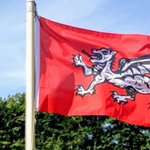
This is his flag.

ALT The flag of Saint Edmund, showing a white dragon on a red background.
Wirral Archaeology retweeted

Another angle of the incredible ‘Human Poppy’ made by local school children on Southport Beach!
Bloody lovely!


Wirral Archaeology retweeted

“They shall grow not old, as we that are left grow old;
Age shall not weary them, nor the years condemn.
At the going down of the sun and in the morning
We will remember them."
Lest We Forget

Wirral Archaeology retweeted

Comme chaque année pour le #11novembre, je remets cette excellente animation du front de l’ouest pendant la Première Guerre mondiale par carto1418.fr/ :

Wirral Archaeology retweeted

Over a century after his death at Passchendaele, Sergeant Thomas Smith of the New Zealand Machine Gun Corps has been formally identified and rededicated at Tyne Cot Cemetery, Belgium.
Once buried as an unknown soldier, new research has restored his name to his final resting place, ensuring he is commemorated in perpetuity.
Read more on our website 🔗
📷 Eric Compernolle BEM


Wirral Archaeology retweeted
A French canister ball tore into Lieutenant-Colonel William Inglis near the neck and lodged in his back. His men moved to carry him to the rear. He refused. He refused the surgeon too. He had them lay him down beneath the colours of the 57th Foot, in the open, facing a French column some 8,000 strong — and from there he gave his regiment one order, over and over again.
16 May 1811. Albuera, Spain. Marshal Beresford's British, Portuguese and Spanish army is covering the siege of Badajoz, and Marshal Soult has come to break it. He swings round the Allied right. Then a hailstorm hides Polish lancers until they are inside a British brigade, and three of its battalions are gone in minutes. That leaves a hole in the line, and one brigade to fill it.
Major-General Hoghton's brigade — the 29th, the 48th and the 57th West Middlesex, 1,651 men — halts in line against a French column of 8,000, with guns firing grape and canister into the ranks at 300 yards. No cover. No manoeuvre. Only the line.
Hoghton is killed. Inglis has his horse shot from under him. Then the canister finds him. He lies beneath the colours, bleeding, and as the files are shot away the men hear him above the guns: "Die hard, 57th! Die hard!"
They do. The King's colour is hit seventeen times, the Regimental colour twenty-one, its staff broken. The line does not go back — and it holds until the Fusiliers come up and break the French.
The 57th went up the ridge 647 strong. 428 were killed or wounded — two men in every three. Beresford wrote that their dead lay "as they fought in the ranks, every wound in front."
Inglis lived, and was back in the field by 1813. His regiment were the Die Hards for the rest of their history, and every 16 May Albuhera Day is still kept.
Two men in three fell on that ridge. The line never went back. That is what the name means.
The 57th held that ridge with two men in three down. Stories like theirs only survive if someone keeps telling them, properly and without apology. That’s what Guardians make possible. Hold the line with me: thestoicenglish.com/guardian…
