
Frequently updated assortment of tweets related to the world of science (with some side tracking) - As an Amazon Associate we earn from qualifying purchases
Joined March 2012
- Tweets7.5K
- Following30
- Followers2.6M
- Likes499



Pinned Tweet
At first glance, a sky full of stars...
Look closer: most of these tiny points of light are actually galaxies!
This Rubin Observatory view captures around 10 million of them, each with a story to uncover.
(Video by WorldAndScience - Credit: RubinObs/NOIRLab/SLAC/NSF/DOE/AURA)
Stunning: A nighttime view of Cairo from the International Space Station.
(Credit: NASA Earth Observatory)

Spectacular:
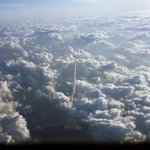
High-altitude observation of the STS 51-A shuttle Discovery launch, with the pad shining as a central beacon in a cloud assembly; the Discovery shuttle is seen as a light at the pinnacle of a smoke shaft, bordered by dense cloud layers.
(Credit: NASA)

An interesting book with some fascinating insights
Remember: The Science of Memory and the Art of Forgetting: amzn.to/4boUsZJ -AmazonAfflink

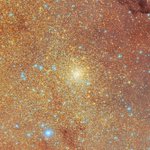
An extraordinary look at NGC 6544, a globular cluster bursting with starlight from tens of thousands of suns.
(Credit: RubinObs/NOIRLab/SLAC/NSF/DOE/AURA)

At first glance, UGC 11397 appears to be a typical two-armed spiral galaxy. But after traveling 250 million years to our eyes, its light reveals a core dominated by a black hole of 174 million solar masses.
(Credit: ESA/Hubble & NASA, M. J. Koss, A. J. Barth)

Fascinating: In Arp 256, 350 million light-years away, the collision of two spirals stretches their structures and ignites furious star birth, a breathtaking scene caught by Hubble.
(Credit: ESA/Hubble, NASA)

How this legged robot could speed up the search for life: universal-sci.com/article/ho…

Journey Through the Orion Nebula in Visible and Infrared Light
(Credit: NASA, ESA, and F. Summers, G. Bacon, Z. Levay, J. DePasquale, L. Hustak, L. Frattare, M. Robberto, M. Gennaro (STScI), R. Hurt (Caltech/IPAC), M. Kornmesser (ESA), A. Fujii, R. Gendler)
Amazing picture!
Spotted from orbit: Curiosity climbing Mont Mercou on the surface of Mars.
(Credit: NASA/JPL/UArizona)

Would you accept 10 million dollars today if the absolute condition was that you could never use the internet again?
Each tiny red dot is a star taking shape inside a cocoon of gas and dust. Deep within, its core is still warming toward the onset of hydrogen fusion.
(Credit: NASA, ESA, the Hubble Heritage Team (STScI/AURA), A. Nota (ESA/STScI), and the Westerlund 2 Science Team)

Majestic: NGC 1275, as seen by Hubble, displays immense red filaments—spanning 200,000 light-years—suspended by magnetic fields in scorching cosmic gas.
Credit: NASA, ESA and Andy Fabian (University of Cambridge, UK)

A remarkable glimpse into our galaxy’s heart: stars orbiting its central black hole over nearly 20 years.
(Credit: ESO/GRAVITY Collaboration)
A fascinating book!
The Molecule of More
How a Single Chemical in Your Brain Drives You and Will Determine the Fate of the Human Race: amzn.to/4uE9OT0 -AmazonAfflink

Even galaxies carry traces of their past. Messier 96’s uneven distorted spiral arms suggest that neighbouring galaxies have left their mark
(Credit: DESI Legacy Imaging Surveys/LBNL/DOE & KPNO/CTIO/NOIRLab/NSF/AURA - M. Rodriguez, J. Miller, T.A. Rector & M. Zamani)

Extraordinary: NGC 1501, a planetary nebula 5,000 light-years away, hosts a rare variable star (its revealed central core brightens rhythmically every 30 minutes).
(Credit: ESA/Hubble & NASA - Acknowledgement: Marc Canale)

Floating 160,000 light-years away, a new generation of stars is being born. This view of the N11 cluster combines Hubble data taken twenty years apart, revealing how young blue stars light up
(Video by WorldAndScience - Credit: ESA/Hubble & NASA, C. Murray, J. Maíz Apellániz)