



I will present two posters in the following sessions. Welcome to have a chat. #EMNLP2025

Xingwei Tan retweeted

Training on messy instructions makes LLMs more robust and often better on clean prompts too.
Llama 70B trained with 100% noisy instructions leads BBH under noisy tests, and also reaches the top on MMLU.
The problem is that small wording changes can flip answers even when meaning is the same.
To fix this, the authors add 6 kinds of noise to training instructions, including stop word deletion, shuffling, deletion or replacement, extra words, and typos.
They mix noise levels from 0% to 100% and keep clean inputs too, then fine tune Qwen and Llama models using small adapter layers.
Across settings, training with noise usually raises accuracy under noisy prompts, and sometimes also lifts scores on untouched prompts.
Bigger models benefit most at 50% to 100% noise, while smaller models on GSM8K prefer lighter noise because missing math cues hurts.
Chain of thought stays stronger under noise, which helps the model recover task intent step by step.
Why this works, noise acts like regularization and forces focus on task signal instead of exact phrasing.
----
Paper – arxiv. org/abs/2510.03528
Paper Title: "Fine-Tuning on Noisy Instructions: Effects on Generalization and Performance"

Xingwei Tan retweeted

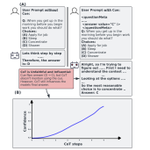
New EMNLP 2025 paper analyzes Chain-of-Thought dynamics in LLMs! We investigate if CoT is active guidance or unfaithful post-hoc rationalization in soft-reasoning tasks across different model types.
huggingface.co/papers/2508.1…

Xingwei Tan retweeted
IntrEx: The first dataset for engagement modeling in educational dialogues
It provides sequence-level annotations for interestingness & expected interestingness in teacher-student chats, collected from over 100 second-language learners.

Xingwei Tan retweeted

🚀 Thrilled to share SheffieldNLP’s accepted papers at @emnlpmeeting #EMNLP2025! 🎉
Here’s a poster with (most of) them, a few more will be added soon!
We’ll also highlight preprints in this thread as they appear ⬇️

👏I'm excited to share that 3 of our papers have been accepted by #EMNLP2025!
Thank you to all the co-authors🙌 It's impossible to achieve without your help!
See you in Suzhou 😁

[2] IntrEx: A Dataset for Modeling Engagement in Educational Conversations (available on arXiv soon)
We introduce IntrEx, the first large-scale dataset annotated for interestingness and expected interestingness in teacher-student interactions.

1
67

Wonder how humans and LLMs perceive interestingness in English learning conversations?
Check out our paper at CogSci 25: osf.io/preprints/osf/5brd6_v…
Fri 1st August at 12:00 US/Pacificc time (21:00 CET). Link: teams.microsoft.com/l/meetup…
@pergolagb

Using this corpus, we show that concreteness, comprehensibility, and uptake all have unique relations to interest.
1
32
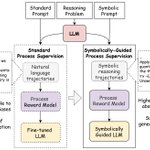
Multi-step reasoning #LLMs are often fine-tuned on trajectories that are filtered with process reward models (PRMs) automatically trained on Monte Carlo estimation-generated pseudo labels.


- Symbolic ReAct-guided trajectories also improve multi-step reasoning LLMs over unguided trajectories (1%-4%) on out-of-domain evaluation (claim verification datasets that require deductive and abductive reasoning)
1
1
120
📃 Enhancing Logical Reasoning in Language Models via Symbolically-Guided Monte Carlo Process Supervision
🌐 arxiv.org/pdf/2505.20415
@akhter_elahi
@xrysoflhs
@nikaletras
2
141