

Project by Jose A. Rafael (INPA-Manaus) and Dalton S. Amorim (USP-Ribeirão Preto) - funded by FAPESP and CNPq-INCT (photo, Craig Cutler)
Manaus and Rib Preto Brazil
Joined August 2023
- Tweets101
- Following38
- Followers36
- Likes231


How 250 years of hard study of biodiversity embraces new technologies to speed up understanding and protection of natural environments? Welcome to XPrize Finals:
youtube.com/watch?v=V6L1uIrh…
21

Our planet's battle for its biodiversity isn't helped by expensive methods and too little data for biodiverse countries. To restore balance, we need to use "innovation through simplification" to develop frugal biomonitoring tech (DIY scopes, lidar, etc): royalsocietypublishing.org/d…
24

World-class universities and critical resources for ecological and evolutionary research:
science.org/doi/10.1126/scie…
The sequencing pipeline infrastructure for the Manaus ZF2 tower project is on its way. While sampling do not begin (collecting begins on Feb 6), a new, parallel project is on it way:
1
1
24


The project is now beginning to move ahead more fastly. Molecular labs in INPA and USP-Ribeirão Preto are being set and the 18-moths sampling schedule is fixed: starting on Feb 6, 2024.
1
2
57
There are many ways to develop speedy assessment of biodiversity. This is one of them:
teapawt.org/RudolfMeier15/status/1…
XPRIZE Rainforest Seminfinals. Sampling for 24 hrs, data analysis for 48 hrs. Watch team XiniX AI compete with robots and the latest MinION tricks: fly poop iDNA: doi.org/10.1111/mec.16767, express barcoding: doi.org/10.1101/2023.04.27.5…, real-time barcoding: doi.org/10.1101/2023.06.26.5…
41
As always happens with projects, there is still a lot of unpublished data from the samples of 2017/2018. Part of it concerns the distribution patterns of adult fly guilds in the vertical structure of the fauna. Part of it concerns +
1
3
69
Not only trees are lost when the forest is removed:
agencia.fapesp.br/microrgani…
1
28
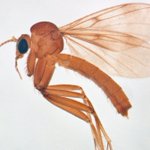
Dark taxonomy on a small island: 115 new species of fungus gnats from Singapore; of course, with proper molecular & morphological diagnoses; 25% increase of known Oriental fauna; Thousands of spp to come! tinyurl.com/5frk5pux @ZooNom @EntCollNet @tarasov_sergio @dimitriforero
1
102
To sequence the CoI barcode of such a number of specimens, a number of protocols have to be set. The basis of the pipeline was designed by @RudolfMeier15 in published papers, as in Srivathsan, et al. 2018, Molecular Ecology Resources, 18(5), 1035–1049, doi.org/10.1111/1755-0998.12…,
1
2
80
Srivathsan, et al. 2019, BMC Biology, 17(1), 96. doi.org/10.1186/s12915-019-0… and Srivathsan, et al. 2021, BMC Biology, 19(1), 217. doi.org/10.1186/s12915-021-0…
1
16
Barcode sequencing in the project follows hard effort from Rudolf Meier @RudolfMeier15, who worked for over a decade to find solutions for projects of large scale discovery of biodiversity, especially insects—meaning innovate protocols with reduced costs and better algorithms.
1
2
81
While at the National University of Singapore @NUSingapore, in a large study of the biodiversity in mangroves and other natural habitats, he and his amazing team sequenced over 140,000 insect specimens.
1
1
22
The current project has largely the influence of @brianVbrown1 Brian Brown’s study of the fly species richness in Zurquí, Costa Rica. In 2010, Brian and Art Borkent received an @NSF grant (DEB 1145890) and gathered a large team of taxonomists to understand how many species of +
1
6
181
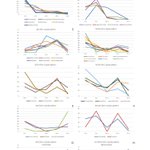
This is one of the most interesting results of the 2022 publication: where are the predator flies in the structure of the forest? Where are the parasitoid tachinids? And where in the forest are the parasitoid phorids, which differ very much in their biology from the tachinids?

1
3
52

There is no way to understand the complexity of the insect fauna if we don’t know what the species composition is. Taxon names are hubs of information. Names are the bridge or the not that connect the knowledge of all different aspects of each species, genera etc.