




Pinned Tweet
#Astronomy is cool, so ima make one cool fact about moons in the Solar System each day until one of the satellite counts for the Giant Planets update. Right now they're:
115 (Jupiter) 293 (Saturn) 29 (Uranus) 16 (Neptune)
Fact #1: The Earth-Moon distance can fit ~30 Earths.

Day 81 of posting a fact about the Solar System's moons until the natural satellite counts of a giant planet increases.
Fact #82: A popular theory for how Uranus gained a 98° axial tilt involves the thought of a violent early impact, additionally creating moons/rings.
#Astronomy

1
21
Day 81 of posting a fact about the Solar System's moons until the natural satellite counts of a giant planet increases.
Fact #81: Ahmakiq Undae is the name approved by the IAU in April 2026 as the Dragonfly spacecraft's landing site on Titan.
#Astronomy

2
39
VFTS 352 potential addition...?

In case you need more of an incentive to be excited for contact binaries.
Details on the upcoming feature: spaceengine.org/news/blog202…
Video from team member Mike.
#binarystars #spaceengine #spacesimulation #universesimulation #spacesimulator #space #universe #universesimulator
39
Day 80 of posting a fact about the Solar System's moons until the natural satellite counts of a giant planet increases.
Fact #80: All Galilean Moons (except Ganymede) are locked in a 1:2:4 resonance. For every orbit of Io, Europa makes two, and Callisto makes four.
#Astronomy

1
20
Day 79 of posting a fact about the Solar System's moons until the natural satellite counts of a giant planet increases.
Fact #79: The MMX will not be able to orbit Phobos to conduct science, due to the moon's low mass. Instead, it will orbit Mars at Phobos' distance.
#Astronomy

1
41
Day 78 of posting a fact about the Solar System's moons until the natural satellite counts of a giant planet increases.
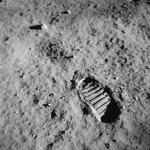
Fact #78: Due to the lack of wind and liquid water on Earth's Moon, the bootprints left by astronauts on the surface can last for millions of years.
#Astronomy

1
1
41


I WAS NOT EXPECTING NASA EYES ADDITIONS TODAY??? THIS IS INCREDIBLE!!


The Hayabusa2# team has received exciting news! Hayabusa2 has been added to NASA’s “Eyes on the Solar System”. We love seeing Hayabusa2 displayed alongside such an impressive lineup of other spacecraft. Thank you to everyone at NASA 🛰️. Do check it out 👀eyes.nasa.gov/apps/solar-sys…

Day 77 of posting a fact about the Solar System's moons until the natural satellite counts of a giant planet increases.
Fact #77: Before names were given, Namaka and Hi'iaka were called "Blitzen" and "Rudolph", to fit with Michael Brown's "Santa" nickname for Haumea.
#Astronomy

1
21
Incredible that stuff like this is marvelous to all of us, yet it's a daily occurence for the asteroids!
#Astro

☀️🪨A solar eclipse in space: the 151-m Dimorphos asteroid, a kilometre away from its Didymos parent, casts a shadow down to its rocky surface - as seen by ESA's Hera mission for planetary defence
esa.int/articles/about-us/di…

ALT The Dimorphos moonlet casting a shadow down to its Didymos parent asteroid
1
54
Day 76 of posting a fact about the Solar System's moons until the natural satellite counts of a giant planet increases.
Fact #76: If Neptune's smallest moon, S/2021 N 1 is known to be 25 km in diameter, it would be bigger than 84% of all known planetary moons.
#Astronomy

1
33
Day 75 of posting a fact about the Solar System's moons until the natural satellite counts of a giant planet increases.
Fact 75: Perdita is a moon of Uranus discovered by Voyager 2 during its flyby of the planet, however it wasn't confirmed until 1999 by Hubble.
#Astronomy

1
1
35